Month: March 2026

Letter of the Week – “The differences between all the copies was even far more obvious the second time I did the shootout.”

Hot Stamper Pressings of the Music of Dire Straits Available Now

One of our good customers had this to say about a Hot Stamper pressing of Dire Straits’ first album he purchased a while ago. (Emphasis added.)

Hey Tom, 

I’ve got to admit that I was skeptical when I purchased your Hot Stamper Dire Straits album. I told my brother I just paid $400 CAD (shipping and duties included) for a used record. Of course he thought I was nuts! I have an original Mercury [?] copy that I bought in 1978 plus an audiophile copy mastered by Bernie Grundman from the original analogue tapes and plated and pressed at Pallas, Germany. [Back to Black reissue from 2013.]

I finally got the chance to do the shootout between all copies. The original totally sounded like shit. It was bright sounding, noisy and lacked bottom end and dynamics. The Grundman mastered copy was much quieter, it was much smoother and more dynamic but it didn’t sound great.

When I put on the Hot Stamper, within a few notes I knew it was far superior. It was far more dynamic as if I turned up the volume. It was also quiet and far more transparent but had that great bottom end.

My brother came to visit me a few days ago and I did the shootout between all the copies again.

The differences between all the copies was even far more obvious the second time I did the shootout. I can tell you that my brother doesn’t think I’m nuts any more. I hope I can purchase more albums from you in the future.

(more…)

Listening in Depth to Houses of the Holy

Hot Stamper Pressings of the Music of Led Zeppelin Available Now

You really get an understanding of just how much of a production genius Jimmy Page was when you listen to a copy of Houses on high quality modern equipment, the kind that simply did not exist when the record came out in 1973.

To take just one example, listen to how clearly the multi-tracked guitars can be heard in the different layers and areas of the soundstage. On some songs you will have no trouble picking out three, four and even more guitars playing, each with its own unique character. The clarity of the better copies allows you to recognize — perhaps for the first time — the special contribution each is making to the finished song.

Side One

The Song Remains the Same
The Rain Song

Check out the guitars — the sound should be warm, sweet and delicate. There are some dead quiet passages in this song that are almost always going to have some surface noise. Most copies start out a bit noisy but almost always get quieter as the music goes along.

Over the Hills and Far Away

This is a great test track for side one. It starts with lovely acoustic guitars before the Monster Zep Rock Chords come crashing in. If both parts of the song sound correct and balanced, you more than likely have a winner. And the bigger the dynamic contrast between the parts the better.

Turn your volume up good and high in order to get the full effect, then stand back and let the boys have at it.

The Crunge (more…)

Cannonball Adderley / Somethin’ Else

More of the Music of Cannonball Adderley

  • A triumph for Rudy Van Gelder, a Top Blue Note title, and as much a showcase for Miles Davis as it is for Cannonball Adderley
  • The best sides of this album had as much energy, presence, dynamics and three-dimensional studio space as any jazz recording we have ever played
  • 5 stars: “Both horn players are at their peak of lyrical invention, crafting gorgeous, flowing blues lines.”
  • “…signs of Milesian influence are the calm, conversational delivery of the title track and the newfound lyricism in Adderley’s playing that followed from his nightly experience at the trumpeter’s side.”

The music here is simply amazing, but the good news for us audiophiles is that it’s also one of the Best Sounding Blue Note Albums we know of, if not The Best.

(more…)

Elvis Costello / Armed Forces – A Phenomenal Demo Disc from 1979

More of the Music of Elvis Costello

  • This vintage UK pressing will show you just how good sounding Elvis’s best recording can be, with KILLER Shootout Winning Triple Plus (A+++) grades or close to them on both sides
  • It’s some of the biggest, boldest rock sound ever recorded
  • A Top 100 Demo Disc, and just amazing here – every track is Elvis at his best
  • 5 stars: “In contrast to the stripped-down pop and rock of his first two albums, Armed Forces boasted a detailed and textured pop production… However, the more spacious arrangements – complete with ringing pianos, echoing reverb, layered guitars, and harmonies – accent Costello’s melodies… It’s a dense but accessible pop record and ranks as his third masterpiece in a row.”
  • There are about 100 records we think deserve to be more popular with audiophiles, and Armed Forces is one of them.

This album checks off a number of our most-prized boxes:

Armed Forces is one of the best-sounding rock records ever made, and a copy like this is proof enough to back up that claim. The best copies are extremely transparent and silky sounding, but with unbelievably punchy, rock-solid bass and drums.

(more…)

It Took Us Three Attempts to Get The Captain and Me Going

Hot Stamper Pressing of the Music of The Doobie Brothers Available Now

UPDATE 2026

By 2009 I had been randomly buying clean copies of The Captain and Me for two decades, with the expectation that one day I would play them and find the mysterious deadwax and other clues that would lead me to the potentially best sounding copies.

Even though I had learned a fair bit about stamper numbers by that time, there was no getting around the fact that the best stamper numbers cannot be predicted for any given title. I didn’t know any especially good ones, which means that I needed to learn them for this title the way I learned them for all the others — one album at a time.

As I was not a fan of the pre-McDonald Doobies, I confess I really had no idea what to look for. I probably had picked up a few of the exceedingly rare Green Label pressings, but were they the best? I couldn’t say. I just hadn’t spent enough time with the album. And I had disproved that old canard that the originals are always the best sounding so many times by then that believing that nonsense was out of the question.

We had tried twice before to get something going, but could not find the sound we were looking for and had simply given up and moved on to greener pastures. This is long before Prelude Enzyme Record Cleaning System had come our way in 2007. It, along with our Odyssey record cleaning machine and some other tricks we learned about record cleaning, allowed us to get a shootout going a couple of years later.

The failed attempts to understand the album mentioned above happened long before we had turned the business over to carrying out shootouts all day, every day, which is all we were doing by 2009. We had stopped promoting Heavy Vinyl in 2007, and by 2009 we were on our way to selling nothing but records we had cleaned and played and evaluated for their sound quality with our own ears.

Eventually we sat down with the copies of The Captain and Me that we had — more than thirty according to the listing you see below, the one we wrote at the time — and gave it our best shot.

(more…)

What Is There to Say about Mercury Sound This Good?

Hot Stamper Pressings of Mercury Classical Recordings Available Now
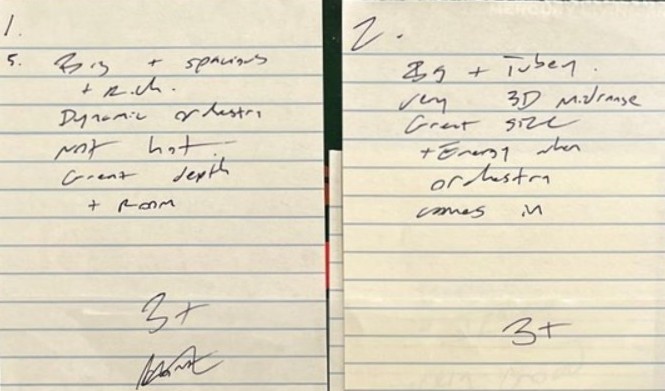
In 2025 we did a shootout for the Mercury you see pictured, SR-90437, having collected a large number of copies with a wide range of stampers, which of course is always the best approach when doing a shootout for the first time. (Once you have a couple under your belt you naturally can start to focus on the pressings that do well and avoid the ones that do badly.)

In our review for the White Hot Stamper shootout winner, we wrote:

Dorati and the LSO’s dynamic performance of these 16 Hungarian Dances debuts on the site with INSANELY GOOD Shootout Winning Triple Plus (A+++) sound throughout this early Mercury pressing.

These sides are doing everything right – they’re rich, clear, undistorted, open, spacious, and have depth and transparency to rival the best recordings you may have heard. You’d be hard-pressed to find a copy that’s this well balanced, yet big and lively, with such wonderful clarity in the mids and highs.

Some of the above may sound familiar. We say these sorts of things and use these stock phrases to describe many of the amazing sounding records that win our shootouts.

But aren’t these adjectives precisely the ones you should be using when a record is doing everything right? What else could you say about a record that sounds this good?

Our notes are simply the impressions a member of our listening panel wrote down as he critically listened to the record while it was playing.

In this case, his attention was being drawn to the marvelous qualities a large scale orchestral recording can have when everything is working at the highest levels of fidelity.

With the right playback equipment and lots of practice, you could easily find yourself listening this way and taking the same kind of notes.

(more…)

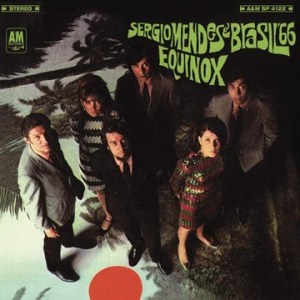
Sergio Mendes and Brasil ’66 – Equinox

More of the Music of Sergio Mendes

  • An Equinox like you’ve never heard, with solid Double Plus (A++) sound throughout this wonderful copy, along with remarkably quiet vinyl for an original pressing
  • The breathy intimacy of the two wonderful female leads – Lani Hall and Janis Hansen – were brilliantly captured by the engineering team of Bruce Botnick and Larry Levine at A&M
  • It’s humble records like this one that blew my mind when I first discovered them back in the 80s, with their dynamic, energetic, spacious sound, as well as shockingly good music that at the time I had no idea existed
  • “Watch What Happens,” “Night and Day,” “Wave” – Mendes brings his innovative Bossa Nova arranging skills to these timeless classics
  • 4 1/2 stars: “Equinox continues the scrumptiously winning sound that Sergio Mendes cooked up in the mid-60s… Again, the mix of American pop tunes old and new and Brazilian standards and sleepers is impeccable, and the treatments are smooth, swinging, and very much to the point.”
  • We’ve recently compiled a list of records we think every audiophile should get to know better, along the lines of “the 1001 records you need to hear before you die,” with the accent on the joy these amazing audiophile-quality recordings can bring to your life
  • Equinox (along with their first release) is also one of those albums that helped us dramatically improve our playback quality

These Sergio Mendes records can be surprisingly dynamic, but only the better copies (such as this one) will allow those dynamics to explode naturally, with the kind of ease that only analog is capable of reproducing correctly in our experience.

As you’ve no doubt noticed, we’re the world’s biggest fans of Sergio Mendes here at Better Records. Brasil ’66, Stillness, and this album are all Desert Island Discs for us, and we even enjoy the hell out of some of the later albums. You can search all you want, but outside of The Beatles you are going to have a very tough time finding the diverse thrills that this group offers. We go crazy for the breathy, multi-part female vocals, their unusually voiced multi-tracked harmonies, the brilliant percussion, and, let us not forget, Mendes’ superb keyboard work anchoring as well as jazzing up the whole production.

His stuff never sounds dated to us, and we’ve never heard another artist do anything in the ’60s samba idiom nearly as well. We love Astrud Gilberto’s albums from the period, which no doubt served as a template for the style Sergio wanted to create with his new ensemble, but Brazil 66 is clearly a step up in every way: songwriting, arranging, production, and quality of musicianship.

Just play the group’s amazing versions of “Watch What Happens,” “Night and Day,” or “Jobim’s Wave” to hear the kind of Mendes Magic that makes us swoon. For we audiophiles, it just doesn’t get any better. (Well, almost. Stillness is still the Ultimate, on the level of a Dark Side of the Moon or Tea for the Tillerman, but Equinox is right up there with it.)

(more…)

Chicago – Chicago VII

More of the Music of Chicago

  • A vintage copy of Chicago VII with very good Hot Stamper grades on all FOUR sides
  • It’s richer, fuller and with more presence than the average copy, and that’s especially true for whatever godawful Heavy Vinyl pressing is currently being foisted on an unsuspecting record buying public
  • This is true of even our lowest-priced, lowest-graded copies – they are guaranteed to sound much better than any pressing you can find on the market today, as well as any pressing you may already own
  • “Happy Man,” “(I’ve Been) Searchin’ So Long” and “Wishing You Were Here” (with Beach Boys backing vox) are the big hits here
  • “It was Peter Cetera who made the biggest strides on Chicago VII, composing his two most impressive songs thus far, Happy Man and “Wishing You Were Here” (#11), a lush ballad (signs of the future) that features three of The Beach Boys on backing vocals and which became a big hit in late 1974.”

Finding great sounding Chicago records is not easy. (Most copies of the second album are so bad sounding they defy understanding. I’ve heard Edison cylinders with more fidelity.) But some of their records are very well recorded, this being one of them, and even though the shootouts for double albums are twice as hard, for Chicago we do them, and for only one reason: we love this music. (Well, parts of it anyway. Chicago and consistency have one thing in common: they both start with the letter C.)

How can you write a better song than “”(I’ve Been) Searchin’ So Long”? That track, with its huge buildup of strings and wall to wall brass, just kills. It’ll send shivers up your spine at the live music levels we were trying to play it at. It actually has some real dynamics built into the mix, which is not something pop songs are supposed to have.

“Wishing You Were Here” (with Beach Boys vocals no less) is another one we love, along with “Happy Man.” These are some great Chicago songs, and the production is first-rate all the way.

(more…)

What Exactly Does Van Gelder Stamped in the Deadwax Tell You?

Hot Stamper Pressings of CTI Titles Available Now
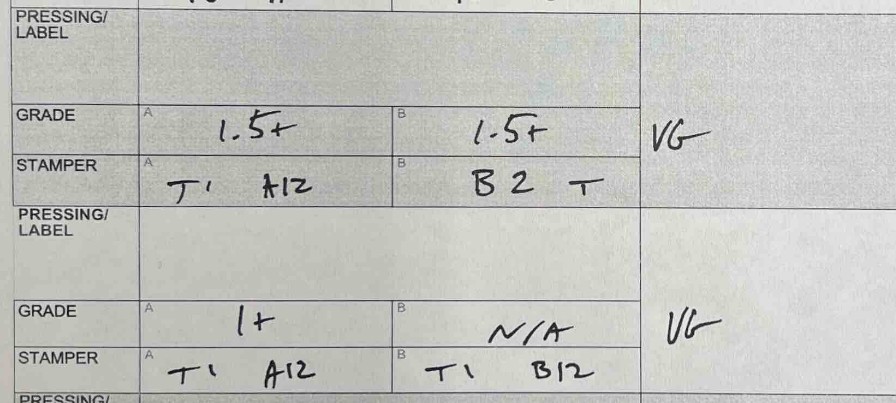
The section of the stamper sheet we wrote up after our most recent shootout belongs to George Benson’s White Rabbit album, the one released by CTI in 1972.

We think these stampers illustrate an important reality regarding the variability of record pressings, and it’s one that we run into on regularly during shootouts.

Keep in mind that the notes you see were made without the listener knowing what the stamper numbers were for the copy being evaluated.

Some relevant facts:

  • Rudy Van Gelder cut all the original domestic pressings for the album that we played in our shootout since those are the only ones we know of to have the potential for Hot Stamper sound. (Hint: forget the reissues, imports, etc.)

(more…)

Audiophiles Should Skip Swingin’ the ’20s on OJC

Hot Stamper Pressings of Contemporary Jazz Records Available Now

This album is fairly common on the OJC pressing from 1988, but more recently we’ve found the sound of the OJC pressings we’ve played seriously wanting. They have the kind of bad reissue sound that plays right into the prejudices of record collectors and audiophiles alike, the kind for whom nothing but an original will do.

They were dramatically smaller, flatter, more recessed and more lifeless than even the worst of the ’70s LPs we played. (We tend to like those, by the way.)

The lesson? Not all reissues are created equal. Some OJC pressings are great — including even some of the new ones — some are awful, and the only way to judge them fairly is to judge them individually, which requires actually playing a large sample.

Since virtually no record collectors or audiophiles like doing that, they make faulty judgments – OJC’s are cheap reissues sourced from digital tapes, run for the hills! – based on their biases and reliance on inadequate sample sizes.

You can find those who subscribe to this approach on every audiophile forum there is. The methods they have adopted do not produce good results, but as long as they stick to them, they will never have to worry about discovering that inconvenient truth.

(more…)