phony-detail

Many audiophile recordings and remasterings are leaner and cleaner, producing a phony kind of transparency and detail at the expense of the fullness and richness of the original recording.

This is almost never a good thing.

Music Matters – Tizzy Cymbals and a Bright Snare Drum, That’s Your Idea of Audiophile Sound?

Hot Stamper Pressings of Blue Note Albums Available Now

UPDATE 2026

This review was written in 2021.


An audiophile hall of shame pressing and a Heavy Vinyl disaster if there ever was one (and oh yes, the audiophile world is practically drowning in them).

After discovering Hot Stampers and the mind-blowing sound they deliver, a new customer generously sent me a few of his favorite Heavy Vinyl pressings to audition, records that he considered the best of the modern reissues that he owns.

He admitted that most of what he has on Heavy Vinyl is not very good, and now that he can clearly hear what he has been missing, having heard some of our best Hot Stamper jazz pressings, he is going to be putting them up on Ebay and selling them to anyone foolish enough to throw their money away on this kind of junk.

We say more power to him.  That money can be used to buy records that actually are good sounding, not just supposedly good sounding because they were custom manufactured with the utmost care and marketed at high prices to soi-disant audiophiles.

Audiophile records are a scam. They always have been and they always will be.

I haven’t listened to a copy of this album in a very long time, but I know a good sounding jazz record when I hear one, having critically auditioned more than a thousand over the course of the 33 38 years I have been in business. (To be clear, we only sold verified good sounding records starting in 2004.)

I knew pretty early on in the session that this was not a good sounding jazz record.  Five minutes was all it took, but I probably wasted another ten making sure the sound was as hopeless as it initially seemed.

For those of you who might have trouble reading my handwriting, my notes say:

  • Bass is sloppy and fat.

The bass is boosted and badly lacks definition. It constantly calls attention to itself. It is the kind of sloppy bass that cannot be found on any RVG recording, none that I have ever heard anyway, and I’ve heard them by the hundreds.

(more…)

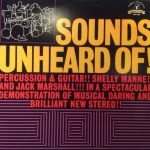
Sounds Unheard Of! – Another Analogue Productions Disaster

Hot Stamper Pressings Featuring Shelly Manne Available Now

Remember the 90s Acoustic Sounds Analog Revival series mastered by Stan Ricker? This was one of the titles they did, and completely ruined of course, as was the case with all the titles from that series that we played.

Ricker boosted the hell out of the top end, as is his wont, so all the percussion had the phony MoFi exaggerated sizzle and tizziness that we dislike so much around here at Better Records.

Yes, it’s the very same phony top that many audiophiles do not seem bothered by to this day. 

The whole series was an audio disaster, but oddly enough, I cannot remember reading a single word of criticism in the audiophile press discussing the shortcomings of that series of (badly) Half-Speed mastered LPs — outside of my own reviews of course. Has anything in audio really changed?

If I were to try to “reverse engineer” the sound of a system that could play this record and hide its many faults, I would look for a system that was thick, dark and overly smooth, with no real extension on the top end to speak of. Stan’s 10k boost — along with other the colorations he favors — is just what the doctor ordered for such a system.

I know that sound. I had a system in the 90s with many of the same shortcomings, but of course I didn’t know any of that.

I didn’t know what I didn’t know back then.

(more…)

MoFi’s Pictures at an Exhibition Is as Wrong as Wrong Can Be

moussmofiHot Stamper Pressings of the Music of Mussorgsky Available Now

If you like orchestral spectaculars, have we got the record for you.

It’s the same recording of the works, but the one you want is on the real EMI label and pressed on UK import vinyl, not this awful Half-Speed recut from Japan.

The record you see pictured is awful sounding, a true hall of shame pressing.

And why are the colors of the album jacket so washed out? Compare their cover to the real thing below. As we often find ourselves asking after reviewing one of these MoFi records: What were they thinking?

The MoFi mastering of Pictures at an Exhibition and The Firebird here are a bad joke played on credulous audiophiles. And yes, I bought them both back when they came out. I was as credulous as everybody else buying these so-called superior pressings.

All that phony boosted top end makes the strings sound funny and causes mischief in virtually every other part of the orchestra as well. Not surprisingly, those boosted highs are missing from the real EMIs.

These appear to be the unbearably bright strings that Stan Ricker favors — why, we have no idea.

The proof? Find me a Mobile Fidelity classical record with that little SR/2 in the dead wax that does not have bright string tone. I have yet to hear one.

The last time I played a copy of the MFSL I found the sound so hi-fi-ish I couldn’t stand to be in the room with it for more than a minute. Of course the bass is jello as well.

The EMI with the right stampers is worlds better.

(Warning: The domestic Angel regular version and the 45 are both awful.)

MoFi had a bad habit of making bright classical records. (More reviews here.) I suppose you could say they had a bad habit of making bright records in general. A few are dull, some are just right, but most of them are bright in one way or another.

(more…)

Brain Salad Surgery on Shout Heavy Vinyl

Hot Stamper Pressings of the Music of Emerson, Lake and Palmer Available Now

If you’re a fan of Emerson, Lake and Palmer’s fifth album, and you know, or at least suspect, that the British original pressings are more than likely to be better sounding than most, you might find yourself in a bit of a quandary, pocketbook-wise.

Early British pressings in audiophile playing condition aren’t easy to find, and they don’t tend to be cheap when you do find them.

Ah, but there is a fairly cheap and exceptionally easy solution: just buy the Shout Heavy Vinyl reissue from 2008.

It says it’s made from the master tape, it has a replica of the original packaging, and even comes with a poster.

What could go wrong?

The sound could be shit — NFG in our shorthand — that’s what could go wrong.

  • The top end could be overly-textured, tizzy and hot, the kind that constantly calls attention to itself.
  • The bass could be smeary and thick.
  • And the overall presentation of the music could be veiled and recessed.

Alas, the money you thought you were saving buying this potentially wonderful flat, quiet pressing made from the master tapes ends up flushed down the tubes. Now what?

Now you have to do what you should have done to begin with: find yourself a real British pressing.

(more…)

This MoFi Makes My Head Hurt

Hot Stamper Pressings of the Music of Richard Strauss Available Now

Is the painting on the cover that of a man whose head is suffering from the ridiculously shrill string tone of this MoFi?

Doubtful. Impossible actually. But that’s exactly how my head feels when I play one of these awful MoFi classical LPs.

Their rock, pop and jazz remasters were hit and miss in the old days, with some real winners hidden amongst the junk, but their classical releases that I’ve played, without exception, was a dog.

Want a good way to know you’re dealing with bad records and collector mentality?

When you find one of these records in your local used record store, it is almost guaranteed to be pristine.

Good records get played. MoFi’s classical releases, like plenty of other classical records audiophiles found attractive, got collected and spent most of their days sitting on a shelf, out to pasture so to speak.

(more…)

MoFi Sure Added Plenty of Sparkle to These Acoustic Guitars

Hot Stamper Pressing of the Music of Ry Cooder Available Now

This review is from many years ago. Hard to imagine I would not still agree with it though.

As you probably know, the MoFi of Jazz goes for big bucks nowadays — $500 and up. Is it worth it? 

You’ve got to be kidding. It’s a nice record as far as it goes, but it suffers from the same shortcomings as just about every Mobile Fidelity pressing we bother to play these days (with some obvious exceptions of course).

We have a test pressing, and knowing that the MoFi is the standard against which many audiophiles prefer to judge our Hot Stampers, we listened to it first before going about our comparison test.

Our MoFi copy is actually tonally correct, which was a bit of a surprise. (Yours of course could very well be otherwise.)

Right away we could hear exactly what people like about it, the same thing that has always impressed audiophiles about half-speed mastered records: their often outstanding transparency.

Jazz on MoFi has zero-distortion, utterly clear, spacious, see-through sound.

But listen past that and what do you hear?

Don’t those guitars seem to have that MoFi Tea-for-the-Tillerman “sparkly” quality you hate: all pluck and no body, all detail and no substance?

Nothing has any weight.

Nothing has any solidity.

Nothing has any real life.

It’s pretty, maybe, but it sure ain’t right.

It’s the kind of sound that shouts out to the world “Hey, look at me, I’m an audiophile record! See how I sound? So clear! So clean!”

Which isn’t bad for about two minutes, and then it’s positively insufferable.

(more…)

On Dark Side of the Moon, “Breathe” Is a Good Check for Midrange Tonality

Hot Stamper Pressings of the Music of Pink Floyd Available Now

Breathe is my favorite test track for side one for any version of Dark Side Of The Moon, Half-Speed or otherwise. When the voices come in about halfway through the song, you can tell that most copies are too bright simply by listening to the vocals on this track. The cymbals might sound wonderful; lots of other instruments might sound wonderful; and there might be plenty of ambience, detail and transparency.

But all of that counts for nothing if the voices don’t sound right.

And far too many copies have the voices sounding bright, aggressive, grainy and transitory. (This is unfortunately the case with the 180 gram 30th anniversary edition. That pressing will wake up a sleepy stereo, but my stereo hasn’t been sleepy enough to play that recut for a very long time, and I hope you can say the same.)

The discussion below may shed light on some of the issues involved in the remastering of Dark Side.

Of course, most audiophiles are still under the misapprehension that Mobile Fidelity, with their strict ‘quality control’, which they spend hundreds of words explaining on their inner sleeves, eliminates pressing variations of these kinds.

Isn’t that the reason for Limited Edition Audiophile Records in the first place? The whole idea is to take the guesswork out of buying the Best Sounding Copy money can buy.

But it just doesn’t work that way. I hate to be the bearer of bad news, but our entire website is based on the proposition that nothing of the sort is true. If paying more money for an audiophile pressing guaranteed the buyer better sound, 99% of what we do around here would be a waste of time.

(more…)

This Mercury Is Not a Good Way to Enjoy Tchaikovsky’s 4th

More of the Music of Tchaikovsky Available Now

The pressings we’ve played of SR 90279 over the years tended to have crude and shrill sound. The string tone was bright and steely.

In our most recent shootout for the work, since we happened to have one in stock, we figured we would give the Mercury one more chance, just in case we had finally stumbled on some good stampers or that other improvements to our playback would allow the hidden virtues of the recording to be revealed. (Yes, thankfully that is still happening. So is the reverse; some records don’t do as well in shootouts as they used to, a reality every audiophile has to be on the alert for, a subject we discuss here.)

It probably lasted less than five minutes on the table.

It was simply too unpleasant to be played on the revealing modern equipment we use.

It seems that many early Mercury recordings suffer from these shortcomings. My guess would be at least half, maybe even closer to two out of three.

Waking Up

If your system is dull, dull, deadly dull, the way some audiophile systems tend to be, this record has the hyped-up, bright and aggressive sound to bring it to life in no time. (If you’re a fan of MoFi pressings from the 70s and 80s, you definitely have a much smoother top end than we do. Most of the records they made in those years are way too bright and full of the kind of phony detail that some systems need to wake them up. I should know; I had one of those systems myself, but of course I didn’t know it at the time and would have gone to the mat to deny the accusation.)

There are scores of commentaries on the site detailing the huge improvements in audio available to the discerning (and well-healed) audiophile. It’s the reason Hot Stampers can and do sound dramatically better than their Heavy Vinyl or audiophile counterparts: because your stereo is now good enough to show you the difference.

With a too-forgiving system, you will most likely continue to be fooled by bad records, just as I and all my audio buds were fooled thirty and forty years ago. Audio has improved immensely in that time. If you’re still playing Heavy Vinyl and audiophile pressings, there’s a world of sound you clearly don’t know you’re missing.

My advice is to get better equipment and spend as much time as you can learning to tweak and tune it. That will allow you to be better at recognizing bad records when you play them.

The Heavy Vinyl Route

If more vintage Mercurys had sound as bad as this one, we would happily admit that going the Heavy Vinyl route might make sense.

And there certainly are a lot of bad vintage pressings — we should know, we’ve played them by the hundreds — but the number of bad modern Heavy Vinyl pressings would give them a run for their money and then some.

Beyond this Tchaicovsky title, there are plenty of others we’ve run into over the years with too many sonic shortcomings. As a public service, here are about 60 of them, broken down by label.

(more…)

How Good Are the Later Reissues of The Bridge?

When we did this shootout ten years ago, we thought the reissues with the cover you see to the left actually sounded better than the original pressings, but we were wrong and we have to admit it, as painful as that may be.

True, we never cared much for the later reissues described below — the tan labels can be passable but fall well short of the standards we set now.

However, even the best orange label pressings from 1975 don’t sound as good to us now as we thought they did ten years ago.

They can be good, but in our experience they can never be great.

Great is the sound that can only be found on the best originals, and they win all the shootouts now.

The notes for the AFL pressing with the black label describe it as bright, phony and lean.

This is the kind of sound better suited to the stone age stereos of the past.

I should know. I had a stereo all the way up until the late-90s — not exactly stone age quality, but far from the sound we have now — that prevented me from hearing my records with the highest quality reproduction.

As a result of the shortcomings of my system, I was wrong about a lot of records. (I loved DCC back in those days. Not that many years later I would undergo a “deconversion” as my stereo and critical listening skills improved.)

Of course, I was convinced my stereo was fantastic. It sure sounded better to me than any other system I’d ever heard, and by a long shot.

I had been working with expensive stereo equipment for more than twenty years at that point. The system I had put together by then cost a lot of money, played at loud levels with great energy, was in a dedicated room, et cetera, et cetera.

Are the audiophiles of today making the same mistakes I made back then?

Probably, if not almost certainly, and the one test we can use to determine which audiophiles have made the least amount of progress in this hobby are those who play records like the ones on this list and find nothing wrong with them. Their defense? “They sound just fine to me and who are you to say otherwise?”

Well, we’re the guys who say “you don’t know what you’re missing, and we have the superior-sounding pressing to prove it.”

Which, of course, as is the way of these things, almost always falls on deaf ears, pun intended.

Bottom Line

As of 2024, it’s clear to us that the early pressings have the potential for the best sound, but that the reissues can still sound very good, certainly quite a bit better than any Heavy Vinyl reissue is likely to.

Want to find your own top quality copy?

(more…)

Something Phony This Way Comes

Here’s what we learned from a shootout many years ago.

Some copies sounded like they were Half-Speed mastered by Mobile Fidelity.

(This is not a compliment. We hate that label’s phony sound and we don’t know why so many audiophiles would want to put up with the colorations MFSL’s records were notorious for.)

  • They had a little something phony added to the top of Linda’s voice.
  • They had a little bit of suckout right in the middle of the midrange, the middle of her voice, and
  • They had a somewhat diffuse, vague quality, with sound that lacked the solidity we heard on the best pressings.

These hi-fi-ish qualities that we heard on so many copies reminded us of the kind of audiophile sound we decry at every turn. We’ve played literally hundreds and hundreds of MoFi’s and other Half-Speed mastered records over the course of the last forty plus years, and one thing we know well is what they sound like.

But think about it. What if you only had one copy of the album — why would you have more than one anyway? — and it had that Half-Speed sound?

You would simply accept that the recording obviously had those qualities. (This assumes you could be expected to recognize them in the first place.)

Let’s face it, most audiophiles can’t, or all these companies would have gone out of business and stayed out of business, and their out of print records would sell for peanuts, not the collector prices they bring on ebay and audiophile web sites.

(more…)