nfg/no

For a record to end up on this list, our review notes must say NFG or NO on at least one side.

Sometimes one side of the record will be passable, but the other side will be so awful it earns the “no f-ing good” grade.

Those of you who own these records may want to compare the two sides and listen for the differences we ascribe to them.

Did We Get The Power of the Orchestra Wrong, or Are These Just Bad Stampers?

Hot Stamper Pressings of Living Stereo Recordings Available Now

In 2007, we wrote the following review for The Power of the Orchestra, VCS 2659:

DEMO DISC QUALITY ORCHESTRAL SOUND like you will not believe. We put two top copies together to bring you the ultimate-sounding Pictures At An Exhibition. Folks, it doesn’t get any better than this for huge orchestral dynamics and energy.

I confess I badly misjudged this record over the course of the last few years. I remember liking it in the early ’90s; at that time it was the only Golden Age recording of Pictures whose performance moved me. I never liked the famous Reiner, LSC 2201, and Ansermet’s performance on London also lacks drive and coherency in my opinion.

I then went on to extoll the many virtues of the recording, making special mention of the brass, dynamics and bass, which you can read about here.

More recently we played a copy of VCS 2659 in one of our regular Pictures at an Exhibition shootouts and were not the least bit impressed by it.

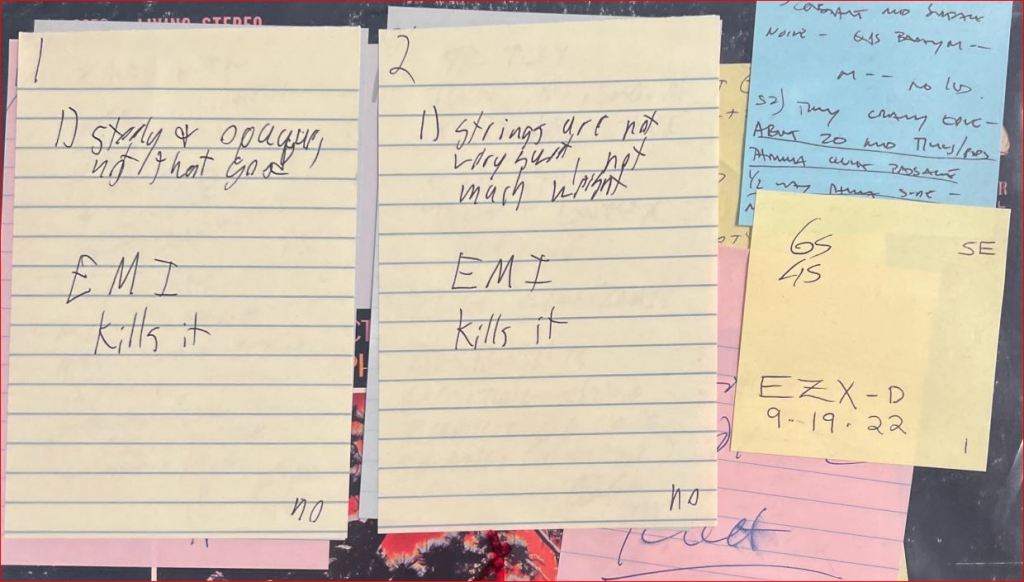
Side One:

Steely and opaque, not that good.

Side Two:

Strings are not very [unintelligible, might be bright], not much weight.

In other words, it just sounded like an old record.

(more…)

And to Think I Used to Like this Strauss Record

Hot Stamper Mercury Pressings Available Now

I used to like this Strauss Family Album back in the old days. Picked them up whenever I saw them, usually for ten bucks or less. They’re fairly common. It’s not exactly HiFi a la Espanola.

Now when we play this Mercury, it doesn’t sound so good. We traded what we had in stock back to stores or gave them away as freebies to our good customers.

A lot of records that I used to like because they were cleaner and brighter — later Red Seal Living Stereos, some OJC jazz, some reissues of rock — sounded much better when my system was darker and less revealing.

Side one of this copy has steely strings, the kiss of death on this kind of music.

Side two is passable, a low grade Hot Stamper. If you see this album for five bucks, pick it up and give it a listen. More than that and you should probably pass.

(more…)

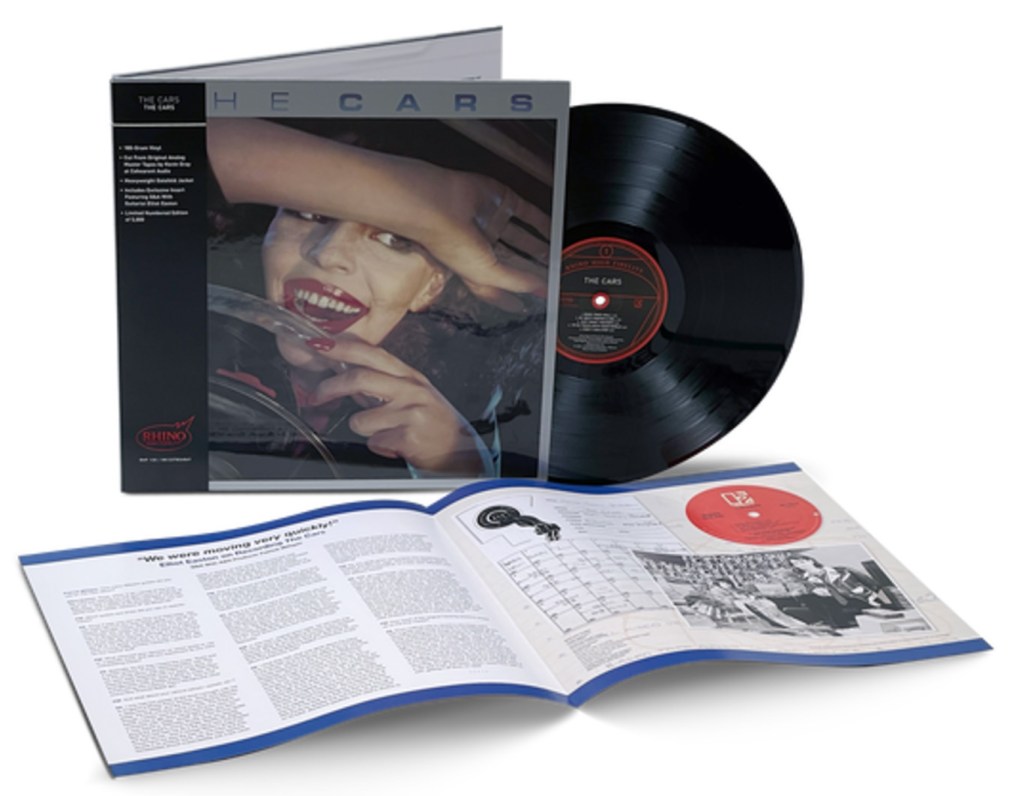
The Cars on Rhino – Man, This Record Is Bad

Hot Stamper Pressings of the Music of The Cars Available Now

I mean, really bad.

Kevin Gray has struck again. He’s a modern one man demolition crew, taking exceptionally well recorded analog albums and turning them into the vinyl equivalent of CDs, and bad CDs at that.

Steve Hoffman did the first Cars album on Gold CD and it sounds quite good. I still own mine. How can Kevin Gray, his former assistant, make such a mess of the album on vinyl?

This question has a rather obvious answer, and much of what we have to say about this record was said in our review of the disastrous Stand Up Gray cut for Analogue Productions.

Allow us to repeat ourselves:

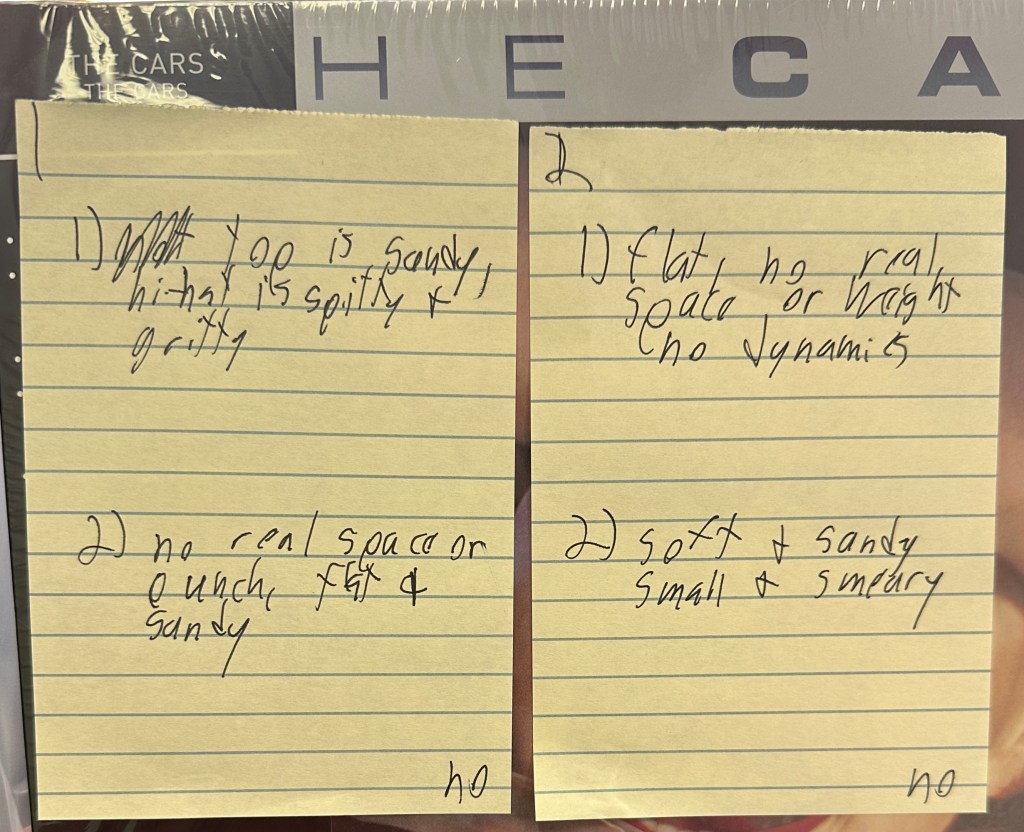
We were finally able to get our hands on the newly remastered Cars first album, a record we know well, having played them by the score. Our notes for the sound can be seen nearby.

If ever a record deserved a “no” grade, as in “not acceptable,” this new pressing mastered by Kevin Gray deserves such a grade, because it’s just awful.

Here is what we heard on side one of the new Cars remaster.

Good Times Roll

  • Top is sandy  [Sandy typically refers to transistory, dry, grainy, or gritty sound.]
  • Hi-hat is spitty and gritty

My Best Friend’s Girl

  • No real space or punch
  • Flat and sandy

You’re All I’ve Got Tonight

  • Flat
  • No real space or weight
  • No dynamics

Bye Bye Love

  • Soft and sandy
  • Small and smeary

Grant Green on Music Matters had many of these same problems. Unsurprisingly, it too was mastered by Kevin Gray.

How this guy is still getting work is beyond me.

I am clearly being facetious here. These guys get work because audiophiles will buy the records they master. The market has decided these records sound just fine, and who am I to say otherwise?

Of course, people can say anything they want about these records, opinions being worth what you pay for them.

We take a different approach. We will sell you the pressing of the album that can mop the floor with this Heavy Vinyl trash. We rarely have the first album in stock, but if you want one, just let us know and we will be glad to put you on the waiting list. Email Fred at fred@better-records.com.

Compared to What?

Is the Rhino pressing the worst version of the album ever made? In our view, it’s only competition would be this disaster, a record that also sold well back in the day. The more things change…

If I were to try to reverse engineer the sound of a system that could play this record and hide its many faults, I would look for a system that was thick, dark and fat, with plenty of tube colorations and no real top end to speak of.

I know that sound. I actually had a system thirty years ago with many of these shortcomings, but of course I didn’t have a clue about any of that. Like every audio enthusiast I met back then, I didn’t know what I didn’t know.

I’m glad to say things are different now, I think.

If you made the mistake of buying this record and can’t stand the phony top end, try covering your tweeter with something absorbent. Foam might work. Also you could try disconnecting your super tweeters if you have any. This is good advice for any record mastered by Stan Ricker as well.

Since that old school vintage tube sound takes the opposite approach to music reproduction that we’ve spent the last few decades working on here at Better Records — our goal being neutrality above all else — we are clearly not playing the record back on equipment that is capable of making it sound anything but godawful, hence our relentlessly negative reaction to the record.

On any properly setup, halfway decent stereo system, any original pressing with RTB in the dead wax should murder this Heavy Vinyl piece of junk. If you don’t have a system like that, we encourage you to get one. You will save a lot of money by not buying crap vinyl like this, only to discover later just how bad it sounds on the higher quality equipment you eventually end up with. (Here is some good news on that subject.)

Although, to be honest, if you are buying these kinds of awful records, it’s hard to see how you will ever get out of the hole you are in. Some audiophiles manage it, but I suspect that most never do.

You can also buy the CD — whether on DCC Gold or just whatever disc Elektra put out — and hear for yourself if it isn’t better sounding. I would be very surprised if it were not.

(more…)

For the Mendelssohn and Prokofiev Violin Concertos‎, These Are the Stampers to Avoid

Hot Stamper Pressings Featuring the Violin

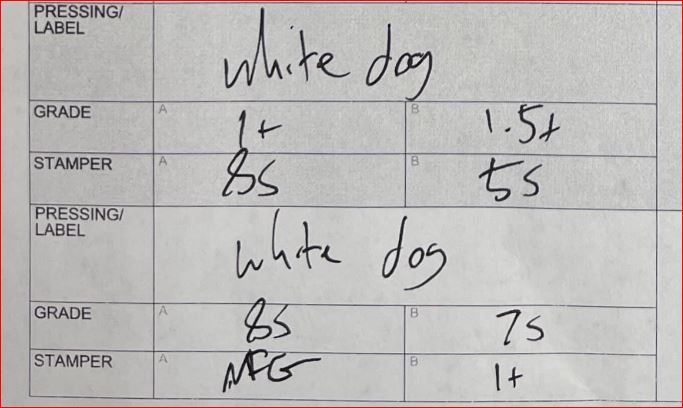
None of the White Dog pressings we played in our most recent shootout were better than mediocre, and the 70s Red Seal pressings were uniformly awful as well.

We had two different side ones with 8s stampers, and two different sides twos with 5s and 7s, respectively. (One of our Shaded Dogs had a 5s side two but it sounded quite a bit better than the White Dog side two with 5s.)

There are quite a number of other records that we’ve run into over the years with obvious shortcomings.

(more…)

Chad Has Served Poor Jethro Tull Most Barbarously

Hot Stamper Pressings of the Music of Jethro Tull Available Now

With a nod to our old friend, John Barleycorn.

We were finally able to get our hands on Analogue Productions’ newly remastered Stand Up, an album we know well, having played the British copies from every era by the score. Our notes for the sound can be seen below.

If ever a record deserved a “no” grade, as in “not acceptable,” this new 45 RPM pressing mastered by Kevin Gray deserves such a grade, because it’s just awful. (This link will take you to a great many more records best avoided by audiophiles in search of better sound. Although we’ve only linked to about 75 pressings here on the blog, it should be noted that the world is full of bad sounding records.)

But let’s put that grade in context. The last time a good sounding version of Stand Up was released, as far as we can tell, was 1989, and that version was the Mobile Fidelity Gold CD. I bought mine soon after it came out. I wasn’t even planning on buying a CD player when the Compact Disc was first invented, but then Mobile Fidelity played a dirty trick on me. Instead of releasing Loggins and Messina’s first album on vinyl, they put it out exclusively on CD as part of their Silver MFCD series.

As a die-hard MoFi fan, that sealed the deal: now I had to buy a CD player. I picked up a cheap Magnavox player, the 1040. I think it ran me less than $100, and played my new Sittin’ In CD, which, as I recall, sounded pretty good. (One of my other early CD purchases was Tumbleweed Connection, the regular label release, and it was dreadful.)

I still own Stand Up on Gold CD, and I still find it superb in every way. (Many of the MFSL Gold CDs from this era are excellent and worth seeking out.)

It sounds nothing like this new vinyl release, and that’s a good thing.

On vinyl, Stand Up has rarely been given the care it deserved. The last version of Stand Up to have sound we would want to listen to was pressed in the UK in the early ’70s. That was close to fifty years ago.

We sold some domestic pressings of the album back in the early 2000s, describing them at the time as made from dub tapes with all the shortcomings that entails, but mastered very well from dub tapes. The best domestic pressings are rich, smooth, tonally correct and natural sounding. They’re too dubby to sell as Hot Stampers, but they are not bad records. Some later Chrysalis pressings are big and open, but often they are too thin and bass-shy for the music to work. We’ve never taken them seriously.

It wasn’t long before we’d eliminated everything but the early UK pressings for our shootouts, and we quickly discovered that the earliest of the UK pressings on the older Island label were not good at all. We wrote about the problem with some originals more than ten years ago.

What was surprising about the shootouts we had done in past years was how disappointing most of the early British pressings we played were. They were flat, lacked energy and just didn’t rock the way they should have.

We learned the hard way that most British Pink label pressings aren’t especially rich, that some are small and recessed, and some are just so smeary, thick and opaque that they frustrate the hell out of you as you’re trying to hear what any of the musicians other than Ian Anderson is doing.

So when a reviewer comes along and says something positive about the new pressing compared to some unidentified original, we appreciate the problem that is at the root of his mistaken judgments:

Here’s the deal: if the goal was to duplicate the original pink label Island sound, this reissue misses that, which is good because this new double 45 reissue is far superior to the original in every possible way.

The tape was in great shape, that’s for sure. Clarity, transparency, high frequency extension and especially transient precision are all far superior to the original. Bass is honest, not hyped up and the mastering delivers full dynamics that are somewhat (but only slightly), compressed on the original. Ian Anderson’s vocals are naturally present as if you are on the other side of the microphone. Most importantly, the overall timbral balance sounds honest and correct. But especially great is the transient clarity on top and bottom.

If you’re fortunate to have an original pink label Island, at first you might think the sound is somewhat “laid back”, but that’s only because the mids and upper mids are not hyped up as they are on the original. That adds some excitement, but it clouds the picture and greatly obscures detail.

If you scroll down to our notes, you will see what we thought of the “laid back” sound this reviewer talks about. (Keep in mind that we first read the above review mere moments ago.)

We think “smaller, thick and stuck in the speakers” may be someone’s idea of “laid back,” but, just so there is no misunderstanding, it’s our idea of “awful.”

None of these are good things. Our Hot Stamper pressings are never small, thick or stuck in the speakers. They’re the records with the opposite of that sound. Our records are big, transparent and open. That’s why we can charge so much money for them and have people scooping them up from our Wednesday mailer the moment they become available.

They deliver the big, bold sound that the brilliant engineer for the album, Andy Johns, was known for. Laid back was not in his vocabulary.

Here is more of what we heard on side one.

Jeffrey Goes to Leicester Square

“Transients are sharp but body is dull. Kinda phony.”

Phony sound is the key here. Messing with the EQ in the mastering benefits some aspects of the sound at the expense of others.

Nothing new there. Audiophile pressings with wacky EQ are the norm. I would be surprised if any common Reprise pressing from back in the day wouldn’t sound more “right,” more tonally correct, more seamless. I’ve played quite a few and I don’t recall ever hearing one sound “phony.”

On side two we played the first two tracks.

(more…)

Ravel, Saint-Saens et al. / Tzigane, Havanaise / Kyung-Wha Chung

Hot Stamper Orchestral Imports on Decca & London

This 1979 London original English pressing of violin showpieces (reviewed in 2012) has Super Hot Stamper sound on side two, which came as a bit of a shock to us after playing side one, which is as congested and opaque as one would expect from such a late London recording.

A great many Decca recordings from the Seventies are not to our liking, for reasons we lay out here.

Side two is fabulous — full-bodied, rich and sweet. Even though it may have been recorded in 1977, the engineer is Kenneth Wilkinson, and the hall is Kingsway — not many bad recordings can be attributed to either.    

But bad mastering or bad pressing quality are surely not the fault of either. When the record doesn’t come out of the oven right, the sound is going to suffer, and the sound on this side one is insufferable all right.

But side two is GLORIOUS, with wonderful music played with skill and feeling. (more…)

How Do the Butterfly and Small Red E Pressings Sound on Strange Days?

Hot Stamper Pressings of the Music of The Doors Available Now

The Butterfly and Small Red E labels are so contemptibly thin and harsh they are not worth the vinyl they were pressed on.

You would be much better off with the DCC Gold CD than any of the reissue vinyl we’ve played.

The fact of the matter is that good digital beats bad analog any day.


This a Must Own Record, a 1967 recording with unbelievable RAW POWER. Most audiophiles very likely have no idea how well recorded this album is, simply because most pressings don’t do a very good job of translating the energy and life of the master tape onto the vinyl of the day.

The second Doors album is without a doubt one of the punchiest, liveliest, most POWERFUL recordings in the entire Doors catalog, right up there with their debut.

I’m guessing this statement does not comport with your own experience, and there’s a good reason for that: not many copies of the album provide evidence of any of the above qualities. Most pressings are opaque, flat, thin, veiled, compressed and lifeless. They sound exactly the way so many old rock records sound: like any old rock record.

Botnick Knocks It Out of the Park

But this album is engineered by Bruce Botnick. The right pressings give you the kind of low-end punch and midrange presence you hear on Love’s first album (when you play the right gold label originals). Botnick engineered them both, and what’s even more amazing is that The Doors second is in many ways an even better recording than Love’s!

Very tubey from start to finish, the energy captured on these Hot Stampers has to be heard to be believed. Not to mention the fact that the live-in-the-studio musicians are swimming in natural ambience, with instruments leaking from one mic to another, and most of them bouncing back and forth off the studio walls to boot.

But the thing that caught us most by surprise is how much LIFE there is in the performances on the better Hot Stamper copies. Morrison pulled out all the stops on songs like Love Me Two Times and the last track on the album, When the Music’s Over. Unless you have a very special pressing there is almost no chance you will ever hear him with this kind of raw power.

Top 100? If we could find more than a sporadic few clean, good sounding copies each year it would surely make the list, joining the other two of the band’s first four albums on there now.

The D4/D5 Stereo Pressings Are Just Awful on My Fair Lady

Hot Stamper Pressings Featuring Shelly Manne Available Now

In our experience, the Black Label stereo originals with D4/D5 stampers are terrible sounding.

With those stampers, My Fair Lady is undoubtedly a hall of shame pressing, as well as another early pressing we’ve reviewed and found wanting.

Both sides graded “No,” our not-especially-technical term for a record that sounds really bad.

Notes for Side One:

Track one is bright and unnatural up top. Track two is not very musical.

Notes for Side Two:

Track one is very weird sounding, thin and small.

(Obviously there was no need to play a second track.)

As you may have read elsewhere on the site, some Contemporary label originals are very poorly mastered, which should put paid to the idea that Hot Stampers are only, or even usually, original pressings.

In our most recent shootout, the second-best sounding pressing was on the early Black Label. We would love to give out the stampers for that one, but we don’t do that.

(more…)

The 45 RPM Classic Records Repress Is Another in a Long String of Failures

More of the Music of Dave Brubeck

Sonic Grade: F

An Audiophile Hall of Shame pressing and another Classic Records Jazz LP.

Not long ago we found a single disc from the 45 RPM four disc set that Classic Records released in 2002 and decided to give it a listen as part of our shootout for the album.

My notes can be seen below, but for those who have trouble reading my handwriting, here they are:

  • Big but hard
  • Zero (0) warmth
  • A bit thin and definitely boring
  • Unnatural
  • No fun
  • No F***ing Good (NFG)

Does that sound like a record you would enjoy playing? I sure didn’t.

But this is the kind of sound that Bernie Grundman managed to find on Classic Record after Classic Record starting in the mid-90s when he began cutting for them.

We’ve been complaining about the sound of these records for more than twenty years but a great many audiophiles and the reviewers who write for them told us we wrong.  If you have a copy of this album on Classic, at 33 or 45, play it and see if you don’t hear the problems we ascribe to it.

To see what we had to say about the 33 RPM version on Classic many years ago, click here.

Maybe we got a bad 45 and the others are better. That has not been our experience.

In these four words we can describe the sound of the average Classic Records pressing.

Not all of their records are as bad sounding as Time Out. We favorably review some of the better ones here.

(more…)

Beethoven / Symphony Nos. 1 and 8 / Ansermet – Good on Only One Side? Yes, It Happens

More of the Music of Ludwig van Beethoven

This Super Hot Stamper side one London Whiteback LP (CS 6388) gives you a wonderful sounding Beethoven First Symphony. It’s rich, sweet and Tubey Magical in the tradition of the best Ansermet recordings from the era.

Unfortunately the second side with the 8th Symphony is awful — hard, shrill and definitely not worth your time.

Good sounding Beethoven symphony recordings are few and far between, and this one is very good indeed. (more…)