Record Mysteries

Perhaps you can explain these record mysteries. We sure can’t.

3s Can Have Amazingly Good Sound, or 3s Can Have Mediocre Sound

Hot Stamper Pressings of Living Stereo Recordings Available Now

But how can you tell which 3s copies sound amazing and which 3s copies don’t?

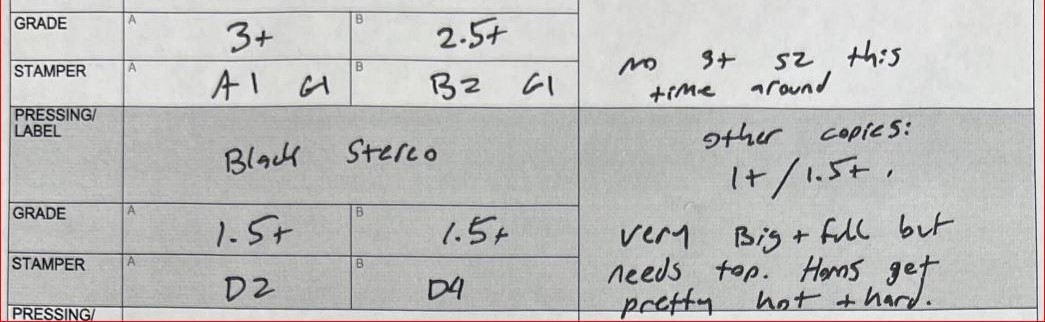
Below you will see the stamper sheet for a shootout we did not long ago.

A lot of our stamper sheets look like this one, close to half I would guess.

As you can see, the stampers and the sound are all over the map. This is not the least bit unusual in our experience. It’s simply the nature of records — they tend to come off the press with very different sound depending on factors that no one seems to understand very well, not even us!

Note that the album you see pictured is not the record we did the shootout for.

(more…)

You Say Your Shaded Dog Just Sounds Like an Old Record?

Hot Stamper Pressings of the Music of Tchaikovsky Available Now

The better pressings of LSC 2328 have some of the best sound we have ever heard for The Nutcracker. We’ve played recordings of the work by the dozens, on the greatest Golden Age labels of all time, including the likes of Mercury, RCA and London. (Our current favorites of both the suites and the complete ballet are those conducted by Ansermet for Decca.)

The CSO, as one might expect, plays this work with more precision and control than most others. They also bring more excitement and dynamic contrasts to their performance, adding greatly to our enjoyment of the music.

Some may find the performances a bit rushed. That was our experience during our most recent shootout.

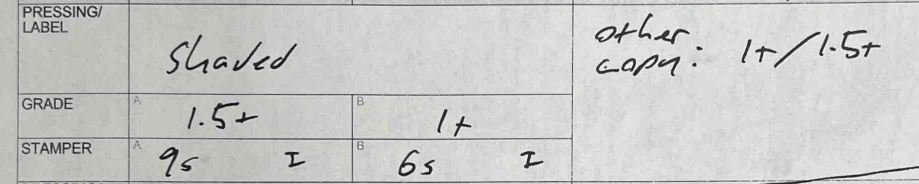
But skip 9s/6s. We had two copies and both of them sounded too much like an old record.

Pressings with those stampers might be passable, even to some degree enjoyable, especially when played on an old school system, but they would not be worth bothering with on the high quality modern equipment we use.

There are quite a number of other records that we’ve run into over the years with a catalog of obvious shortcomings — obvious to us but not necessarily to others — and we’ve broken them down into the three major labels that account for most of the best classical and orchestral titles we’ve had the pleasure to play.

(more…)

It’s Already So Good, How Could It Get Any Better?

Hot Stamper Pressings of the Music of Berlioz Available Now

You may have noticed that most of the time when we give out the stampers for the top copies of an album, we do not identify the title of the record that has those Shootout Winning stampers.

As you can imagine, our huge investments in research and development make up a big part of our costs, costs that accrue over the course of years, decades even, and that must eventually be passed on to our customers.

But this title is an exception, because we are telling you straight out that the 1K pressings of CS 6101, Music of Berlioz, are the way to go.

It turns out that both the early Decca pressings (SXL 2134) and the London Bluebacks were cut by Tony Hawkins.

It’s unfortunate that this record did not sell well when it came out in 1959, which explains why we could find no evidence of copies with any stampers other than 1K.

Not that the work of any other mastering engineers was in any way needed. Mr. Hawkins did a wonderful job on the copies we played than managed to reproduce the glorious, Golden Age All Tube analog sound of the master tape, which may sound  tautological as all get out but I assure you is not.

No, sadly for us, that glorious sound could be found on one and only one pressing, the one we graded 3+/3+.

No other pressing earned a top grade on either side. Whatever caused the amazing pressings to come out differently from the very good ones happened in the plating and pressing stages of manufacturing, an area that did not involve the work of any of the Decca mastering engineers.

(more…)

What Can You Learn from a Mercury Shootout Like This One?

Hot Stamper Pressings of Mercury Classical Recordings Available Now

The short answer is that you can’t learn much from this shootout, because we’re not telling you which title the stampers you see below belong to.

Be that as it may, in the case of this mystery title the conventional wisdom turns out to be correct — the earlier numbered pressings did better than the later numbered pressings, and the early labels did better than the later labels.

That happens a lot, and we are happy to admit that it does. Why? Because the experimental evidence — the datasay that is what happened.

As usual for posts in which the stamper sheet from a shootout is reproduced in its entirety, the stamper numbers shown below will belong to a different album than the one you see pictured.

These can be found under the heading of Mystery Stampers. Most of these posts will illustrate something to be learned from a Hot Stamper shootout, but because the information reveals the shootout winning stampers, the actual title of the record is rarely revealed.

Much more useful stamper information can be found using this link, which includes plenty of stamper numbers for specific titles that are best avoided by audiophiles looking for top quality sound. In addition, we post the winning and losing stampers for some titles that are an unreliable guide to good sound. Unreliable stampers are also quite common.

(more…)

On Security, Robert Ludwig Let Us Down, Big Time

Hot Stamper Pressings of the Music of Peter Gabriel Available Now

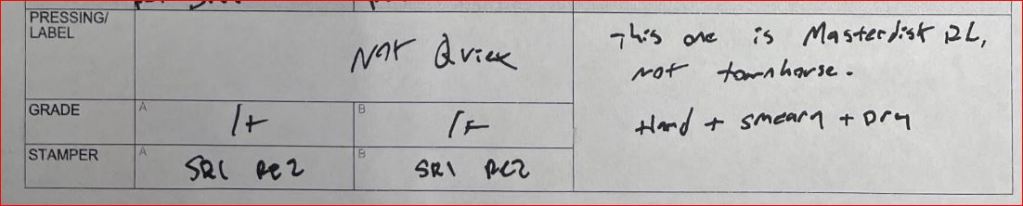
All the copies we had in our shootout were pressed domestically, and none of them were mastered by the legendary Robert Ludwig except for the one whose stampers you see below.

We awarded both sides of RL’s cutting a sub-Hot Stamper grade of 1+, which means the sound is passable at best, even after a good cleaning. (Without a good cleaning it would probably not even earn that single plus.)

We do not sell records with 1+ grades. We figure you can find those on your own. The world is full of them, as are most audiophile record collections.

1+ is actually a fairly good grade for many of the Heavy Vinyl pressings being made today. Some of the ones we’ve reviewed can be found in our Heavy Vinyl mediocrities section.

Any version of the album we sell will be noticeably — and probably dramatically — better sounding.

If you own any of those titles and didn’t pay much for them, you didn’t get ripped off too badly. You got something for your money. Not much, but something, and it would surprise us no end if any of them have been played much. Mediocre records tend to spend most of their lives sitting on record shelves. They’re not good enough sounding to bother with.

If you have any of these specific Heavy Vinyl pressings, something is wrong somewhere and it would be a good idea for you to figure out what before you flush any more money down the drain.

General Advice

On this title, forget the Brits. Every British pressing we played was badly smeared and veiled.

This took us somewhat by surprise because we happen to like the British PG pressings. However, So on British vinyl is awful too, so it’s clear (to us anyway) that the later PG records are bad on British vinyl and the early ones are better.

We are limiting our comments here to albums up through So. Anything after that is more or less terra incognita for us simply because we don’t care for any of the music he was making after 1986.

(more…)

So You Actually Think an OJC Can Beat an Original Black Label Contemporary?

Hot Stamper Pressings of Contemporary Jazz Albums Available Now

Yes, we think that, because that’s what the evidence from our most recent shootout in 2025 showed us.

As you can see from the stamper sheet below, the A1/B2 stampers of our OJC, in a blinded test, came out on top.

Better mastering equipment? Better mastering skills? Better vinyl? Better pressing methods?

Who the hell knows?

Better yet, what audiophile or record collector with a lick of sense would even pretend to know?

Not us, that’s for sure. At this point we are very comfortable not having answers for the unanswerable questions we posed above.

But don’t rush off to buy the OJC of the Sonny Rollins record you see pictured. This commentary has nothing to do with that record. (more…)

Artisan Let Us Down on These Early Green Label Pressings

Hot Stamper Pressings of the Music of James Taylor Available Now

Our most recent Shootout Winner was a very special copy indeed:

A wonderful copy of JT’s classic followup to Sweet Baby James with KILLER Shootout Winning Triple Plus (A+++) grades or close to them on both sides.

This early Green Label pressing demonstrates the Tubey Magical midrange that modern records almost never reproduce. The sound of most of the tracks on the better pressings is raw, real and exceptionally unprocessed.

The only pressings we put in shootouts these days are cut at Artisan, on transistor equipment we should note, but the kind of transistor gear that, to the best of our knowledge, no longer exists — the kind that transforms the Tubey Magic found on the tape into Tubey Magical grooves on the record.

Bernie Grundman used to have equipment like that back in 1971. The evidence is there for all to hear on records like this one. Oddly enough the two titles have remarkably similiar qualities.

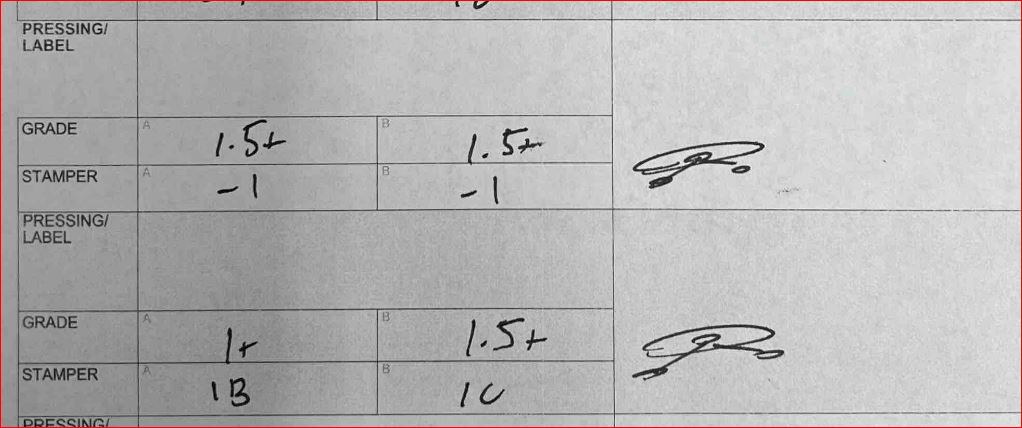
But not all Artisan cuttings are equal, as our stamper sheet from the shootout makes clear.

-1/-1 earned 1.5+ Hot Stamper grades, which means the sound is good, not great.

1.5+ is four grades down from the top copy. That’s a steep dropoff as far as we’re concerned. 1.5+ only hints at how good a recording Mudslide Slim can be on the best vintage Green Label Artisan-cut pressings. (For those who might be interested, there’s more on our grading scale here.)

1B/1C, the worst pressing from our shootout, is what we would consider passable. It’s not a bad sounding record, but it’s not good enough to qualify as a Hot Stamper.

The world is full of records that sound like the 1B/1C cutting of Mud Slide.

(more…)

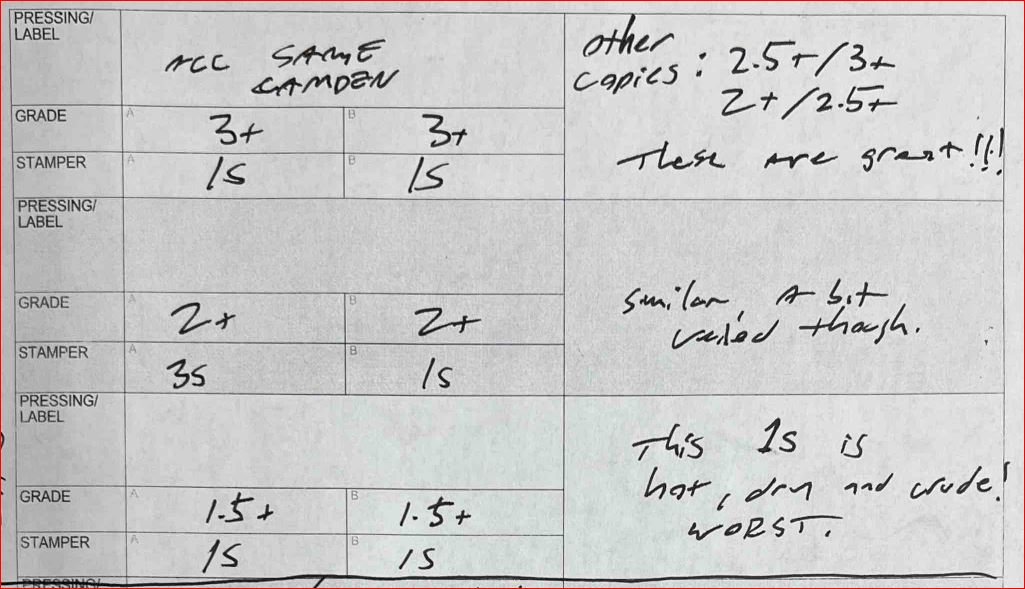
Does 1s Sound Great or Does It Sound Good (but Hot, Dry and Crude)?

Hot Stamper Pressings of Living Stereo Recordings Available Now

Below you will see the complete stamper sheet for a shootout we did recently.

Note that the album you see pictured is not the record we did the shootout for.

We are not revealing what record had these stampers and earned these grades for the simple reason that we rarely if ever give out the specific information that identifies the best sounding pressing of any album.

As I’m sure you can understand, we want you to buy the copy with the Hottest Stampers from us, not find one on your own! We’re happy to be moderately helpful, but naturally we find it necessary to draw the line somewhere, and giving out “the shootout winning stampers” is where we choose to draw it.

(more…)

This Rudy Van Gelder Cutting of Red Clay Is Good but…

xxx

… far from the best we played, earning barely Hot Stamper grades.

And we would be remiss if we failed to point out that the proper cleaning of your records will typically improve their sound quality by at least one half plus, and more often than not one full plus.

It’s very likely that neither of the A3/B3 copies you see below would have qualified as Hot Stamper pressings without the aid of a good cleaning.

Red Clay is one of our favorite CTI albums – Red Clay (the song and the album) is Hubbard’s soul jazz Masterpiece, and it’s a record that belongs in every audiophile’s jazz collection.

Lenny White drums up a storm on this album – on this copy he is playing right in the room with you. If you’re a Hubbard fan, or perhaps a fan of early-70s soul jazz, this title from 1970 is surely a Must Own.

Although Rudy recorded and mastered the album — the only pressings that qualified for the shootout were his — it should be noted that Van Gelder in the dead wax is never a guarantee of high quality sound, on any record.

(It’s easy to criticize the bad pressings of Rudy Van Gelder’s work, but let us not lose site of the countless great ones.)

This A3/B3 pressing was not awful, or even mediocre — the reissues without VAN GELDER in the dead wax would most likely be much worse sounding — but at 1.5+ we would say it has earned good, not great Hot Stamper grades.

The only way to guarantee higher quality sound is to do a shootout with a good-sized pile of cleaned pressings and find the one with the best sound using the rigorous testing methodologies we use.

For this kind of work, top quality playback is a must.

There is of course a way to avoid doing all that work and spending all that money on piles of pressings, most of which you will eventually have no use for, and that’s to buy a Hot Stamper copy of the album from us.

(more…)

Do The Original Domestic KC Pressings Always Beat the Later PC LPs?

Hot Stamper Pressings of Psychedelic Rock Recordings Available Now

Here is our description for the Super Hot (2+) copy that is currently on the site:

One of the most important records in my growth as an audiophile from 1971 to the present – my stereo was forced to evolve in order to play this kind of big production rock at the loud levels that the album needs in order to work its magic.

No matter how many times you play it, you will most likely hear – or at least gain more of an appreciation for – something new in the exceptionally dense, sophisticated soundfield Chris Kimsey creates for these songs.

And each time you make an improvement in the quality of your playback, this is the album that will show you exactly what you have just accomplished.
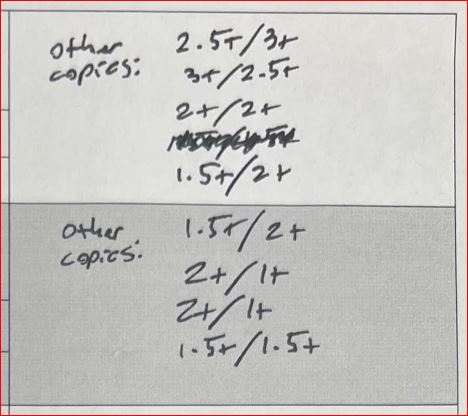

Overall, the best performers in our most recent shootout were UK pressings. They ranged in sound from the 3/3 Shootout Winning pressing (not shown) to the lowest graded British copy which earned grades of 1.5+/2+ (at the bottom of the top box).

On the left is a portion of the breakdown, minus the actual stamper numbers that earned the highest grades (for obvious reasons.)

We had six UK pressings, all with the same stampers — the five you see graded and the one hidden to the left that actually won the shootout. (Three sides earned White Hot Stamper grades, an unusual outcome and a good one for the bottom line.)

Note that with the “right stampers” you could have ended up with an incredible Demo Disc (copy #1) or just a very good sounding copy on side two mated to a passable side one (copy #6).

Finding six clean UK pressings is, as you can well imagine, neither cheap nor easy. We probably bought close to twice that many to end up with six that we’re in something close to audiophile playing condition.

As you can see from the grades, two of them were clearly inferior to the other four. In the case of this title, a small sample size could have been very misleading. Fortunately for us, we spent the money and the time it takes to track down a good-sized batch of UK pressings in order to avoid that possibility.

Next come the better domestic pressings. There was a 2+/2+ that outscored all the other domestic pressings, and four others that came in behind it, all with the same stampers.

Of the five copies that had those stampers, two had side two’s that scored sub-Hot Stamper grades, which marked them as unsaleable. (Perhaps we will offer them as one-sided records since their side one’s are so good.)
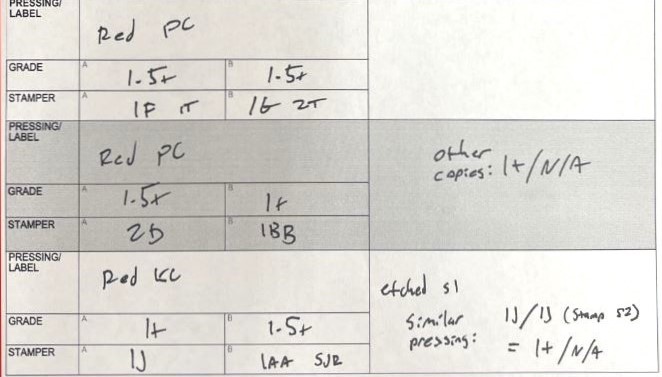
KC VS PC

We rarely have good luck with PC reissue copies when the originals come with the KC prefix, rarely meaning we find a PC winner maybe once out of every ten titles we play.

(more…)