Testing Dynamics

Taking Tiger Mountain – A Big Speaker Tour De Force

Hot Stamper Pressings of the Music of Brian Eno Available Now

If you have a big speaker and the kind of high quality playback capable of unraveling the most complex musical creations, with all the weight and power of live music, this is the record that will make all your audio effort and expense worthwhile.

Repeat As Necessary

Like Roxy Music’s first album, Taking Tiger Mountain is a powerhouse that not only rewards repeated listenings but requires them. Music like this simply cannot be digested at one sitting. Like the Beatles said, It’s All Too Much. But the more you hear it the more you will be able to understand it and appreciate it and, if you’re like me, really start to love it (I hope).

I’ve been listening to this album since the mid-70s and in all that time I have never tired of it. To me it’s the very definition of a Desert Island Disc: a record that knocks me out every time I play it and never wears out its welcome. It’s still fresh and “cutting edge” (if I can use that term) forty odd years after its release. (801 Live from 1976 is the same way.)

The Sound

This album is all about sound, pure sound itself if you will: the sound of the instruments, their textures, and the textures of the soundscape Eno has created for them. Much of that information is lost or perverted on the LP reissues and of course the CD. Only these British originals sound like they are made from fresh master tapes on rich, sweet tubey-magical, super high resolution cutting equipment.

With the subtle harmonics of Eno’s treated sounds captured onto vinyl intact, the magic of the experience far exceeds just another batch of catchy songs with clever arrangements. It truly becomes an immersive experience; sounds you’ve never heard in quite that way draw you into their world, each more interesting than the next.

Brian Eno and other Art Rockers of the period were clearly dedicated to making higher quality recordings, recordings that could only come to life in the homes of those with the most advanced audio equipment. Credit the work of the amazing Rhett Davies for some of the best albums of the 70s: this one, 801 Live, Diamond Head, Dire Straits’ first album, and more.

My system was forced to evolve in order to reproduce the scores of challenging recordings issued by Eno in the 70s. The love you have for your favorite music has to be the driving force of your progress in audio if you want to achieve world class sound.

(more…)

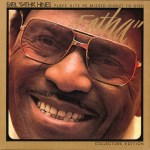
Fatha – Now That’s a Dynamic Piano

More Direct to Disc Recordings

Reviews and Commentaries for Direct to Disc Recordings

This review is from 2012, the first time we did a shootout (two copies!) for the album.

Of course, no shootout we would do these days would involve only two copies of an album. If we were to scold ourselves today for this silly exercise from back in 2012, it would look something like this: 

We encourage any audiophile who wants to improve the quality of his record collection to do some shootouts for himself. Freeing up an afternoon to sit down with a pile of cleaned copies of a favorite LP (you won’t make it through any other kind) and play them one after another is by far the best way to learn about records and pressing variations. Doing your own shootout will also help you see just how much work it is.

They are a great deal of work if you do them right. If you have just a few pressings on hand and don’t bother to clean them rigorously, that kind of shootout anyone can do. We would not consider that a real shootout. (Art Dudley illustrates this approach, but you could pick any reviewer you like — none of them have ever undertaken a shootout worthy of the name to our knowledge.)

With only a few records to play you probably won’t learn much of value and, worse, you are unlikely to find a top copy, although you may be tempted to convince yourself that you have. As Richard Feynman so famously remarked, “The first principle is that you must not fool yourself – and you are the easiest person to fool.”

Our 2012 Review for the Winner

This M&K Direct to Disc SMOKED the copy we played it against — the difference was NIGHT and DAY! The sound is smoother, sweeter, and richer than we are used to hearing for this album. There’s lots of space around the drums, and the tuba sounds awesome.

You aren’t going to believe how DYNAMIC this copy is — when Fatha’s really pounding on the keys, you’re gonna jump out of your chair. The overall sound is clean, clear, lively, and super transparent.

The edgy, hard piano sound that plagued our lesser copy is nowhere to be found.

This is especially good jazz piano music; Earl Hines plays up a storm on this album. The opening track, Birdland, with just a high hat, a tuba and Fatha on piano is worth the price of the disc alone.

Piano Testing

Lately we have been writing quite a bit about how pianos are good for testing your system, room, tweaks, electricity and all the rest, not to mention turntable setup and adjustment.

  • We like our pianos to sound natural (however one chooses to define the term).
  • We like them to be solidly weighted.
  • We like them to be free of smear, a quality that is rarely mentioned in the audiophile record reviews we read.

(more…)

Big Speakers and Loud Levels Bring Out the Power of the Orchestra

Hot Stamper LPs that Sound Their Best on Big Speakers at Loud Levels

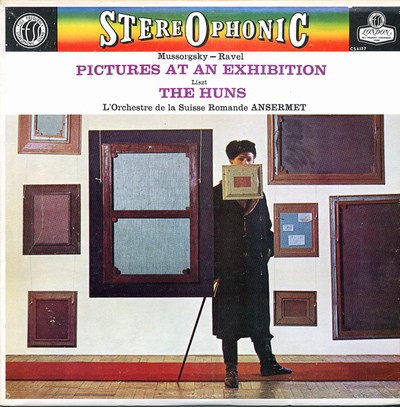
The darker brass instruments like tubas, trombones and french horns are superb here. Other Golden Age recordings of the work, as enjoyable as they may be in other respects, do not fully reproduce the weighty quality of the brass, probably due to limiting, poor eq, poor miking, or some combination of the three.

The brass on this record has the powerful weight and energy of live music like practically no other orchestral pressing we have ever played.

It’s also tonally correct. It’s not aggressive. It’s not irritating. It’s just immediate and powerful the way the real thing is when you hear it live. That’s what really caught my ear when I first played the recording.

There is a blast of brass at the end of Catacombs that is so big and real, it makes you forget you’re listening to a recording. You hear every brass instrument, full size, full weight. I still remember the night I was playing the album, good and loud of course, when that part of the work played through. The power of it was truly startling.

Back then I had the Legacy Whisper speaker system, the one with eight 15″ woofers. They moved air like nobody’s business. If you want to reproduce the power of the trombone, the loudest instrument in the orchestra, they’re the speaker that can do it.

Some of Ansermet’s recordings with the Suisse Romande are absolutely the best I’ve ever heard. It was a magical combination of the right hall, the right engineers, the right orchestra and the right technology — the pure tube ANALOG technology of the 50s and 60s!

Dynamics

Another thing this recording has going for it is dynamic power. This is a dynamic piece of music. Few recordings I have ever heard have the dynamic contrasts that this one does. It really gets loud when it needs to. The best pressings sound completely uncompressed. Although I’m sure there has to be compression of one kind or another, the listener is rarely made aware of it.

Dynamics such as these are thrilling. They let the music come alive.

(more…)

Dynamic Vocals Like Thelma Houston’s Require Really Big Speakers

houstivego

Hot Stamper Pressings of Direct-to-Disc Recordings Available Now

Unlike most Direct to Disc recordings, this album actually contains real music worth listening to — but only when the pressing lets the energy of the musicians through, accompanied, of course, by fidelity to the sound of their instruments.

Brass without bite is boring.

Drummers who drum too delicately will put you to sleep.

But the focus of this commentary is on dynamic vocals.

To Know You Is to Love You has the potential to come right at you in a shockingly powerful way. This lady can sing as loud as the best of all the greats.

It sounds like there is virtually no compression on Ms Houston’s vocals whatsoever. There has to be a limiter of some kind, but when she starts to really belt it out, you will not believe how powerfully she can sing. Might just give you goosebumps.

Don’t Misunderstand on side two has an equally dynamic vocal. It’s probably my favorite track on the album.

The loudest choruses of Got to Get You into My Life / I’ve Got the Music in Me are a tough test for any system as well.

This could easily be the most dynamic vocal album you have ever heard. It’s right up there at the top for us too.

(more…)

We Love Dynamic Choruses, and These Are Amazing

More of the Music of The Cars

The hottest of the Hot Stampers did one easily recognizable thing better than the Also-Rans, and it was apparent pretty much from the get-go. The multi-multi-multi-tracked Power Pop Choruses on the best copies don’t strain (a very common problem), they are bigger and more powerful, they stretch from wall to wall, and the voices that make them up are separated much more than on other copies. 

I won’t say you can make out all the players — there are dozens of tracks overdubbed together don’t you know — but you can surely make out some of the voices. At least you can if you have the kind of high resolution front end that we do. Big speakers help a lot too, creating more space for each voice to occupy.

Some copies are huge; others, not so much. The effect of these size differentials is ENORMOUS. The power of the music ramps up like crazy — how could this recording possibly be this BIG and POWERFUL? How did it achieve this kind of scale? You may need twenty copies to find one like this, which begs the question: why don’t the other 19 sound the way this one does? The sound we heard has to be on the master tape in some sense, doesn’t it? Mastering clearly contributes to the sound, but can it really be a factor of this magnitude?

My intuition says no. More likely it’s the mastering of the other copies that is one of the many factors holding them back, along with worn stampers, bad stampers, bad metal mothers, bad plating, bad vinyl, bad needles and all the rest — all of the above and more contributing to the fact that the average copy of this album is just plain average.

More Hot Stamper pressings with huge choruses

(more…)

Listening in Depth to Deceptive Bends

Hot Stamper Pressings of the Music of 10cc Available Now

If you are interested in digging deeper, our listening in depth commentaries have extensive track by track breakdowns for some of the better-known albums we’ve done multiple shootouts for.

Side One

Good Morning Judge

There’s a wonderful guitar duel in this song, but notice how the guitar in the right channel is softer than the one in the left. It’s the same way on every copy we played, so it must be that way on the tape. The guitar in the left channel is louder so it wins.

The Things We Do for Love

A big hit for the band on both sides of the pond, and as such, there’s always a touch of radio EQ to the lead vocals on this track. If you have an suitably transparent copy you’ll be able to hear that the background vocals actually sound much more natural. They’re tonally correct, assuming your copy is right enough in the first place to let you hear it.

Marriage Bureau Rendezvous

This track has wonderful Tubey Magical Tillermanesque guitars. They sound out of this world on a copy with the kind of clarity and sweetness found on the best pressings.

People in Love
Modern Man Blues

Side Two

Honeymoon With B Troop

Amazing DEMO DISC SOUND on the best copies! Some of the punchiest sound we have ever heard, bar none.

I Bought a Flat Guitar Tutor

This track has a richer, more relaxed sound than most of the rest of the album. The sparse instrumentation allows the various elements more room to breathe. On a Hot Stamper copy even the whistling will sound full-bodied.

This is Analog Magic at its best. The sound is effortless, completely natural, and totally free from any hint of hi-fi-ishness. Not one out of a hundred rock records has a track this well recorded.

As long as it’s not too bright. If it is it will spit like crazy.

(more…)

Listening in Depth to Fragile

yes__fragi_depth_1392743863Hot Stamper Pressings of the Music of Yes Available Now

Eddie Offord took charge of Yes’s engineering starting with Time and a Word (1970) and we are very glad that he did.

Although his masterpiece is surely ELP’s first album, both The Yes Album and Fragile are so amazingly well recorded they clearly belong at the top of any list of All Time Great Sounding Rock Albums.

Side One

Roundabout

You can tell by the sound of the opening guitar whether you have a copy that is tonally correct, has its ambience intact, as well as the proper leading edge transients to the strings plucks. Most of the reissues will sound either thin and edgy, or dull and blunted. On the best copies, that guitar will just sound out of this world.

Cans and Brahms
We Have Heaven
South Side of the Sky

What really separates the amazing copies from the merely good copies is the WEIGHT of the sound. The lower midrange is key in this regard. When you hear the piano on this track, it should have tremendous body and sustain to the notes. If the piano comes across at all anemic, the sound will be unbearably harsh.

Side Two

Five Per Cent for Nothing
Long Distance Runaround

This is one of the best sounding Yes tracks of all time. Jon Anderson’s voice is so present; he sounds as if he’s standing right between the speakers.

Fish (Schindleria Praematurus)
Mood for a Day

The top pressings exhibit amazing transparency and sweetness on this track. We would rate this one of the best rock acoustic guitar recordings on the planet. I’ve recently come to realize that this is actually a key track for side two. The guitar can sound midrangy and hard; too fat; blunted; and I’m sure lots of other ways.

And I’m talking about ONLY the best early pressings (the four digit ones). None of the later pressings sound any good to me at all.

This is where the surface noise will be most audible. After playing a number of copies, I noticed that there was always surface noise on this track, but not necessarily others. And then it dawned on me: the surface noise has to be spread evenly throughout the record; it’s on this track that you can actually hear it. The other tracks tend to be loud and little surface noise will ever be audible.

Heart of the Sunrise

My second favorite track on the album. All those aggressive guitar parts can be very irritating if you do not have a copy that’s cut properly, which in this case means smooth and full-bodied. Any thinness or edginess will be all but unbearable on this track.

The Reiner Sound Is A Demo Disc for Energy, Dynamics and Top End

Hot Stamper Pressings of Living Stereo Recordings Available Now

This review was written in 2010.

I don’t think we have found a Reiner Sound as nice as this one since then. 


UPDATE 2024

It may have taken us more than a decade and cost us a lot of money to get another shootout going, but this killer copy made it all worth it.


Wow, the first nice Reiner Sound on Shaded Dog to make it to our site. Why? Because the few copies we’ve run across that looked decent enough to clean and play were just too noisy to enjoy. Not many copies have survived the bad turntables of their day with all their top end and inner grooves intact, but we’re proud to say that this one has! 

This former TAS List record really surprised us on two counts. First, you will not believe how DYNAMIC the recording is. Of all the classical recordings we’ve played lately I would have to say this is THE MOST DYNAMIC of them all. 

I really don’t have the wattage to handle the explosively loud sections of these wonderful works, with their huge orchestral effects, dynamic contrasts that are clearly part of the composer’s intentions but ones that rarely make it from the concert hall to vinyl disc the way they do here. 

Second, there is simply an amazing amount of TOP END on this record. Rarely do I hear Golden Age recordings with this kind of ENERGY and extension up top. Again, it has to be some of the best I have heard recently.

This is of course one of the reasons the Classic reissue is such a disaster. With all that top end energy, Bernie’s gritty cutting system and penchant for boosted upper midrange frequencies positively guarantees that the Classic Reiner Sound will be all but unplayable on a proper set up system.

Boosting the bass and highs and adding transistory harshness is the last thing in the world that The Reiner Sound needs.

(more…)

801 Live – It’s All About the Bass (Except for that One Time When It Wasn’t)

Hot Stamper Pressings of 801 Live Available Now

This commentary was written in 2007 or thereabouts.

What’s especially interesting about this copy is that we went crazy for it even though it did not have the best bass of the copies we played, which, as you will see below, clearly contradicts what we had previously written. We thought that the copies with the best bass had the best everything else too, but that was not what we heard this time around.

THIS copy got the music to work its magic, and it did it with most, but not all, of the bass of the best. Not sure how to explain it. Rules were made to be broken maybe?  (more…)

Santana’s Guitar Solos Soar on Inner Secrets

Hot Stamper Pressings of Albums with Especially Dynamic Guitar Solos Available Now

On side two the final guitar solo Santana takes on Well All Right gets as loud in the mix as any guitar solo on any rock record that I know of (off the top of my head).

This link will take you to some of the other records with especially dynamic guitar solos we have auditioned to date.

The sound gets louder after the first chorus, then louder still right before the second solo, and then the solo itself gets even louder until it seems to be as loud as live music. (Operative word: seems.)

Does it seem odd to you that the only audiophiles writing about the amazing sound of this recording are those who happen to work for Better Records?

Oh, we’ve gotten pretty used to it by now. It’s mostly a function of two things: cleaning and playing lots of copies of the same album to find the ones with the incredible dynamics we’re discussing here, and playing them on big speakers at loud levels so that the power of the music gets reproduced in all its glory.

Two points to keep in mind:

  • Some copies get loud and some do not.
  • Some stereos are dynamic and some are not.

If you have the right stereo, set at the right volume, and the hottest of our Hot Stamper copies, you will hear something that not one out of one hundred audiophiles (or music lovers) have ever heard on a record — LIVE ROCK SOUND.

What makes it possible to play this record so loud and still enjoy it? Simple. Just like Nirvana, when the sound is smooth and sweet, completely free of aggressive mids and highs, records get BETTER as they get LOUDER. (This of course assumes low distortion and all the rest, but the main factor is correct tonality from top to bottom, and this record has it.) 

One reason the turn up your volume test is such a great test — the louder the problem, the harder it is to ignore.

(more…)