More Soul, Blues, and R&B
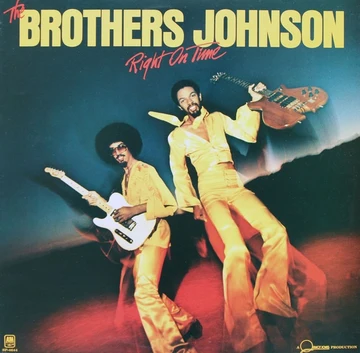
- Boasting two STUNNING Shootout Winning Triple Plus (A+++) sides, this vintage A&M pressing could not be beat
- A tough shootout, as no other copy earned a 3+ grade on either side, which simply means that when you find a top copy, it sets such a high standard that everything else ends up getting marked down
- The sound is huge – big, wide, deep, and open, with a punchy bottom end and rhythmic energy to spare, as well as cleaner, smoother, sweeter upper mids and a more extended top
- Analog at its Tubey Magical finest – you’ll never play a CD (or any other digitally sourced material) that sounds as good as this record as long as you live
- 4 1/2 stars: “An enjoyable and even infectious collection that, in its sophistication, certainly avoids being just some sort of dry run for [Quincy] Jones … producing Michael Jackson’s wildly successful Off the Wall and Thriller albums…”
This vintage A&M pressing has the kind of Tubey Magical Midrange that modern records can barely BEGIN to reproduce. Folks, that sound is gone and it sure isn’t showing signs of coming back. If you love hearing INTO a recording, actually being able to “see” the performers, and feeling as if you are sitting in the studio with the band, this is the record for you. It’s what vintage all analog recordings are known for — this sound.
If you exclusively play modern repressings of vintage recordings, I can say without fear of contradiction that you have never heard this kind of sound on vinyl. Old records have it — not often, and certainly not always — but maybe one out of a hundred new records do, and those are some pretty long odds.
What The Best Sides Of Right on Time Have To Offer Is Not Hard To Hear
- The biggest, most immediate staging in the largest acoustic space
- The most Tubey Magic, without which you have almost nothing. CDs give you clean and clear. Only the best vintage vinyl pressings offer the kind of Tubey Magic that was on the tapes in 1977
- Tight, note-like, rich, full-bodied bass, with the correct amount of weight down low
- Natural tonality in the midrange — with all the instruments having the correct timbre
- Transparency and resolution, critical to hearing into the three-dimensional studio space
No doubt there’s more but we hope that should do for now. Playing the record is the only way to hear all of the qualities we discuss above, and playing the best pressings against a pile of other copies under rigorously controlled conditions is the only way to find a pressing that sounds as good as this one does.
Standard Operating Procedures
What are sonic qualities by which a record — any record — should be judged? Pretty much the ones we discuss in most of our Hot Stamper listings: energy, vocal presence, frequency extension (on both ends), transparency, spaciousness, harmonic textures (freedom from smear is key), rhythmic drive, tonal correctness, fullness, richness, three-dimensionality, and on and on down the list.
When we can get a number of these qualities to come together on the side we’re playing, we provisionally give it a ballpark Hot Stamper grade, a grade that is often revised during the shootout as we hear what the other copies are doing, both good and bad.
Once we’ve been through all the side ones, we play the best of the best against each other and arrive at a winner for that side. Other copies from earlier in the shootout will frequently have their grades raised or lowered based on how they sounded compared to the eventual shootout winner. If we’re not sure about any pressing, perhaps because we played it early on in the shootout before we had learned what to listen for, we take the time to play it again.
Repeat the process for side two and the shootout is officially over. All that’s left is to see how the sides of each pressing match up.
It may not be rocket science, but it’s a science of a kind, one with strict protocols that we’ve developed over the course of many years to insure that the results we arrive at are as accurate as we can make them.
The result of all our work speaks for itself, on this very record in fact. We guarantee you have never heard this music sound better than it does on our Hot Stamper pressing — or your money back.
What We’re Listening For On Right on Time
- Energy for starters. What could be more important than the life of the music?
- Then: presence and immediacy. The vocals aren’t “back there” somewhere, lost in the mix. They’re front and center where any recording engineer worth his salt would put them.
- The Big Sound comes next — wall to wall, lots of depth, huge space, three-dimensionality, all that sort of thing.
- Then transient information — fast, clear, sharp attacks, not the smear and thickness so common to these LPs.
- Tight punchy bass — which ties in with good transient information, also the issue of frequency extension further down.
- Next: transparency — the quality that allows you to hear deep into the soundfield, showing you the space and air around all the instruments.
- Extend the top and bottom and voila, you have The Real Thing — an honest to goodness Hot Stamper.
Side One
Runnin’ For Your Lovin’
Free Yourself, Be Yourself
“Q”
Right On Time
Side Two
Strawberry Letter 23
Brother Man
Never Leave You Lonely
Love Is
AMG 4 1/2 Star Review
Potentially viewed as something of a warm-up for Quincy Jones before producing Michael Jackson’s wildly successful Off the Wall and Thriller albums, the Brothers Johnson’s first two releases spawned hits like “I’ll Be Good to You” and brought George and Louis Johnson to a mass audience of their own. (Louis, in fact, would go on to play bass on those first two sessions by the King of Pop.)
As with the Jackson discs, Jones creates a seamless mix of pop and funk on the Brothers sophomore release Right on Time, helping to create the group’s second chart-topper “Strawberry Letter 23” as well the equally effervescent, minor R&B hit “Runnin’ for Your Lovin’.” With Earth, Wind & Fire’s airy dancefloor hits in mind, the Brothers also deliver polished funk tracks like “Right on Time” and “Never Leave You Lonely,” as well as more pop-friendly material like “Free Yourself, Be Yourself” and “Love Is.”
And with one of the best jazz arrangers in the business behind the board, the Brothers couldn’t forgo some instrumentals here as well, specifically the breezy, funk-in-a-quiet-storm number “‘Q'” and the less intriguing, synthesizer jam “Brother Man.” An enjoyable and even infectious collection that, in its sophistication, certainly avoids being just some sort of dry run for Jones.