Testing Bass, Weight and Whomp

Venerable or Execrable? If It’s Athena the Chances Are Good It’s the Latter

Hot Stamper Pressings of the Music of Rachmaninoff Available Now

I spied an interesting quote on the Acoustic Sounds site many years ago:

“…Analogue Productions’ 45rpm remastering improves upon the venerable Athena LP release from the late 80s, with better dynamics and a fuller ‘middle’ to the orchestral sonority.” – Andrew Quint, The Absolute Sound, October 2010

For some reason Andrew uses the word “venerable” when a better, certainly more accurate term would have been “execrable.” Having played the record in question this strikes us as the kind of mistake that would not be easy to make.

Athena was a godawful audiophile label that managed to put out all of five records before going under, only one of which was any good, and it’s definitely not this one.

It was in fact the Debussy piano recording with Moravec, mastered by the venerable Robert Ludwig himself, a man who knows his classical music, having cut scores if not hundreds of records for Nonesuch and other labels in the 60s and 70s.

From the jacket:

Analogue Master Recording™

Unlike other remastering companies, Athena Records always uses the ORIGINAL ANALOG MASTER SESSION TAPES. In this case, The Master Lacquers were cut directly by Doug Sax at The Mastering Lab so you know it will sound superb.

Our Hot Stamper listing for the Vox pressing:

This famously good sounding Vox pressing os Symphonic Dances has been remastered a number of times, but you can be sure that the Hot Stamper we are offering here will beat any of those modern pressings by a wide margin in any area that has to do with sound (surfaces being another matter and one we won’t go into here).

The sound of this recording on the best pressings is dynamic, lively and BIG. The music just jumps out of the speakers, bringing the power and vibrant colors of a symphony orchestra right into your listening room. Guaranteed to put to shame 95% or more of all the classical records you own, even if you own lots of our Hot Stampers. [Can’t say I would agree with that in 2023.]

The bass is phenomenal on this recording, assuming you have a copy that has the bass cut and pressed right. This one sure does! Few Golden Age classical recordings from the 50s will have the kind of bass that’s found on this record.

(more…)

In the Market for New Speakers? See How Well They Handle the Energy of Far More Drums

Hot Stamper Pressings of the Music of Dave Brubeck Available Now

The drum solo Joe Morello lets loose on Far More Drums is one of the best on record. I was playing that song recently and it occurred to me that it is practically impossible for a screen or panel speaker of any design to reproduce the sound of those drums properly, regardless of how many subs you have.

Most of the music is not in the deeper bass anyway. It’s the whack of instruments whose energy is in the lower midrange and mid-bass that a screen speaker will struggle with.

A good large-driver dynamic speaker fed by fast electronics can handle the energy in that range with ease.

This is the album you need to take with you next time you head to your local stereo store to audition speakers.

It will help clarify the issues. Screen speakers do many things well, but drums are not one of them, at least in my experience they aren’t. If drums are important to you, do yourself a favor and buy a dynamic speaker, the bigger the better.

brubeck in the studio733

Time Further Out, like most of the classic Brubeck albums, is a big speaker record. It requires a pair of speakers that can move air with authority below 250 cycles and play at fairly loud levels. If you don’t own speakers that can do that, this record will never really sound the way it should.

(more…)

This Original British Tarkus Had the Sound Most Audiophiles Can Only Dream Of

Hot Stamper Pressings of the Music of Emerson, Lake and Palmer Available Now

To be clear, audiophiles who buy a shootout winning White Hot Stamper pressing from us don’t have to dream, but practically everyone else does, because copies that sound as good as this one are few and far between.

It’s an amazing find, the kind of record we live for here at Better Records.

We described the sound of our most recent shootout winning copy this way:

This original UK Island pressing was doing everything right, earning killer Triple Plus (A+++) grades from top to bottom.

Our recent monster shootout produced this incredible sounding British pressing on Island (the only way we offer the title) and it is stone guaranteed to rock your world.

Eddie Offord‘s trademark Tubey Magic, energy, resolution, whomp factor and dynamics are all over this phenomenal recording, and this pressing captured it all.

Here are the notes that back up everything we said, and more. We can’t put all the qualities we rave about into every listing. Who would believe us?

No other copy offered this kind of sound. It’s what we used to call AGAIG — As Good As It Gets.

3+/3+ records like this one go in our Top Shelf section, which currently holds 32 titles.

Records with at least one 3+ side go in this section, and there are 143 of those as of today, almost five times as many.

Eddie Is The Man

Tarkus is clearly a Demo Disc for big speakers that can play at loud levels.

The organ captured here by Eddie Offord (of Yes engineering fame, we’re his biggest fans) and then transferred so well onto our Hot Stamper pressings will rattle the foundation of your house if you’re not careful. This music really needs that kind of megawatt reproduction to make sense. It’s Big Bombastic Prog that wants desperately to rock your world. At moderate levels it just sounds overblown and silly. At loud levels it actually will rock your world.

All but the best Brit pressings have a tendency to be a bit turgid and many of them lack the bottom end weight that music like this absolutely must have to work its magic. There are some good domestic copies — not in a league with the best Brits at all — but most of them have sub-generation sound that robs the instruments of their immediacy and texture (much the same way that Heavy Vinyl does, truth be told).

(more…)

The Yes Album – Another Good Reason to Get Deeper into Audio

Hot Stamper Pressings of the Music of Yes Available Now

At its best, this album is a Big Speaker Prog-Rock opus with tremendous power and dynamic range, but it takes a special pressing to really bring the album to life. 

These guys — and by that I mean this particular iteration of the band, the actual players that were involved in the making of this album — came together for the first time and created the sound of Yes on this very album, rather aptly titled when you think about it.

With the amazing Eddie Offord at the board, as well as the best batch of songs ever to appear on a single Yes album, they produced both their sonic and musical masterpiece — good news for audiophiles with Big Speakers!

Drop the needle on a top copy and you will find yourself on a Yes journey the likes of which you have never known.

And that’s what I’m in this audiophile game for.

The Heavy Vinyl crowd can have their dead-as-a-doornail, wake-me-when-it’s-over pressings that are typically cheap to buy and tend to play quietly.  (Here’s one I couldn’t sit through with a gun to my head.)

The amount of effort that went into the recording of this album is comparable to that expended by the engineers and producers of bands like Supertramp, ELP, The Who, Jethro Tull, Ambrosia, Pink Floyd and far too many others to list.

It seems that no effort or cost was spared in making the home listening experience as compelling as the recording technology of the day permitted. Tubey Magical British Prog Rock just doesn’t get any better.

(more…)

Now That’s the Way a Piano Should Sound!

On the best copies the rich texture of the strings is out of this world — you will have a very hard time finding a DG with better string tone.

The best pressings of this recording have none of the shortcomings of the average DG: it’s not hard, shrill, or sour.

DG made plenty of good records in the 50s and 60s, then proceeded to fall apart, like most labels did. This is one of their finest. It proves conclusively that at one time — 1962 to be exact — they clearly knew exactly what they were doing.

Without question this is a phenomenal piano recording in every way.

I don’t know of another recording of the work that gets the sound of the piano better. On the better copies, the percussive quality of the instrument really comes through.

It’s amazing how many piano recordings have poorly-miked pianos.

These bad sounding pianos are either too distant, lack proper reproduction of the lower registers, or somehow smear the pounding of the keys into a blurry mess.

Are they badly recorded?

Or perhaps it is a mastering issue?

Maybe a pressing issue?

To be honest, it’s probably all three.

Lately we have been writing quite a bit about how good pianos are for testing your system, room, tweaks, electricity and all the rest, not to mention turntable setup and adjustment.

  • We like our pianos to sound natural (however one chooses to define the term)
  • We like them to be solidly weighted
  • We like them to be free of smear, a quality that is rarely mentioned in the audiophile reviews we read

Other records that we have found to be good for testing and improving your playback can be found here.

(more…)

On Trust, the Bass Is (Almost) All

Hot Stamper Pressings of Elvis’s Albums Available Now

Notes from a Hot Stamper shootout we did quite a while back.

There’s a TON of low-end on this record. Regrettably, most copies suffer from either a lack of bass or a lack of bass definition. I can’t tell you how much you’re missing when the bass isn’t right on this album. (Or if you have the typical bass-shy audiophile speaker, yuck.) 

It’s without a doubt THE SINGLE MOST IMPORTANT ASPECT of the sound on this album. When the bass is right, everything falls into place, and the music comes powerfully to life. When the bass is lacking or ill-defined, the music seems labored; the moment-to-moment rhythmic changes in the songs blur together, and the band just doesn’t swing the way it’s supposed to.

On the best pressings, you get the full-on bottom end WHOMP you paid for, with no loss in control. You can clearly follow Bruce Thomas’s bass lines throughout the songs, a real treat for any music lover. (He and Elvis don’t get along, hence the end of the Attractions as his backing band. I guess we should be thankful for the nine albums on which they were together; many of them are Desert Island Discs for me.)

Not only that, but the drums have real body and resonance, a far cry from the wimpy cardboard drum sound you’ll hear on most copies.

Hey, these are The Attractions: the pro’s pros. You can’t ask for better, and as expected they deliver big time on this album. But the mastering and pressing problems of most British copies typically make them sound half-hearted and uninspired, which is certainly nothing like what they sound like on the master tape. On the master tape, they play GREAT. You need a very special copy of the LP to hear them play that way, and that’s all there is to it. 

The better the pressing, the better the band.

A Must Own Title

This, along with My Aim Is True and Armed Forces, is as good as it gets for Elvis on LP.

All three are absolute Must Owns that belong in any serious rock collection. This is that rare breed of music that never sounds dated (especially considering the era in which it was produced). Music with real depth such as this only gets better with the passage of time. The more you play it, the more you appreciate it, and love it.

(more…)

Listening in Depth to Country Life

Hot Stamper Pressings of the Music of Roxy Music Available Now

The domestic, German, Japanese and Dutch pressings are not remotely competitive with the Brits on this album (which is not true for all Roxy’s albums but clearly true for this one, Siren being the obvious exception to the rule).

Now for those of you who are not big Roxy Music fans and don’t know this music, this album may take a bit of getting used to. We assure you it will be well worth your while. We think it’s brilliant.

And if you do consider yourself a fan of Art Rock, every Roxy album should be on your shelf, right up there with your Bowie, Pink Floyd, Supertramp, Eno, Peter Gabriel, 10cc and too many others to list. (Most are personal favorites of mine, albums I have played hundreds of times over the last 40 years and plan to keep playing until my ears give out.)

Side One

The Thrill of It All
Three and Nine

On the best copies this track is the very definition of Tubey Magical richness and smoothness.

All I Want Is You

A little thinner and brighter than the other tracks on this side as a rule.

Out of the Blue

The best guitar solo ever played on the violin. Go Eddie!

If It Takes All Night

Side Two

Bitter Sweet

The best copies have monstrous bass on this track, along with huge amounts of space. Again, the Tubey Magic can be off the charts here.

Triptych
Casanova

The vocals on this track will always spit to some degree. The cleanest, most tonally correct sibilance is what you are looking for on this track. That, and amazing rock energy!

A Really Good Time
Prairie Rose


Want to find your own top quality copy?

Consider taking our moderately helpful advice concerning the pressings that tend to win our shootouts.

(more…)

Listening for a Bit Too Much Tubey Magic Down Low on Buffalo Springfield

Hot Stamper Pressings of Personal Favorites Available Now

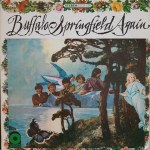
Note to customers: We rarely have Hot Stamper pressings of Buffalo Springfield available on the site, so albums with Stephen Stills or Neil Young playing on them are about the best we can do these days. We regret we must go many years between shootouts for this seminal band’s albums, two of which are personal favorites of mine and have been since they were first released, 1968’s (Again) and 1969’s (Last Time Around) Thank god my older stepbrother had good taste in music. I doubt that many 14-year-olds were playing Buffalo Springfield albums, but I was, even though most of the time it was on 8-track tape.


On even the best copies I regret to say there’s a bit too much Tubey Magic in the bass. Tubbiness and bloat were par for the course. This may explain why so many copies have rolled off bass; the engineer cut the bass because he heard how tubby it was and figured no bass is better than bad bass. 

Which is just not true. Cutting the bass leans out and “modernizes” the sound, making the voices sound thinner and dryer. Less rich. This pretty much ruins everything on this album, just the way it ruins everything in many of the modern recordings I hear.

Having your bass under control on the playback side isn’t easy — in fact it’s probably the hardest thing to achieve in audio — but it can be done, and with good bass control the slightly wooly bass is just a part of the sound you learn to accept.

It doesn’t actually interfere much with your enjoyment of the music, mostly because all the other instruments and voices sounds so magical.


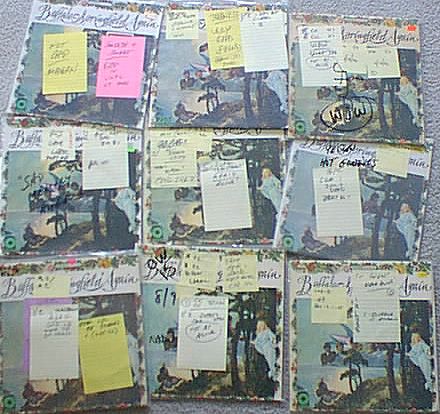
The post-it notes you see are very old, probably from the early 2000s.

Until we got our cleaning system sorted in 2007, shootouts for any of this band’s first three albums were going to be tough sledding, if not downright impossible.

In this commentary we describe what needed to change in order to make Buffalo Springfield shootouts a reality.


Want to find your own killer copy?

Consider taking our moderately helpful advice concerning the pressings that tend to win our shootouts. This album sounds its best:

(more…)

Listening in Depth to Famous Blue Raincoat

Hot Stamper Pressings of the Music of Leonard Cohen Available Now

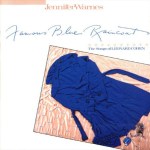
I’m a huge fan of this FBR. It’s the only album Jennifer Warnes ever made that I would consider a Must Own recording or a Desert Island Disc. Without question this is her Masterpiece.

Key Test for Side One

Listen to the snare drum on Bird on a Wire. On most copies it sound thin and bright, not very much like a real snare. Let’s face it: most copies of this record are thin and bright, and that’s just not our sound here at Better Records. If the snare on Bird sounds solid and meaty, at the very least you have a copy that is probably not too bright, and on this album that puts it well ahead of the pack.

While you’re listening for the sound of that snare, notice the amazing drum work of Vinnie Colaiuta, session drummer extraordinaire. The guy’s work on this track — especially with the high hat — is genius.

Key Test for Side Two

Listen to the sound of the piano on Song of Bernadette. If it’s rich and full-bodied with the weight of a real piano, you might just have yourself a winner. At the very least you won’t have to suffer through the anemically thin sound of the average copy.

Side One

First We Take Manhattan

Don’t expect this song to be tonally correct. It runs the gamut from bright to too bright to excrutiatingly bright. Steve Hoffman told me that he took out something like 6 DB at 6K when he mastered it for a compilation he made, and I’m guessing that that’s the minimum that would need to come out. It’s made to be a hit single, and like so many hit single wannabes, it’s mixed brighter than we audiophiles might like.

(more…)

The Greatest Beethoven Ninth on Vinyl – Ansermet in 1960

Hot Stamper Pressings of the Music of Beethoven Available Now

The legendary Ansermet recording from 1960 you see to the left is the best sounding Beethoven 9th we have ever had the pleasure to play here at Better Records.

Ansermet’s performance is clearly definitive to my ear as well. The gorgeous hall the Suisse Romande recorded in was possibly the best recording venue of its day, possibly of all time. More amazing sounding recordings were made there than in any other hall we know of.

Both sides are big, rich and clear, and both were showing us pretty much everything that’s good about a vintage symphonic recording.

There is a solidity and richness to the sound beyond all others, yet clarity and transparency are not sacrificed in the least.

It’s as wide, deep and three-dimensional as any, which is of course all to the good, but what makes the sound of these recordings so special is the weight and power of the brass, combined with unerring timbral accuracy of the instruments in every section of the orchestra.

The Chorus — Always a Tough Test

To get the chorus to play cleanly right to the very end is difficult for any pressing and this one is no exception. The chorus should play mostly without distortion or congestion even in the loudest parts, but we can’t say there won’t be a trace of one or both.

A good test of your turntable setup!

Production and Engineering

James Walker was the producer, Roy Wallace the engineer for these sessions from April of 1959 in Geneva’s glorious Victoria Hall.

The album came out in 1960, along with a great many other exceptional titles from the Golden Age of vacuum tube recording.

(more…)