Testing Bass, Weight and Whomp

The Best Pressings of Love Over Gold Have Surprisingly Natural Sound

Hot Stamper Pressings of the Music of Dire Straits Available Now

This modern album (1982) can sound surprisingly good on the right pressing.

On most copies the highs are grainy and harsh, not exactly the kind of sound that inspires you to turn your system up good and loud and get really involved in the music. I’m happy to report that the best pressings have no such problem – they rock and they sound great when playing loud.

We pick up every clean copy we see of this album, domestic or import, because we know from experience just how good the best pressings can sound.

What do the best copies have?

REAL dynamics for one.

And with those dynamics you need rock solid bass. Otherwise the loud portions simply become irritating.

A lack of grain is always nice — many of the pressings we played were gritty or grainy.

Other copies that were quite good in most ways lacked immediacy, and we naturally took serious points off for that.

The best copies of Love Over Gold are far more natural than the average pressing you might come across, and that’s a recognizable quality we can listen for and give weight to in our grading.

It’s key to the sound of the better pressings, which means in our shootouts it’s worth a lot of points. Otherwise you might as well be playing the CD.

Domestics or Imports?

(more…)

For Arcana, Speed Is Key

Hot Stamper Pressings on Decca and London Available Now

This is a recording that allows your speakers to disappear completely like practically no other. A powerful Test Disc as well. Use this one to check your speed and staging, subtle changes in your equipment can have a big effect on recordings like this

Incredible sound for this CRAZY 20th Century music, featuring wild and wacky works which rely almost exclusively on percussion (not one, not two, but three bass drums!). My favorite piece here may be Ionisation, which uses real sirens (the Old School ones cranked by hand) as part of Varese’s uniquely specialized instrumental array.

But the main reason audiophiles will LOVE this album is not the music, but the SOUND. Ionisation has amazing depth, soundstaging, dynamics, three-dimensionality and absolutely dead-on tonality — it’s hard to imagine a recording that allows your speakers to disappear more completely than this one.

It also makes a superb test disc. Subtle changes in your equipment can have a big effect on recordings like this.

The instrumental palette is large and colorful, giving the critical listener plenty to work with.

And this copy is perfect for testing because is is nearly FLAWLESS in its sound. No other copy could touch it. Many copies are not especially transparent, spacious or three-dimensional, and lack extension on both ends of the frequency spectrum.

The SPEED of the percussion is also critical to its proper reproduction.

No two pieces of electronics will get this record to sound the same, and some will fail miserably.

If vintage tube gear is your idea of the ultimate in sound, this record may help you to better understand where its shortcomings lie.

(more…)

Orchestral Music Is the Ultimate Test for Proper Turntable-Arm-Cartridge Setup

Hot Stamper Pressings of the Music of Stravinsky Available Now

Dorati’s performance of The Firebird for Mercury is excellent for adjusting tracking weight, VTA, azimuth and the like.

A huge and powerful recording such as The Firebird quickly separates the men from the boys when it comes to the honest recreation of an orchestra performing live in a concert hall.

Recordings of this quality are the reason $10,000+ front ends exist in the first place. Just ask Robert Brook.

You don’t need to spend that kind of money to play this record, but if you do, this might just be the record that will show you what you got for all your hard-earned dough.

Ideally you would want to work your setup magic at home with this record, then take it to a friend’s house and see if the same results could be achieved on his system.

I actually did this sort of thing for years.

Sadly, not so much anymore; nobody I know can play records such as these the way we can.

Playing and critically evaluating records all day, every day, year after year, you get pretty good at it. And the more you do it, the easier it gets.


UPDATE 2025

The above was written about ten years ago. By then I had learned enough to know that all the systems my audio friends owned were woefully inadequate to the proper reproducton of sonic blockbusters such as The Firebird. They simply hadn’t spent the money on their equipment or done the tweaking and tuning work that it takes to play a magnificent recording such as this.

It was about this time that I stopped visiting them. In my experience, mediocre sound is not simply a matter of being less enjoyable than good sound. In fact, I found it to be the opposite of enjoyable. It was frustrating, irritating and unpleasant, and I wanted no part of it. My friends couldn’t hear what was wrong — they had nothing better to compare the sound to. I knew how much better it could sound because I had the killer pressings and the highly-tweaked system that were able to work magic on orchestral spectaculars like The Firebird. (More on that subject here.)

By the way, Robert Brook can get your front end tuned up and working right.

We highly recommend his new service. It might just put you on the path to achieving the next level in audio. (You will definitely struggle to get there with a table, arm and cartridge that aren’t set up with a high degree of precision by a person who knows what they are doing, and Robert has been doing this work for years now.)


Properly set VTA is especially critical on this record, as it is on most classical recordings. The smallest change will dramatically affect the timbre, texture and harmonic information of the strings, as well as all the other instruments of the symphony orchestra of course.

(more…)

Face Value with Hugh Padgham’s Big Drum Sound

Hot Stamper Pressings of the Music of Phil Collins Available Now

There may be some hope for Hello, I Must Be Going! (1982), but Phil’s third album, 1985’s No Jacket Required, sounds digital and way too heavily processed.

I suppose not many albums from 1985 weren’t, but it’s still an unfortunate development for us audiophile types who might’ve wanted to enjoy these albums but are just not able to get past the ridiculously bad sound. (If we ever do a listing for it, you can be sure it will go right into our hall of shame.)

The recording of Face Value is still analog and the quality is excellent, thanks to hugely talented engineer and producer Hugh Padgham (Peter Gabriel, Genesis, The Police, Yes, Emerson, Lake & Palmer, etc.)

On the best copies, the sound is nothing short of superb.

Check out Phil’s take on Tomorrow Never Knows for some heavily reverbed vocal effects, complete with a slew of backwards psychedelic sounds. If anybody can play the weirdly syncopated rhythms of TNK, it’s Phil Collins.

Whomp!

Until we heard some of the better copies, we were never able to appreciate just how important bass definition and weight are to the sound of this record. When the bass is wooly or thin, as it is on so many copies — not clear, not deep, not full enough — it throws the rest of the mix off.

When the bass is huge and powerful, the music itself becomes huge and powerful.

The copies with the big bottom end are the only ones that really make you sit up and take notice of just how big the sound is. The best Hot Stamper pressings will be Demo Discs for bass on big speakers at loud levels. Here are some others you may enjoy reading about.

After moving into our new custom-built studio and spending a few months optimizing the room treatments, we now have even more transparency in the mids and highs, while improving the whomp factor (the formula goes like this: deep bass + mid bass + speed + dynamics + energy = whomp) at the listening position.

There’s always tons of bass being produced when you have three 12′ woofers firing away, but getting the bass out of the corners and into the center of the room is one of the toughest tricks in all of audio.

Transparency Is Key

Phil’s lead and harmony vocals are both breathy and present on the best copies, with natural, not hyped-up, texture, and harmonics. This is especially important for the love songs.

The many ballads on the album — This Must Be Love and If Leaving Me Is Easy are two of our favorites — don’t work unless the sound is intimate and immediate.

Only the best pressings have the high-resolution, full-bodied sound that allows both the rockers and the ballads to sound their best.

If you’re a fan of big drums in a big room, with jump out of the speakers sound, this is the album for you.

(more…)

English Settlement – A Sonic Tour de Force

More of the Music of XTC

This is an AMAZINGLY well-recorded album, with huge amounts of open studio space and that Tubey Magical, rich, fat, dense British Rock Sound. That sound isn’t easy to reproduce, but this copy absolutely nails it. Nothing else in our shootout came close to it!

If you have big speakers and the room to play them, this is quite the sonic tour de force. Credit Hugh Padgham, producer and engineer, who’s worked with the likes of Peter Gabriel, Genesis, The Police, Yes and Emerson, Lake and Palmer. Those bands make the kind of music that make good use of Padgham trademark sound: wall-to-wall, deep, layered, smooth, rich and stuffed to the gills. XTC with Padgham’s help have here produced a real steamroller of an album in English Settlement.

The big hit on this album is one that most audiophiles will probably know: Senses Working Overtime. Even over the radio you can hear how dense the production is. Imagine what it sounds like on an original British pressing with Hot Stampers, played on a modern audiophile rig. We can tell you: IT ROCKS. (more…)

Testing for Life-Size Images and Living Presence

Hot Stamper Pressings of the Music of Paul McCartney Available Now

On the song Blackbird Paul moves the microphone, scraping it along the floor, which causes a huge wave of bass to spread through the room.

I was over at one of my customer’s houses a while twenty years ago, doing some testing with electronics and tweaks, and I remember distinctly that the microphone stand was shrunken and lean sounding in a way I had simply never heard before.

Now this customer, whose system was in the $100K range, had no idea what that microphone stand could really do. I did, because I’ve been hearing it do it for years.

Some speakers can’t move enough air down low to reproduce that sound properly.

And some speakers, usually those with woofers under 12 inches, shrink the size of images.

These are many things to test for for in a given system, dozens and dozens in fact, but two of the important ones are these: if it doesn’t have a solid foundation (read: a big bottom end), and it doesn’t have correctly-sized images for the instruments, that’s a system that is failing in fundamentally important ways. 

If you close your eyes, you’re not in the presence of full-size musicians. Ipso facto, the fidelity to the live event has been compromised.

That’s precisely what makes this a good test disc. The band is right there.

To the extent that you can make them sound live in your living room, you are getting the job done.

The last bit of resolution is not the point. Full-sized live musicians in your living room is the point. Either Paul and his band are in front of you, or they’re not.

When they’re not, it’s time to get to work and find out what part of the system is not doing its job.

Hint: you can be pretty sure it’s the speaker. Most audiophile speakers are not very good at moving enough air. You need multiple large dynamic drivers with plenty of piston area to do the job correctly. Speakers of that design are usually large and expensive. I recommend the original Legacy Focus (not the current model) as the best sounding, most affordable full-size speaker on the used market.

Make Me Better

The bulk of this commentary was written in 2006. Most of it is based on what we had learned from the shootout we’d just done, our first for the album.

I bought my first copy of Unplugged upon its release. I credit it with helping me advance in this hobby of ours. Back in those dark days of the 90s, although I was completely clueless at the time about pretty much everything having to do with vinyl and equipment, I can take some solace in the fact that everybody else appeared to be as clueless as I was.

This blog is dedicated to sharing some of what I’ve learned — with the unflagging help of my staff of course — about records and audio over the last fifty years.

Testing with Unplugged

This record is good for testing all of the following areas, and here are some links to other titles that will also make good test records for those of you looking to improve the quality of your analog playback:

(more…)

The Insufficiently Dedicated Will Have a Fight on Their Hands with This One

A spectacular orchestral dreadnought such as this requires mastering and pressing of the highest quality.

Herrmann’s music taxes the limits of LP playback itself, with deep organ notes (listen for the famous Decca rumble accompanying the organ if you have the deep bass reproduction to hear it); incredible dynamics from every area of the stage; masses of strings playing at the top of their registers with abandon; huge drums; powerful brass effects everywhere — every sound an orchestra can produce is found on this record, and then some.

You will hear plenty of sounds that defy description, that’s for sure. Some of the time I can’t even imagine what instrument could possibly make such a sound!

Your Hard Work Pays Off

A recording of this size and scope will bring virtually any stereo system to its knees. This is the real Power Of The Orchestra! You had better have a top quality front end if you want to play this record properly, not to mention plenty of power and big speakers.

This is not the record for the weekend budget audiophile. If you haven’t put in the years of effort and invested the tens of thousands of dollars in equipment and room treatments it takes to play records of great difficulty such as this one, your system is probably not up to the challenge this album represents.

If, on the other hand, you’ve done the work and spent the money, this is the album that will show you what you have achieved.

Side One

Journey to the Center of the Earth

All those lovely harps! You can practically feel the cool air of the cave as you descend into the blackness.

The Seventh Voyage of Sinbad

Side one boasts some wonderful material from Jason and the Argonauts, including the fight with the skeletons that we all remember from our Saturday matinee movie days. Who else could have orchestrated such a film?

Side Two

The Day the Earth Stood Still

Astonishingly powerful deep bass and drum sounds!

Fahrenheit 451

One of our key tests for side two is the string tone on the Fire Engine sequence.

(more…)

We Was Wrong About The Beatles Magical Mystery Tour (Circa 1985-90)

Hot Stamper Pressings of the Music of The Beatles Available Now

This is a very old and somewhat embarrassing commentary about how ridiculously wrong we were about which are the best sounding German pressings of the Magical Mystery Tour.

Today we would never consider selling a record that sounds as phony as this version of the album does, but we did back in the 90s and probably as late as the 2000s.

Bad sounding records I once liked are common enough on the blog to have their own category, with 76 entries to date. If we had the time to make listings for them, there would surely be hundreds of others. If you’ve been in the audio game for as long as we have, you should have plenty of records that fit that bill. All those old records sitting on the shelves that you haven’t played in years might not sound they way you remember them, but the only way to know that is to pull them out and play them. If you’ve been making regular audio progress, most of them should sound better than ever, but there have to be plenty that won’t. You just don’t know which are which as long as they sit on the shelf.


This German pressing has sound that is dramatically different from that found on other Hot Stamper pressings of MMT we’ve had on the site. I used to be convinced that its sound was clearly superior to the regular German MMT LPs.

Back in the late 80s and into the 90s this was the pressing that I was certain blew them all out of the water.

We know better now. We call this version the “Too Hot” Stamper pressing — the upper mids and top end are much too boosted to be enjoyable on top quality equipment.

(more…)

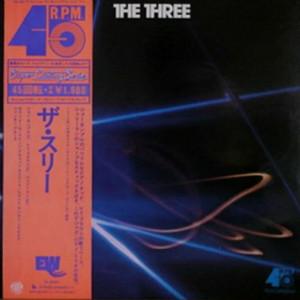
The Three at 45 RPM Has Energy Like No Recording We’ve Ever Heard

Hot Stamper Pressings Featuring Shelly Manne Available Now

When it comes to blockbuster sound that jumps out of the speakers, the wind is at your back with The Three because this is one seriously well-recorded album. If this record doesn’t wake up your stereo, nothing will.

We call it a “blockbuster” because it does not sound very much like a jazz trio performing in a club or some such venue.

But where is the harm in that? It’s not trying to.

What it’s trying to be is huge and powerful in your home. Everything has been carefully and artificially placed in the soundfield. Shelly Manne’s cymbals are placed as far left and as far right as possible on the “stage,” making him the longest-armed drummer to have ever sat behind a kit.

The drum solo on side two is full of energy and so dynamic. Why aren’t more drum kits recorded this well?

Check out the pictures inside the fold-open cover to see all the mics that were used on the drums. That’s where that wall-to-wall, floor-to-ceiling sound comes from.

It’s a phenomenal big speaker jazz Demo Disc.

Play this one as loud as you can. The louder you play it, the better it sounds.

Speaking of Energy

The transients found on this recording are uncannily lifelike. Listen for the huge amounts of kinetic energy produced when Shelly whacks the hell out of his cymbals.

This is a quality no one seems to be writing about, other than us of course, but what could possibly be more important? On this record, the more energetic copies took the players’ performances to a level beyond all expectations. It is positively shocking how lively and dynamic the best copies of this record are.

I know of no other jazz recording with this combination of sonic and musical energy.

(more…)

On Discovered Again, Does It Sound Like the Snare Is Wrapped in a Towel on Your Copy?

Hot Stamper Pressings of Direct-to-Disc Recordings Available Now

The bulk of this commentary was written in 2008 and is based on the shootout we had just done, our first for the album. It has been amended a number of times since.

I bought my first copy of Discovered Again in 1976 upon its release. I was a big fan of the label at the time. The Missing Linc had been a revelation to me years before in terms of how good music could sound in the home (or apartment as the case may be). I wrote a bit about it here.

I credit that amazing record as well as Discovered Again as fundamentally important in helping me advance in this devilishly difficult hobby of ours. Back in those dark days of the 70s, although I was completely clueless at the time about pretty much everything having to do with vinyl and equipment, I can take some solace in the fact that everybody else was every bit as clueless as I was too.

This blog is dedicated to sharing some of what I’ve learned — with the unflagging help of my staff of course — about records and audio over the last fifty years.


The sound quality of the typical pressing of Discovered Again leaves much to be desired.

Two areas are especially lacking as a rule: the top end tends to be rolled off, and there is a noticeable lack of presence, which can easily be heard in the drum sound.

The snare sounds like it’s covered with a towel on most copies of this album.

How does that even happen?

Who knows? Even though the mastering is fixed at the live event, there are many other variables which no doubt affect the sound. The album is cut on two different lathes — M (Master) and S (Slave), and pressed in two different countries: Japan and Germany. Many mothers were pulled from the acetates and many, many stampers made from those mothers. (I saw one stamper marked number 15!)

Bottom line? You got to play ’em to know how they sound, just like any other pressing. If no two records sound the same, it follows that no two audiophile records sound the same, a fact that became clear early on in the listening.

Of course not many audiophiles are in a position to shootout six copies of Discovered Again, and I’m not sure most people would have the patience to do it. Here at Better Records we have a whole system set up to do that, so we waited until we had a pile of them, got them all cleaned up, and off to the races we went.

What Else to Listen For

Listen to the harmonics around the cymbals and bells on Git Along Little Dogies — on the best copies you can really hear the transients of the cymbals and percussion, so important to the actual sound of those instruments. (More records that are good for testing percussion can be found here.)

The stand-up acoustic bass is amazingly well recorded on this album; it’s so rich and full-bodied. You will have a hard time finding a string bass that sounds better.

Track after track, the sound is surprisingly open and airy. Dave’s keyboards throughout have wonderful presence; on the best copies they really jump out of the speakers. (A good test for midrange presence.)

(more…)