Testing Bass, Weight and Whomp

Mobile Fidelity’s Approach to Mastering – I Have a Theory

Hot Stamper Pressings of the Music of Little Feat Available Now

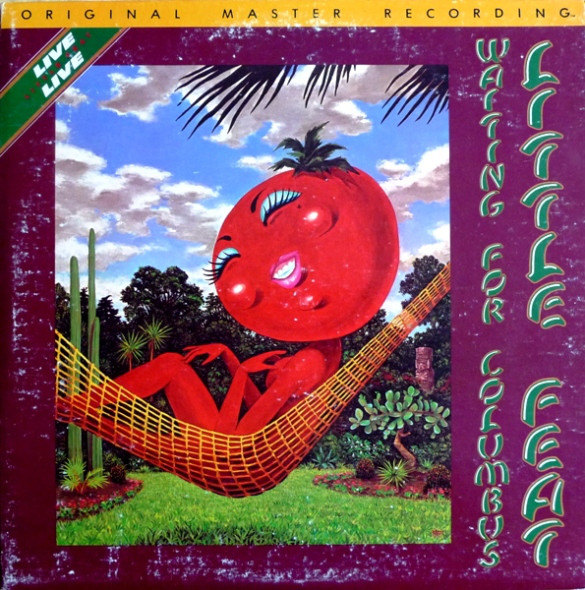
I have a theory about why MoFi’s mastering approach tended to work for the Waiting for Columbus album when it failed so miserably for so many others. It goes a little something like this. 

Back in their early days, MoFi tended to add bass and treble to practically every record they mastered, regardless of whether or not the master tape they were using needed a boost.

A little extra sparkle up top and a little extra kick down low was what the audiophile public seemed to want.  We call this the smile curve and lots of audiophile records have a case of it.

Truth be told, I was a member of that group and I know I did.

Fortunately for them, Waiting for Columbus is an album that can ofteny use a little at both ends. Rarely did The Mastering Lab supply it, making the original domestic pressings somewhat bass-shy and dull on the extreme top. The MoFi clearly corrected the poor EQ choices The Mastering Lab had often made. 


UPDATE 2024: Poor EQ Choices?

Or perhaps it could have been one or more of the following:

  • Perhaps the band liked it better that way.
  • Perhaps The Mastering Lab found it easier to cut that way.
  • Perhaps the cause of the records lacking extension on both ends comes from some other factors that cannot be known.

Or, if you don’t like those three, just make up some other reasons that sound plausible, or ones that fit in with other ideas you may have, even though there is probably not an iota of evidence to support any of it.

This is the way of the audiophile record collector — theories galore, but not much experimental evidence to back them up (or falsify them as the case may be). We are more inclined to the No Theory approach to finding good records, which you can read about here. We believe it has served us well and can do the same for you.

(more…)

On Sweetnighter, Watch Out for Sourness, Slowness and Smear

Hot Stamper Pressings of the Music of Weather Report

What surprised us most about the dozen or so copies that we played years ago for a shootout was how wrong most copies of this album sound. They’re SOUR in the midrange. On this kind of music, a sour midrange is the kiss of death.

Those copies that aren’t sour are frequently just plain dull. On a recording like this, so full of percussion — which, to be honest, it’s a record that LIVES OR DIES on the quality of its percussion — dullness is devastating.

And so is slowness. If you have old school tube equipment — great for vintage RVG recordings but way too slow to keep up with this fast-paced and percussion-heavy music — this record is not going to do what it desperately wants to do: get your feet tappin’.

Smear is also another thing to watch out for — smear kills what’s good about this record. The percussion transients lose their snap and the harmonics get lost. The less smeary sides really bring out the funky magic of the recording.

(more…)

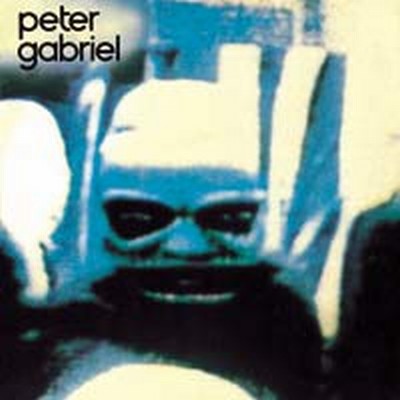
Unlike the First Three Albums, on Security You Can Forget the Brits

Hot Stamper Pressings of the Music of Peter Gabriel Available Now

The basics notes here were written in 2009, about the time we finished our album by album auditions of his early catalog.

On this title, forget the Brits. Every British pressing we played was badly smeared and veiled.

This took us somewhat by surprise because we happen to like the British PG pressings, but remember, So on British vinyl is awful too, so it’s clear (to us anyway) that the later PG records are bad on British vinyl and the early ones are better.

We are limiting our comments here to albums up through So. Anything after that is more or less terra incognita for us simply because we don’t care for the music he was making after 1986.

Plays Live, from 1983, takes the dark, overly-rich, overly-thick and way-too-smooth sonics of Security and lathers it over the material he had previouly recorded up through then. Some of it works well enough I suppose, but in my experience it usually isn’t long before the monotony of this approach grows tiresome.

What We Listened For

The best copies have sonic qualities that are not the least bit difficult to recognize:

  • Presence, putting PG front and center;
  • Dynamics, both micro and macro;
  • Energy, allowing the rhythmic elements to bring out the life in the music;
  • Transparency, so that we hear all the way to the back of the studio (where some of the many musicians that play in the densest parts no doubt had to stand); and
  • Ambience, the air that surrounds all the players and what instruments they played.

And of course we played the album VERY LOUD, as loud as we could. It’s the only way to get the massive druming to sound right.

The Music

This is one of the most important records in the Peter Gabriel canon, groundbreaking and influential on so many levels. The entire album is a wonderful journey; anyone with a pop-prog bend will enjoy the ride. Just turn the volume up good and loud, turn off your mind, relax and float along with PG and the band. You’re in good hands.

I’ve listened to this one more than other PG albums with the only exception being his second release, the one produced by Robert Fripp. That one is still clearly my favorite of the lot. I play it to this day and have never tired of it since I bought it way back in 1978.

Naturally, I would have originally picked up the domestic pressing, which is clearly made from a dub tape, but in 1978 what did I know about master tapes and imported pressings?

I was still a big Mobile Fidelity fan at that time, which is a simple way of saying that it’s clear that I had a very long way to go in this hobby and a great deal left to learn!

Nothing Peter Gabriel released after So did much for me so I resigned myself to the first five albums. Five excellent albums from one artist is plenty in my book.

If you like the albums after So, to each his own and more power to you. It’s my opinion that their appeal is limited, such that doing a shootout for them is not likely to be in the cards.

(more…)

Our 2024 Shootout Winner of Mac’s Greatest Hits Was Amazing Sounding

Hot Stamper Pressings of the Music of Fleetwood Mac Available Now

With a KILLER Shootout Winning Triple Plus (A+++) side two mated to a solid Double Plus (A++) side one, this vintage British import is doing practically everything right.

Here are just a few of the things we had to say about this incredible copy in our notes: “big and tubey and weighty”…”lots of space and detail”…”sweet and breathy vox”…”jumping out of the speakers.”

Big, rich, energetic, with an abundance of analog Tubey Magic, this original Orange Label UK pressing has exactly the right sound for this music.

“Oh Well, Parts One and Two,” “Black Magic Woman,” “Man of the World,” and the surprise Number One single “Albatross” are all here and guaranteed to blow your mind.

Peter Green is hands down our favorite British Blues Guitarist of All Time – play this record and you will surely see why we feel that way.

This is a lot of money for a somewhat noisy copy, but the sound is so awesome and quiet pressings of the album so hard to come by that we hope someone will take a chance on it and get the thrill we did from hearing it sound right for once.

We’ve recently compiled a list of records we think every audiophile should get to know, along the lines of “the 1001 records you need to hear before you die,” but with less of an accent on morbidity and more on the joy these amazing audiophile-quality recordings can bring to your life.

If you’re a fan of Fleetwood Mac, this copy is guaranteed to blow your mind. Like all the best vintage British pressings, the sound is smooth, rich and full.

This is Old School ANALOG, baby. They don’t make ’em like this anymore because they don’t know how to.

(more…)

Today’s Half-Speed Mastered Mess Is Meddle

Hot Stamper Pressings of the Music of Pink Floyd Available Now

Sonic Grade: D

Same sonic shortcomings as the MoFi Thick As a Brick. Twenty years ago we wrote:

“The MoFi is TRANSPARENT and OPEN, and the top end will be lush and extended. If you prize clarity, this is the one.”

But if you prize clarity at the expense of everything else, you are seriously missing the boat on Meddle (and Thick As A Brick too).

The MoFi is all mids and highs with almost nothing going on below.

This is a rock record, but without bass and dynamics, the MoFi pressing doesn’t rock, so why would anyone want to own it or play it?

I suppose you could argue that on small speakers the shortcomings of this pressing would be much less bothersome, but on the reference system we use — including the one we had twenty years ago — the lack of low end is a real dealbreaker.

The One Thing They Do

The one thing these pressings have going for them is that they tend to be transparent in the midrange.

It sounds like someone messed with the sound, and of course someone did. They took out the bottom end so that the midrange would be clearer.

That’s one of the tricks these labels use to get their records to impress the audiophiles with small speakers, or ones that are pressed up against the wall, perhaps with a television screen mounted between them.

For some reason, some audiophiles like their records to sound pretty and lifeless with blurry bass.

That is not our sound here at Better Records. We don’t offer records with those qualities and we don’t think audiophiles should be paying good money for records that sound like that.

(more…)

Lincoln Mayorga Volume 1 and Obvious Pressing Variations

Hot Stamper Pressings of Direct-to-Disc Recordings Available Now

After doing our first shootout many years ago for the record that single-handedly introduced the audiophile community to Direct to Disc recording, Lincoln Mayorga and Distinguished Colleagues, Volume One, I have to confess I was taken aback by the significant pressing variations we heard among the copies we played, 

These LPs are all over the map sonically.

Some Sheffield pressings are aggressive, many of them are dull and lack the spark of live music, some of them have wonky bass or are lacking in the lowest octave — they are prey to every fault that befalls other pressings, direct to disc and otherwise.

Which should not be too surprising. Records are records. Pressing variations exist for every album ever made. If you haven’t noticed that yet, start playing multiple copies of the same album while listening carefully and critically. If your stereo is any good at all, it should not take you long to notice how different one record sounds from another in practically every case.

Biggest problems on S9?

I would have to say smear is Number One.

When the brass loses its bite and the bells don’t have the percussive quality of metal being struck, this is not a good thing. The band also seems to lose energy when the pressing suffers from smear.

Number Two would be a lack of top end extension.

The harmonics of the sax and trumpet are muted on some copies, and the harpsichord really suffers when the top end isn’t all there. This lack of extension is most noticeable on all the lovely bells and percussion instruments that pepper the soundstage, but you can actually hear it on practically every instrument once you recognize the problem. It’s there on guitar harmonics, cymbals and snares, and on down the list.

Linked here are other records that are good for testing these same shortcomings:

(more…)

What to Listen For on English Settlement

Hot Stamper Pressings of Arty Rock Albums Available Now

For big production rock albums such as this there are obvious problems that are heard on at least one or two sides of practically any copy of this four-sided album you might find on your turntable.

With so many heavily-produced instruments crammed into the soundfield, if the sound is at all veiled, recessed or smeared — problems common to 90+% of the records we play in our shootouts — the mix quickly becomes opaque, forcing the listener to work too hard to separate out the various elements of musical interest.

Irritation, if not exhaustion, is bound to follow.

Some general observations about the sound of the album:

  • Transparency, clarity and presence are key.
  • None of the British copies we played was thin and anemic.
  • The domestic copies are made from dubs and can’t begin to compete.
  • Almost all the copies we played had plenty of Tubey Magic and bottom end, so thankfully that was almost never a problem.
  • They did however tend to lack top end extension and transparency, and many were overly compressed.
  • There is plenty of tube compression being used in both the mixing and mastering, but most of the time it is working its magic to keep the bass big, punchy and loud. 

Speaking of Tube Compression

Robert Ludwig used humungous amounts of tube compression on another favorite album of ours, and we’re glad he did. All that massive compression is at least partly responsible for it being one of the ten best sounding rock and pop albums ever made.

The sides that had sound that jumped out of the speakers, with driving rhythmic energy, worked the best for us. They really brought this complex music to life and allowed us to make sense of it. This is yet another definition of a Hot Stamper — it’s the copy that lets the music work as music. (more…)

Farmers Market Barbecue – First Among Equals, or The Best Pablo Ever?

Hot Stamper Pressings of the Music of Count Basie Available Now

Musically FMB is a Top Basie Big Band title in every way. This should not be surprising: many of his recordings for Pablo in the ’70s and early ’80s display the talents of The Count and his band of veterans at their best.

Sonically it’s another story. Based on our recent shootout for this title, in comparison to the other Basie titles we’ve done lately, we would have to say that FMB is the best Basie big band title we’ve ever played. Since so many Basie big band recordings are so good, we don’t want to get ahead of ourselves; after all, we haven’t done shootouts for all of his Pablo large group recordings. To be safe we’ll just call this one First Among Equals.

The following are some general guidelines as to What to Listen For while you critically evaluate any of the Basie Big Band Pablo recordings (or any other big band recordings for that matter).

Simply put, we offer here a short list of qualities that we’ve come to appreciate on the best of the Basie Big Band pressings, qualities that we find are often in short supply on lesser LPs (and, as a rule, those that have been remastered onto Heavy Vinyl). (more…)

Yes, We’re Getting Awfully Close To The Edge…

Hot Stamper Pressings of the Music of Yes Available Now

On the difficulty of reproduction scale, Close to the Edge ranks well above most of the albums we play, in the top few percent without a doubt.

You need lots of Tubey Magic and freedom from distortion, the kind of distortion-free sound I rarely hear on any but the most heavily tweaked systems — the kind of systems that guys like me have been slaving over for more than forty years.

If you’re a weekend warrior when it comes to working on your stereo, this is not the record for you.

It took a long time to get to the point where we could clean the record properly, twenty years or so, and about the same amount of time to get the stereo to the level it needed to be, involving, you guessed it, many of the revolutionary changes in audio we tout so obsessively.

It’s also not easy to find a pressing with the low end whomp factor, midrange energy and overall dynamic power that this music needs, and it takes one helluva stereo to play one too.

If you have the kind of big system that a record like this demands, when you drop the needle on the best of our Hot Stamper pressings, you are going to hear some astonishingly good sound.

Unless your system is firing on all cylinders, even our Hottest Stamper copies can be difficult. Your electricity has got to be cooking, you’ve got to be using the right room treatments, and ideally you should be using a demagnetizer such as the Talisman on the record itself, your cables (power, interconnect and speaker) as well as the individual drivers of your speakers.

This is a record that’s going to demand a lot from the listener, and we want to make sure that you’re up to the challenge. If you don’t mind putting in the hard work, here’s a record that will reward you many times over, and probably teach you a thing or two about tweaking your gear in the process.

We’d started and abandoned this shootout multiple times before breaking through in 2008. The typical copy was just too painful to listen to, and the better pressings weren’t sounding the way we’d hoped they would.

Where was the Tubey Magical analog sound with the HUGE whomp factor that we’d been hearing on the best copies of Fragile and The Yes Album?

We just could not find that sound on Close to the Edge.

As futile as our previous attempts were, we decided in 2008 that we would take another stab at it. After all, there had been quite a few changes around here that had the stereo working really well —  the addition of the Odyssey Record Cleaning Machine and Prelude Record Cleaning System to our cleaning process, the Talisman Magnetic Optimizer, the third pair of Hallographs we added years back, tons of smaller tweaks, and a few other tricks that we’re going to leave hidden up our sleeves for now.

The Planets Align

Think about it: This is a highly COMPLEX recording, with HUGE organs, light-speed changes, lots of multi-tracking, and what amounts to an OVERLOAD of musical information. Can you imagine how irritating that would sound on a third-rate copy? We didn’t have to imagine it — we lived through it!

But that’s exactly what made the shootout so rewarding. We had finally gotten the sound we were searching for from Close To The Edge, although it was anything but easy. The toughest peaks to climb are the ones you feel the best standing at the top of, and I have no doubt that many of you will be able to get there, just as we did, as long as you’re willing to work for it. (We humbly suggest you follow our lead.)

We put a lot of time and energy into getting everything just right for our shootouts, and to hear the album sound amazing you’re going to have to do the same. If it doesn’t all come together and our Hot Stamper Close to the Edge leaves you cold, feel free to send it back for a full refund. That’s always our policy, but we wanted to stress it in regards to this album, because it is VERY difficult to reproduce. (Big speakers are pretty much a must on this one as well.)

And it should be noted that there is distortion on the tape. It’s on every LP copy and it’s on the CD too. There are cacophonous passages that have what sounds like board overload, mic preamp overload, tape saturation or some combination of all three.

(more…)
Got Old Records? Played ‘Em Lately? What Did You Think of the Sound?

Hot Stamper Pressings of Pop and Rock Records Available Now

It’s not that most copies of Lee Michaels’ 5th sound bad; it’s that most of them just sound like old records — thick, dull, opaque, smeary, closed-in, two-dimensional, lifeless and uninspired.

You know that sound. It’s on a lot of the records we play, and no doubt on a lot of the records you own, especially the records you haven’t cleaned and played in a while. It’s there; you just aren’t aware of it.

Pull out your old copy of 5th. Back in the day it sounded just fine, but if you’ve been listening to mostly better records lately (assuming you haven’t fallen into the Heavy Vinyl trap), doubtlessly on much improved equipment than you had 40 years ago, your old A&M copy probably doesn’t sound as good as you remember it.

The records may not have changed, but your stereo and your standards should have.

Couple that with improved listening skills and before long the average old record starts to sound a lot more average than you wish it did. Even today’s better pot can’t fix the problems of most vintage pressings (or the Heavy Vinyl and CD reissues, which have to be seen for what they are: two of the biggest jokes ever played on the audiophile public).

But we can fix the problems — well, not really: we’re just finding the copies that managed to be mastered and pressed without the problems, and then giving them a good cleaning — and our Hot Stampers are 100% legal to boot.

(more…)