Testing Bass, Weight and Whomp

Ladies of the Canyon and its Growly Cellos and Solid Pianos

More of the Music of Joni Mitchell

The growl of the cello on Rainy Night House can clearly be heard behind Joni, with the wood of the instrument sounding real and correct. The kind of You Are There immediacy and transparency of the best copies has to be heard to be believed. 

Listen to the piano Joni plays throughout the album. This is not the thin and hard-sounding instrument that accompanies her on practically every LP you have ever had the misfortune to audition, hoping against hope that someday you would find that “elusive disc,” the one with sound worthy of such extraordinary music.

No, this piano has real weight; it has body; and it’s surrounded by real, three-dimensional studio space.

This side two is warm, rich, and sweet in a way that we’ve only heard on a handful of other copies in the past. Joni’s vocals just couldn’t sound any better; they’re full-bodied, breathy, textured, and shockingly present. This is the copy to play if you want Joni Mitchell singing to you right there in your listening room. What could be better than that?

With the transparency of the better copies comes the sound of Joni’s right foot on the pedal. It’s clearly audible through most of the takes, something the engineers we doubt could hear. And if they did, you can be sure they didn’t think you could.
(more…)

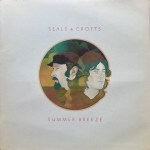
Seals & Crofts’ Folky Rock – What to Listen For

More of the Music of Seals and Crofts

Hot Stamper Pressings of Folk Rock Albums Available Now

In our recent shootout, all our best copies had very similar numbers and letters in the dead wax, which doesn’t happen all that often but does from time to time.

This album does not have a single set of stampers that always win, but it does have a set of very similar stampers that always win. All of the best stampers can only be found on the Green Label original pressings, if that’s any help.

What We’re Listening For On Summer Breeze

Here are some of the things we specifically listen for in a vintage Folk Rock record. Our hottest Hot Stamper copies are simply doing more of these things better than the other copies we played in our shootout. The best copies have:

  • Greater immediacy in the vocals (most copies are veiled and distant to some degree).
  • Natural tonal balance (many copies are at least slightly brighter or darker than ideal; those with the right balance are the exception, not the rule).
  • Good solid weight (so the bass sounds full and powerful).
  • Spaciousness (the best copies have wonderful studio ambience and space).
  • Tubey Magic (without which you might as well be playing a CD).
  • And last but not least, transparency, the quality of being able to see into the studio, where there is plenty of musical information to be revealed in this sometimes simple, sometimes complex and sophisticated recording.

Further Reading

If you would like to run your own tests on the Folk Rock records you own, we make that easy. Here are some other titles that are good for testing these qualities, many with specific advice on what to listen for.

Big Speakers and Loud Levels Bring Out the Power of the Orchestra

Hot Stamper LPs that Sound Their Best on Big Speakers at Loud Levels

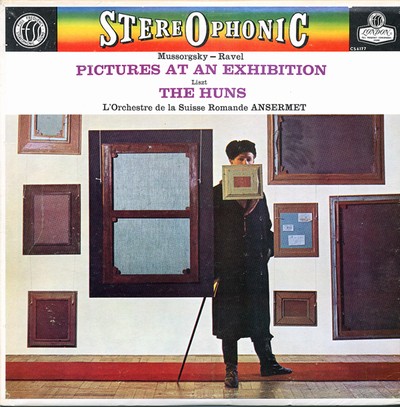
The darker brass instruments like tubas, trombones and french horns are superb here. Other Golden Age recordings of the work, as enjoyable as they may be in other respects, do not fully reproduce the weighty quality of the brass, probably due to limiting, poor eq, poor miking, or some combination of the three.

The brass on this record has the powerful weight and energy of live music like practically no other orchestral pressing we have ever played.

It’s also tonally correct. It’s not aggressive. It’s not irritating. It’s just immediate and powerful the way the real thing is when you hear it live. That’s what really caught my ear when I first played the recording.

There is a blast of brass at the end of Catacombs that is so big and real, it makes you forget you’re listening to a recording. You hear every brass instrument, full size, full weight. I still remember the night I was playing the album, good and loud of course, when that part of the work played through. The power of it was truly startling.
Back then I had the Legacy Whisper speaker system, the one with eight 15″ woofers. They moved air like nobody’s business. If you want to reproduce the power of the trombone, the loudest instrument in the orchestra, they’re the speaker that can do it.

Some of Ansermet’s recordings with the Suisse Romande are absolutely the best I’ve ever heard. It was a magical combination of the right hall, the right engineers, the right orchestra and the right technology — the pure tube ANALOG technology of the 50s and 60s!

Dynamics

Another thing this recording has going for it is dynamic power. This is a dynamic piece of music. Few recordings I have ever heard have the dynamic contrasts that this one does. It really gets loud when it needs to. The best pressings sound completely uncompressed. Although I’m sure there has to be compression of one kind or another, the listener is rarely made aware of it.

Dynamics such as these are thrilling. They let the music come alive.

(more…)

Huge, Powerful Choruses Like These Are a Thrill

Hot Stamper Pressings with Huge Choruses Available Now

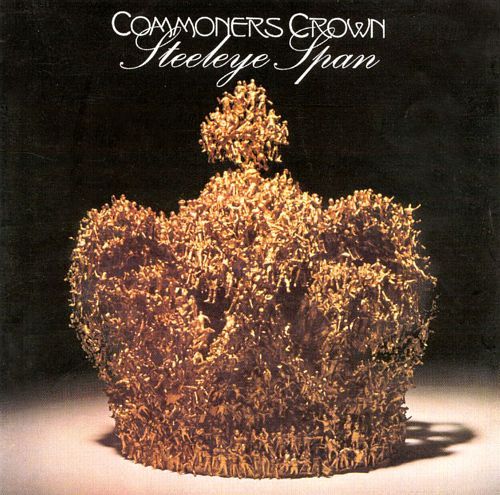
This is one of the rare pop/rock albums that actually has actual, measurable, serious dynamic contrasts in its levels as it moves from the verses to the choruses of many songs . The second track on side two, Demon Lover, is a perfect example. Not only are the choruses noticeably louder than the verses, but later on in the song the choruses get REALLY LOUD, louder than the choruses of 99 out of 100 rock/pop records we audition. It sometimes takes a record like this to open your ears to how compressed practically everything else you own is.

The sad fact of the matter is that most mixes for rock and pop recordings are much too safe. The engineers believe that the mixes have to be designed to be played on the average (read: crap) stereo.

We like when music gets loud. It gets loud in live performance. Why shouldn’t some of that energy make it to the record? It does of course, especially in classical music, but all too rarely even then.

We happened to do the shootout for Thick as a Brick the same week as Commoner’s Crown, and let us tell you, those are two records with shockingly real dynamics in the grooves of the best copies. If you like your music loud — which is just another way of saying you like it to sound LIVE — then the better copies of either album are guaranteed to blow your mind with their dynamic energy and power.

(more…)

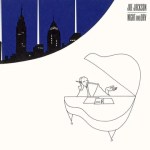
Listening in Depth to Joe Jackson – Balancing Night with Day

Hot Stamper Pressings of the Music of Joe Jackson Available Now

There are basically four elements that go into the making of Night and Day: vocals; keyboards (mostly the piano); percussion (in the mids and highs) and rhythm (drums and bass).

No two copies will get all of these elements to sound their best. The trick to finding the hottest of the Hot Stamper pressings is to find copies of the album that reproduce these four elements clearly and correctly. They should be balanced with one another, and distributed throughout a large, three-dimensional studio space.

It may sound easy but I assure you it is not. With this many instruments in the mix, it’s a lot to get right.

Vocals

Pop records live and die by the quality of their vocals and Night and Day is no different in that respect. The vocals have to be front and center. Veiling in the midrange costs a fair number of points. They should also be smooth, not thin or edgy. I would rather have slightly veiled vocals relative to thin and edgy ones, but some copies manage to give you full, clear, present vocals, and those are the ones we tend to like the best.

Keyboards

When the sound is thin in the lower midrange and upper bass the piano will lose its weight and solidity. In the denser mixes it can easily get washed out, and nobody wants a washed out piano.

There is no guitar on this record. The piano carries much of the structural energy of the music. You need to be able to hear the piano clearly and hear that it is both full-bodied and percussive. (more…)

What to Listen For on Quadrophenia

Hot Stamper Pressings of the Music of The Who Available Now

Moon’s drums need to blast away like cannons. This is the quintessential Who sound. Everybody who’s ever seen them live knows it. I saw them back in the day when Moon was still behind his kit and it’s a sound I’ll never forget. 

Most copies don’t have nearly this much Tubey Magic — you aren’t going to believe all the richness, sweetness, and warmth here. The clarity and transparency are superb in their own right, and the impressive dynamics really allows this copy to communicate the explosive energy of The Who at their peak.

(more…)

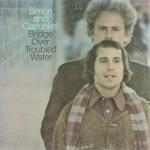
Bridge Over Troubled Water – A Price Must Be Paid

More of the Music of Simon and Garfunkel
Reviews and Commentaries for Bridge Over Troubled Water

One of the most interesting findings in this shootout was that no Red Label copy scored as high as the best 360 Label copies. The later labels can be very clean and clear, but ultimately they lack the midrange magic, warmth and sweetness of the best early pressings.

Since this recording has a problem in all those areas to start with, most red label copies suffer from a pronounced deficit of  Simon & Garfunkel magic, the kind of magic that is so wonderfully evident on their two previous outings: Parsley, Sage… and Bookends.

The Last of the Four Track Recordings

Why do the two previous albums have more magic?

They’re simpler productions, the kind that can be handled by the four track machine they were recorded on.

Bridge, on the other hand, is the boys’ Grand Musical Statement for All Time, with production and scope far exceeding their previous work. Like the Beatles with Abbey Road, they gave it their all and went out on a high note. (The Beatles planned it that way, while S and G fell victim to their ambition, which you can read about in the AMG review below.)

What a Masterpiece they achieved. Ten weeks at Number One on the charts. Depth and breadth of material only hinted at on their earlier efforts.

Who can argue with this as one of the most important achievements in popular music of the last fifty years? [Make that sixty.]

It’s on this short list for a reason.

Back Away From The Console

The sonic problems and promise of the multi-track approach can both be heard in one track: The Only Living Boy In New York. The song starts out simply, focusing on the duo’s lovely voices, with only minimal instrumentation. It sounds PHENOMENAL on the best pressings, and very good on even the typical copies. Halfway through the song, heavy-handed production kicks in, and the sound suffers significantly. You can’t fault the band for going big, but nor can you blame audiophiles for wishing they had kept it simple.

(more…)

Another Amazing Demo Disc for Bass – Peter Cetera and Chicago

We’ve called this album a Demo Disc for Bass and any Hot Stamper copy will show you why.

Talk about beefy — this album is the poster boy for rock solid bottom end. When you have a copy of Chicago’s first album with a hot side three you have a Bass Demo Disc LP that’s going to rock your world, not to mention the foundation of your house.

(How they managed to get the bass so right and screw up so many other things I will never know.)

This is a Rock Demo Disc by any measure, especially on Big Speakers at Loud Levels

It’s also our pick for the band’s best sounding album. Roughly 150 other listings for the Best Recording by an Artist or Group can be found here.

Peter Cetera

Not many musicians qualify to be placed on the list of Most Underrated, but if there were any justice in this world Peter Cetera’s name would be found right up at the top.

Meaning that he can’t even get credit for being the most underrated.

His bass playing alone — forget his singing, which is as good as any pop singer of his generation — qualifies him for Most Talented (but for some reason) Most Overlooked Musician. The huge bass sound Peter got out of his axe is the meat and potatoes of this album.

Again, it’s hard to believe this is the same guy that sang and played on ‘Hard To Say I’m Sorry’. His jazz-rock chops anchor the rhythm section with the kind of energy a band with as many pieces as this one simply cannot do without.

Chicago boasts seven top players, but Cetera’s brilliance cuts through on practically every song. People may not be able to appreciate his playing because they have bad records or bad stereos, but we’re here to rectify that situation, as least the record part of it.


New to the Blog? Start Here

What Exactly Are Hot Stamper Pressings?

Basic Concepts and Realities Explained 

Transparency, Energy, and Whomp Are Key on Eat a Peach

xxxMore of the Music of The Allman Brothers

Reviews and Commentaries for Southern Rock Albums

What do high grades give you for this album? Unbelievably Tubey Magical guitars, huge whomp factor on the bottom end, incredible dynamics and life, shocking transparency and clarity, and the kind of immediacy that puts these crazy southern rockers right in your very own living room. The overall sound is impressively BIG, BOLD, and POWERFUL.

This and Live At Fillmore East are the two monumental albums these guys put out, and they have a lot in common. You know what you’re gonna get with the Allmans: dueling electric guitars, sweet acoustic guitars, energetic drumming, and full-bodied vocals throughout. There’s obviously a lot of exploration — two complete sides are dedicated to the song Mountain Jam — but the heartfelt radio-friendly songs such as Melissa and Little Martha keep up the energy and provide maximum enjoyment factor.

The Three Keys: Transparency, Energy, and WHOMP

A great copy like this one really lets everything that’s great about this music come through. You can easily pick out each of the musicians and follow their contributions over the course of the songs. The huge WHOMP factor throughout kicks up the excitement factor and sets the foundation for the extended guitar jams to work their Southern bluesy magic. The top end extends beautifully to bring out all the ambience and spaciousness of the Fillmore. (more…)

Audiophile Wire Testing with Jethro Tull and His Friend Aqualung

Hot Stamper Pressings of the Music of Jethro Tull Available Now

… who seems to have a rather nasty bronchial condition…

[This commentary is from 2008 or so I’m guessing. Still holds up though.]

Like Heart’s Little Queen album, Aqualung presents us with a Demo Disc / Test Disc that really puts a stereo through its paces, assuming it’s the kind of stereo that’s designed to play an album like Aqualung.

Not many audiophile systems I’ve run across over the years were capable of reproducing the Big Rock Sound this album requires, but perhaps you have one and would like to use the album to test some of your tweaks and components. I used it to show me how bad sounding some of the audiophile wire I was testing really was.

Here’s what I wrote:

A quick note about some wire testing I was doing a while back. My favorite wire testing record at the time (2007)? None other than Aqualung!

Part One

Here’s why: Big Whomp Factor. Take the whomp out of Aqualung and the music simply doesn’t work, at all. To rock you need whomp, and much of Aqualung wants to rock.

(more…)