Testing Bass, Weight and Whomp

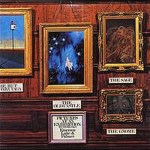
Pictures At An Exhibition and its Gigantic Organ Sound

More of the Music of Emerson, Lake and Palmer

Listen to that GIGANTIC organ that plays the fanfare opening of the work.

Honestly, I have never heard a rock album with an organ that stretched from wall to wall and sounds like it’s seventy five feet tall.

No, I take that back. The first ELP album has an organ that sounds about that big, but that’s a studio album. How did they manage to get that kind of organ sound in a live setting without actually having to build one inside the concert hall? I have no idea.

Pictures At An Exhibition has some of the biggest, boldest sound we have ever heard.

It’s clearly a Demo Disc for big speakers that play at loud levels.

Play this one as loud as you can. The louder you play it, the better it sounds.

The hottest Hot Stamper pressings of Pictures are Demo Discs in two other areas as well, bass and size and space, along with the titles linked below:

Please note that many of our Hot Stamper pressings are only available as imports. It has been our experience that the domestic pressings of these albums are simply not competitive with the better imports.

Advice

Want to avoid paying our admittedly high prices and find a top quality copy for yourself?

Consider taking our moderately helpful advice concerning the pressings that tend to win our shootouts.

Pictures at an Exhibition should sound its best this way:

(more…)

Listening to Aja (with Free Cisco Debunking Tool)

Hot Stamper Pressings of the Music of Steely Dan Available Now

UPDATE 2024

This commentary references a shootout we did in 2007 or thereabouts, shortly after the release of Cisco’s misbegotten remaster.


Our track commentary for the song Home at Last makes it easy to spot an obvious problem with Cisco’s remastered Aja: This is the toughest song to get right on side two.

Nine out of ten copies have grainy, irritating vocals; the deep bass is often missing too. Home at Last can sometimes be just plain unpleasant, which is why it’s such a great test track.

Get this one right and it’s pretty much smooth sailing from there on out.

If you own the Cisco pressing, focus on Victor Feldman’s piano at the beginning of the song. It lacks body, weight and ambience on the new pressing, but any of our better Hot Stamper copies will show you a piano with those qualities in spades on every track. It’s some of my favorite work by the Steely Dan vibesman.

The thin piano on the Cisco release must be recognized for what it is: a major error on the part of the mastering engineers.

(more…)

Stomping and Clapping with the Fans on News of the World

Hot Stamper Pressings of the Music of Queen Available Now

Side one starts out with Queen’s back-to-back anthemic classics, “We Will Rock You” and “We Are the Champions.” Does it get any better for a Queen fan? Hell no! 

The stomps and claps that introduce the former should make you feel like you are in a stadium full of people with a single goal – to rock you.

Those stomps and claps need weight and clarity, an unusual combination. One without the other is not going to cut it.

The record needs to be able to reproduce the room everybody is in, while still conveying the tremendous impact and power. Most domestic pressings are severely lacking in these areas. This kind of anemia can be frustrating — you want to rock but the sound won’t let you.

Another quality our best copies excelled in was the sound of Brian May’s guitar during his solo toward the end of the song. Here his tone is very boxy with no real highs or lows, but when that sound is exaggerated by bad mastering, it sounds like there are mattresses sitting in front of his amplifiers. The best copies had extension on the high end, restoring the clarity and complimenting his distinctive technique.

(more…)

The Drums and Cymbals Are Key to the Best Pressings of Presence

Hot Stamper Pressings of Led Zeppelin’s Albums Available Now

The drum sound on the best copies is punchy and huge, with prodigious amounts of studio space swirling around Bonham’s kit.

There’s real resonance to the toms, not the standard overdamped sound of a studio kit, which gives them a lively, realistic, natural quality that you rarely hear outside of Zep records.

And the cymbals crash and splash just like real cymbals do, which is yet another sound you rarely hear outside of the best Zep pressings. (The best copies of Zep IV have crashing cymbals on Black Dog and Rock and Roll like few records in the history of rock.)

We just finished a massive shootout for this album and were reminded just how hard this album rocks. Achilles Last Stand, For Your Life and Nobody’s Fault But Mine are all KILLER on a Hot Stamper pressing like this one. After cleaning and playing a pile of copies we are pleased to report that the best of them are full of The Real Zep Magic. The average LP may not be much of a thrill but our Hot Stampers sure are, with all the energy, dynamics, whomp, and presence (pun only slightly intended) you could hope for.

That is EXACTLY the kind of sound we love here at Better Records.

Hey Man, Turn It Up!

We’re hoping this copy ends up in the hands of someone who will play it good and loud because that’s the way it was meant to be heard. It’s the only way the mix works, which is a sure sign that that is clearly how the artists intended their records to be played.

Turn up the volume and play the midsection of For Your Life on side one or the entire Nobody’s Fault But Mine on side two to hear Zep rockin’ out in their prime.

Nobody did it better than these four guys. If you have Hot Stampers of their albums, you have some of the best sounding rock and roll records ever made, records that sound the way Zep wanted you to hear them as long as you play them at good loud levels.

(more…)

Wish You Were Here – An Overview

Hot Stamper Pressings of the Music of Pink Floyd Available Now

We have added some helpful title specific advice at the bottom of the listing for those of you want to find your own Hot Stamper pressing.

This is the perfect example of everything we look for in a recording here at Better Records: it’s dynamic, present, transparent, rich, full-bodied, super low-distortion, sweet — good copies of this record have exactly what we need to make us audiophiles forget what our stereos are doing and focus instead on what the musicians are doing.

For those of you who aren’t familiar with the album, Pink Floyd managed to record one of the most amazing sounding records in the history of rock music. The song Wish You Were Here starts out with radio noise and other sound effects, then suddenly an acoustic guitar appears, floating in the middle of your living room between the speakers, clear as a bell and as real as you have ever heard. It’s obviously an “effect,” but for us audiophiles it’s pure ear candy.   

Shine on You Crazy Diamond, Pts. 1-5

Right from the dynamic intro you can tell this is going to be a wild ride. David Gilmour’s haunting guitar line that comes cutting from out of the abyss should be warm with tons of room for his phasers to do their phasing.

After the band comes in and the vocals begin (listen for the man chuckling in the left channel) you should pay attention to the balance of the mix. Most copies tend to be very midrangy which can make the guitars aggressive and harsh, often times taking emphasis away from the vocals. The good copies have lots of transparency and allow everything to sit in their respectively places. This is probably most noticeable during the saxophone solo.

The tenor that starts off this section needs to be breathy, full-bodied, and sitting delicately in the center of your speakers. It does NOT need be be honky and hard sounding without any top extension. As the solo slowly crescendos, notice the guitar line spread across the soundstage that actually bookends the saxophone. The more dynamic copies really let you hear the intricacy and delicacy of his picking that foreshadows the time signature shift about to come.

When the time does change to 6/4, the saxophone player changes to alto, totally changing the sound of the solo! You can clearly hear on the better copies that he is further away from the mic than during the previous section, but if you listen closely, it sounds as though he is moving on and off axis. Whether this is part of his mic technique or him just dancin’ and groovin’ to the music, we may never know. I certainly hope for the latter.

Other Pressings

Most copies of the CBS Half-Speed lack deep bass, and for that matter bass in general.

They’re also consistently brighter. The upper mids and highs call attention to themselves at every turn. When you switch back to a good domestic copy or import, you might not notice as much detail, but everything will sound correct and balanced: less like a recording and more like music.

Phony highs cause listener fatigue for the same reason that bright CDs get tiresome.

Just listen to the sax break on side one. If your pressing is too bright that sax will tear your head off.

The Seventies – What a Decade!

Tubey Magical acoustic guitar reproduction is superb on the better copies of this recording. Simply phenomenal amounts of Tubey Magic can be heard on every strum, along with richness, body and harmonic coherency that have all but disappeared from modern recordings (and especially from modern remasterings).

Big Production Tubey Magical British Prog Rock just doesn’t get much better than Wish You Were Here.

A Big Speaker Record

Let’s face it, this is a big speaker recording. It requires a pair of speakers that can move air with authority below 250 cycles and play at loud levels. If you don’t own speakers that can do that, this record will never really sound the way it should.

It demands to be played loud. It simply cannot come to life the way the producers, engineers and artists involved intended if you play it at moderate levels.

Obsessed? You Better Believe It

Wish You Were Here is yet another record we admit to being obsessed with.

Currently we have identified about 150 that fit that description, so if you have some spare time, check them out.

(more…)
What to Listen for on Time Further Out

Hot Stamper Pressings of the Music of Dave Brubeck Available Now

The best copies demonstrate the big-as-life Fred Plaut Columbia sound at its best (even better than Time Out in our opinion).

These vintage recordings are full-bodied, spacious, three-dimensional, rich, sweet and warm in the best tradition of an All Tube Analog recording.

If you want to hear big drums in a big room, these Brubeck recordings will show you that sound better than practically any records we know of. 

The one standout track on this album for audiophiles is surely Unsquare Dance, with its uncannily real sounding handclaps in 7/4. The copies that did the best job of reproducing that “flesh on flesh” sound of actual human hands clapping scored very well in our shootout.

More to Listen For

For starters, listen for a fat snare and rich piano on the first track of side one. When you hear that, assuming you do, you should know you are in for a treat. Our best copies captured those two sounds brilliantly.

On the second track the clarity of the brushed snare is key to how resolving and transparent any copy is. The rich, smooth sound of Desmond’s sax balanced against the clarity of the brushes will help you make sure that the overall sound is tonally correct from top to bottom.

On side two the first track has the Wall to Wall Big Drums in a Big Room sound that positively blows our minds. If you’re a fan of  with jump out of the speakers sound, this is the album for you.

Note that in some places it sounds like the piano is overdriving its mic. We heard that sound on practically every copy we played, so we’re pretty sure it’s on the tape that way.

(more…)

Donny Hathaway Lives On Through His Masterful Live Album from 1972

More of the Music of Donny Hathaway

Hot Stamper Pressings of Soul, Blues and R&B Albums Available Now

This live recording has YOU ARE THERE sound. The soundstage is wide and deep. It’s so natural, rich and transparent, what is there to fault? 

Within moments of the needle hitting the groove your speakers disappear and the music just flows into the room.

On the best original domestic pressings you can immediately understand and appreciate the honest, emotive quality of his singing that made Donny Hathaway the tremendous performer he was known to be.

I’ve been playing this record regularly since I first heard it back in the mid-’90s and even after twenty years it has never failed to thrill. If I could take only one soul album to my desert island, it would be this one, no doubt about it.

Listening Test — Don’t Be Fooled

Pay close attention to the audience chatter and clapping. Most copies, being compressed and veiled, have no hope of reproducing the handclaps and audience shout-outs correctly. Only those copies with transparency and presence let you “see” the crowd clearly.

But don’t be fooled by thinner, leaner sounding copies. There is tons of low end and lower midrange in this recording — it’s one of its prime strengths, and it’s what it would have sounded like if you were there — so make sure you have plenty going on in the lower frequencies before you start evaluating the audience participation.

Many audiophile recordings and remasterings are leaner and cleaner, producing a phony kind of transparency and detail at the expense of the fullness and richness of the original recording.

This is almost never a good thing.

Listening Test — Conga Energy

The copies where the congas are up-front, punchy and full-bodied were the ones where the rhythmic energy really carried the day. You know it when you hear it, that’s for sure. Most copies failed in this regard to some degree. If you have more than one copy, see if you don’t hear quite a bit more energy on the copies with more prominent, solid-sounding congas.

Congas, like drums and pianos, are good for testing specific pressings as well as stereo equipment.

If these instruments get lost in the mix, or sound smeary or thin, it’s usually fairly easy to hear those problems if you are listening for them. Most of what you will read on this blog is dedicated to helping you do that kind of listening.

The richness of analog is where much of its appeal lies. Lean drums, congas and pianos are what you more often than not get with CDs.

These three instruments are also exceptionally good for helping you to choose what kind of speakers to buy. (We recommend big ones with dynamic drivers.)

(more…)

Taking Tiger Mountain Is a Big Speaker Tour De Force

Hot Stamper Pressings of the Music of Brian Eno Available Now

If you have a big speaker and the kind of high quality playback capable of unraveling the most complex musical creations, with all the weight and power of live music, this is the record that will make all your audio effort and expense worthwhile.

Repeat As Necessary

Like Roxy Music’s first album, Taking Tiger Mountain is a powerhouse that not only rewards repeated listenings but requires them. Music like this simply cannot be digested at one sitting. Like the Beatles said, It’s All Too Much. But the more you hear it the more you will be able to understand it and appreciate it and, if you’re like me, really start to love it (I hope).

I’ve been listening to this album since the mid-70s and in all that time I have never tired of it. To me it’s the very definition of a Desert Island Disc: a record that knocks me out every time I play it and never wears out its welcome. It’s still fresh and “cutting edge” (if I can use that term) forty odd years after its release. (801 Live from 1976 is the same way.)

The Sound

This album is all about sound, pure sound itself if you will: the sound of the instruments, their textures, and the textures of the soundscape Eno has created for them. Much of that information is lost or perverted on the LP reissues and of course the CD. Only these British originals sound like they are made from fresh master tapes on rich, sweet tubey-magical, super high resolution cutting equipment.

With the subtle harmonics of Eno’s treated sounds captured onto vinyl intact, the magic of the experience far exceeds just another batch of catchy songs with clever arrangements. It truly becomes an immersive experience; sounds you’ve never heard in quite that way draw you into their world, each more interesting than the next.

Brian Eno and other Art Rockers of the period were clearly dedicated to making higher quality recordings, recordings that could only come to life in the homes of those with the most advanced audio equipment. Credit the work of the amazing Rhett Davies for some of the best albums of the 70s: this one, 801 Live, Diamond Head, Dire Straits’ first album, and more.

My system was forced to evolve in order to reproduce the scores of challenging recordings issued by Eno in the 70s. The love you have for your favorite music has to be the driving force of your progress in audio if you want to achieve world class sound.

(more…)

Robert Brook Discusses His Evolving Understanding of Bass

More from Robert Brook

Robert Brook has a blog which he calls

A GUIDE FOR THE DEDICATED ANALOG AUDIOPHILE

Below you will find a link to Robert’s story about the famous Charlie Mingus record you see pictured.

He had a number of different pressings, each of which showed him some qualities that the others lacked. Ultimately you have to pick one to play, and he did.

“GETTING” BASS with Charles Mingus’ BLUES & ROOTS

Robert went from a $20,000 speaker with one eight inch woofer to the Legacy III’s, a speaker costing less than half as much, with three ten inch woofers, to the Legacy Focus, a speaker quite a bit less than $20k, with three twelve inch woofers.

Robert learned something about his Parsifals by playing a speaker that could do so much more down low:

But I’ve learned since that, for all their strengths, the Parsifal had at least one fatal flaw – they made just about every record sound good.

Adding:

Making every record sound good is, it turns out, not a good quality to have in a speaker, nor in any other piece of equipment you use. At least it’s not if you want the best possible sound from your analog system.

(more…)

Two Tracks on Teaser and the Firecat Are Key

Hot Stamper Pressings of the Music of Cat Stevens Available Now

Just ran across the following in an old listing. We’re nothing if not consistent here at Better Records!

“And if you are ever tempted to pick up one of those recently remastered versions on heavy vinyl, don’t do it. There is simply no one alive today making records that sound like these good originals. Not to these ears anyway. We may choose to indulge ourselves in the audacity of hope, but reality has to set in sooner or later. After thirty years of trying, the modern mastering engineers of the world have nothing to show for their efforts but a ever-growing pile of failures. The time to call it quits has come and gone. Let’s face facts: when it comes to Teaser and the Firecat, it’s the Real Thing or nothing.”

If you’re looking for an amazing Demo Quality rock recording, you’ve come to the right place.

If you want a timeless classic rock record, it’s here too.

They just don’t know how to make them like this anymore. Those of you waiting for audiophile vinyl reissues with the kind of magic found on these originals will be in your graves long before it ever comes to pass.

Analogue Productions tried and failed — more than once — to produce a good sounding Heavy Vinyl pressing of Tea for the Tillerman.

You can be sure of one thing: there is little chance they would have better luck with Teaser and the Firecat.

Changes IV 

On this song there is a tremendous amount of energy in the grooves. On a copy I had a while back it sounded good to start with, but an intense cleaning regimen made it sound so alive I could hardly believe my ears. Listen to it VERY LOUD (as it was meant to be played) and then notice how quiet the next solo guitar intro is, with lots of space between the notes. Never heard it like that before. That’s when audio is FUN.

It’s always a roller coaster ride around here, as one day the system is cooking, and the next it ain’t, and nobody knows why. But the night that Teaser sounded great is one I will remember for a long time. Those big bass drum thwacks and that high hat being slapped to the point of abuse way out in front of the mix just blew my mind.

Tuesday’s Dead

There is a good-sized group of singers behind Cat Stevens that back him up when he says “whoa” right before the line “Where do you go?”. What often separates the best copies from the also-rans is how clearly those singers can be heard, assuming the tonal balance is correct and there’s plenty of energy in the performances.

The most transparent copies make it easy to appreciate the enthusiasm of the individual singers; they’re practically shouting.

For twenty years Tuesday’s Dead has been one of my favorite tracks for demonstrating what The Big Speaker Sound is all about. Now I think I better understand why. Big speakers are the only way to reproduce the physical size and tremendous energy of the congas (and other drums of course) that play such a big part in driving the rhythmic energy of the song.

In my experience no six inch woofer — or seven, or eight, or ten even — gets the sound of the conga right, from bottom to top, drum to skin. No screen can do it either. It’s simply a sound that large dynamic drivers reproduce well and other speaker designs do not reproduce so well.

Since this is one of my favorite records of all time, a true Desert Island Disc, I would never want to be without a pair of big speakers to play it, because those are the kinds of speakers that play it well.


(more…)