Testing Bass, Weight and Whomp

Listening in Depth to Little Queen

Hot Stamper Pressings of the Music of Heart Available Now

This is a recording that I credit with taking me to the next level of sound. When I first heard a killer Hot Stamper pressing played back through the EAR 324P phono stage at a friend’s house, I immediately called the distributor and ordered one. That was a Saturday. It arrived on the following Tuesday.

Compared to the 834P tube unit I had been using, the solid state 324P simply took the recording to a level I had no idea could possibly exist. Yet there it was.

That was 2007. Looking back now, it’s clear to me that 2007 was by far the most momentous year in the history of Better Records.

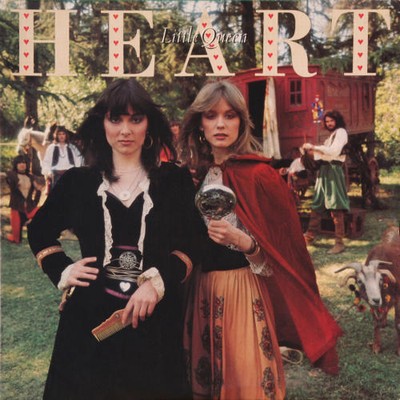
Once I had reached that higher level of playback, I set about using the album for tweaking and testing, and learned a lot doing it. Along with a substantial number of other records I have come across in my forty plus years as a hobbyist and audiophile record dealer, Little Queen is one that has done a great deal to help me become a more critical listener. [1]

Side One

Barracuda

One of the little tricks I used toward the end of my marathon Little Queen tweaking session from many years ago (which lasted more than six hours one Saturday evening, leaving me euphoric but exhausted) was to listen to the ending of Barracuda. Some of the big guitar chords at the end of the song are louder than others, and the more the differences in level among them can be heard, the better the stereo and the room must be at exposing these micro-dynamic changes.

You can’t make the guitarist play some of the notes at the end louder than others, you can only reveal the fact that he indeed must have. This is what we mean by Hi-Fidelity.

(more…)

Bass, Choruses and Energy Are Key to the Best Pressings of War’s Albums

More Jazz / Rock Fusion Records with Hot Stampers

[This review was originally published about 2012 or so. Note that we rarely have any War records in stock. If you see one, grab it, the recordings on the best pressings are positively amazing on big speakers at loud levels.]

We just finished our first big shootout for this fun album — the All Music Guide calls it “a magical ride with plenty of surprises to keep the listener on his or her toes” and we couldn’t agree more.

This copy gives you punchy bass, airy flutes, hard-hitting percussion and loads of Tubey Magic. Many copies we played had too much hardness, edge, and midrange honk, but this one is smooth, sweet and rich.

Engineered by the brilliant Chris Huston, this recording displays all his trademark gifts.

His mixes feature:

The links above will take you to other albums that are good for testing all of these qualities.

As for the choruses, allow me to paraphrase our listing from Commoner’s Crown.

This is one of the rare pop/rock albums that actually has actual, measurable, serious dynamic contrasts in its levels as it moves from the verses to the choruses of many songs. The first track on side two, Four Cornered Room, is a perfect example. Not only are the choruses noticeably louder than the verses, but later on in the song the choruses get REALLY LOUD, louder than the choruses of 99 out of 100 rock/pop records we audition. It sometimes takes a record like this to open your ears to how compressed practically everything else you own is.

The Top Is Important Too

Richness and weight are key to the sound, but oddly enough an extended top end was almost as crucial to the success of the best copies. When the top end extends, the sound is open and relaxed. When the various songs build to their climaxes, the copies with lots of clean top end had a sense of “ease” that simply was not to be found on the smoother (read: duller) brethren.

(more…)

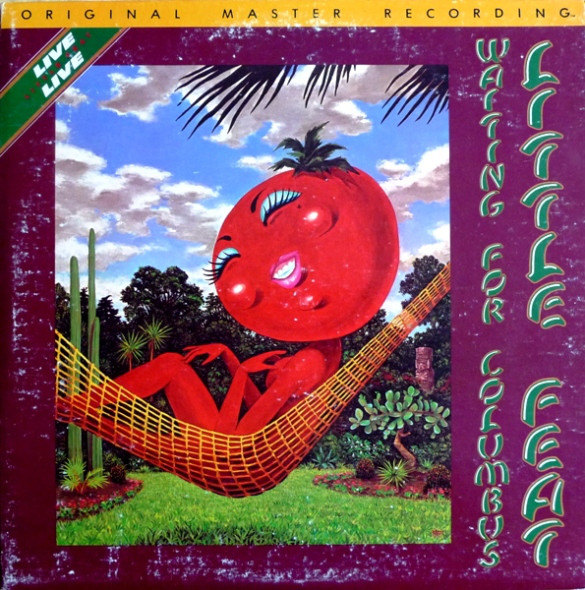
Waiting for Columbus – A MoFi Pseudo-Hot Stamper

Hot Stamper Pressings of the Music of Little Feat Available Now

Sonic Grade: C

Ten or fifteen years ago we did a listing for this Mobile Fidelity pressing as a Pseudo-Hot Stamper. Here is what we had to say about it at the time:

This is actually a pretty good sounding record, all things considered. We put this one through our cleaning process and gave it a listen. Although our Hot Stamper copies do sound better, they’re also quite a bit more expensive. This copy had the best sound we heard out of the three or four we played, which makes it a Hot Stamper I suppose, but we are instead just calling it a Very Good Sounding Copy.

Waiting for Columbus is one of the greatest live rock and roll albums ever made, containing performances by one of the greatest rock and roll bands to ever play. If you only buy one Little Feat album in your lifetime, make it this one.

We spent years trying to get shootouts together for this album, but kept running into the fact that in a head to head shootout the right MoFi pressing — sloppy bass and all — was hard to beat.

This is no longer the case, courtesy of that same old laundry list you have no doubt seen on the site countless times: better equipment, tweaks, record cleaning, room treatments, et cetera, et cetera. Now the shortcomings of the MoFi are clear for all to see, and the strengths of the best non-half-speed mastered pressings are too, which simply means that playing the MoFi now would be an excruciating experience. All I can hear is what it does wrong. I was so much happier with it when I didn’t know better.

(more…)

Punch The Clock – Drums, Bass and Horns Are Key to the Best Imports

Hot Stamper Pressings of Elvis’s Albums Available Now

The bottom end is as punchy, well-defined and powerful as they come. There’s plenty of low-end on this record; regrettably most copies suffer from either a lack of bass or a lack of bass definition. I can’t tell you how much you’re missing when the bass isn’t right on this album. (Or if you have the typical bass-shy audiophile speaker, yuck.) When the bass is lacking or ill-defined, the music seems labored; the moment-to-moment rhythmic changes in the songs blur together, and the band just doesn’t swing the way it’s supposed to.

The bass, along with the horn sound, are the two key elements to getting a good copy of this record.

The horns are often compressed, making them lose their bite and smearing them together.

On some copies you can pick out the trombones and on some copies you can’t; you just hear horns because the individual instruments are smashed into a congested mess. This is Elvis’ Motown Album; the horns are what bring the music to life. They’re what make this album fun.

On this copy, you get the full-on bottom end WHOMP you paid for, with no loss in control. You can clearly follow Bruce Thomas’s bass lines throughout the songs, a real treat for any music lover. (He and Elvis don’t get along, hence the end of the Attractions as his backing band. I guess we should be thankful for the nine albums on which they were together; many of them are Desert Island Discs for me.)

Not only that, but the drums have real body and resonance, a far cry from the wimpy cardboard drums so many rock records have. Listen to the drum sound on Charm School. Man, those are some BIG FAT PUNCHY DRUMS. Very reminiscent of Bowie’s Let’s Dance. The drum sound on that album is some of the best we’ve ever heard, bar none.

Right out of the gate, Let Them All Talk is lively and full of energy. Elvis’ vocals have all the presence and clarity you could hope for. Since the drums are such a driving force for the Attractions, you have got to have room and spaciousness around them. This copy showcases the percussion with weight down low and harmonics on the cymbals.

The female background singers are clear, another tough test.

It should be noted that this is not an easy record to reproduce well. Everything needs to be working at its best to bring this recording to life, especially in the range of 200 cycles and under, an area where most audiophile systems are at their weakest. If you’ve got power to spare down there, this one will really rock.

Listening in Depth to Fragile

yes__fragi_depth_1392743863Hot Stamper Pressings of the Music of Yes Available Now

Eddie Offord took charge of Yes’s engineering starting with Time and a Word (1970) and we are very glad that he did.

Although his masterpiece is surely ELP’s first album, both The Yes Album and Fragile are so amazingly well recorded they clearly belong at the top of any list of All Time Great Sounding Rock Albums.

Side One

Roundabout

You can tell by the sound of the opening guitar whether you have a copy that is tonally correct, has its ambience intact, as well as the proper leading edge transients to the strings plucks. Most of the reissues will sound either thin and edgy, or dull and blunted. On the best copies, that guitar will just sound out of this world.

Cans and Brahms
We Have Heaven
South Side of the Sky

What really separates the amazing copies from the merely good copies is the WEIGHT of the sound. The lower midrange is key in this regard. When you hear the piano on this track, it should have tremendous body and sustain to the notes. If the piano comes across at all anemic, the sound will be unbearably harsh.

Side Two

Five Per Cent for Nothing
Long Distance Runaround

This is one of the best sounding Yes tracks of all time. Jon Anderson’s voice is so present; he sounds as if he’s standing right between the speakers.

Fish (Schindleria Praematurus)
Mood for a Day

The top pressings exhibit amazing transparency and sweetness on this track. We would rate this one of the best rock acoustic guitar recordings on the planet. I’ve recently come to realize that this is actually a key track for side two. The guitar can sound midrangy and hard; too fat; blunted; and I’m sure lots of other ways.

And I’m talking about ONLY the best early pressings (the four digit ones). None of the later pressings sound any good to me at all.

This is where the surface noise will be most audible. After playing a number of copies, I noticed that there was always surface noise on this track, but not necessarily others. And then it dawned on me: the surface noise has to be spread evenly throughout the record; it’s on this track that you can actually hear it. The other tracks tend to be loud and little surface noise will ever be audible.

Heart of the Sunrise

My second favorite track on the album. All those aggressive guitar parts can be very irritating if you do not have a copy that’s cut properly, which in this case means smooth and full-bodied. Any thinness or edginess will be all but unbearable on this track.

Foreigner – What’s Good About the Sound of Their Albums?

Hot Stamper Pressings of the Music of Foreigner Available Now

Mobile Fidelity Half-Speed mastered this album back in the day when their records were pressed in Japan (#1-052).

We haven’t played it in years. As I recall it was as lifeless and sucked-out in the midrange as most of the other MoFis of that period, notably The Doors (#051) and Trick of the Tail (#062).

What’s key to the sound of Foreigner’s records?

Obviously, the big one would have to be energy, a subject we have discussed at length here on the site.

Next would be punchy bass, followed by clear, present vocals.

Those would be the big three.

But those are qualities that are almost never found on Half-Speed mastered records!

The remastering of those records usually leaves them lifeless and compressed, with sloppy bass and recessed vocals.

For some reason, audiophiles — including the audiophiles who produce them — like that sound.

We do not. In fact we can’t stand it. Which is why we will not be auditioning MoFi’s newest remastered pressing. If you are feeling adventurous (and have $30 to throw away) and want to do the shootout for yourself, please let us know how it went.

The sound of the best pressings were jumping out of our speakers. Have you ever heard a Half-Speed do that?

Almost never, and we’ve played them by the hundreds.

Winelight – A Demo Disc for Bass (on the Right Copy)

Hot Stamper Pressings with Demo Disc Bass

Reviews and Commentaries for Bass Demo Discs

What’s unusual about this album — shocking really — is how MEATY the bottom end is. I don’t know of a pop jazz recording with beefier, more articulate or weightier bass. The only record I can think of in this genre of jazz with comparable bass is Mangione’s Children of Sanchez. We played some copies of that album recently and were just knocked out with how well recorded the bass is, just the way we were knocked out by the best copies of Grover Washington’s Winelight from a recent shootout. Both of these albums really set the standard for recording this kind of music. 

This is a classic Grover Washington album with the hit Just The Two Of Us. I happen to like this record for what it is: good pop jazz. If that ain’t your thing this record is unlikely to change your mind, but if you’re a fan of the genre I imagine you’ll be delighted with the sound and music here.

And I can’t end without mentioning the amazing steel drums on Just the Two of Us, complete with the incredibly talented Ralph McDonald on percussion. When that song hit big, overnight Ralph McDonald’s session dates were booked up for years in advance, and on this copy you will hear exactly why. The energy of the song just explodes when he gets going on whatever the hell he is banging on.

On Tarkus, Only the Brits Have the Tubey Magical Sound We Love

Hot Stamper Pressings of the Music of Emerson, Lake and Palmer Available Now

This killer copy features some of the more intense prog rock sound to hit our table in quite some time. This is a true Demo Disc LP, one of the most dynamic and powerful rock recordings ever made.

The organ captured here by Eddie Offord (of Yes engineering fame, we’re his biggest fans) and then transferred so well onto our Hot Stamper pressings will rattle the foundation of your house if you’re not careful. This music really needs that kind of megawatt reproduction to make sense. It’s big Bombastic Prog that wants desperately to rock your world. At moderate levels it just sounds overblown and silly. At loud levels it actually does rock your world.

Unlike most British pressings of the first album, the Brits here really ROCK, with greater dynamic contrasts and seriously prodigious bass, some of the best ever committed to vinyl. This music needs real whomp down below and lots of jump factor to work its magic. These Brits are super-low distortion, with an open, sweet sound, especially up top, but they still manage to convey the awesome power of the music, no mean feat.

All but the best Brit pressings have a tendency to be a bit turgid and many of them lack the bottom end weight that music like this absolutely needs in order to work its magic. There are some good domestic copies — not in a league with the best Brits at all — but most of them have sub-generation sound that robs the instruments of their immediacy and texture (much the same way that Heavy Vinyl does, truth be told).

(more…)

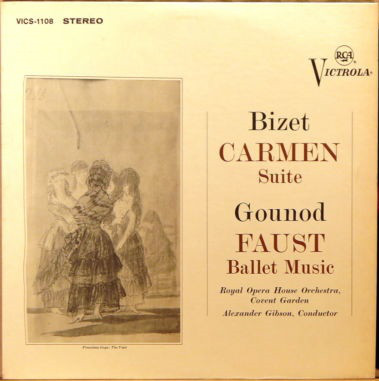
Gounod / Faust – Does Your Copy Have Clipped Bass?

This RCA Plum Label Victrola LP, the budget reissue of the incredibly rare LSC 2449, has some of the best and worst Golden Age sound I’ve ever heard. It has most of the magic of the better VICS copy I rave about.

When a cutting amplifier runs out of juice, the bass simply “clips.” The beginning of the bass note is heard, and then it just stops.

A fair number of RCA Shaded Dog originals have this problem. The cutting amplifiers of the day were often not up to the job. They ran out of power.

It’s amazing to me that so few collectors of these records even know what I’m talking about when I mention this shortcoming. They just assume it’s something in the recording perhaps. But it’s not. Oftentimes it is simply stamper variations that separate the clipped records from the unclipped records.

The more compression that is used, the less likely it is that the amplifiers will clip at all. But that’s obviously not the solution. And of course if you play records like this back on say, Quads, a notoriously compressed and bass-shy speaker to begin with, you’ll never notice any of this.

You also won’t hear it on this system.

Ah, but here is a wonderful recording that, on the better pressings at least, has deep, powerful, unclipped bass that can rattle the walls and sound like your flooring is in danger of being warped. But you need big woofers to get that effect, and lots of them.

But side two actually sounds quite good. Not as good as the best Shaded Dog copies possibly, but since those are $1000 and up, this has to be considered a good alternative at a fair price.

Lots of Living Stereo magic and a wonderful performance by Gibson make this record easy to recommend.

Listening in Depth to The Fantasy Film World

More of the Music of Bernard Herrmann

Reviews and Commentaries for the Music of Bernard Herrmann

Music like this taxes the limits of LP playback itself, with deep organ notes (listen for the famous Decca rumble accompanying the organ if you have the deep bass reproduction to hear it); incredible dynamics from every area of the stage; masses of strings playing at the top of their registers with abandon; huge drums; powerful brass effects everywhere — every sound an orchestra can produce is found on this record, and then some.

You will hear plenty of sounds that defy description, that’s for sure. Some of the time I can’t even imagine what instrument could possibly make such a sound!

TRACK LISTING

Side One

Journey to the Center of the Earth

All those lovely harps! You can practically feel the cool air of the cave as you descend into the blackness.

The Seventh Voyage of Sinbad

Side one boasts some wonderful material from Jason and the Argonauts, including the fight with the skeletons that we all remember from our Saturday matinee movie days. Who else could have orchestrated such a film?

Side Two

The Day the Earth Stood Still

Astonishingly powerful deep bass and drum sounds!

Fahrenheit 451

One of our key tests for side two is the string tone on the Fire Engine sequence here. The best copies had wonderfully textured and tonally correct strings, with just the right amount of sheen — not glossy, not gritty, not blurry, but just right.

Any orchestral recording without good string tone is a lost cause. (Almost all Classic Records fail miserably in this regard. They may be on the TAS List but that sure doesn’t mean they sound any good!)

(more…)