*Experimenting with Records

Experimenting with records is the only way to learn much about them of any real value.

Our Amazingly Good Shootout Winning Copy Fell Short in One Area

Hot Stamper Pressings of Bossa Nova Albums Available Now

With INCREDIBLE Shootout Winning Triple Plus (A+++) live jazz sound or close to it throughout, this copy is guaranteed to blow the doors off any other Getz – Gilberto #2 you’ve heard.

Rich, tubey and musical, the sound is wonderful for these live performances of the two very different groups – one side featuring Getz, the other Gilberto.

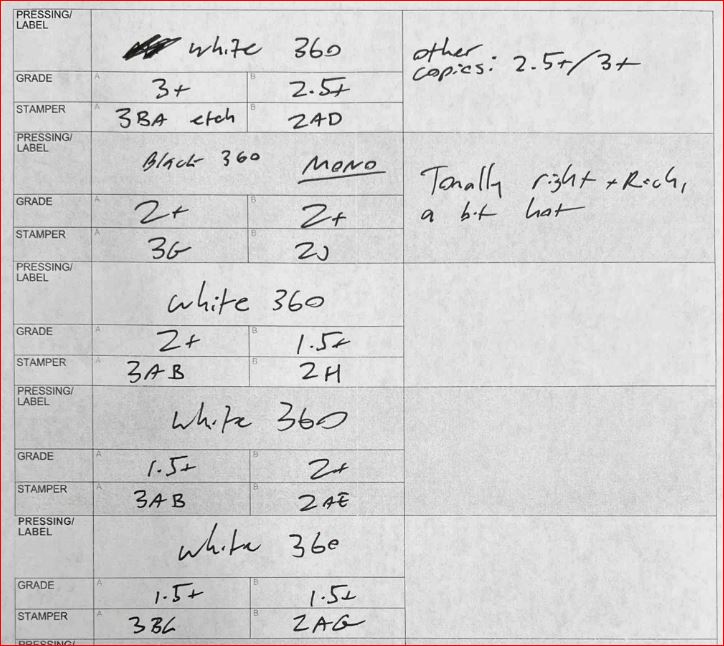
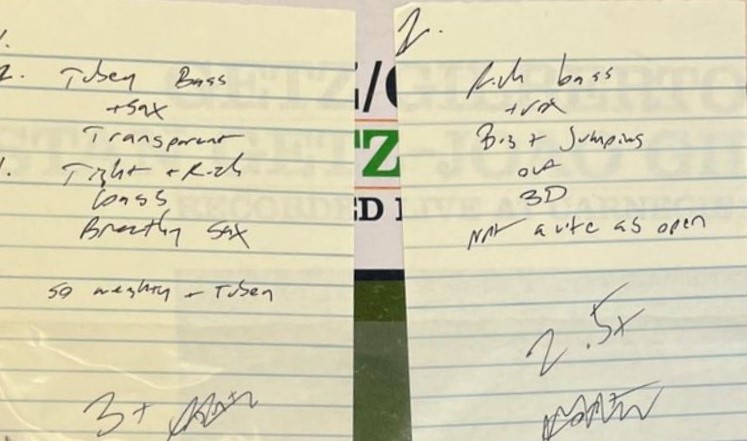
As you can see from the notes, side one of our most recent White Hot stamper Shootout Winner was doing everything right.

However, we had a side two that was slightly better than the side two you see here.

The Second Round

When we played the two best copies back to back, side one of this copy came out on top, earning a grade of 3+, but the side two of another pressing showed us the sound could be even more open than we thought the first time around.

As a consequence, we dropped side two’s grade a half plus, from 3 to 2.5+.

This is exactly why we do shootouts. If you really want to be able to recognize subtle (and sometimes not so subtle!) differences between pressings, you must learn to do them too.

And make sure to take notes about what you are hearing, good and bad.

One side falling short of the full Three Pluses happens more often than not. One out of five records that has one shootout winning side will have a matching shootout winning other side.

The math works like this. 3+/3+ records go in this section, which currently holds 29 titles as of 4/2025. Records with at least one 3+ side go in this section, and there are 145 of those as of the same date, about five times as many.

Getz Is the Man

Stan Getz is a truly great tenor saxophonist, the cool school’s most popular player. Over the years we have invested an insane amount of time and money in our search for Hot Stamper copies of this and other Getz albums.

We rarely have much to show for our efforts — certainly not in terms of quantity, as years can go by without a single record of his on the site.

(more…)

What Lessons Can We Take from this Columbia Shootout?

Hot Stamper Pressings of Vintage Columbia Albums Available Now

Recently we conducted a shootout for one of our favorite Columbia recordings, one that we had auditioned many times before and for which we knew the music and the general quality of the sound well.

It’s not the record you see pictured.

For now we’re keeping the title a mystery, consistent with the idea that we give out plenty of stamper information on this blog, including some of the worst ones we’ve had the misfortune to run into, but rarely do we feel the need to give out the really good ones. After decades of doing this kind of work, the time and effort that has gone into finding them is beyond calculation.

When we do give out the best stampers, as is the case here (3BA baby!), we make a point of keeping the title under wraps.

We are not the least bit interested in putting ourselves out of business.

The discussion for today revolves around the idea held by a great many audiophiles that the original White Print 360 label pressings are going to be the best sounding for any title that was made starting with that label in the early-60s.

(The Black Print 360 mono is an example of the mono labels being a bit behind the times as far as I can tell.)

Note that we did not bother to put any of the 70s Red Label Columbia pressings in the shootout. We’ve been down that road with this title before, and we have yet to hear one worth the vinyl wasted on it.

Columbia, like most labels, seems to have made very little effort with the sound quality of their reissues. Perhaps it was the result of all the bad transistor equipment in the studios by the time the 70s rolled around, but that would be speculation on my part, as well as something that would be very hard to find evidence for one way or the other.

We did find one Monk record that sounded better on the Red Label reissue, and readers of this blog should easily be able to find out which one it is by reading our many reviews for Monk’s recorded output.

We have two new lists for those who would like to know which Columbia labels win shootouts — one for 6-Eye winners and one for 360 Label winners.

What interests me in these findings is the following:

  • Both of our shootout winning copies had the same stampers. Can that really be a coincidence?
  • The shootout winner for side one is 3BA.
  • Two copies with stampers very similar to that one, 3AB, did noticeably worse, 2+ and 1.5+.
  • And the worst of the White Print 360 Label pressings barely earned a Hot Stamper grade at all.
  • They are on the same original label as the other copies, but for some reason they don’t sound as good. Why is that?

If an audiophile collector were to go to Discogs, find a nice clean copy on the early label and buy it, he might find that he know owns a top quality sounding copy, a pretty good sounding copy, or a not-nearly-as-good sounding copy as he’d hoped for, depending on his luck.

And what would he know about the quality of the recording? About that thing that audiophiles and record collectors seem to reference so often, “the master tape,” as if they have any way of knowing about the sound of a tape they have never come into contact with.

Just Assume

If he had a killer 3BA, wouldn’t he just assume that for some reason the recording must be amazing and consider himself lucky to find such a wonderful record to play.

Why one set of stampers sounds so much better than another set, or the same or a similar set on a different pressing, is a mystery, and it’s one that we confidently predict will never be solved.

Does anyone have a practical way to get around the reality that allows one set of stampers to sound great and the same or a similar set of stampers to sound no better than very good, if that?

Well, we can’t say there is a practical way, but we do know of an impractical one. We’ve been practicing and refining that one for more than twenty years.

We just play lots and lots of copies of the albums to find out how they sound.

(more…)

Bones Howe Knocked Windy Right Out of the Park

More Hot Stamper Pressings of Tubey Magical Rock Recordings Available Now

We describe the 2-pack currently on the site (as of 4/2025) this way:

The Tubey Magical sound, the lively, tight playing by The Wrecking Crew, not to mention some killer chart-topping 60s pop, make this THE Association album to own.

With these copies the Sound of the Sixties will fill your room like never before – wall to wall, floor to ceiling, with layers upon layers of analog depth.

These original Gold Label stereo pressings are have the potential to be the best sounding, with the ideal balance of richness and clarity.

Potentially is the key concept when it comes to understanding this and every other record. Again, the label is no guarantee of top quality sound. Only proper cleaning, revealing stereos and careful shootouts make it possible to recognize the best sounding pressings.

As you can see by the notes for a different, but equally good copy below, many aspects of the sound caught our attention on side one of this particular copy. (It turned out to have unacceptable amounts of noise on one of its side, hence the 2-pack.)
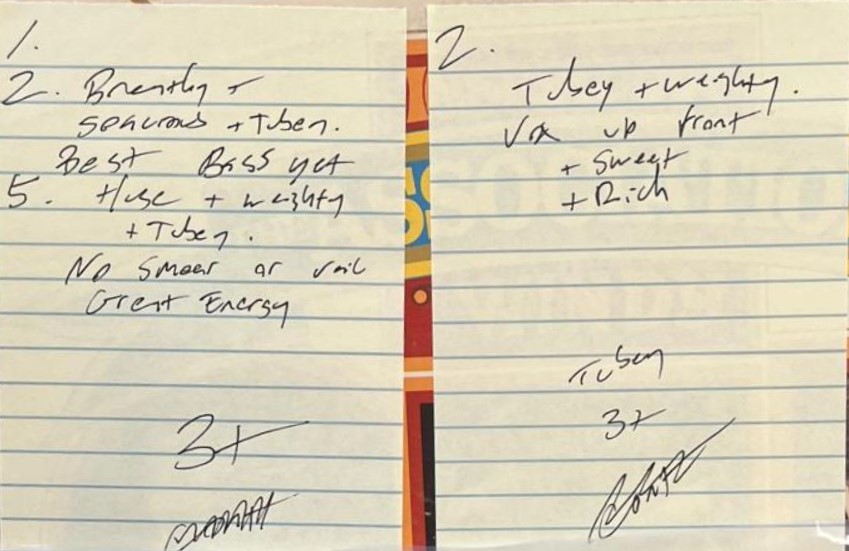
I have boldened three that I think did the most heavy lifting to put it over the top:

  • Breathy
  • Spacious and tubey
  • Best bass yet
  • Huge and weighty and tubey
  • No smear or veil
  • Great energy

Side two was every bit as good:

  • Tubey and weighty
  • Vocals up front and sweet and rich
  • Tubey (I tell you!)

The master of Tubey Magical pop recording is, of course, a Mr. BONES HOWE.

 You would be very hard pressed to find a pop or rock recording from 1967 that sounds as good as a Hot Stamper Insight Out. (Sgt. Pepper comes to mind, as well as some of these other Must Own titles, but Insight Out sets a fairly high bar most of them will have trouble getting over.)

Can you imagine the Mamas and the Papas or The Jefferson Airplane with this kind of rich, sweet, open, textured, natural, tonally correct sound quality?

The midrange is pure Tubey Magic. If you have the kind of system that brings out that quality in a recording, you will go wild over this one. In fact, it’s so good it made me appreciate some of the other songs on the album which I had previously dismissed as filler. When you hear them sound this good, you may change your mind about them too.

Hal, Joe and Bones

The real stars of Windy (and the album itself) are Hal Blaine and Joe Osborne, the famous session drummer/ bass player team. It is they who create the driving force behind these songs. Osborne’s website puts Windy front and center as the first track demonstrating what a top rhythm section can do for a pop song. This whole album can be enjoyed simply for the great drum and bass work, not to mention the sound that both of those instruments are given by the pop recording master Bones Howe.

He produced and engineered the show here; Bones is a man who knew his way around a studio as well as practically anybody in the 60s. He’s the one responsible for all the Tubey Magic of the recording. That’s his sound. If you are a fan of that sound, will find much to like here.

Bouncing Tracks

Never My Love is clearly the best sounding track on the album. Those of you with better front ends will be astonished at the quality of the sound. Windy also sounds excellent, but I hear some sub-generation harmonic distortion, probably caused by bouncing down some of the tracks to make room for others.

This is the era of the four track machine, and when four of the tracks are used up they are bounced down to one track, making available three new tracks. Some of the albums from this era — the Mamas and the Papas come to mind — have multiple bounces, three and four deep, which accounts for the distortion that you hear all through their recordings. The two-track finished master might have upwards of five tape generations or more on some instruments or vocal parts.


UPDATE 2025:

In our shootout notes, no mention was made of any problems with the sound of the song Windy.  The harmonic distortion we mentioned above may be an artifact of some of our previous limitations in cleaning and playback. Those of you with a top quality copy may want to listen for yourself and see if you hear the harmonic distortion we describe.


(more…)

THE Hot Ticket, or Just One of a Bunch of Potentially Hot Tickets?

Hot Stamper Pressings of Rock and Pop Albums Available Now

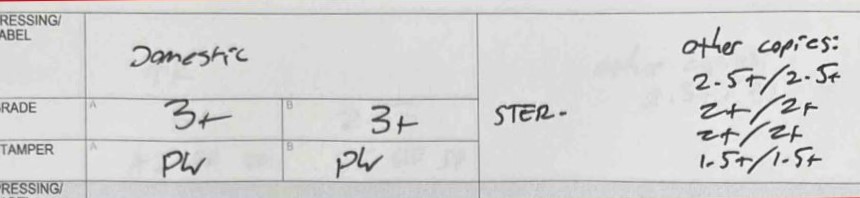
Below you will find the stamper sheet for a title from a recent shootout we did for a rock record whose name we are not revealing.

You may have noticed that when we give out the stampers for the top copies, we rarely identify the title of the record with those Shootout Winning stampers.

As you can well imagine, our sizable investments in research and development over the course of decades make up a big part of the costs we must pass on to our customers.

I can’t say this title is typical of most of the rock and pop we play, but it’s not all that unusual either.

Obviously, knowing the “right” stamper information in this case gets you in the ballpark, but it won’t help you hit the grand slam home run you want to. To do that you have to clean and play about five copies the way we did.

Hot Stamper shootouts may be expensive, they may be a lot of work, but our experience tells us there is simply no other way to find top quality pressings — the ones that earn the 3+ grades, not the 1.5+ grades.

They might all look the same, but they sure don’t sound the same.

In this particular case, the import pressings we played — the ones we expected to do the best as a matter of fact — had by far the worse sound.  There were a couple of them, there was a domestic reissue, and there were five originals: eight records in total.

Changes for 2024

Beginning in 2024 we decided to make available to our readers a great deal of the pressing information we’ve compiled over the last twenty years, under these headings:

(more…)

This Mercury May Have the Same Stampers on Both Sides, But the Sound Is Very, Very Different

Hot Stamper Pressings of Mercury Classical Recordings Available Now

For Mercury classical and orchestral recordings, the original FR pressings (when there are such pressings), in stereo, on the original plum label are the best way to go, right? 

In many cases, yes. We talk about how much better the FR pressings for The Firebird are compared to the much more common, and still quite good, M2 reissue pressings here. (Both beat the pants off the awful Classic Records pressing.

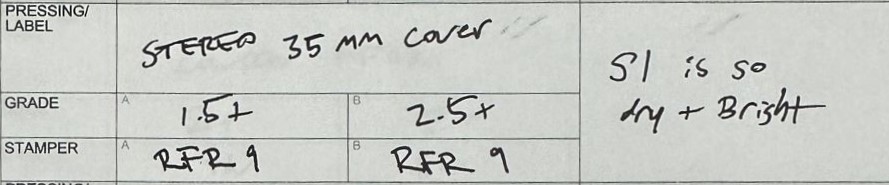
But sometimes the RFR pressings — which, as I am sure you know, can be the earliest stampers for some titles — are nothing special on one side or the other. That is exactly the case here.

Keep in mind that the stamper numbers you see above belong to a different album.

We’ve lately been giving out much more stamper information than we used to, but for now we are keeping the identify of this title close to the vest.

We are not able to predict what stampers will win a shootout before we actually sit down to play all our copies.

It turns out that the FR pressings did not sound as good as some of other pressings. The RFR stampers came in somewhere in the middle of the pack, an average of 2+, but a hard record to sell with such very different sounding sides.

This is why we do shootouts, and why you must do them too, if owning the highest quality pressings is important to you.

Fortunately for readers of this blog, our methods are explained in detail, free of charge.

We’ve also written quite a few commentaries to help audiophiles improve the way they think about records.

I implore everyone who wants to make progress in this hobby to learn from the mistakes we’ve made. There are 146 “we were wrong” listings on the site as of this writing, and we learned something from every damn one of them, painful and costly as those experiences may have been.

(more…)

A Killer Reissue Pressing of Jazz Samba Won Our Shootout

Hot Stamper Pressings of Bossa Nova Albums Available Now
A killer copy of Jazz Samba (the first to hit the site in over four years) with INSANELY GOOD Shootout Winning Triple Plus (A+++) sound from first note to last – exceptionally (and exceptionally rare) quiet vinyl too.

This is by far the best copy of the album we have ever played — we had no idea a copy could possibly sound this good and be pressed on vinyl this quiet.

Remarkably spacious and three-dimensional, as well as relaxed and full-bodied – this pressing was a big step up over all of the other pressings we played in our recent shootout.

No other copy earned a better grade than 2+ on either side, and some of the originals were godawful (watch for the “wrong” stampers coming to the blog soon).

As you can see from the notes, both sides of our most recent White Hot stamper shootout winning copy were doing everything right. This copy was so good that it qualified to be in our Top Shelf section, for records with two shootout winning sides.

You know what’s unusual about these notes?

They’re the kind of notes we’ve never written for any Heavy Vinyl reissue, even for the one that won our shootout not long ago.

They are the kind of notes that make it clear to us what a sham the modern Heavy Vinyl pressing tends to be, even those that are done right.

No modern record we’ve ever played has ever had anything even approaching this kind of big as life sound, and we doubt one ever will.

Records like this vintage vinyl pressing are thrilling in a way that very, very few records ever are.

Once you hear sound like this, you are not likely to forget it.

It sets a standard that modern remastered records simply cannot meet.

Hey, want to find your own top quality copy?

Consider taking our moderately helpful advice concerning the pressings that consistently win our shootouts.

This record has been sounding its best for many years, in shootout after shootout, this way:

(more…)

Which Side Lacked Space, and How Did You Figure That Out?

Hot Stamper Pressings of the Music of Linda Ronstadt Available Now

Big, rich, smooth, and sweet, how did George Massenburg pull off this kind of analog sound in 1987?

We don’t know, but we do know good sound when we hear it, and we heard remarkably good sound on this copy.

The first track on side one was big and rich, with vocals that were breathy and present, just the way we like ’em.

The third track was every bit as good, with sound that was rich and weighty. The vocals wer so present and open, sweet and silky. This is exactly what you want on this album.

And the way we know that is we played a bunch of copies and nothing could beat it. This side one took top honors for having sound we described above.

Side two is another matter. We came across a side two that was slightly better than the side one you see here.

How did that kind of thing happen, you ask?

Well, when we played the two best copies back to back, side one of this copy came out on top, earning a grade of 3+, but the side two of another pressing showed us there was even more space in the recording than we noticed the first time around.

We knew side two was “at least 2+,” the crossed-out text you see in the notes.

With another copy earning a better grade, 3 pluses, we felt the right grade for this side two was 2.5+.

(more…)

Honky Chateau – Two Very Different Mastering Approaches

Hot Stamper Pressings of the Music of Elton John Available Now

Our thoughts circa 2007, about the time we found our first real breakthrough pressing.

This has to be one of the best sounding rock records of all time. The highs are silky sweet, the vocals are full-bodied and breathy, and the tonal balance is perfection from top to bottom.

If you have any doubts that Elton John was a pop music genius, just play this record. It’s all the proof you will need. Drop the needle on any track — you just can’t go wrong.

There’s no need to go on and on about the sonic qualities of this copy. Everything you’d ever want from this record is here in abundance. Folks, this copy is the epitome of what we call Master Tape Sound — on both sides.

Two mastering approaches

The original British copies of this record, with the leatherette cover, have two distinctly different mastering approaches.

The earliest pressings tend to be very lively, but a bit hi-fi-ish and aggressive in places. I used to think these were the best.

The later British originals tend to sound dull and muddy.

There was a time when we liked a certain British stamper that we thought split the difference between the mastering approaches mentioned above.

The copies we played this time around with that stamper were practically unacceptable this time around.

Our best domestic pressings actually bettered many of the Brit copies with our old favorite stamper.

Recent improvements in our stereo and evaluation process have allowed us to discover the stampers with that we think have the right sound.


When it comes to stampers, labels, mastering credits, country of origin and the like, we make a point of revealing little of such information on the site, for a number of reasons we discussed in a commentary we wrote many years ago, at the dawn of the Hot Stamper revolution. (Ahem.)

However, in 2024 we decided to reverse our previous policy. We now make available to our readers a great deal of that information, under these four headings:

Please to enjoy.

(more…)

Doesn’t Anyone Know What Love Is (Supposed to Sound Like)?

Click Here to See Our Most Recent Review for a Real Gold Label Stereo Pressing of Forever Changes 

The one person we can say for sure who must have absolutely no idea what a vintage pressing of the album is supposed to sound like is Chris Bellman. Allow us to make the case.

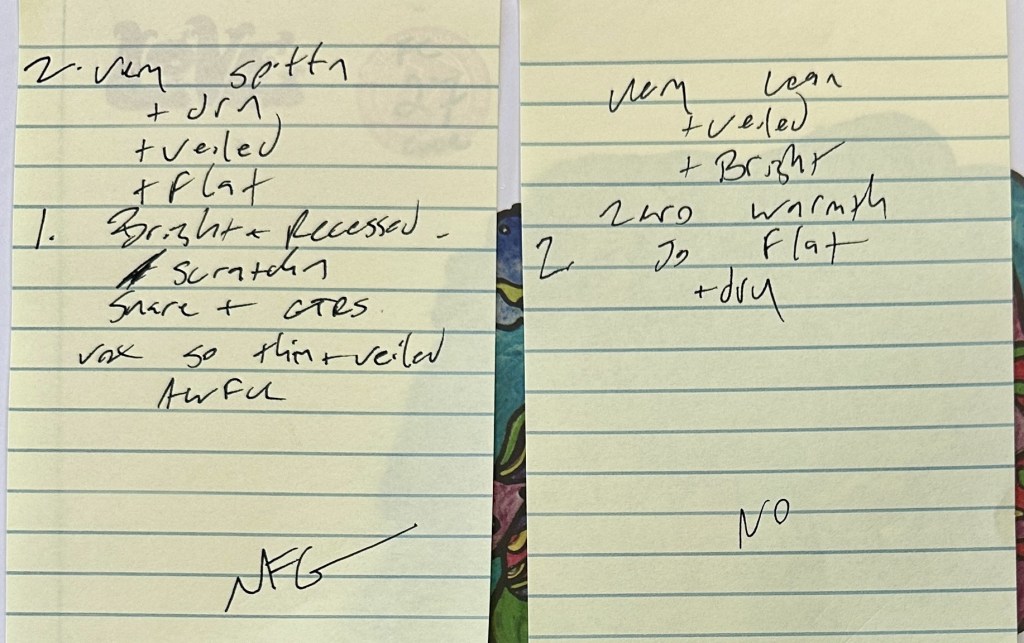
Below you can see our notes for the Rhino Heavy Vinyl pressing of Forever Changes cut by Chris for Bernie Grundman Mastering in 2012.

We recently got hold of a copy locally and figured why not give it a spin and see how one of the most respected mastering engineers of the day, CB, fared with this apparently difficult to master title. (Others have tried and failed. See here and here.)

The Gold Label pressings are the only ones we buy these days. The Big Red E Elektras are passable at best, and everything after them is terrible, including imports and all the Heavy Vinyl reissues that we’ve had the misfortune to play over the years. We hope to be posting some of the stampers to avoid (we call them bad stamps) before too long.

Let’s get right into the sound of this 2012 remaster. We played the two tracks on each side that we’re most familiar with from doing shootouts for the title.

As the record played, to the best of our ability we made notes of the sound we were hearing:

(more…)

Bob and Ray Were Not Enough – We Needed the Tillerman Too

Bob and Ray Throw a Stereo Spectacular is my all time favorite test disc, the one test that every change to the system must pass: by making The Song of the Volga Boatmen sound better.

The danger in making the bulk of your sonic judgments using only one record is that you never want to optimize your system for a single record, only to find out later that it now sounds better but others you play now sound worse.

Here is the story of how I made that mistake long ago (and apparently did not learn my lesson): In 2005, I fell into a exactly this kind of audiophile trap.

The Right Way

So the right way to go about testing and tweaking is to get all your hardest test records out and start playing them, making notes as you tweak and tune your system, setup, room and whatever else you can think of.

This may take a long time, but it is time well spent when you consider that, once you are done, all — or nearly all — of your records will sound better than they did before.

In my review of the 45 RPM Tillerman, I noted the following:

Recently I was able to borrow a copy of the new 45 cutting from a customer who had rather liked it. I would have never spent my own money to hear a record put out on the Analogue Productions label, a label that has an unmitigated string of failures to its name. But for free? Count me in!

The offer of the new 45 could not have been more fortuitous. I had just spent a number of weeks playing a White Hot pink label original UK pressing in an attempt to get our new playback studio sounding right.

We had a lot of problems.

We needed to work on electrical issues.

We needed to work on our room treatments.

We needed to work on speaker placement.

We Repeated Our Mistake

(more…)