*Experimenting with Records

Experimenting with records is the only way to learn much about them of any real value.

Lee Konitz With Warne Marsh Is Yet Another Amazing Sounding Budget Reissue

Hot Stamper Pressings of Jazz Recordings Featuring the Saxophone Available Now

Here is how we described this wonderful reissue of the 1955 recording of Lee Konitz with Warne Marsh:

Incredible MONO sound throughout this reissue copy of Lee Konitz with Warne Marsh (only the second to hit the site in years).

Exceptionally spacious and three-dimensional, as well as relaxed and full-bodied – this pressing was a big step up over every other copy we played.

If you want to hear the Tubey Magic, size and energy of this wonderful session from 1955 – originally recorded by Tom Dowd and expertly remastered by George Piros – this pressing will definitely let you do that.

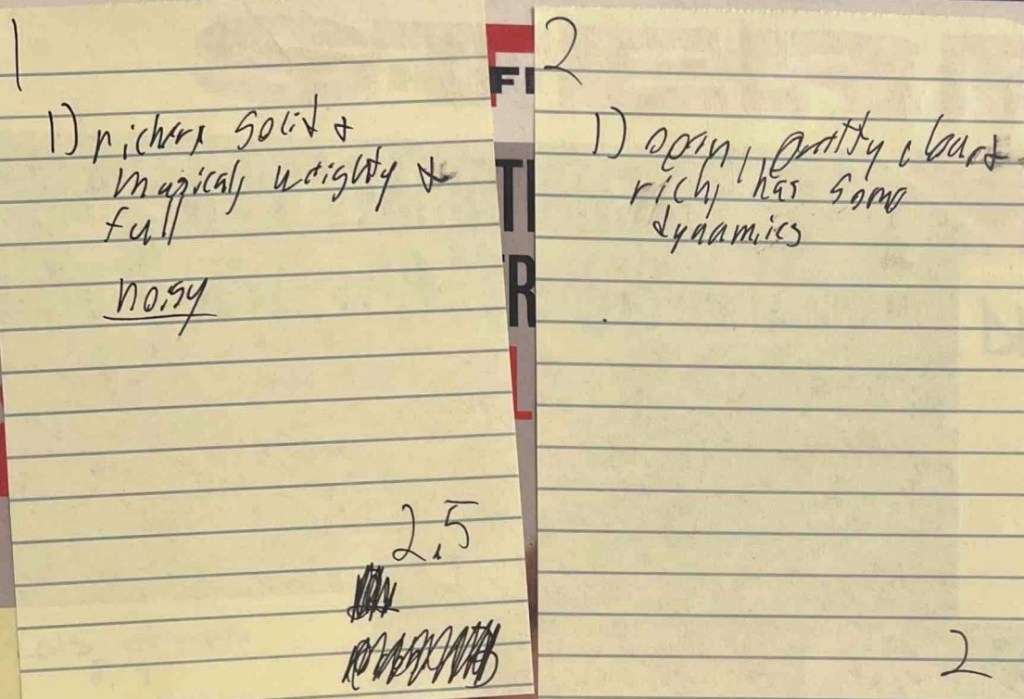
I hope these notes are able to speak for themselves. If you have trouble reading them, please drop me a line and I will translate them for you.
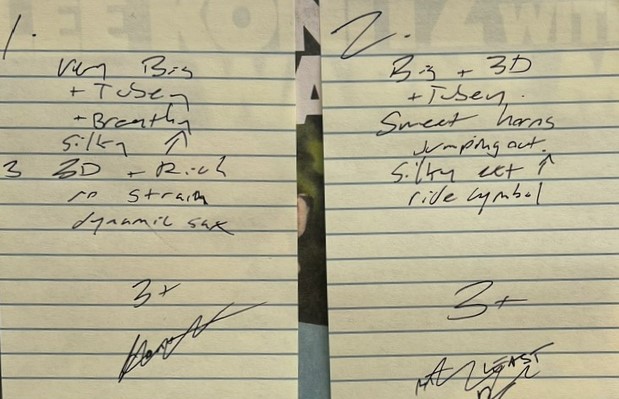
The horns are breathy and clear, yet full and rich as can be. There may be a good reason that this pressing sounds as good as it does: it was remastered by one of the greatest mastering engineers of all time, George Piros.

Tom Dowd is the original recording engineer, and this one album should be all the proof you need that when it comes to jazz in mono, the guy is hard to beat. Rock in stereo, there the record is quite a bit more spotty (see, or better yet, listen to Cream, The Young Rascals, Delaney and Bonnie and too many others to list).


UPDATE 2025

The listening panel for this record listened to it with the mono switch in as well as with the mono switch out on the EAR 324p phono stage we use.

Somewhat surprisingly, the sound got worse on this mono pressing playing with the mono switch activated.

That’s not supposed to be the way works, but in the world of records, when has that ever counted for anything?

Just another reminder to always stay skeptical. Never believe anything anybody tells you about audio. Test everything for yourself, and that includes our Hot Stamper pressings. Play them against the best other pressings you can find. We will happily take back any record that doesn’t trounce anything you have to play head to head with our records.


(more…)

Letter of the Week – “Tom likes forward-sounding records, mastered for FM broadcasts. Steve masters for home stereos.”

Hot Stamper Pressings of the Music of Fleetwood Mac Available Now

One of our good customers played some Hot Stamper pressings for a friend of his and wrote to tell us about  the experience.

Dear Tom,

There’s some fascinating sociology here with how contentious your business model is. It really tweaks people.

I recently made a friend who’s always been a vinyl enthusiast. He’s got a fantastic collection. My friend has worked with Steve Hoffman on a few projects in the past, and holds him in very high regard, both professionally and personally.

We got together over Thanksgiving and I brought along my hot stampers. We listened to them on his gorgeous Linn stereo. One by one, he could appreciate the differences in them, and confirm what I was hearing.

I put my Rumours hot stamper and then his Steve Hoffman remaster. I put my Mahavishnu alongside his first UK pressing. I played my Abraxas Hot Stamper against the MoFi OneStep, which he had heard of, but never actually heard.

We debated the sonic merits of each, noting the different decisions that different mastering engineers had made. In all cases, he heard what there was to like about the hot stampers. Despite the evident sonic differences, which we could both hear and agree to, we disagreed over whether that meant Better Records was really on to something.

My friend’s reasons to resist becoming a customer really had nothing to do with the listening experience we had just shared. “Tom likes forward-sounding records, mastered for FM broadcasts. Steve masters for home stereos.”

Or, “a 1A-1A pressing that’s been well cared for will sound the best by definition because that’s closest to what the artists intended.”

Or, “Tom says there’s variance from one biscuit to the next. That’s clearly absurd.”

All this, despite having heard the records! Now, to my friend’s credit, he did allow that he might have a look at the site and try one out, if a record he really loves pops up at a reasonable price. (As far as I know, he hasn’t done it yet…)

Anyway, I had to agree with him – your business model makes no sense in light of all our preconceptions about how to find great sounding records.

And, even when you hear hot stampers for yourself, the defensive walls still stay up. It’s possible to deny what you’re hearing.

Aaron

Aaron,

A quick note about 1A/1A. There was a time when we might have had 6-8 original pressings of a title, some 1A’s, some 1B’s etc. I would have loved to have let you borrow them and have your friend spot the 1A pressing, since it’s “the best.”

It is of course impossible to do that, but then you just lose friends when you embarrass them that way, and who cares what somebody else likes or doesn’t like, thinks or doesn’t think about records? I sure never did. The records sound the way they sound. Opinions, as you found out for yourself, have been known to vary.

Hoffman’s fans are true believers. Try blindfolding the guys on his forum and playing them a variety of pressings, of his stuff and others. They would not do a good job of knowing which is which by ear, which are the ones you’re supposed to like and which are the ones that shouldn’t sound good, your friend included.

But most audiophiles will never submit to this test because the rug might be pulled out from under them. That is a risk they cannot take. The only tests they are willing to submit to are the ones where they know what the answers are in advance, and, to make matters worse, the only answers they will accept are the ones guaranteed to corroborate their biases and prejudgments.

When Geoff Edgers of The Washington Post wanted to test me with a batch of mystery pressings, I said “Bring it on. I do this for a living, and I’ve been at it for twenty years. I know good sound when I hear it.” He went on to play me two of the best sounding Heavy Vinyl pressings I have ever heard (here’s one of them), as well as some of the worst. (Reviews for those are  coming, but there are only so many hours in a day and finding the motivation to critique mediocre Heavy Vinyl pressings is not easy when there are so many great records to write about.)

(more…)

These Pink Label Pressings Can Sound Good, But Great? Not a Chance

Hot Stamper Pressings of Music on Island Records Available Now

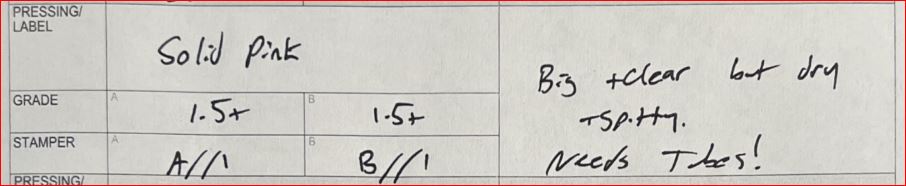
Below you will see the bottom part of the stamper sheet for a shootout we did recently.

Please note that the album you see pictured is not the one we are discussing here.

It very well could have been been a Jethro Tull album, but all we can say for sure is that it was definitely an album on Island, which just happens to be one of our favorite labels, for sound and music.

The earliest pressings for many records on the Island label are not very good. This one — again, not for This Was, for some other record — is not a bad sounding pressing.

With grades of 1.5+ on both sides, it fits comfortably in our section for good, not great sounding LPs — but the right reissues from the 70s are a big step up in class sonically. They’re the ones that win shootouts, not these Pink Label LPs.

It’s big and clear but dry and spitty and badly needs tubes in the cutting chain.

Do the record collectors who prize the Pink Label pressings above all others notice these things?

Do the audiophiles who play them?

Been There, Done That

We’ve run into so many sonically-flawed Pink Label Islands by now that hearing one sound lackluster if not actually awful doesn’t phase us in the least. Some of the other Pink Labels that never win shootouts can be found here.

(more…)

Midrange Suckout? I Have a Theory

These Titles Are Good for Testing Presence in the Midrange

Many audiophile records suffer from a bad case of midrange suckout.

Vocals and other instruments seem to be so far back in the soundfield that they might as well be coming from another room.

Yet somehow there are still audiophiles who defend the records put out by the ridiculous label that single-handedly created and produced that sound. What is wrong with these people?

(On a side note, yes, I was one of the audiophiles who fell for their phony EQ trickery in the 70s and 80s. In my defense, that was a long time ago.)

I Have a Theory

Actually, I have a good idea why so many so-called audiophile records have a sucked-out midrange.

A midrange suckout creates depth in a system that has difficulty reproducing it.

Imagine that instead of having your speakers pulled well out from the back wall the way you should, you instead have your speakers shoved flat up against that wall.

This arrangement has the effect of seriously limiting your speakers’ ability to reproduce the three-dimensional space of the recordings you play.

Kind of Blue on MoFi

I hinted back in 2022 I was going to discuss their pressing down the road, and like most things that I was supposed to write about down the road, we’re still waiting to see it.

The short version of that future commentary will note that the drums in the right channel of All Blues are about five feet further back in the soundfield than they are on our reference too-noisy-to-sell Six-Eye pressing, or any other pressing of the album we’ve played for that matter.

At the time I could not wrap my head around how Mobile Fidelity could have gotten hold of the multi-tracks in order to remix the album and place the drums further back in the mix.

(more…)

This Is Why We Love Hippie Folk Rock from the 60s and 70s

Hot Stamper Pressings of Hippie Folk Rock Albums Available Now

This has long been one of our favorite Hippie Folk Rock albums here at Better Records.

If you like Crosby, Stills and Nash’s first album or Rubber Soul — and who doesn’t love those two albums? — you should much to like on Down in L.A.

Here is how we described our most recent shootout winner:

These are just a few of the things we had to say about this amazing copy in our notes: “fully extended from top to bottom”…”vox and guitar jumping out of the speakers”…”big and tubey and weighty”…”HTF [hard to fault]” (side one)…”serious bass and energy”…:”rich and 3D and lively.”

Both of these sides have the smooth, sweet, analog sound we were listening for – they’re rich and tubey, with clarity and freedom from smear — the best of both worlds.

The notes for the top copy from our most recent shootout can be seen below. It us six years to get this shootout going, but the best copies we played were so impressive that they made all the time and money it took to pull it off worth the effort.

Side one was HTF – Hard To Fault.

Brewer and Shipley’s first and only release for A&M has long been a Desert Island Disc in my world. I consider it one of the top debuts of all time, although it’s doubtful many will agree with me about that since I have yet to meet anyone who has ever even heard of this album, let alone felt as passionate as I do about it.

To me this is a classic of Folk Rock, along the lines of The Grateful Dead circa American Beauty, surely a touchstone for the genre.

It’s overflowing with carefully-crafted (B and S apparently were obsessive perfectionists in the studio) inspired material and beautifully harmonized voices backed by (mostly) acoustic guitars.

The Beatles pulled it off masterfully on Help and Rubber Soul.

All three are built on the same folk pop sensibilities. Tarkio, album number three, is clearly the duo’s Masterpiece, but this record comes next in my book, followed by Weeds, their second album and first for Kama Sutra. After Tarkio it’s all downhill.

“Of all the many folkys to make a transition to electric folk-rock in the 1960s, Brewer & Shipley retained more of the wholesome, strident qualities of early-60s folk revival harmonizing than almost anyone.”

(more…)

The Enigma Variations on Mercury Was Not to Our Liking (Although We Sure Love the Cover)

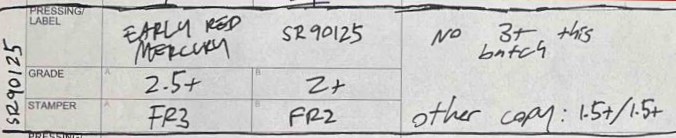
Neither the sound nor the performance of this 1959 Mercury (SR 90125) impressed us when we did a shootout for the work years ago.

The performance of the Enigma Variations here seems rushed, and the two other recordings of the work that we like, one on Philips, the other on RCA, are better.

The Philips with Haitink is probably the better of the time and our favorite at this time. Of the three recordings that we felt had the best combination of music and sound, the Merc with Barbarolli was our least favorite, so we decided to concentrate on the best two recordings in our shootout and get rid of the Mercury pressings we had on hand.

(more…)

Blonde On Blonde and Some Bad Side Fours

Hot Stamper Pressings of the Music of Bob Dylan Available Now

Here’s a little something that you may have come across on your own, but since we’ve never seen it mentioned anywhere else, perhaps this will come as news to you the way it came as news to us about ten years ago.

There is a stamper used on some Blonde on Blonde side fours that is so ridiculously bad, you might as well be listening to a cassette playing underwater.

To be sure, we pick up plenty of mediocre copies all the time, but these side fours are so beyond terrible it’s clear someone was asleep at the wheel.

They’re fascinating to hear in their own way, because it’s simply shocking that a good recording could sound that bad. Like the best pressings of our favorites (but in a very different way), words don’t do it justice.

Its awfulness has to be heard to be believed.

If you’ve been reading this blog much, you may have noticed that we’ve been saying that more and more lately.

(more…)

Glenn Miller Orchestra – The Direct Disc Sound of…

  • An original pressing of a Great American Gramophone Company direct-to-disc recording with STUNNING Shootout Winning Triple Plus (A+++) sound or close to it throughout
  • Here are just a few of the things we had to say about this incredible copy in our notes: “tubey and 3D and breathy”…”huge and lively”…”powerful orchestra”…”jumping out of the speakers”…”very rich and present”
  • Great energy, but the sound is relaxed and Tubey sweet at the same time, never squawky, with plenty of extension on both ends – that’s analog for ya!
  • This is no sleepy over-the-hill Sheffield Direct-to-Disc (referring to the later Harry James titles, not the excellent first one) – these guys are the real deal and they play their hearts out on this live-in-the-studio recording
  • Note that side two did not have all the space but it was so punchy and 3-D that it was easy to award it 2.5+. The copy that beat had all the same qualities and more space, sounding like side one of this copy.

One of the all time GREAT Direct to Disc recordings. For sound and music, this one is hard to beat. And the vinyl is as quiet as any you will find.

We went a bit overboard years ago when we wrote, “I don’t think you can find a better sounding big band record on the planet.” Well, we’ve heard plenty of amazing big band albums in the course of our Hot Stamper shootouts for the last five or ten years, albums by the likes of Basie, Zoot Sims, Ellington, Shorty Rogers, Ted Heath and others.

Not to mention the fact that the shockingly good Sauter-Finegan track “Song of the Volga Boatman” from the LP Memories Of Goodman and Miller is played regularly around these parts for cartridge setup and tuning, as well as general tweaking.

But that should take nothing away from this superb recording, made at the famously good-sounding Capitol Records Studio A, with none other than Wally Heider doing the mix and Ken Perry manning the lathe.

We also noted that, “It absolutely murders all the Sheffield big band records, which sound like they were made by old tired men sorely in need of their naps. Way past their prime anyway”, which is mostly true.

The Glenn Miller Orchestra heard here was an actively touring band. They know this material inside and out, they clearly love it, and they’re used to playing the hell out of it practically every night.

If you like the tunes that Glenn Miller made famous — “String of Pearls,” “In The Mood,” “Tuxedo Junction” — you will have a very hard time finding them performed with more gusto, or recorded with anything approaching this kind of fidelity.

(more…)

Why Do So Few Living Stereo Pressings Sound as Good as This One?

Hot Stamper Pressings of Orchestral Spectaculars Available Now

We introduced our most recent shootout winning copy of The Reiner Sound from 1958 this way:

The Reiner Sound returns to the site for the first time in years, here with big, bold, dynamic Triple Plus (A+++) Living Stereo sound throughout this original Shaded Dog pressing.

These are just a few of the things we had to say about this amazing copy in our notes: “fully extended up top”…”sweet and rich”…”supremely dynamic and spacious!!!” (side one)…”massive and tubey and 3D”…”like no other” (side two)…”explosive finish.”

These sides are doing everything right – they’re rich, clear, undistorted, open, spacious, and have depth and transparency to rival the best recordings you may have heard.

This record will have you asking why so few Living Stereo pressings actually do what this one does.

The more critical listeners among you will recognize that this is a very special copy indeed.

Everyone else will just enjoy the hell out of it.

And here are the notes to prove it!

Side one was at least 3+.

(more…)

Robert Brook Revisits a White Hot Stamper Pressing of The Eagles

Robert Brook runs a blog called The Broken Record, with a subtitle explaining that the aim of his blog is to serve as:

A GUIDE FOR THE DEDICATED ANALOG AUDIOPHILE

Here is a posting Robert wrote many years ago and has recently updated.

EAGLES: WHITE HOT and SOARING HIGHER!

A quote I rather liked:

You can throw a Hot Stamper onto your rig and hear that it sounds better than your crappy “audiophile” 180g reissue, but when you compare it to your high res digital file, you’re not quite sure which one you like better.

The digital vs. analog debate, perhaps the most enduring in all of audio, persists because only a handful of audiophiles have truly realized the full potential of analog in their systems.

You may be reading this thinking “hey whad’ya mean! My analog system sounds great!.” And it very well may sound great, but I thought and still think that my copy of Eagles sounds great, and let me tell you, the White Hot Stamper is a WHOLE new platter of wax!

The tubey jangle of the guitars, the room filling weight of the drums and bass, the airy, spacious, luscious vocal harmonies, and every last sumptuous element of the mix, unmoored, liberated from obscuration so completely that the music, freed from every conceivable resolution constraint, SOARS to life in the listening room.

That’s what this White Hot Stamper of Eagles sounds like, and that’s what analog is ALL ABOUT!

This record, The Dude be damned, is one of my all time favorites. It’s a delicious recording on even a decent copy. My current copy, which bested several others, was competitive on side 1, but laid to waste by the White Hot on side 2. And that was the side I thought mine had nailed!

Eagles lives and dies by the vocal harmonies, and when the backing vocals are as clear and present and alive as the lead vocal is on most other records then you know you’re hearing a very special copy.

Here is our description of a recent copy that is up on the site at this time.

Super Hot and $699 — affordable maybe for some, certainly not cheap, but as Robert makes clear in his review, one of the most amazing sounding recordings in the history of popular music on the right pressing, and the right pressings are the only ones we offer.

The notes for our Shootout Winning copy from 2024 can be seen at the very end of this post. Side two was a “strong 3+, ” which we would have called 4+, Beyond White Hot, way back when, but we stopped doing that many years ago.

Side two was HTF — Hard To Fault. This may have been the side two that Robert is raving about in his review.

My current copy, which bested several others, was competitive on side 1, but laid to waste by the White Hot on side 2. And that was the side I thought mine had nailed!

Eagles lives and dies by the vocal harmonies, and when the backing vocals are as clear and present and alive as the lead vocal is on most other records then you know you’re hearing a very special copy.

Can’t argue with any of that! That’s what we heard too.

(more…)