Demo Discs for Dynamics

The group of records you see here are some of the most dynamic we’ve had the good fortune to discover.

Our scientific approach to finding the best sounding records has allowed these exceptional pressings to take their place among the best we’ve know of.

One of the many faults we find with modern Heavy Vinyl pressings is that they tend to be noticeably more compressed than the vintage pressings on this list.

The Blues… A Real Summit Meeting

More B.B. King

More Electric Blues

  • You’ll find superb Double Plus (A++) sound or BETTER on all FOUR sides of this vintage Buddah Brown & Pink Label double album from 1973
  • This copy is wonderfully spacious, full-bodied and natural, with a nice extended top end, plenty of space around the instruments and few of the problems that plagued most of the pressings we played
  • Features B.B. King, Muddy Waters, Eddie “Cleanhead” Vinson, Big Mama Thornton, Arthur “Big Boy” Crudup and more
  • Recorded live at Newport in New York, this is an OUTSTANDING blues album

Listen to ’Big Mama’ Thorton’s voice on this record — it sounds like somebody forgot to put a limiter on her mic. It is without a doubt one of the most dynamic vocals I have ever heard on any record in my entire life. You feel like you are sitting front row center.

This record sounds JUST RIGHT to me. It doesn’t sound like there’s anything you could do to it to make it sound better. It’s tonally correct from top to bottom and very transparent. If you want a great introduction to the blues, I can’t think of a better one than this. (more…)

Loggins & Messina – Sittin’ In

More Loggins & Messina

  • An outstanding copy of L&M’s debut Masterpiece with Double Plus (A++) grades from first note to last
  • The sound is big, lively, open and clear with Tubey Magical richness that only the best vintage pressings can show you
  • One of our favorite albums, and with every improvement in the system this one just keeps getting better and better
  • Every track on side one is brilliant, from “Nobody But You,” to “Danny’s Song,” to “Vahevala,” to the ending of the ‘Trilogy’ with “Peace of Mind”
  • 4 1/2 stars: “With their infectious blend of country, folk, rock and Caribbean music, L&M started out at the top of their game”
  • If you’re a fan of this remarkable duo, and what audiophile wouldn’t be?, this title from 1971 is clearly one of their best
  • The complete list of titles from 1971 that we’ve reviewed to date can be found here.

We love this album and have been playing it regularly since it came out in 1971. That’s a long time, and the good news is it just keeps getting better and better, like all the best records in your collection should. (more…)

Arnold / English, Scottish and Cornish Dances

Hot Stamper Pressings of TAS List Super Disc Albums

Reviews and Commentaries for TAS Super Disc Recordings

  • The rare and highly regarded TAS List Heavyweight, Lyrita mastered as per HP’s preference
  • Full, spacious, with a HUGE hall and amazing clarity
  • Super Hot on both sides, you had better watch your levels – this copy is extremely dynamic
  • This pressing is clearly a Demo Disc for Size and Space as well as a Demo Disc for Dynamics

This Lyrita-mastered title is a member of HP’s famous TAS Super Disc list.

It includes Eight English Dances, Four Scottish Dances and Four Cornish Dances.

The sound is uncolored and natural, with a mid-hall perspective, and very little multi-miking to be heard, all to the good. 

It’s extremely fast, dynamic and clear, in those respects very much like live music. The top end is right and the overall sound balanced.

The woodwinds on the second track of side two are especially lovely.

(more…)

Illinois Jacquet / How High the Moon – A Killer Two-Fer Thanks to David Turner

More Jazz Recordings Featuring the Saxophone

More Recordings by Rudy Van Gelder

  • This superb Prestige Two-Fer boasts Shootout Winning Triple Plus (A+++) sound on side two and outstanding double plus (A++) sound on the other three
  • Compiled from four Jacquet albums released in 1968 and 1969, including favorites like “Bottoms Up,”The Blues; That’s Me”, and “The King”
  • Jacquet’s one of the creators of the big, soulful tenor sax sound – I know of no one who does it better 
  • “… a fine sampler to Jacquet’s music… it features Illinois in a variety of settings (ranging from a quartet to a mini-big band)…”

The album combines material from four different Illinois Jacquet albums (Bottoms Up, The King, The Soul Explosion, and The Blues; That’s Me!). The sound is AMAZING and Jacquet plays with wonderful emotion and skill throughout.

Check out the man’s bassoon playing on ‘Round Midnight, the last track on side four — now there’s a sound you don’t hear too often on a jazz record!

As a bonus, they selected only about half the material from each of these classic albums, turning over to each of them about one side of these two discs. Which simply means that the quality and variety are consistently high on all four of these sides. No unreleased material or alternate takes; in other words, no filler. (more…)

Andrew Gold – What’s Wrong With This Picture?

Hot Stamper Pressings on the Asylum Label Available Now

More Records on Asylum – A Label We Love

The best copies of Gold’s sophomore release are incredibly rich, sweet and Tubey Magical. They also have tons of deep punchy bass and wonderfully breathy vocals.

If you own many Asylum records, you know this title is yet another example of classic Asylum Analog. Think of the sound of the Eagles first album and you won’t be far off.

Andrew Gold is another talented popster who got little respect from the critics, or the public for that matter. His music has a lot of the same qualities as Buddy Holly’s: simple catchy tunes about love, with clever lyrics and tons of hooks. He covers one of Holly’s songs on this very album.

But the best song he ever did is right here on side two: One of Them Is Me. Everybody has been the guy telling this story at one time or another; it’s a heavy song if you make the effort to listen to the lyrics.

More importantly, from an audiophile recording point of view, the song builds and surges to a stirring, dynamically powerful climax, then drops down to the noise floor with just an electric piano playing softly. This is what being a studio wizard is all about, and Gold is definitely a wizard. Any Super Hot or better pressing will demonstrate to you that this is one helluva well recorded album.

(more…)

Ambrosia / Self-Titled – Our 2022 Shootout Winner


  • Spectacular Prog Rock sound explodes on this copy of the band’s phenomenally well-recorded debut album, mixed by none other than Alan Parsons – exceptionally quiet vinyl too
  • Big Whomp Factor here – the bottom end is huge and punchy on this copy, like nothing you’ve heard
  • “Its songs skillfully blend strong melodic hooks and smooth vocal harmonies with music of an almost symphonic density.”
  • A permanent member of our Top 100 and, on big speakers at loud levels, a Rock Demo Disc of the Highest Order
  • We’ve recently compiled a list of records we think every audiophile should get to know better, along the lines of “the 1001 records you need to hear before you die,” but with less of an accent on morbidity and more on the joy these amazing audiophile-quality recordings can bring to your life. Ambrosia’s debut is a good example of a record many audiophiles may not know well but should.
  • If you’re a fan of the band, this classic from 1975 belongs in your collection.
  • The complete list of titles from 1975 that we’ve reviewed to date can be found here.

Folks, this LP is nothing short of a Sonic Spectacular. For that reason alone it would get a strong recommendation, but the music is so good that the brilliant sound is best seen as a bonus, not the sole reason to own the album.

These sides have the kind of energy that few titles can lay claim to. Put this one up against your best Dark Side of the Moon. Unless you bought a High Dollar copy from us, I’d say there’s almost no chance that this album won’t reduce it to vinyl rubble. (We talk about how similar the recordings are below.) (more…)

Borodin / Symphony No. 2 / Tchaikovsky / Francesca Da Rimini / Varviso

Hot Stamper Classical and Orchestral Imports on Decca & London

More Classical ‘Sleeper” Recordings We’ve Discovered with Demo Disc Sound

This London Whiteback pressing (CS 6578) has SHOCKINGLY GOOD sound; in many ways it deserves to be called a Demo Disc. It has at least one quality that one virtually never hears on an audiophile reissue: a smooth, natural top end. This record only sounds correct and “real” at louder volumes, in the same way that a live orchestra often sounds a bit lifeless in the quiet passages, only to get exciting, big and powerful when the score calls for it. For this to happen on record you need real dynamics and tonal neutrality.

We have not heard many audiophile reissues pull these things off either, just two of the reasons we no longer carry them.

And you can find all the other reasons on the site easily enough. We can’t stop talking about how disappointing Heavy Vinyl sounds to us now.

We graded both sides AT LEAST A++, a bit vague we admit; we just don’t have enough copies to know if the sound could get much better.

We played a good many vintage classical LPs that day and this was clearly one of the best sounding, so we feel this grade should be accurate, perhaps even conservative.

Credit for the sound must go to the Decca engineers, of course, but also to the hall that the L’Orchestre de la Suisse Romande played in, where so many of the great Ansermet recordings were made. This recording is from 1968. Ansermet died in 1969. One imagines that he was perhaps not able to conduct at this stage of his life and turned his wonderful orchestra and hall over to Varviso, a man better known for conducting operas at the time.

Side One – Borodin

At Least A++, with the kind of Golden Age sound that has rarely if ever been realized in the modern era. Big, wide and deep, with smooth, rich orchestral sound, these are the kind of records that let you forget the sound and just enjoy the music. The performance is taken a brisk pace, rarely a bad thing.

More reviews and commentaries for recordings of the Second Symphony.

Side Two – Tchaicovsky

At Least A++, and a lovely work that has never made it to the site in Hot Stamper form before, hint hint.

Rich, with deep bass, big stage, huge space and so 3-D, this is what we love about vintage recordings. And a great performance as well.

For Misty, Stick with the Real Japanese Pressings

More Audiophile Recordings with Audiophile Quality Sound

Hot Stamper Pressings of Jazz Recordings Featuring the Piano Available Now

This is a highly recommended Three Blind Mice LP. We don’t like most Three Blind Mice albums, or jazz played by practically anyone who is not American. (Ever played Jazz at the Pawnshop? If so, did you enjoy your nap?)

But we like the music of Yamamoto well enough to recommend some of it. Midnight Sugar might actually be his most enjoyable album of them all.

The Heavy Vinyl versions are not as good, although the 45 RPM pressing probably comes the closest to the real Japanese pressing we review here.

Anything pressed at RTI is rarely better than second rate and should be avoided if at all possible.

We almost never like records Made In Japan that were not recorded in Japan. There are of course a few exceptions.

My First Time

This was the first Three Blind Mice recording I ever heard, over 20 [now close to 40] years ago. A fellow audiophile who went on to become a true audio guru for me (George Louis) played me this recording to demonstrate his stereo.

It had to be the most dynamic piano recording I had ever heard in my life. 

Yamamoto likes to tinkle the keys very softly, and then really pound them. And the Three Blind Mice engineers were able to capture both the quiet tinkling because of the Japanese vinyl, and the full-on pounding because of the audiophile recording equipment they used. It was an ear-opening experience.

Over the course of the next year or two, I sold off my Fulton Premiers and my Audio Research Electronics, because no matter how hard I tried, I couldn’t get Misty to sound like it did at George’s house.

I realized that it takes better equipment than those companies were making back then to get the sound of that record right, and that put me on, to quote Cat Stevens, ”the road to find out.”

And it wasn’t just the equipment that had to get better, a subject we address in our commentary Revolutionary Changes in Audio. An excerpt:

When I got started in audio in the early- to mid-70s, the following important elements of the modern stereo system did not exist:

  • Stand-alone phono stages.
  • Modern cabling and power cords.
  • Vibration controlling platforms for turntables and equipment.
  • Synchronous Drive Systems for turntable motors.
  • Carbon fiber mats for massive turntable platters.
  • Highly adjustable tonearms (for VTA, etc.) with extremely delicate adjustments and precision bearings.
  • Modern record cleaning machines and fluids.
  • And there wasn’t much in the way of innovative room treatments like the Hallographs we use.

A lot of things had to change in order for us to reproduce records at the level required to do our record shootouts and be confident about our findings, and we pursued every one of them about as far as time and money allowed.

For a further discussion of these issues, please click here.

(more…)

Bud & Travis …In Concert

More Folk Revival Music

This original Liberty Black and Rainbow Label LP has exceptionally quiet vinyl and very good sound.

About fifteen years ago, I played side one and thoroughly enjoyed it. These guys are very entertaining, especially their between song banter.

What was surprising was how dynamic the vocals are on this recording. You would never hear a studio recording with these kinds of dynamics, I can tell you that.

Why does this 1960 recording of live folk music sound so good?

Well, Liberty was a label that tended to produce very good sounding records. We’ve played scores of them, and we did some shootouts for the ones that had music that could justify our high prices the cost of all the time and effort required to find the best sounding copies.

But the most obvious reason this record has such good sound is that Ted Keep recorded it.

You don’t have to, but if you want this kind of sound quality, it pays to go back to the All Tube Recording and Mastering chains of the late ’50s and early ’60s. That is where you are most likely to find it.

If you’re a fan of live folk music, this album from 1960 surely belongs in your collection.

The complete list of titles from 1960 that we’ve reviewed to date can be found here.

(more…)

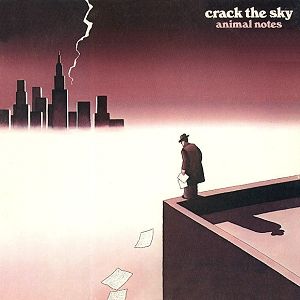
Crack The Sky – Animal Notes

More Recordings Engineered by Shelly Yakus

Other Well Recorded Albums that Should Be More Popular with Audiophiles

Both sides are big and rich in the same way that all the best Classic Rock albums from the ’70s are. It has plenty of rock ENERGY; here the sound jumps out of the speakers like practically no other copy we heard.

At the levels it was playing at it was nothing less than a thrill to hear the album I’d known for so long sound so much better than I remember it from back in the day. (Stereo has come a long way since 1976, that’s for damn sure.)

To my mind, speaking as both a fan and an audiophile, both the first two Crack the Sky albums succeed brilliantly on every level: production, originality, songwriting, technical virtuosity, musical consistency and, perhaps most importantly for those of you who have managed to make it this far, Top Quality Audiophile Sound.

This is simply a great album of adventurous, highly melodic Proggy Arty rock. If you like the well known bands that made the classic albums cited below there’s a very good chance you will like this much less well known band’s second album also. Especially if you have the taste for something different — I know of no other album quite like it. It may have been strongly influenced by many of the ’70s Classics of both Prog and Art Rock, but it is stylistically unique.

This is Big Production rock that pulls out all the stops and then some, with a massive Beatlesque string section, horns, synths, backward guitars and every other kind of studio effect that they could work out.

Much like Ambrosia’s debut (another poorly understood band on a small label), such an ambitious project was clearly an effort to make a grand musical statement along the lines of Tumbleweed Connection, Sgt. Pepper, Crime of the Century, Close to the Edge, The Original Soundtrack or Dark Side of the Moon — all albums I suspect this band played countless times in hopes of recreating some of that magic themselves once in the studio. I am of the opinion that they succeeded marvelously.

In the 70s I was a huge fan of those albums too. (Still am of course; check out our Top 100 if you don’t believe me. They’re all in there.) I played them more times than I can remember, with Crack The Sky’s albums spending plenty of time — in heavy rotation you could say — on the turntable in those days.

Fun tip: Listen for the Elton-John-like piano chords on the first track. Can you name that song? (Hint: it’s on Tumbleweed Connection.)

Crack the Sky

I freely admit this band is not for everybody. AMG is correct that the album is not exactly sweetness and light. Of course Dark Side of the Moon isn’t exactly a treatise on positive thinking either. It seems to have held up rather well.

If after listening to the album you feel Crack the Sky is not to your liking, feel free to send it back for a full refund. We want you to be happy with every Hot Stamper purchase you make. Every one is guaranteed to satisfy or we will gladly take it back, no questions asked.

Want to find your own killer copy?

Consider taking our moderately helpful advice for how to find your own shootout winners.

Shootouts for this album should be carried out:

How else can you hear this record to sound the way it should?

Based on what were the winners of our most recent shootout, Animal Notes should sound its best:

(more…)