congest-loud

Pressings that get congested in the louder parts of the music.

This Blueback Was Somewhat Opaque and Crude – Does that Surprise You?

Hot Stamper Pressings of the Music of Felix Mendelssohn Available Now

Presenting our latest findings from 2023:

For our most recent shootout, the original we played earned grades of 1.5+ on both sides, a grade that is the absolute minimum for a Hot Stamper pressing to be listed on the site now.

Our best reissues killed it.

The 3D/3E stampers of our early Blueback copy can probably be beaten by others — assuming there are others — but this is just not a good bet for us when it comes to Mendelssohn’s famous Third Symphony, not when there are so many other pressings with superior sound.

Our favorite performance with top quality sound is made from the same recording you see here, but on a certain budget reissue that has much better sound.

It’s very possible that the Speakers Corner Heavy Vinyl pressing from 2003 pictured below would beat the original we describe. We make no claims that it doesn’t, or wouldn’t.

Our claim would be that a properly-mastered, properly-pressed version of the album is very unlikely to be bested by something from Speakers Corner, or any other label making records during the last thirty years.

What I would have played against the Speakers Corner pressing in 2003 would have been an original London Blueback, and maybe a Stereo Treasury or two. Both of them would have been obvious choices, and I was stuck making obvious choices because I simply did not understand enough about classical records at the time to do otherwise.

I confess I knew very little about the recording of the 3rd symphony back in those days, and I certainly didn’t know how good some of the right reissues could sound.

Obviously we needed to do a great deal more research and development, which we began to undertake over the course of the next twenty years in a much more serious way, making one discovery after another.

And that all happened out of the love for great sounding music on vinyl, and, every bit as importantly, because we get paid to do it.

(more…)

The Weavers At Carnegie Hall, Vol. 2 Is Bad News in Mono

Hot Stamper Pressings of Live Recordings Available Now

We recently did a shootout for this famous Weavers album. These are just a few of the things we had to say about our shootout winner in the notes:

“Tubey and 3D and weighty”…”very full and detailed vox”…”sweet and tubey and present”…”so much space and bass.” Both of these sides are rich and full, Tubey Magical, and tonally correct from top to bottom. The sound is big and open, with the performers front and center (as well as left and right).

Our notes for the early red label mono pressing we played noted that it was “crude, congested and awful.” There are plenty of mono pressings on Vanguard with excellent sound, but this is not one of them.

Here is an extract from the stamper sheet showing the sonic notes and the stamper numbers of the mono pressing we played.

Crude and congested vocals? On a Weavers record? What could be worse?

We didn’t even bother to play side two. Why waste any more time on such an awful sounding record?

When the voice is wrong, you my friend have yourself a completely worthless piece of vinyl.  (Other titles that get the voice wrong and therefore should be avoided by audiophiles of all stripes can be found here.)

The world is full of old records that just sound like old records. We’ve suffered through them by the tens of thousands. (Yes, you read that right. We play thousands of records every year, and we’ve been doing it for more than two decades . They add up!)

Our website, as well as this blog, are devoted to helping audiophiles find pressings that don’t sound anything like the millions of run-of-the-mill LPs that were stamped out with little regard for sound quality for more than seven decades.

Even a million dollar stereo can’t make the average record sound good, and the more accurate and revealing the system, the more limited and lifeless the average record will show itself to be.

(more…)

Save the Life of My Child Is One Tough Test

Hot Stamper Pressings of the Music of Simon and Garfunkel Available Now

The big production songs on Bookends have a tendency to get congested on even the best pressings, which is not uncommon for four track recordings from the 60s.

Those of you with properly set up high-dollar front ends should have less of a problem than those of you without them. $3000 cartridges can usually deal with this kind of complex information better than $300 ones.

But not always. Expensive does not always mean better, since painstaking and exacting setup is so essential to proper playback.

Save the Life of My Child — A Tough Test

I used to think this track would never sound good enough to use as an evaluation track. It’s a huge production that I had heretofore found all but impossible to get to sound right on even the best original copies of the album. Even as recently as ten years ago I had basically given up on reproducing it right.

Thankfully things have changed. Nowadays, with carefully cleaned top copies at our disposal and a system that is really cooking, virtually all of the harmonic distortion in the big chorus near the opening has disappeared. It takes a very special pressing and a very special stereo to play this song. That’s precisely what makes it a good test!

America — Another Tough Test

America is another one of the toughest tracks to get right. The big ending with its powerful orchestral elements is positively stunning on the rare copies that have little or no congestion in the loudest passages.

On virtually every copy you will ever hear the voices on this track are a little sibilant. Modern records are made with what is known as a de-essing limiter. This limiter recognizes sibilance and keeps it under control, because once the cutter head sees that kind of high frequency information, which is already boosted for the RIAA curve, it will try to cut it onto the record and the result will be this kind of spitty distortion.

(more…)

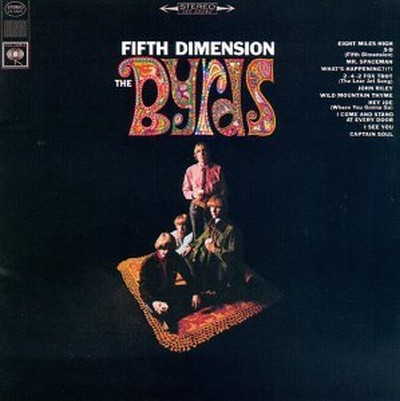
Fifth Dimension – More Dead as a Doornail Sundazed Sound

Hot Stamper Pressings of Sixties Pop Recordings Available Now

This review was written probably more than twenty years ago, back in the day when we actually would order up the latest Sundazed title in the hopes of finding something worth offering to our customers. Looking back, it’s hard to imagine a bigger waste of our time. So few were any good and so many were terrible, why were we bothering to fish where there weren’t any good fish?

Through it all, through the worst of those dark days, somehow we managed to learn some important lessons.

The main lesson we learned was that there was no record with sound so bad that it could not be released.

Even worse, there was no record with sound so bad that it would prevent the better known reviewers from raving about it. (If you think anything has changed, just pull up the latest TAS Super Disc list. The bad souding Heavy Vinyl pressings to be found there far exceed the good sounding vintage pressings they’ve nominated for inclusion over the last 50 years. A small sample.)

Our days playing and selling even the best of these kinds of modern reissues are long gone. By 2007 everything had changed.

Our Old Review

The best stereo copies are rich, sweet and Tubey Magical — three areas in which the Sundazed reissues are seriously lacking.

If anyone still cares, anyone besides Michael Fremer, that is. He seems to like some of their remastered records. We can’t be bothered with mediocrities such as this and the rest of their sorry output, but apparently people are still buying these records. The label is still in business and cranking out more dreck with each passing year. 

And none of the Columbia monos we’ve played did much for us either. Congested and compressed, with no real top, who in his right mind could possibly prefer that sound?

Audiophiles? Record collectors? What in god’s name are they listening with, or for?

(more…)

Don’t Waste Your Money on this RCA from 1960

Hot Stamper Pressings of the Music of Modest Mussorgsky Available Now

Never liked the performance. The sound can be quite good on the best pressings, but too many copies are congested in the loudest passages.

We recently found a pressing that was quite a bit better than the other Reiner pressings we had on hand, which simply means that good pressings exist, but they are very hard to find.

However, without a good cleaning, this record is very unlikely to sound right on high quality modern equipment.

There are quite a number of other vintage classical releases that we’ve run into over the years with similar shortcomings.

For fans of vintage Living Stereo pressings, here are some to avoid.

Some audiophiles may be impressed by the average Shaded Dog pressing, but I can assure you that we here at Better Records are decidedly not of that persuasion.

Something in the range of five to ten per cent of the major label Golden Age recordings we play will eventually make it to the site. The vast majority just don’t sound all that good to us. (Many have second- and third-rate performances and those get tossed without ever making it to a shootout.)

It may be on the TAS super disc list, but that doesn’t mean the sound is up to our standards.

We much prefer Muti’s performance from 1979 for EMI.

(more…)

Compression Works Its Magic on The Christmas Eve Suite

Hot Stamper Pressings of the Music of Rimsky-Korsakov Available Now

Some notes about the compression effects we heard on side two of a Blueback pressing of The Christmas Eve Suite album back in 2012. We wrote:

Side two is even more transparent and high-rez than side one. The texture on the strings and the breathy quality of the woodwinds make this a very special pressing indeed.

The horns are somewhat smeary and do get a bit congested when loud.

There is more compression on this side two than there was on the best copy we played, and that means low level detail is superb, but louder parts, such as when the more powerful brass instruments come in, can present problems.

Note how good The Flight of the Bumble Bee sounds here.

Compression is helping bring out all the ambience and detail in the recording, and there’s no downside because the orchestra is playing softly, unlike the piece that precedes it.

A classic case of compression having sonic tradeoffs.

(more…)

How Good Are the Domestic Originals of City to City Cut by Artisan?

Hot Stamper Pressings of the Music of Gerry Rafferty Available Now

The original domestic pressings may be cut by Artisan, but they are brighter and dramatically more congested and distorted than the better UK imports, and should be avoided at any price.

They are clearly made from dubbed tapes, and there is no getting around what that does to the sound.

However, as good a cutting house as Artisan may be, it’s shocking how bad the sound is on most of the domestic copies of the album they mastered.

Atrocious, to be honest.

When it comes to stampers, labels, mastering credits, country of origin and the like, we make a point of rarely revealing any of this information on the site, for a number of good reasons we discuss in some depth here.

We will happily make an exception in this case. Stick with UK imports. Or buy a Hot Stamper pressing from us.

If you’re a Gerry Rafferty fan, or perhaps a fan of mid-70s British folk pop, this title, a personal favorite of mine since 1978, is surely a Must Own.

In our opinion, City to City is the man’s best sounding album, and probably the only Gerry Rafferty record you’ll ever need. Click on this link to see more titles we like to call one and done.

The sound, at least on some tracks, Baker Street amoung them, may be too heavily processed for some, making the album fairly difficult to reproduce, but the best sounding pressings — played at good, loud levels on big dynamic speakers in a large, heavily-treated room, as god intended — are a truly powerful listening experience.

1978 was a good year for music on vinyl — we have some excellent pressings of well-recorded albums available now for those who want the best and are willing to pay a premium price to get it.

(more…)

Specific Critiques of All Four Sides of 4 Way Street

Hot Stamper Pressings of the Music of Crosby, Stills, Nash and (Sometimes) Young

If you want to hear Crosby, Stills, Nash and Young rock out live in your listening room, this copy will let you do it. It’s not easy to find good sound on even one side of this album, let alone all four.

Three Shootout Winning White Hot Stamper sides out of four! These three sides handily blow other copies out of the water, with the size, space, presence and energy that only the finest pressings are capable of. If you want to hear Crosby, Stills, Nash and Young rock out live in your listening room, this is the only copy that will let you do it. No other copy we’ve ever played rocked the way this one rocked! For three quarters of the “concert”, YOU ARE THERE.

If the singers get hard and shrill in the louder passages, then what you have is a pretty typical pressing. Add grit and grain, smeared transients, opacity, surface noise and a lack of weight down low and you’ll know why it takes us years to find enough copies to shoot out — because this is what most pressings sound like.

As you have surely read on the site by now, this band has put out more bad pressings of good recordings than practically any I can think of. Here is an excerpt from our review of their first album that discusses the issue in more depth.

Wrong Sound

95% of all the pressings of this album I’ve ever played have been disappointing. They’re almost always wrong, each in their own way of course. Some are dull, some are shrill, some are aggressive, some have no bass — every mastering fault you can imagine can be heard on one copy or another of this record. The bottom line? If you want to buy them and try them from your local record store, plan on spending hundreds of dollars and putting in years of frustrating effort, perhaps with little to show for it in the end. This is one tough nut to crack; it’s best to know that going in.

Sound So Real

The song “Triad”, for example, presents us with a lone David Crosby and acoustic guitar. It’s as real sounding as anything I’ve ever heard from this band. Listening to that natural guitar tone brings home the fact that their studio recordings (and studio recordings in general) are processed and degraded significantly relative to what the original microphones picked up.

This live album gives you the “naked” sound of the real thing — the real voices and the real guitars and the real everything else, in a way that would never happen again. (Later CSN albums are mostly dreadful. Fortunately later Neil Young albums, e.g., Zuma, are often Demo Discs of the highest quality.)


More records for which we’ve detailed the strengths and weaknesses of a specific shootout copy.

Side One

Big, clear, present, dynamic — what’s not to like? It shows you what few copies can: how well-recorded the album is. Halverson did a great job but you have to work your tail off to find a copy that does his brilliant engineering justice. Sad, isn’t it?

(more…)

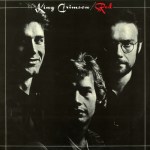
On King Crimson’s Red Album, How Good Are the Polydor Pressings?

Hot Stamper Pressings of the Music of King Crimson Available Now

Harsh and congested.

Not remotely competitive with the British originals.

Clean copies on the UK Island label may be hard to find, but they are the only game in town if you are serious about sound.

Want to find your own killer copy?

Consider taking the following moderately helpful advice.

As of 2024, shootouts for this album should be carried out:

How else can you expect to hear the record sound its best?

Based on our experience, Red sounds better:

That’s about it. They are neither easy nor cheap to find, but they are definitely the best sounding.

There’s more collecting help where that came from. Click on the top link below to learn about the pressings that win shootouts.

(more…)

Audiophiles Should Give Reiner’s Rossini Overtures a Miss

More of the music of Gioachino Rossini (1792-1868)

None of the pressings we played of this RCA were remotely competitive with Maag and the PCO on London.

The sound of this RCA was consistently boxy and congested, a case of the “old record” sound we find on countless vintage pressings. The world is full of bad records. We’ve suffered through them by the thousands.

Only an old school audio system can hide the faults of a pressing such as this. The world is full of those too, even though they might comprise all the latest and most expensive components.

There are quite a number of Golden Age pressings that we’ve run into over the years with obvious shortcomings.

Here are some of them, a very small fraction of what we’ve auditioned, broken down into the three major labels that account for most of the best classical and orchestral titles we’ve had the pleasure to play.

  • London/Decca records with weak sound or performances
  • Mercury records with weak sound or performances
  • RCA records with weak sound or performances

We’ve auditioned countless pressings in the 37 years we’ve been in business — buying, cleaning and playing them by the thousands.

This is how we find the best sounding vinyl pressings ever made, through trial and error. It may be expensive and time consuming, but there is simply no other method for finding better records that works. If you know of one, please write me!

We are not the least bit interested in records that are “known” to sound the best.

Known by whom? Which audiophiles — hobbyists or professionals, take your pick — can be trusted to know what they are talking about when it comes to the sound of records?

I have never met one, outside of those of us who work for Better Records. I remain skeptical of the existence of such a creature. The audiophile experts and reviewers I’ve encountered on the web seem hopelessly lost to me.


UPDATE: 2024

Woops, I take that back. I have met one, a certain Mr. Robert Brook. He has been conducting his own shootouts for a few years now and has made his findings available on his blog, The Broken Record. This is information you can trust.


(more…)