Top Artists – Cat Stevens

Acoustic Sounds Was Selling This Ridiculously Bad “TAS List” Record Back in the Day

Hot Stamper Pressings of the Music of Cat Stevens Available Now

This commentary was written circa 2001. 

I remember 15 years ago when Acoustic Sounds was selling the then in-print 25th Anniversary Island pressing (with 7U stampers as I recall) for $15, claiming that it was a TAS List record. If you’ve ever heard the pressing, you know it has no business going anywhere near a Super Disc List. It’s mediocre at best and has virtually none of the magic of the good originals.

NEWSFLASH: Just looked it up on Discogs, a site that did not exist when I wrote this commentary. My memory is apparently better than I thought it was. The 25th Anniversary Island Life Collection pressing came out in 1986.

    • Matrix / Runout (Runout side A, variant 1): ILPM 9154 A-1 ILPM•9154•A1
    • Matrix / Runout (Runout side B, variant 1): ILPM 9154 B-7U-1-1-3
    • Matrix / Runout (Runout side A, variant 2): ILPM 9154 A-8U-1- G10
    • Matrix / Runout (Runout side B, variant 2): ILPM 9154 B-7U-1-

By the way, I am not aware of any of these pressings from the 80s being especially good sounding. I remember playing some of them but I don’t remember liking any of them. They were cheap reissues that satisfied those looking for import vinyl, not audiophile quality sound.

I refused to sell it back in those days, for no other reason than the fact that it’s far from a Better Sounding Record. I don’t like misrepresenting records and I don’t like ripping off my customers. It’s bad for business.

That pressing was a fraud and I was having none of it.

Chad probably didn’t even know the difference.

When you don’t know much about records, you can say all sorts of things and not get called out for them. Audiophiles are a credulous bunch and always have been. They still believe the same nonsense that I foolishly fell for back in the 80s. (And I admit that even as late as 2006 I was still a fan of certain Heavy Vinyl pressings.)

(more…)

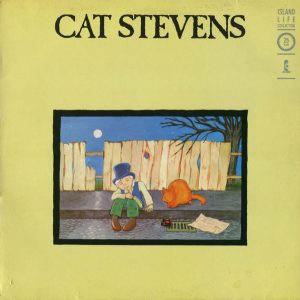
Cat Stevens – Tea For The Tillerman on the Island Pink Rim Label

More Cat Stevens

More Reviews and Commentaries for Tea for the Tillerman


  • This early Pink Rim Island UK pressing of TFTT, an album we consider the Pinnacle of British Folk Rock, boasts two excellent Double Plus (A++) sides
  • The emotional power of the songs is communicated completely on a pressing that sounds like this one – the experience will be like hearing the album for the first time, and how can you put a price on that?
  • Here’s your chance to relive the experience of hearing this groundbreaking album for the first time, but with much better sound than you ever thought possible
  • 5 stars on Allmusic, a stunning Demo Disc, and a permanent member of the Better Records Top 100

Hearing this Hot Stamper is a privilege that affords the listener insight into Cat Stevens’ music that is simply not possible any other way.

This album, I hope it goes without saying, is one of the greatest Folk Rock recordings of all time, the kind of music that belongs in any collection. I’ve been playing this album for 40+ years and I can honestly say I’ve never once tired of hearing it. I do get tired of hearing bad copies.

Cat’s mixes are full of subtle elements that may require many listening sessions over the course of years, even decades, to recognize and appreciate. Consider them an extra reward for having played the record so many times. I’ve played hundreds of copies over the last thirty-plus years and never tired of it once. As every music lover knows, the best albums only get better with time.

(more…)

Tea for the Tillerman – This Is Your Idea of Analog?

Dear Record Loving Audiophiles of Earth,

I’m afraid we have some bad news. [This was written back in 2011 when the record came out so it’s hard to imagine that what I am about to say is news to anyone after all these years.]

Regrettably we must inform you that the 2011 edition of Tea for the Tillerman pressed by Analogue Productions on Heavy Vinyl doesn’t sound very good. We know you were all hoping for the best. We also know that you must be very disappointed to hear this unwelcome news.

But the record is what it is, and what it is is not very good. Its specific shortcomings are many and will be considered at length in our review below.

Yes, we know, the folks over at Acoustic Sounds, in consultation with the late George Marino at Sterling Sound, supposedly with the real master tape in hand, and supposedly with access to the best mastering equipment money can buy, labored mightily, doing their level best to master and press the Definitive Audiophile Tea for the Tillerman on Vinyl of All Time.

It just didn’t come out very good, no matter what the reviewers say. And what do they say? Allow me to quote one.

…superbly dynamic, spacious and detailed…The attack of the pick on the guitar strings is astonishingly clean and detailed.

Depth is pronounced…

…the resolution of low level detail reveals a host of details that are either buried or glossed over on the other versions I’ve heard…

Uh-oh, wait a minute, here’s a blindingly red flag:

If you have the edition, you’ll find this similar in one way: there’s nothing “mellow” about the overall production and when the music gets loud (and Marino lets it get so) it can get a bit hard, but better that than to soften it and lose the clarity, focus and detail of this superb recording, especially in the quieter passages where the resolution of low level detail is astonishing.

More about that later.

(more…)

Cat Stevens – The World of Cat Stevens

More Cat Stevens

More Folk Rock

  • A vintage copy of Cat Stevens’ 1970 compilation LP with an INCREDIBLE Shootout Winning Triple Plus (A+++) side two mated to an superb Double Plus (A++) side one, and British Decca vinyl that is about as quiet as we can find it
  • This side two is doing everything right – the sound is rich, full-bodied and Tubey Magical, Cat’s vocals are present, and there is plenty of studio space on the recording
  • Everything you want in a Folky Pop Star recording is here
  • Not an easy record to find in audiophile playing condition with top quality sound – it took us years to get this shootout going

Tubey Magical Acoustic Guitar reproduction is superb on the better copies of this recording. Simply phenomenal amounts of Tubey Magic can be heard on every strum, along with richness, body and harmonic coherency that have all but disappeared from modern recordings (and especially from modern remasterings). (more…)

Letter of the Week – “This one is great — involving, NOT smeared, 3-D — most of all it invites me in…”

Hot Stamper Pressing of the Music of The Rolling Stones Available Now

One of our good customers had this to say about some Hot Stampers he purchased recently:

Hey Tom, 

I bought the Sticky you suggested (seemed like a dare). Like I said, I have several pressings, including the horrible MFSL. This sounds better than all of them, by far. My sense is that it’s a tough album, deliberately a bit muddy and smeared and inconsistent from track to track, which made the quest even more appealing. This one is great; involving, NOT smeared, 3D — most of all it invites me in, instead of saying “OK, this may be a bit cloudy, but try to enjoy anyway.”

I’m on my 5th listen. And Catch Bull at Four is also seriously good. Such an underrated album. I’ll be back, inasmuch as most of my other vinyl sounds flaccid compared to these.

John

John,

Thanks for your letter. You are spot on with your observation about the sound being deliberately muddy.

Glyn Johns loves his tube compressors. They can make some tracks murkier than many of us would like, but they work positive wonders most of the time.

A lot of the smearing you reference is from uncleaned or improperly cleaned vinyl. Once we got our cleaning regimen dialed in, a lot of the smear we used to hear so often on old records stopped being a problem.

3-Dimensionality also greatly improves with clean, fully-restored vinyl.

A lot of old records just sound like old records until you figure out how to clean them right.

(more…)

Letter of the Week – “The White Hot stamper just pulled you into those songs, so you could feel every little dynamic shift and tonal change…”

More of the Music of Steely Dan

More of the Music of Cat Stevens

One of our good customers had this to say about some Hot Stampers he purchased recently. [The bolding has been added by us.]

Hey Tom,   

A friend and I just did a shootout of 16 copies of Aja, plus one of your White Stampers, which easily trounced them all (including some DJ 12″ singles from the album) [1], and in exactly those areas that you cover in some of the WTLF descriptions you have for that album. Just a great big, open and lovely-sounding record–what a thrill!. And thanks very much for those notes–they help clarify the critical listening process.

We also listened to 16 copies of Tea for the Tillerman. Among those (UK pink rims, German, Japanese, and many US labels) were two excellent early brown label A&M pressings, which I saved for the end of the shootout.

And we had the Analogue Productions 33 rpm pressing, which has been a big disappointment since I first heard it. [2] Those two original A&Ms both sound so much more natural, with more delicacy, extension, air, presence and energy than the AP version. My listening buddy said they sounded as if they were cut at 45 rpm; and neither of us really expected your White Hot UK pink-rim pressing could be a significant improvement over those.

But, as good as those are, it was also obvious that your WHS brought the music several steps closer. The A&M brown labels both added some thickness and over-emphasized the low range of his voice–which (until we heard your WHS) was a pleasant coloration.

But as you frequently mention, the biggest issue, once you’ve heard a great copy, is how much more energy and flow the music has. The WHS stamper just pulled you into those songs, so you could feel every little dynamic shift and tonal change that the musicians were bringing to the table. It allowed that music to breathe in a way I’ve never heard before. What a record!

The BIG thing your Hot Stampers do is present the music in a perfectly balanced way — no frequency range is emphasized, which also means none are compromised. I think this is why you can always turn up the volume on a Hot Stamper. If you’ve got a bad mastering or bad pressing, at some point, turning up the volume only make parts of the recording more unlistenable. Turning up a Hot stamper makes it a bit louder, sure. But it also brings you further into the studio, and closer to the music — and that’s we really want, right?

Ivan

Ivan,

Quite a shootout! I see you learned a lot. That’s what shootouts are for, to teach you what the good copies do well that the other copies do not do so well. As you well know, going deep into the sound the way you did is a thrill, one we get to enjoy on a regular basis. Maybe not every day — not every record is as good as Tea for the Tillerman – but multiple times a week. It’s what make the coming to work every day fun for those of us on the listening panels.

(more…)

Letter of the Week – “These records are all making clear that I need bigger speakers. Much bigger. Twice the size.”

Hot Stamper Pressings of the Music of Cat Stevens Available Now

One of our good customers had this to say about some Hot Stampers he purchased recently:

Goddamit Tom, these records are all making clear that I need bigger speakers. Much bigger. Twice the size. In a bigger room, with treatments. Your stuff makes the path forward very clear. They need the dynamics I’m sure you’re getting. I can hear what is missing.

I don’t know if that’s a good thing, since I was generally unaware of this previously, and can’t afford that level of upgrade for a while.

We’re talking a few years out to buy a house (we’re in an apartment on the corner of the building over a garage, so no neighbor noise problems but the room is only 15×14.5 with average height ceilings) and some big upgrades.

Dear Sir,

You and I seem to be on the same page. The vast majority of audiophiles never get to the higher levels because of all the compromises they make in their rooms, speakers, wires and everything else. They end up with a collection of crap heavy vinyl because their systems don’t let them hear what is really going on with the best vintage pressings.

Call it a breakthrough of a sort. The long road ahead is an expensive one, but I’ve always been of the belief that the money you spend on audio — if you do it right — rewards you a hundred times over in listening pleasure, and it does so for as long as you live, which I hope is many more decades, at least.

These are records that need to be played loud. Until you have a bigger room and bigger speakers, they are not going to be easy to get to sound right.

I ended up building a playback studio that is 17 by 22 with a 12 foot high ceiling, a concrete slab floor and six inch thick double drywall for walls, and dedicated electrical circuits, but it took a lot of work to get it to sound right.

Oddly enough, what made the biggest difference was getting the electricity right: computers and cleaning machines on isolation transformers, stuff unplugged, stuff left plugged in that made the sound better, lights hooked up to batteries rather than plugged in to the main circuits, etc.  Night and day better that way. (More on unplugging here.)

This work is not hard for me, I’ve been doing it for decades, but you have one advantage over everyone else: you have good sounding records to test with.

You have Hot Stampers! The records are correct. If they sound wrong, it’s not their fault. They are not the problem. (more…)

These Are Just Some of the Stampers to Avoid on Catch Bull at Four

More of the Music of Cat Stevens

The domestic pressings of Catch Bull at Four with the stampers shown below, and others similar to them, have not done well in our shootouts for years now. If you own a copy with these stampers, or ones like them, the good news is that we can get you a much better sounding copy of Catch Bull at Four than you have ever heard.

Stamper numbers are not the be-all and end-all in the world of records, a subject we discuss below, but after hearing too many copies with these stampers and decidedly mediocre sound, from now on we are going to focus our attention on the stampers that do well and leave copies with these markings sitting in the bins.

When it comes to stampers, labels, mastering credits, country of origin and the like, we make a point of revealing very little of this information on the site, for a number of good reasons we discuss here.

The idea that the stampers are entirely responsible for the quality of any given record’s sound is a mistaken idea, and a rather convenient one when you stop to think about it. Audiophiles, like most everybody else on this planet, want answers.

(more…)

Two Key Tracks for Testing Sibilance and Transparency on Tea for the Tillerman

Hot Stamper Pressings of the Music of Cat Stevens Available Now

The song Father and Son can be a bit sibilant. On the best copies the sibilance is under control.

The best copies have the least amount and make the spit they do have much less gritty and objectionable.

We’ve known for decades how good a test sibilance is for tables, cartridges and arms. Sibilance is a bitch. The best pressings, with the most extension up top and the least amount of aggressive grit and grain mixed into the music, played using the highest quality, most carefully dialed-in front ends, will keep sibilance to an acceptable minimum.

VTA, tracking weight, azimuth and anti-skate adjustments are critical to reducing the amount and the quality of the spit in your records.

Another track I like to play on side two is Into White. With this song, you hear into the music on the best copies as if you were seeing the live musicians before you. The violinist is also a key element. He’s very far back in the studio. When he’s back where he should be, but the sound of the wood of his violin and the rosin on the strings is still clearly audible, without any brightness or edginess to artificially create those details, you know you are hearing the real thing.

(more…)

Listening In Depth to Catch Bull At Four

More of the Music of Cat Stevens

If you’re familiar with what the best Hot Stamper pressings of Tea for the Tillerman, Teaser and the Firecat or Mona Bone Jakon can sound like — amazing is the word that comes to mind — then you should easily be able to imagine how good a killer copy of Catch Bull at Four sounds.

All the ingredients for a Classic Cat Stevens album were in place for this release which came out in 1972, about a year after Teaser and the Firecat. His amazing guitar player Alun Davies is still in the band, and Paul Samwell-Smith is still producing as brilliantly as ever.

Side One

Sitting

This track often sounds a bit flat and midrangy, and it sounds that way on most domestic pressings and the “wrong” imports.

The best imports and domestic pressings are the only ones with the sweeter, tubier Midrange Magic that we’ve come to associate with the best Cat Stevens recordings.

Boy With a Moon & Star on His Head

Another very difficult track to get to sound right. The better copies have such amazingly transparent sound you can’t help feeling as though you really are in the presence of live human beings. You get the sense of actual fingers — in this case the fingers of Cat’s stalwart accompanist Alun Davies — plucking the strings of his Spanish guitar.

Angelsea

This is one of the best sounding tracks on the album, right up there with Cat’s most well recorded big productions such as Tuesday’s Dead, Changes IV, Where Do The Children Play and Hard Headed Woman. On Hot Stamper copies this is a Demo Track that’s hard to beat.

The midrange magic of the acoustic guitars is off the scale. Some of Catch Bull At Four has the magic and some of it does not, unlike Tea and Teaser, which are magical all the way through.

Silent Sunlight
Can’t Keep It In

On the best copies this track is as Huge and Powerful as anything the man ever recorded. It’s another one of the best sounding tracks on the album. On our top copies this is a Demo Track that’s hard to beat.

The midrange magic of the acoustic guitars is off the scale. Some of Catch Bull At Four has the magic and some of it does not, unlike Tea and Teaser, which are magical all the way through.

Side Two

(more…)