Speaker Advice

Carlos Santana Knows: Louder Is Better

santasanta_1401s

Hot Stamper Pressings of the Music of Santana Available Now

UPDATE 2026

The commentary below refers to an experience I had playing the album on my Legacy Whisper speakers in the late-90s. I moved into a house in the early 2000s and it took me until about 2005 to get the sound back to the level I had achieved in the 90s. Fortunately for me, my employees and all our Hot Stamper fans, by the mid-2000s we were really cookin’, with dramatic improvements to the sound occurring at a furious clip.


This album needs to be played loud. I mean really loud. Years ago I used to demonstrate how important it was to have the level up good and high on the song Waiting.

Back in the mid-90s, I had somehow lucked into my first shockingly good Hot Stamper copy.

As a demonstration of what the Legacy Whisper system and its 8 fifteen inch woofer/midrange drivers could do, I would play the first minute or so of the track at a pretty good level. There’s lots of ambience, there’s a couple of guys who shout things out from way back in the studio, there’s a substantial amount of deep bass, and the whole recording has a natural smooth quality to it, which is precisely what allows you to play it at loud volumes.

Then I would turn it up a notch, say about 2-3 DB. I would announce to my friends that this is probably louder than you will ever play this record, but listen to what happens when you do. The soundstage gets wider and deeper, all those guys that shout can be heard more clearly, you start to really feel that deep bass, and when the song gets going, it really gets going. The energy of the music would jump to another level.

Then I would turn it up another 3 DB or so. At this point I would say that “this is how loud it should be played.” All the effects I mentioned earlier would become even more pronounced — wider, deeper, more clear, more powerful. The record was actually starting to sound like live music in my living room.

But of course, I was showing off a system that few could afford and that nobody in his right mind would put out in the middle of his living room. You would need a custom sound room, and a big one at that, to fit such a massive speaker and be able to turn it up.

(more…)

In the Market for New Speakers? – Will They Handle the Size and Energy of Take It Easy?

Hot Stamper Pressings of the Music of The Eagles Available Now

Take one of our killer Hot Stamper pressings with you when you go shopping for speakers. The speaker that gets the POWER and ENERGY of this music right is the one you want.

This record will separate the men from the boys thirty seconds into Take It Easy.

It will be glaringly obvious who’s got the piston power and who doesn’t.  

With big bass and huge scope, this may become your favorite disc for showing your friends just what analog is really capable of. No CD ever sounded like one of our killer Hot Stamper pressings.

When the big chorus comes in on Take It Easy — one of the toughest tests for side one — you will be amazed by how energetic and downright GLORIOUS these boys can sound. Believe us when we tell you, it’s the rare copy that can pass that test.

Choruses Are Key

The richness, sweetness and freedom from artificiality is most apparent on Breakfast in America where you most always hear it on a pop record: in the biggest, loudest, densest, climactic choruses.

We set the playback volume so that the loudest parts of the record are as huge and powerful as they can possibly grow to be without crossing the line into distortion or congestion.

(more…)

Letter of the Week – “The Triplanar is bringing out more of the life and energy in the music than any other change I’ve made.”

Check Out Our New Audio Advice Section

When our customers ask for audio advice, we never hesitate to give it to them. (We also give out plenty of advice that nobody asked for.)

We want to help our customers pursue the kind of equipment that we know through decades of experience is probably superior to most of what is available in audiophile salons, regardless of price.

(In 1976, at the tender age of 22, I heard something at an audio salon that rocked my world: tube equipment. Everything changed that year.)

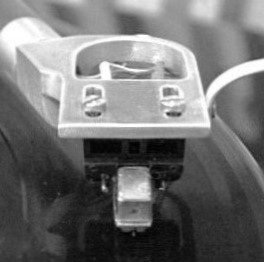
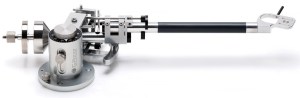
Robert Brook has taken our advice and ended up with much of the same equipment we currently use. He seems very happy with the analog sound he is getting these days, especially from his Triplanar tonearm.

And now Aaron B. has made a great leap forward into better sound. He wrote to tell me all about the differences he is hearing now that he has a system that is designed to reveal what’s actually on his records. His previous system was better at hiding the imperfections and shortcomings of many of the albums he was playing, but he’s decided he doesn’t want to go down that road anymore, and we couldn’t be happier for him. His letter:

I’m feeling another huge dose of gratitude for you, Tom.

I installed the Tri-Planar arm on Friday, and I could tell right away that things are sounding just wonderfully better.

My whole setup is getting really close to your full recommendation. Dynavector 17dx mounted in a Tri-Planar tonearm, mounted on a VPI Aries 1 table, going into an EAR 324, out to a [redacted] amp, driving Legacy speakers.

I managed to buy everything except the cartridge used and in good shape. The total cost for my current system is a hair above $10K, and it is sounding nearly as good as I’ve ever heard vinyl sound, or any recorded music for that matter.

The Triplanar tonearm is a game-changer. This is the most dramatic improvement since I first replaced my B&W bookshelf speakers with the Legacys. I’m frankly stunned by what a difference it makes.

The difference the tonearm makes is evident in nearly every aspect of the sound.

First, the problems I was having previously have cleared up. This includes vocal sibilance, occasional graininess to the sound, and what I mistook for groove wear, even on some hot stampers that otherwise sounded great.

Some that I returned to you, I now wish I could have back.

Beyond fixing the last of my playback problems, the Triplanar is bringing out more of the life and energy in the music than any other change I’ve made since you started advising me.

The attack on instruments is arresting. I’ve come to believe that the aspect of live music that’s hardest for any recording to capture is the attack. That’s where the energy of live music is to be found.

I am hearing more details and overtones to the music that I ordinarily needed to turn up the volume to hear. Also, there’s greater depth to the soundstage, even in my small room.

I’ve said this to you before, but it bears repeating. I love the records you sell. I’ve got 15 hot stampers now, and they are the crown jewels of my collection. But, it’s the education you’ve given me that’s truly transformed my music listening experience.

Today, for that, you have my deep gratitude.

Aaron

Aaron,

Thanks for taking the time to write and say all those nice things about our records and the equipment we have recommended you play them with. As you can clearly see now, it takes the right stereo to really bring our records to life. Glad to hear yours is working so well.

I have long held that the best way to do audio is to find a system in someone’s home that sounds amazing and just buy all the same stuff that person has and set it up the same way he did. If a stereo is sounding good, much of it has to be working right. Start there, then make your own improvements based on a proven model of success.

I did this to the extent it was possible back in the 80s, copying my friend George Louis’s system, comprising four 140 watt per channel transistor amps (four times the power I have now), an electronic crossover, two sets of adjustable electrostatic tweeter arrays (RTR for one and Janzen for the other), a large number of woofers in the main cabinet and a couple of dual 10″ subs thrown in for good measure.

(more…)

Soundstaging at All Costs – A Flawed Approach to Audio

More on the Subject of Vague Imaging

The first thing I noticed about this system is that the Hallographs are in the wrong place, or at least they are in the wrong place if you are only using one pair. The first pair should be to the outside and just behind the speakers.

What this system screams out to those of us who have heard a lot of stereos, in my case having spent about fifty years in high-end audio, is “Soundstage Freak.”

The speakers are too far apart to create a proper center image.

The sound will be exceptionally spacious this way, but it is also very likely to be washed out and vague.

If you listen exclusively to orchestral music, and you like to sit toward the back of the hall when you go to live performances, then yes, you can almost justify having the speakers this far apart.

For most other music this is not a good approach.

A good vocal recording is all you would need to demonstrate the serious shortcomings of placing your speakers this wide apart.

If this were your setup, But I Might Die Tonight could show you the error of your ways, the way it showed me some of mine (albeit different ones) when I had initially finished the speaker setup at our new studio.

I worked on my speaker placement and room treatments for weeks and months after that, but I knew something was wrong well before that two minute song was over.

Stardust would also be a good choice. Most of Julie London‘s records would work. Some of the more intimate Ella records would be ideal of course, but we rarely have much stock. Blue would work, as would any early Joni Mitchell album.

The recordings of singer songwriters rarely place them anywhere but in the center of the stage, the best of them as prominently as possible. Many of our Hot Stamper pressings would make excellent test discs for getting this aspect of speaker placement dialed in better.

(more…)

Robert Brook Discusses His Evolving Understanding of Bass

More from Robert Brook

Robert Brook has a blog which he calls

A GUIDE FOR THE DEDICATED ANALOG AUDIOPHILE

Below you will find a link to Robert’s story about the famous Charlie Mingus record you see pictured.

He had a number of different pressings, each of which showed him some qualities that the others lacked. Ultimately you have to pick one to play, and he did.

“GETTING” BASS with Charles Mingus’ BLUES & ROOTS

Robert went from a $20,000 speaker with one eight inch woofer to the Legacy III’s, a speaker costing less than half as much, with three ten inch woofers, to the Legacy Focus, a speaker quite a bit less than $20k, with three twelve inch woofers.

Robert learned something about his Parsifals by playing a speaker that could do so much more down low:

But I’ve learned since that, for all their strengths, the Parsifal had at least one fatal flaw – they made just about every record sound good.

Adding:

Making every record sound good is, it turns out, not a good quality to have in a speaker, nor in any other piece of equipment you use. At least it’s not if you want the best possible sound from your analog system.

(more…)

Big Speakers and Loud Levels Bring Out the Power of the Orchestra

Hot Stamper LPs that Sound Their Best on Big Speakers at Loud Levels

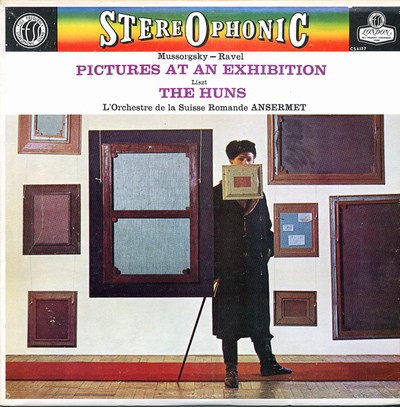
The darker brass instruments like tubas, trombones and french horns are superb here. Other Golden Age recordings of the work, as enjoyable as they may be in other respects, do not fully reproduce the weighty quality of the brass, probably due to limiting, poor eq, poor miking, or some combination of the three.

The brass on this record has the powerful weight and energy of live music like practically no other orchestral pressing we have ever played.

It’s also tonally correct. It’s not aggressive. It’s not irritating. It’s just immediate and powerful the way the real thing is when you hear it live. That’s what really caught my ear when I first played the recording.

There is a blast of brass at the end of Catacombs that is so big and real, it makes you forget you’re listening to a recording. You hear every brass instrument, full size, full weight. I still remember the night I was playing the album, good and loud of course, when that part of the work played through. The power of it was truly startling.

Back then I had the Legacy Whisper speaker system, the one with eight 15″ woofers. They moved air like nobody’s business. If you want to reproduce the power of the trombone, the loudest instrument in the orchestra, they’re the speaker that can do it.

Some of Ansermet’s recordings with the Suisse Romande are absolutely the best I’ve ever heard. It was a magical combination of the right hall, the right engineers, the right orchestra and the right technology — the pure tube ANALOG technology of the 50s and 60s!

Dynamics

Another thing this recording has going for it is dynamic power. This is a dynamic piece of music. Few recordings I have ever heard have the dynamic contrasts that this one does. It really gets loud when it needs to. The best pressings sound completely uncompressed. Although I’m sure there has to be compression of one kind or another, the listener is rarely made aware of it.

Dynamics such as these are thrilling. They let the music come alive.

(more…)

Letter of the Week – “I would appreciate the opportunity to speak to someone about the factors that make this a “White Hot Pressing.””

A customer recently contacted us after making his first purchase and being disappointed with the White Hot Stamper pressing we had sent him.

Hi,

Wondered who I can talk to about this record that I purchased. I’ve listened to it numerous times and it just does not have that sound stage I was expecting.

I am not looking for a refund. In fact, I refuse a refund. However, I would appreciate the opportunity to speak to someone about the factors that make this a “White Hot Pressing.”

I’m sure you need to understand what amplifier, speakers, setting, etc. I am using. Without going into the details, I have a McIntosh amplifier and Focal 936 speakers. I know how much of a difference equipment makes in the sound of a record.

I love to hear amazing records, some of which I have in original pressings I purchased when they were released and can truly feel it when there is something special about the record. This one does not seem to have it to me, but I am interested in finding and purchasing one from you that gives that amazing feeling.

Please let me know if there is someone I can speak to about finding that record.

Thank you,
S.

I replied with an overwhelming amount of information (and opinions!) designed to help Mr. S understand more about records, as follows:

Dear Sir,

Tom here. Let me see if I can help.

The first thing I would need to know is what version of the album do you have that you think sounds better, or, if not better, comparable?

[He had no other pressing, not surprising as our White Hot copies are practically impossible to beat.]

Assuming you don’t have a better copy — we would be very surprised if you did — we would say that it’s likely there are two factors at play:

White Hot does not mean amazing Demo Disc sound.

It means the best sound we can find for this recording, relative to the others we play. In other words, the best there is within the limitations of the recording.

We can’t fix the recording, we can only find you the best available pressing. If you were expecting more, something along the lines of Dark Side of the Moon, then I understand your disappointment.

(more…)

Tone Poets and One-Legged Tarzans

Basic Audio Advice — These Are the Fundamentals of Good Sound

A fundamental tenet of conservatism is that we must accommodate ourselves to the world that exists, not the world we might want to pretend exists, or the world we would like to exist.

The laws of physics are laws — not theories, not recommendations — and they operate independently of how convenient we may find them.

It follows from this — if you will allow me to make the case — that not everybody with a stereo can play Rudy Van Gelder’s recordings properly, and some people cannot play Tarzan at all. (More on that below.)

There is a fellow, rl1856, who made some comments on Robert Brook’s blog, addressing the Tone Poets pressings of RVG’s recordings vis-a-vis vintage pressings that RVG mastered. (Emphasis added.)

rl1856 writes:

An original RVG 1st or 2nd pressing has a visceral, “edge of the seat” feeling that is missing in the TP [Tone Poets] and BN [Blue Note] Classic reissues. The RVG has a tighter stereo spread, and is voiced so that the listener feels they are very close to the musicians. The TP and Classic remasters have a more distant perspective. The soundstage is wider, but the added apparent distance between musician and listener significantly reduces the impact of the music. OTOH, the reissues have greater extension at frequency extremes, and reproduce more micro detail than original pressings. We know that RVG used a surprising amount of EQ when mastering his LPs back in the day. So we need to ask ourselves, what do we want ? A better version of what we are familiar with, including EQ compromises, or a more accurate representation of what was actually captured on the master tape in RVG’s studio ? The answers may be mutually exclusive.

My system: Linn LP12 ITTOK LVII, SoundSmith Denon 103D, Audio Research SP10MKIII, Luxman MA 88 monoblocks, or Triode TRV 845PSE, or Mac 240, KEF LS50. Resolving enough to easily hear differences in LP quality.

When an audiophile reveals that his equipment is simply not capable of reproducing the sound of live music, I think that we can safely ignore whatever opinions he may have offered about the sound of the records he is discussing.

It’s obvious that the records were played with unacceptably low fidelity, which means he has all the credibility of a blind man judging paintings.

If this person wants to make the case that he is in fact able to reproduce music with acceptable fidelity, we would need to know more about his system and room in order to take his claim more seriously.

(more…)

My Aim Is True Can Really Rock – If You Have the Speaker System to Play It

Hot Stamper Pressings of Elvis’s Albums Available Now

Yet another in the long list of recordings that really comes alive when you Turn Up Your Volume.

There is a line in the Hot Stamper commentary on the site concerning driving punk rock bass. Man, this record lives or dies by your ability to reproduce the powerful bottom end that propels this music.

Pardon me for cueing up a broken record again, and with all due respect to the things they do well — they must do something well, right? People keep buying them — small speakers and screens are not going to cut it on My Aim Is True.

This is precisely the kind of album they don’t do well with.

’70s-era JBLs, the ones with the 15 inch woofers, as awful as they may be in most respects, do a better job with an album like this than the average audiophile speaker system being sold today.

Two six or seven inch woofers, even three six or seven inch woofers, is not what anybody had in mind when they pictured the playback system for My Aim Is True — and they were right about that.

We’re talking about one of the best records in the history of rock and roll. It will never sound dated. It will never go out of style. It will reward repeated listening from now until you lose your hearing.

In that respect it’s like all the best records both you and I own: they are timeless, priceless treasures. 

Dynamic Vocals Like Thelma Houston’s Require Really Big Speakers

houstivego

Hot Stamper Pressings of Direct-to-Disc Recordings Available Now

Unlike most Direct to Disc recordings, this album actually contains real music worth listening to — but only when the pressing lets the energy of the musicians through, accompanied, of course, by fidelity to the sound of their instruments.

Brass without bite is boring.

Drummers who drum too delicately will put you to sleep.

But the focus of this commentary is on dynamic vocals.

To Know You Is to Love You has the potential to come right at you in a shockingly powerful way. This lady can sing as loud as the best of all the greats.

It sounds like there is virtually no compression on Ms Houston’s vocals whatsoever. There has to be a limiter of some kind, but when she starts to really belt it out, you will not believe how powerfully she can sing. Might just give you goosebumps.

Don’t Misunderstand on side two has an equally dynamic vocal. It’s probably my favorite track on the album.

The loudest choruses of Got to Get You into My Life / I’ve Got the Music in Me are a tough test for any system as well.

This could easily be the most dynamic vocal album you have ever heard. It’s right up there at the top for us too.

(more…)