*Experimenting with Records

Experimenting with records is the only way to learn much about them of any real value.

Every Top Copy of In Through the Out Door Must Pass This Test

Hot Stamper Pressings of the Music of Led Zeppelin Available Now

In our review for In Through the Out Door, we debunked the Classic Records pressing of the album using a very simple test which you may want to try using at home.

A copy that makes you want to turn up the volume is likely to be a winner.

The Classic does not pass this test.

We threw one on and just couldn’t deal with the edgy vocals and upper-midrange boost. We wanted to turn down the volume as quickly as we could get our hands on the knob. As far as we’re concerned there’s no substitute for The Real Thing. As hard as it is to find great sounding copies of this album, it’s even harder for us to sit through a sub-par version like the Classic.

And boy were our faces red. We used to think the Classic version was pretty decent, but the best originals SLAUGHTER it! We had never done a shootout for this album before 2007. We didn’t feel up to the challenge, because the typical pressing tends to be miserable — gritty, grainy, and hard sounding, with congested mids, dull up top, and on and on.

But 2007 turned out to be a breakthrough year for us here at Better Records.

Looking back on that year, the discovery of the Prelude Record Cleaning System, along with some system upgrades, allowed us to jump to the next level.

With better cleaning and more revealing and accurate playback, the Zeppelin shootout we conducted in 20o7 made it clear to us that the Classic was all sorts of wrong when played head to head against the best domestic pressings.

Try the Turn Up the Volume Test and see if your copy makes the grade, or makes you want to turn it right back down. I’m guessing the latter, unless you were lucky enough to get one of our Hot Stampers from the last shootout. There sure weren’t enough to go around.

Bashin’ Is a Difficult to Reproduce Jazz Masterpiece

Hot Stamper Pressing of the Music of Jimmy Smith Available Now

In the past we’ve complained about “Rudy Van Gelder’s somewhat over the top echo-drenched brass,” but on a copy such as this there is nothing to complain about!

All that reverb on the brass sounds RIGHT. If you have a top quality front end (and the system that goes with it), this recording will be amazingly spacious, three-dimensional, transparent, dynamic, and open.

Copies of this album are sometimes so sour or dull (or both) that they go right in the trade pile. Add to that the difficulty of finding copies that are scratch-free and not too noisy and you have one tough shootout. Inner Groove Distortion caused by the non-anti-skate-equipped turntables of the day is a chronic problem with vintage jazz records, and this title is typically no exception — except in this case! 

A Must Own Jazz Record

This Demo Disc Quality recording should be part of any serious Jazz Collection.

It also ranks fairly high on our difficulty of reproduction scale. Do not attempt to play it using any but the best equipment.

Unless your system is firing on all cylinders, even our hottest Hot Stamper copies — the Super Hot and White Hot pressings with the biggest, most dynamic, clearest, and least distorted sound — can have problems .

Your system should be thoroughly warmed up, your electricity should be clean and cooking, you’ve got to be using the right room treatments, and we also highly recommend using a demagnetizer such as the Walker Talisman on the record, your cables (power, interconnect and speaker) as well as the individual drivers of your speakers.

This is a record that’s going to demand a lot from the audio enthusiast, and we want to make sure that you feel you’re up to the challenge. If you don’t mind putting in a little hard work, here’s a record that will reward your time and effort many times over, and probably teach you a thing or two about tweaking your gear in the process.

(more…)

Smooth or Detailed, Which Is the Right Sound for Jackson Browne’s Debut?

The real trick with this album is striking the right balance between richness and presence.

A White Hot Stamper from years back made me change my mind about this recording.

I used to think it was dull, but I was wrong. I used to think that even the best copies of this recording sounded rolled off on the top end. I no longer believe that to be true. On the best pressings the top end is correct for this music.

It took the right pressing to show me the error of my ways.

Side one of that copy was rich and full and sweet as can be. Playing side two I noticed more transparency and clarity, especially in the guitars and voices. It seemed to have correct highs, highs that were a little soft on the first side.

But the more I listened, the less I liked it. It started to sound more like a record and less like music. Going back and forth between sides one and two, it was obvious that side one had less clarity because it had the kind of richness and fullness that made all the musicians and their instruments sound real in a way that wasn’t happening on side two.

Side two had clarity, it had transparency, but it kept reminding me that it was a recording.

Side one allowed me to forget that I was playing a record.

When the music started, my attention was completely focused on the songwriting and the performing. Aspects of the recording were lost in my enjoyment of the music. I kept thinking what a great album this is, not what a great recording it is. That tells me that both the recording engineer and the mastering engineer did their jobs right. They created a sound that best served this music.

I think if an audiophile label had produced a version of this album that sounded like side two, most audiophiles would love it. They would hear detail that they’d never heard before. (It’s my belief that the original Asylum master tape has been lost, so the details of which we speak can be heard on these good originals and nowhere else.)

But, fooled into listening for details in the music rather than the music as a whole, they would never know how RIGHT the album can really sound.

The best of our Hot Stampers are the ones that have the right sound for this music.

“I started leaving notes and assessments which I frequently check later and often correct, since I keep learning more and more what to listen for.”

Our Guide to Record Collecting for Audiophiles

One of our customers wanted to give us his reactions to the first year’s worth of Hot Stamper pressings he had purchased, starting in 2022 and hitting 31 by 2023. (He has since put in more than 200 additional orders. Turns out he really likes our records.)

What you see below is just a small excerpt from the longer letter he sent. Apologies for not having posted it sooner. (Emphasis added.)

Dear Tom

I learned already a lot from your website by constantly following your new entries and digging into older ones.

I listen to my records at a far louder level than I used to and can appreciate the advantages of bringing the music really to life (while hopefully not hurting my not very young ears :-).

More importantly, I listen to my large collection more than I ever did.

I started leaving notes and assessments which I check frequently later and often correct, since I keep learning more and more what to listen for. I never did this before and it is great fun. And I keep scribbling a list of records which I may be interested in to buy from you.

There are also lots of reissues I bought and never really compared to originals, taking for granted the kudos they receive frequently in the press. Some are good, some are respectable, some are really bad, and none was as good or even better than a good original or one of your SH stampers at hand for comparison.

The One step Mofi Michael Jackson is almost a bad joke compared to your Super Hot stamper. So I stopped buying reissues and started putting aside still sealed reissues which should sell well anytime in the future.

To sum it up: I never had more fun listening to my collection and to your records thanks to you guys. Keep up the good work.

Christian

Christian,

Thanks for your letter. We love to hear from customers who actually take the time to read what we say about records and, even better, follow our advice (wherever possible) regarding their playback.

When you listen critically to records, taking the time to compare pressings and actually making notes about what you are hearing, you will certainly end end up understanding and enjoying the music you play on a much deeper and more emotionally powerful level. As you put it so well:

“I never did this before and it is great fun.”

Which means you get what we have been saying for more than twenty years:

When you do the work needed to get good sound, and the work it takes to find better records, the effort you make is work, but much more importantly, it is fun.

If it wasn’t fun, who would do it?

(more…)

Revolutions in Audio Can Make a Huge Difference on Your Problematic Recordings

UPDATE 2026

In 2008 we did our first big shootout for Life Beyond L.A. which allowed us to discover a copy with sound quality we had simply never heard for the album, the kind of sound we had no idea could exist until we finally heard it.

In 2005 we had attempted the same shootout and abandoned it. The difference between the best domestic pressings and the Nautilus Half-Speed were not big enough to justify the price we would have had to charge for the best copies.

We probably owned an exceptionally good sounding pressing of the Nautilus, something we also had no way of knowing at the time, or would have even considered possible, but the main problem we faced in 2005 was inferior record cleaning as well as playback equipment that needed to be more accurate and revealing.

Our ability to do shootouts advanced dramatically from 2005 to 2007. By 2007 everything had changed for us here at Better Records.

Life Beyond L.A. is just one example of a shootout that couldn’t be done in 2005 but ended up being a smashing success in 2008.


Our Commentary from 2008

This White Hot Stamper pressing of Life Beyond L.A. from some years ago had the kind of sound you would never expect to find in the grooves of this album. It was a THRILL to hear it, especially at the volumes at which we were playing the record.

The transparency and openness were off the charts, unmatched by any other copy in our shootout. We’re big fans of this band here at Better Records — we love their take on complex, big production arty rock.

It’s also yet another example of the value of taking part in the myriad revolutions in audio.

If you never want your prized but sonically-challenged records to sound any better than they do right now, this minute, don’t bother to learn how to clean them better, play them back better or improve the acoustics of your room.

(more…)

Side One Had Tubey Colorations Missing from Side Two

Hot Stamper Pressings of Vintage Columbia Albums Available Now

An undiscovered gem from 1967 on the 360 Columbia label.

Side two of this record blew our minds with its White Hot Stamper sound.

Musically and sonically this record is nothing short of wonderful.

Who knew? You could play fifty vintage piano recordings and not find one as good as this.

Tchaikovsky, Liszt, Beethoven, Debussy, Mozart — these shorter pieces and excerpts were composed by those with the greatest gift for melody, men who’ve produced works that have stood the test of time, enchanting audiences over the centuries with works of such beauty and charm.

Here at Better Records we have never been fans of Columbia classical LPs. To be clear, the fault more often than not has to be in the mastering, not the recording. We’ve raved about so many great copies of titles in the past, only to find that the next three or four LPs we pick up of the very same titles sound godawful.

There are some amazing Bernstein recordings out there, but the amount of work it takes to find the one that sounds good is overwhelming — how can such great recordings be mastered so poorly so often?

Side One

A++, with a huge, rich, sweet, natural sounding piano. The more you listen, the more apparent it becomes that, as natural as it may seem at first blush, there are still some old school tubey colorations that make the sound not quite as lifelike as one might wish.

And the confirmation of that finding comes as soon as you flip the record over.

(more…)

Have You Ever Noticed that Sometimes the Highs Come Back on Some Pressings?

More of the music of Sergei Rachmaninoff (1873-1943)

This side one is interesting., I would say that it starts out Super Hot (A++) and within a few minutes becomes White Hot (A+++). The piano is a bit veiled at the start, but within a relatively short period of time that subtle loss of transparency disappears and the piano is RIGHT THERE.

This is not unusual in our experience.

The first track on many records can sound dull, and by the second track the highs come back and the tonality is right from top to bottom. Who knows why?

We speculate that the vinyl did not have time to fully heat up the edge of the record, but that’s speculation, something that has almost no value in our (yours and mine) quest for better sounding records. 1A, 1B, first off the stamper, who gives a flying you-know-what. You have to play the record to know how it sounds.

The rest is BS, proffered mostly by those who are simply too lazy (or busy; some folks do have real jobs!) to do the work of cleaning and playing multiple copies of an album in order to have the evidence they need to support their opinions.

We much prefer real knowledge supported by real evidence, not the other kind.

(more…)

This Pressing of Carmen Had Dry Strings on One Side, Rich Strings on the Other

Hot Stamper Pressings on Decca and London Available Now

My notes for side two on a copy we recently auditioned read:

Could use more tubes.

Strings could be a bit smoother.

Needs a bit more weight down low.

My notes for side one:

Side one had all of this and more!

Some Common Issues with Londons and Deccas

Many London and Decca pressings lack weight down low, which thins out the sound, easily heard in the lower strings, which sound washed out.

On some sides of some copies the strings are dry, lacking Tubey Magic. This is decidedly not our sound, although it can easily be heard on many London pressings, the kind we’ve played by the hundreds over the years.

If you have a rich sounding cartridge, perhaps with that little dip in the upper midrange that so many moving coils have these days, you will not notice this tonality issue nearly as much as we do.

Our 17Dx is ruler flat and quite unforgiving in this regard. It makes our shootouts much easier, but brings out the flaws in all but the best pressings, exactly the job we require it to do.

Here are some other records that are good for testing string tone and texture.

(more…)

Finding Good Companies to Invest In Is a Lot Like Finding Good Sounding Records to Play

Important Lessons We Learned from Record Experiments

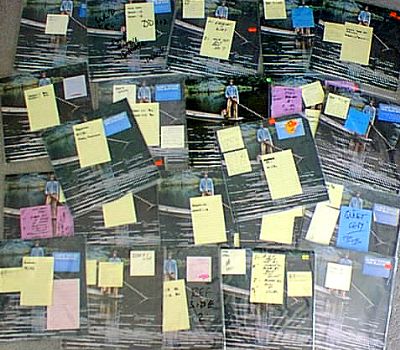
Which of the copies pictured below sound good and which ones don’t?

If you turn over enough of these “rocks,” you — and you alone — will know.

There are some amazing sounding winners in this pile. If you conduct your shootouts following the  tried and true methods we describe on the blog, you will be able to hear One Man Dog and every other album you love sound better than you ever dreamed possible.

Pictured below are just a small fraction of the rocks we’ve turned over in the 20 years since we began doing shootouts.

(more…)

Why Did Suite No. 2 Sound Better than Suite No. 5?

Hot Stamper Pressings of the Music of J.S. Bach Available Now

We described our most recent Shootout Winning pressing of SR-90370, Bach’s Suites Nos. 2 and 5 for Solo Cello this way:

An early Mercury label pressing of Starker’s legendary 1963 recording of Bach’s sublime music for solo cello with INCREDIBLE Shootout Winning Triple Plus (A+++) grades or close to them.

The bass-boosted, muddy, veiled and ambience-challenged sound of the typical modern Heavy Vinyl remaster is nowhere to be found here.

I would bet money that whatever version is currently available has plenty of shortcomings along those lines, which may be acceptable to the mid-fi crowd but is positively ruinous on the high-fidelity systems that our customers have (or why on earth would they keep paying these prices?)

Some Mercury pressings from the 50s have absolutely amazing sound – we should know, we’ve played them by the score

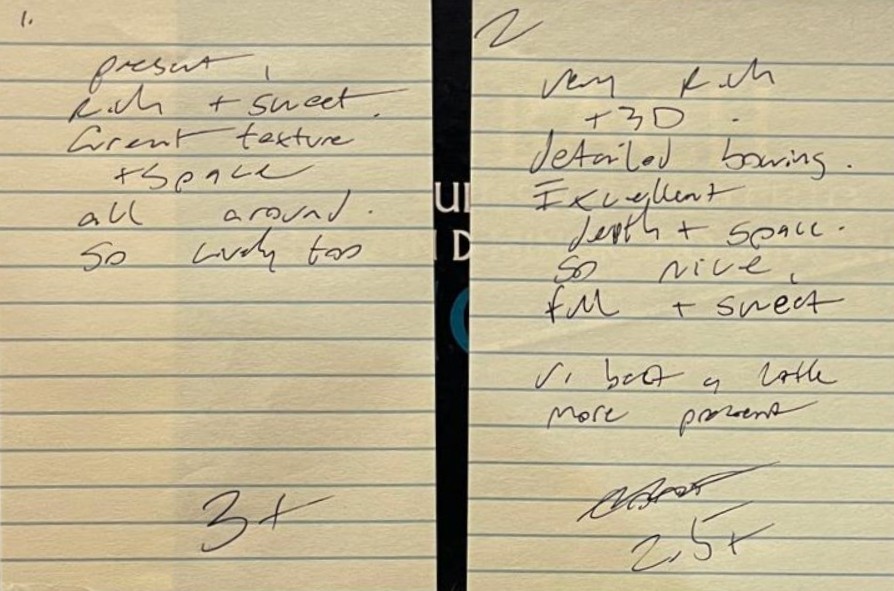
Side one was killer in every way, and the way we know that is we played a bunch of copies and nothing could beat it. This side one took top honors for having exactly the sound we described above.

  • Present
  • Rich and sweet
  • Great texture and space all around
  • So lively too

Side two is another matter. We came across a side two that was slightly better than the side two you see here.

(more…)