*Experimenting with Records

Experimenting with records is the only way to learn much about them of any real value.

Finding Good Companies to Invest In Is a Lot Like Finding Good Sounding Records to Play

Important Lessons We Learned from Record Experiments

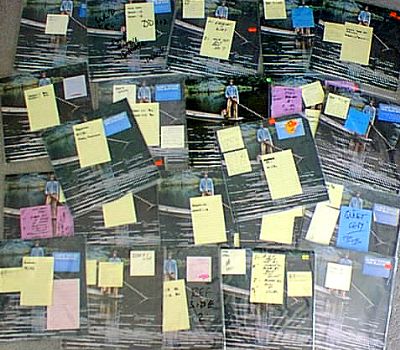
Which of the copies pictured below sound good and which ones don’t?

If you turn over enough of these “rocks,” you — and you alone — will know.

There are some amazing sounding winners in this pile. If you conduct your shootouts following the  tried and true methods we describe on the blog, you will be able to hear One Man Dog and every other album you love sound better than you ever dreamed possible.

Pictured below are just a small fraction of the rocks we’ve turned over in the 20 years since we began doing shootouts.

(more…)

Why Did Suite No. 2 Sound Better than Suite No. 5?

Hot Stamper Pressings of the Music of J.S. Bach Available Now

We described our most recent Shootout Winning pressing of SR-90370, Bach’s Suites Nos. 2 and 5 for Solo Cello this way:

An early Mercury label pressing of Starker’s legendary 1963 recording of Bach’s sublime music for solo cello with INCREDIBLE Shootout Winning Triple Plus (A+++) grades or close to them.

The bass-boosted, muddy, veiled and ambience-challenged sound of the typical modern Heavy Vinyl remaster is nowhere to be found here.

I would bet money that whatever version is currently available has plenty of shortcomings along those lines, which may be acceptable to the mid-fi crowd but is positively ruinous on the high-fidelity systems that our customers have (or why on earth would they keep paying these prices?)

Some Mercury pressings from the 50s have absolutely amazing sound – we should know, we’ve played them by the score

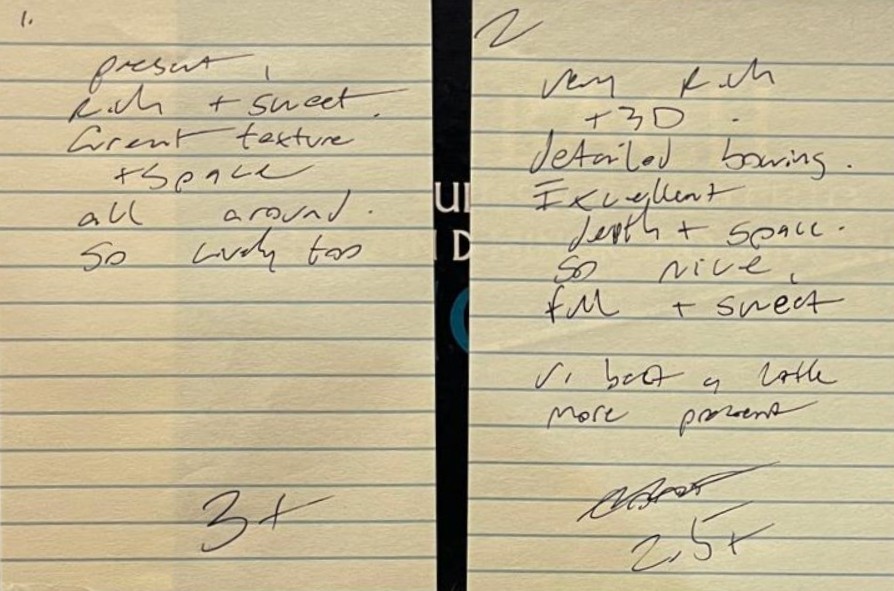
Side one was killer in every way, and the way we know that is we played a bunch of copies and nothing could beat it. This side one took top honors for having exactly the sound we described above.

  • Present
  • Rich and sweet
  • Great texture and space all around
  • So lively too

Side two is another matter. We came across a side two that was slightly better than the side two you see here.

(more…)

Put Us to the Test! We Can Tell a Good Record from a Bad One, Digital or No Digital

Skeptical Thinking Is Key to Finding Better Sounding Records

And we don’t need to know anything about how it was made in order to judge it!

For those of you who did not follow this story from a few years back, you may want to catch up here.

Although it’s behind a paywall, you can get a free test drive easily enough.

Now that you are up to date on the overall contours of this mess, here is another one of the many thoughts I have had concerning the revelation that Mobile Fidelity has been secretly sourcing at least some of their masters digitally since 2015.

Back in August of 2022, I wrote what you see below to Geoff Edgers, the reporter who exposed this ridiculous mess. (I toned it down quite a bit. The original version was not suitable for publication.)

Earlier that same year he had visited me at my studio, where I played him the awful Dire Straits first album that MoFi remastered, one of the worst half speeds ever made (review coming, but you can get a good idea of my take on it here).

By August of 2022 he was starting to see just how crazy the world of audiophiles actually is, and the more he learned about some of these people, the crazier they seemed. And he was not wrong about that.

My letter (with a few additions):

Jim Davis (of MoFi) is not one to be trusted and would have loved to cover up this whole thing if he could have figured out how to do it. It got away from him, and as far as I’m concerned, good.

And you heard how shitty their Dire Straits record is. Who cares if it’s digital? The sound is bad. Why bother trying to figure out the reasons this crappy label doesn’t know how to make good records? It’s just a fact. Accept it.

Many of MoFi’s now-exposed records were on Fremer and Esposito’s own lists of the best sounding analog albums.

Of course they were. I defy you to find me two “audiophile experts” who are wrong more often than these guys!

From the article:

One of the reasons they want to excoriate MoFi is for lying,” says Howarth. “The other part that bothers them is that they’ve been listening to digital all along and they’re highly invested in believing that any digital step will destroy their experience. And they’re wrong.

These people who claim they have golden ears and can hear the difference between analog and digital, well, it turns out you couldn’t.

The best ears? Are you kidding me? In their dreams. These guys give every indication that they are virtually devoid of critical listening skills. The evidence supporting this reality has been laid out in this very blog in scores of commentaries over the course of more than twenty years.

(more…)
Can a Pile of Different Pressings All Sound the Same?

Skeptical Thinking Is Critical to Making Progress 

There are certain things we can stipulate as all but impossible. Nobody who says they can levitate should be taken seriously.

But are there aspects of audio reproduction that you’re not familiar with?

Are there stereos that reproduce music at a much higher level than any with which you are familiar?

Are there ways to make your stereo sound better than the ones you know of?

Are there record pressings that sound better than the ones you’ve heard?

The reason I ask is this: There is never been a case in which a person contacted me and told me that they had played a pile of copies of a particular album and that they all sounded the same.

(more…)

Three Top Copies Make for One Tough Shootout

Hot Stamper Pressings of the Music of Cat Stevens Available Now

Our good customer Michel wrote to us about his experience playing three Hot Stamper pressings of Mona Bone Jakon, two of which were our new favorite imports (hence the shootout winning grades) and one domestic LP that came close to them in sound  quality. Close, but no cigar.

At the bottom of the post you can see the notes for one of the knockout copies he bought.

Hi Tom,

Well, I’ve been going at it for about an hour and a half.

3 Hot Stamper copies… NWHS US 2.5/2.5… WHS UK 2.5/3… WHS UK 3/2.5.

Using both UK 3+ White Hots, I went back and forth and back and forth again with side one. The 3+ side one is definitely the winner. That is also my favorite side.

The more I listened, the more the 2.5+ side one sounded like a wanna-be 3.0! It was straining to get there, but simply could not. Everything really dialed in with the 3+ side.

There seemed to be less vocal strain on the sound with the 3+.

The amazing openess, clarity, warmth, natural tonality, extended bass that reverberates throughout my house and beyond are simply phenomenal. These ever so deep reverberating bass notes are simply divine on this 3+.

What a pleasure to listen to. I don’t think I own many records that can produce the sound that this one does.

(more…)

The Best Reissue Pressings of Way Out West Are Amazing Sounding

Hot Stamper Pressings of Contemporary Jazz Albums Available Now
When it comes to Contemporary recordings, sometimes the originals are the best sounding pressings. Other times, regardless of how good the originals may be, the best reissues, which is to day the right reissues, somehow manage to beat them.

This is undeniable — at least it is to those of us who audition records without regard to preconceived notions of which pressings are sure to have the best sound, based on attributes such as who mastered them, what label they have, what country they’re from, as well as a host of other things that collectors tend to look for.

We hold a different view. Foundational to understanding the nature of the vinyl LP is the idea that rules were made to be broken — the rules I just mentioned and others just like them.

The winners cannot be predicted. They can only be discovered.

Which is precisely why we do shootouts: to find out which pressings have the best sound, not which ones should have the best sound, or used to have the best sound, or might have the best sound, or were told will have the best sound.

Not only do we not care what anybody else thinks is the best pressing. It’s worse than that. We don’t even care what we used to think was the best pressing.

The current best evidence is the best evidence and that’s all there is to it. When new evidence overturns our previous understanding, then we naturally change our views. It’s the main reason we have no qualms about admitting our mistakes. If you let the evidence guide you in your search for the best sounding pressings, one thing you can be sure of is that you will get a lot of things wrong, and we have.

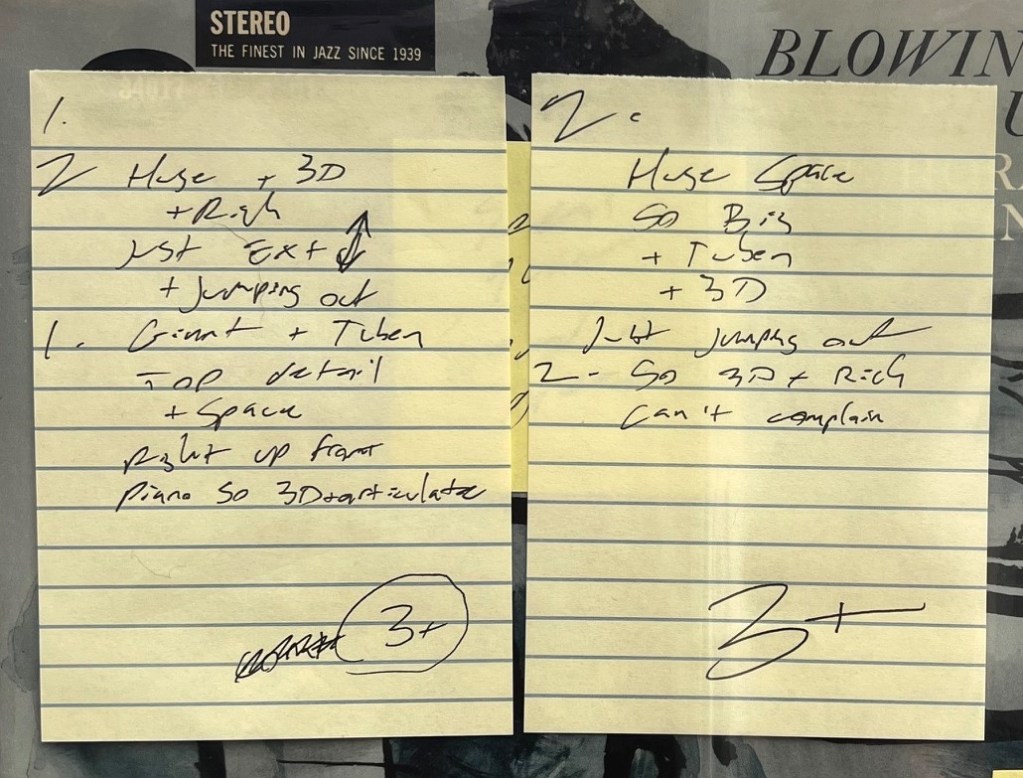
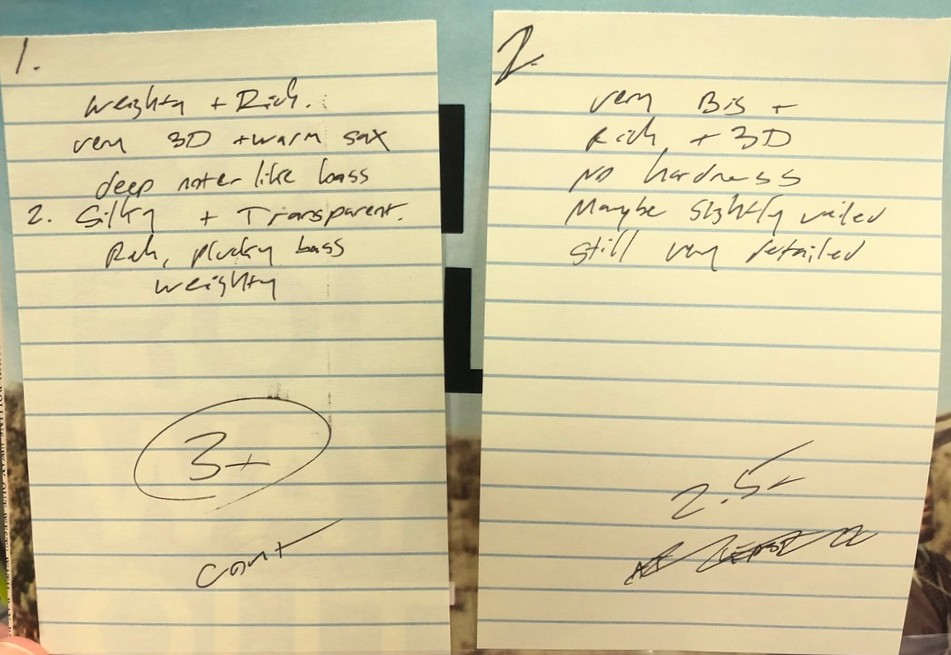
Not long ago we came across a Shootout Winning pressing of Way Out West with absolutely amazing sound. You can see the notes we took below. We described it this way:

This copy has superb 1957 Contemporary stereo sound – big, open and natural throughout. It’s one of our favorite Rollins records – one listen to this copy and you will know exactly why we love the recordings engineered by Roy DuNann.

Side One

Track One

  • Weighty and rich
  • Very 3-D and warm sax
  • Deep note-like bass

(more…)

Doing Shootouts for Other Genres of Music

Record Collecting for Audiophiles from A to Z

Jack contacted us recently about doing shootouts for the kinds of records that we rarely do shootouts for:

Hello Tom,

I am thinking about opening an online record store based on the same hot stamper methodology as Better Records, only I focus on genres that you do not cover, such as rap, metal, punk, hardcore, post-punk, noise and other niche genres.

Thus I am trying to get a sense of what it would take to make this project work. Did you have a reputation in the audiophile community prior to starting Better Records that drove people to your store?

The other question I am wondering is about equipment. Do you think that one has to have extremely high-end equipment (e.g., $5000 tone arms and the like) to properly tell whether a record is a hot stamper?

Finally, do you think that your methodology could work on LPs released post-1990, when there are far fewer variants of an album available? Any insight you could offer would be much appreciated.

Regards, Jack

Jack,

You need to follow our approach to the letter. The basics of it can be found here.

For a deeper dive, here is where you will find more helpful advice on doing your own shootouts

This would be a good budget to start with:

(more…)

Another Reason to Love Rudy Van Gelder in the 60s

Hot Stamper Pressings Engineered by Rudy Van Gelder Available Now

A Must Own album from Horace Silver, with the kind of sound that only the best vintage pressings can offer.

If you don’t know the man’s music, this is a good place to start. It’s yet another triumph for engineering maestro Rudy Van Gelder – he refined a “live-in-the-studio” jazz sound that’s still fresh today, even after 65 years.

The really good RVG pressings (often on the later labels) sound shockingly close to live music — uncompressed, present, full of energy, with the instruments clearly located on a wide and often deep soundstage, surrounded by the natural space and cool air of his New Jersey studio.

As our stereo has improved, and we’ve found better pressings and learned how to clean them better, his “you-are-there” live jazz sound has come to impress us more and more. (I hope everyone can read the scribble on our Hot Stamper post-it notes by now. If there is any line you need translated, please feel free to let me know.)

(more…)

To Find Better Records, Make More Mistakes

mistakes_stevensx20

Skeptical Thinking Is Key to Finding Records with Audiophile Quality Sound

UPDATE 2026

We would no longer agree with the following statement:

“…most of the received wisdom handed down to record lovers of all kinds is more likely to be wrong than right.”

We recently wrote about the subject in a commentary about  conventional wisdom. There we simply point out that most of the time the conventional wisdom is right, but there is a lot more to it than that.

Audiophiles should be asking themselves the question: How would I even know whether it’s right or not?

Believing something about records because everybody else believes it is not a good approach to finding better sounding records. It’s really not a good approach to records, audio or practically anything else you care to name.

Experimental evidence trumps the advice of the reviewers, the forum posters, the youtube “cognoscenti” (scare quotes very much called for), and especially the kind of theoretical speculation audiophiles engage in as to the qualities of master tapes that few if any have ever heard.

We do things differently around here. (more…)

The Most Serious Fault of the Typical Half-Speed Mastered LP?

Hot Stamper Pressings of Revolver Available Now

UPDATE 2026

This commentary must be fairly old because we haven’t bothered to play anything put out by Sundazed in longer than I can remember.


The most serious fault of the typical Half-Speed mastered LP is not incorrect tonality or poor bass definition, although you will have a hard time finding one that doesn’t suffer from both.

It’s dead-as-a-doornail sound, plain and simple.

And most Heavy Vinyl pressings coming down the pike these days are as guilty of this sin as their audiophile forerunners from the 70s. The average Sundazed record I throw on my turntable sounds like it’s playing in another room. What audiophile in his right mind could possibly find that quality appealing? (Apparently the guy who wrote this absurd list of records you should buy It has a number of inexcusably at best mediocre and mostly awful sounding Sundazed records.)

But Sundazed and other companies just like them keep turning out this crap. Somebody must be buying it.

So how does the famous MoFi pressing of Revolver sound? In a word, clean. Also not as crude as the average British import, and far better than any Japanese or domestic pressing we heard.

But it’s dead, man. It’s just so dead.

(more…)