tube-mastering

Thoughts on mastering with tubes.

A Few Observations on RCA’s Chamber Recordings

beethseren_LSC2550

Hot Stamper Pressings of Living Stereo Titles Available Now

What do the best copies of this album sound like?

The sound is RICH and TRANSPARENT, and unlike a lot of RCA’s chamber recordings, not dry.

The tonality is also Right On The Money.

The performers are present and the transients of their instruments are not in the least bit smeared.

A case of good tube mastering?

On the best pressings, absolutely.

(More on the subject of tubes in audio here.)

Classical Shootouts

RCA is justly famous for its chamber recordings, which tend to be somewhat rare for some reason. Let’s be honest: we did not conduct this shootout with a dozen copies of the album. (It would take us at least twenty-five years to find that many clean pressings.)

What we had were quite a few other Heifetz RCA chamber recordings, as well as some favorites by the Quartetto Italiano and I Musici that we are very fond of and know well.

After thirty two years in business selling vintage vinyl, by now we’ve played scores if not hundreds of good violin recordings. We have no problem recognizing good violin sound (as well as correct violin tone, not exactly the same thing) when we hear it. In the past our top Hot Stamper classical pressings would go directly to our best customers, customers who want classical recordings that actually sound good. not just the kind of Golden Age Recordings that are supposed to. Now that we are able to do classical shootouts on a regular basis, we hope to have enough superb sounding classical recordings for all of our audiophile customers.

I’ve commented often over the years of the benefits to be gained from listening to classical music regularly. Once a week is a good rule of thumb I would say. I love rock and roll, jazz and all the rest of it, but there is something about classical music that restores a certain balance in your musical life that can’t be accomplished by other means. It grounds your listening experience to something perhaps less immediately gratifying but deeper and more enriching over time. Once habituated, the effect on one’s mood is not hard to recognize.

Orchestral Music Is Hard to Record, Master and Press, Apparently
(more…)

Audiophile Reviewers Raved About This Doug Sax Tube-Mastered Mess

User comments

More of the music of Sergei Rachmaninoff (1873-1943)

The reviews below will sound depressingly familiar to you if you have been in audio for as long as I have.

Sonic Grade: F

This Athena LP is now long out of print, but it received rave reviews when it was released. (We quote many of them below.) This album is a member of the TAS Super Disc list, but we found the sound awfully opaque, smeary, slow and compressed, the kind of bad “analog” sound that Doug Sax brought to the early AP releases. 

The sticker on the shrink wrap of a previous copy had these quotes:

“…for this is the definitive symphonic recording to date.” – J. Gordon Holt/ Stereophile

“Wins ‘Best Record of the Year’ award against tough competition.” – Joe Hart/High End Audio Press & Music Review

“HP heard the Athena remastering of the Rachmaninoff and found it stunning. He could recommend it without reservation.” – Harry Pearson/The Absolute Sound #57

I guess things never change.

And doubtlessly he continued to refer to himself in the third person until the end.

Reviewer malpractice? We’ve been writing about it for more than 25 years.

(more…)

Le Cid on Klavier – Now With Added Smile Curve

Presenting Yet Another Pressing Perfectly Suited to the Stereos of the Past

This hi-fi-ish Doug Sax/ Acoustic Sounds butchering of Fremaux’s performance from 1971 is insufferable. These Klavier pressings of EMI recordings are nothing but Audiophile Bullshit.

Can this possibly be the sound that EMI engineer Stuart Eltham was after?

Back in the day, audiophiles in droves bought this pressing from all the major mail order audiophile record dealers (you know who I’m talking about), apparently not noticing the overblown bass and spark-spark-sparkling top end. 

Perhaps the same audiophiles who think that Mobile Fidelity makes good sounding records? It would not surprise me. Same odd-tasting wine, different bottle.

The Smile Curve

If you’ve spent any time on this site, you should know by now that many audiophile records sound worse than the typical CD. The typical CD does not have an equalization curve resembling a smile. The classic smile curve starts up high on the left, gets low in the middle, and rises again at the end, resulting in boosted bass, boosted top end, and a sucked out midrange — the Mobile Fidelity formula in a nutshell.

If your system needs boosted bass and highs, perhaps because your speakers are too small, well, I suppose you could try this Klavier pressing.

Here’s a better idea.

Fix your f-ing stereo so you won’t need phony audiophile records like this one to make it sound good.

Either of the two records you see below will be dramatically better sounding than the Klavier Heavy Vinyl. The best pressings of this one win all the shootouts, but the Greensleeves Budget reissue pressing can also sound very good, with the better pressings earning a grade of 2+ or thereabouts.

(more…)

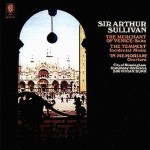
The Merchant of Venice Suite – Another Dubby Klavier Record

Hot Stamper Pressings of Classical and Orchestral Music

Sonic Grade: F

A Hall of Shame Pressing and another Heavy Vinyl Classical LP debunked.

This record sounds like it was mastered from copy tapes, which is where at least some of its dubby sound comes from. All the Klavier Heavy Vinyl pressings we’ve played have this problem.

Yes, it is yet another murky, smeary Audiophile Piece of Trash from the mastering lathe of the formerly brilliant Doug Sax. He used to cut the best sounding records in the world. Once he started cutting Heavy Vinyl it was all over.


The Trout Quintet – Original Versus Reissue

More of the music of Franz Schubert

This unusual 2-pack combines two very different pressings from very different eras to create a complete performance of The “Trout” Quintet with SUPERB Super Hot Stamper (or better) on both sides. One pressing, the one shown, is from the early ’60s; the other is from 1982. How could an imported budget late reissue beat a superb Golden Age pressing on any side you ask? Well, the answer to that question is provided by the records we will send you. 

Side one of this London Whiteback pressing is dark and opaque, with a serious lack of both top end and clarity. Side two however is GORGEOUS: so big, rich, clear and lively, it earned a sonic grade of A++ to A+++! In our shootouts the person reviewing the records (in this case me) never knows which pressing is being critiqued. Imagine my surprise when the late London handily beat the early one.

Actually it’s easy to imagine my surprise, because there was simply no surprise to imagine. In our shootouts here at Better Records, later pressings beat early pressings regularly. We let the records speak for themselves, and that’s what they told us, at least on side one of The “Trout.” The reason the late pressing even made it into our shootout was that in a preliminary round it showed us that it had very good sound on side one. Side two didn’t hold up, but any record with good sound on any side is going to go in the shootout, regardless of the “incorrectness” of its label or country of origin.

On the earlier pressing (CS 6090) the sound is rich and sweet; some might say it’s too rich, but for this music it works. The piano and the strings have that Golden Age Tubey Magical sound we love. It’s been years since I’ve had the opportunity to play this record; most copies are just too beat up to bother with, so I was glad to find this one in such minty condition. (more…)

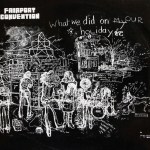
Listening in Depth to What We Did On Our Holidays

More of the Music of Richard Thompson

This RARE Island Sunray British Import LP has Hot Stamper sound, full of the Tubey Magic you expect from a British Folk album in 1969 (and the unavoidable sonic shortcomings you should expect if you know much about this band and their records).

It’s without a doubt the nicest copy we have ever seen, the acquisition of which was purely a matter of luck, as early pressings are virtually impossible to find in anything but beat-to-death condition. 

The “haunting, ethereal” vocals of the lovely Sandy Denny (or Alexandra Elene McLean Denny as she’s listed on the sleeve) are sublime on this British early copy.

Some of you may recognize her voice from a ditty called ‘Battle of Evermore,’ found on a grayish ’70s rock album that no one even bothered to name. Wonder what ever became of that group? No doubt by now their story is lost to the sands of time. I have to say I thought the music was pretty good though.

The sound varies greatly from track to track. We played the first three songs on each side and guessed that the rest would fall in line with the average of the three we heard.

Side One

The third track gets the balance of tubes and clarity about right.

The second track has a Fleetwood Mac bluesy sound with grungy guitars and surprisingly sweet and breathy vocals.

The first track has too many tubes and sounds “dubby.”

Side Two

Again, the first track is rich but a bit too tubey.

Track two gets it right — still Tubey Magical but clear and clean, some of the best sound we heard.

Track three is the same way, rich and sweet and maybe a bit fat but that’s the way these British Folk Albums are supposed to sound, if our experience with dozens of them can serve as a guide.

(more…)