steveteafo

Letter of the Week – “The White Hot stamper just pulled you into those songs, so you could feel every little dynamic shift and tonal change…”

More of the Music of Steely Dan

More of the Music of Cat Stevens

One of our good customers had this to say about some Hot Stampers he purchased recently. [The bolding has been added by us.]

Hey Tom,   

A friend and I just did a shootout of 16 copies of Aja, plus one of your White Stampers, which easily trounced them all (including some DJ 12″ singles from the album) [1], and in exactly those areas that you cover in some of the WTLF descriptions you have for that album. Just a great big, open and lovely-sounding record–what a thrill!. And thanks very much for those notes–they help clarify the critical listening process.

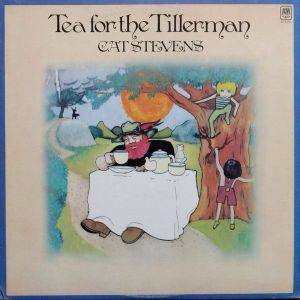
We also listened to 16 copies of Tea for the Tillerman. Among those (UK pink rims, German, Japanese, and many US labels) were two excellent early brown label A&M pressings, which I saved for the end of the shootout.

And we had the Analogue Productions 33 rpm pressing, which has been a big disappointment since I first heard it. [2] Those two original A&Ms both sound so much more natural, with more delicacy, extension, air, presence and energy than the AP version. My listening buddy said they sounded as if they were cut at 45 rpm; and neither of us really expected your White Hot UK pink-rim pressing could be a significant improvement over those.

But, as good as those are, it was also obvious that your WHS brought the music several steps closer. The A&M brown labels both added some thickness and over-emphasized the low range of his voice–which (until we heard your WHS) was a pleasant coloration.

But as you frequently mention, the biggest issue, once you’ve heard a great copy, is how much more energy and flow the music has. The WHS stamper just pulled you into those songs, so you could feel every little dynamic shift and tonal change that the musicians were bringing to the table. It allowed that music to breathe in a way I’ve never heard before. What a record!

The BIG thing your Hot Stampers do is present the music in a perfectly balanced way — no frequency range is emphasized, which also means none are compromised. I think this is why you can always turn up the volume on a Hot Stamper. If you’ve got a bad mastering or bad pressing, at some point, turning up the volume only make parts of the recording more unlistenable. Turning up a Hot stamper makes it a bit louder, sure. But it also brings you further into the studio, and closer to the music — and that’s we really want, right?

Ivan

Ivan,

Quite a shootout! I see you learned a lot. That’s what shootouts are for, to teach you what the good copies do well that the other copies do not do so well. As you well know, going deep into the sound the way you did is a thrill, one we get to enjoy on a regular basis. Maybe not every day — not every record is as good as Tea for the Tillerman – but multiple times a week. It’s what make the coming to work every day fun for those of us on the listening panels.

(more…)

Letter of the Week – “These records are all making clear that I need bigger speakers. Much bigger. Twice the size.”

Hot Stamper Pressings of the Music of Cat Stevens Available Now

One of our good customers had this to say about some Hot Stampers he purchased recently:

Goddamit Tom, these records are all making clear that I need bigger speakers. Much bigger. Twice the size. In a bigger room, with treatments. Your stuff makes the path forward very clear. They need the dynamics I’m sure you’re getting. I can hear what is missing.

I don’t know if that’s a good thing, since I was generally unaware of this previously, and can’t afford that level of upgrade for a while.

We’re talking a few years out to buy a house (we’re in an apartment on the corner of the building over a garage, so no neighbor noise problems but the room is only 15×14.5 with average height ceilings) and some big upgrades.

Dear Sir,

You and I seem to be on the same page. The vast majority of audiophiles never get to the higher levels because of all the compromises they make in their rooms, speakers, wires and everything else. They end up with a collection of crap heavy vinyl because their systems don’t let them hear what is really going on with the best vintage pressings.

Call it a breakthrough of a sort. The long road ahead is an expensive one, but I’ve always been of the belief that the money you spend on audio — if you do it right — rewards you a hundred times over in listening pleasure, and it does so for as long as you live, which I hope is many more decades, at least.

These are records that need to be played loud. Until you have a bigger room and bigger speakers, they are not going to be easy to get to sound right.

I ended up building a playback studio that is 17 by 22 with a 12 foot high ceiling, a concrete slab floor and six inch thick double drywall for walls, and dedicated electrical circuits, but it took a lot of work to get it to sound right.

Oddly enough, what made the biggest difference was getting the electricity right: computers and cleaning machines on isolation transformers, stuff unplugged, stuff left plugged in that made the sound better, lights hooked up to batteries rather than plugged in to the main circuits, etc.  Night and day better that way. (More on unplugging here.)

This work is not hard for me, I’ve been doing it for decades, but you have one advantage over everyone else: you have good sounding records to test with.

You have Hot Stampers! The records are correct. If they sound wrong, it’s not their fault. They are not the problem. (more…)

Two Key Tracks for Testing Sibilance and Transparency on Tea for the Tillerman

Hot Stamper Pressings of the Music of Cat Stevens Available Now

The song Father and Son can be a bit sibilant. On the best copies the sibilance is under control.

The best copies have the least amount and make the spit they do have much less gritty and objectionable.

We’ve known for decades how good a test sibilance is for tables, cartridges and arms. Sibilance is a bitch. The best pressings, with the most extension up top and the least amount of aggressive grit and grain mixed into the music, played using the highest quality, most carefully dialed-in front ends, will keep sibilance to an acceptable minimum.

VTA, tracking weight, azimuth and anti-skate adjustments are critical to reducing the amount and the quality of the spit in your records.

Another track I like to play on side two is Into White. With this song, you hear into the music on the best copies as if you were seeing the live musicians before you. The violinist is also a key element. He’s very far back in the studio. When he’s back where he should be, but the sound of the wood of his violin and the rosin on the strings is still clearly audible, without any brightness or edginess to artificially create those details, you know you are hearing the real thing.

(more…)

Two Minutes that Shook My World – “But I Might Die Tonight”

After building our new studio a few years ago, we soon found out we had a whole host of problems.

We needed to work on electrical issues. We needed to work on our room treatments. We needed to work on speaker placement.

We initially thought the room was doing everything right, because our Go To setup disc, Bob and Ray, sounded super spacious and clear, bigger and more lively than we’d ever heard it. That’s what a 12 foot high ceiling can do for a large group of musicians playing live in a huge studio, in 1959, on an All Tube Chain Living Stereo recording. The sound just soared.

But Cat Stevens wasn’t sounding right, and if Cat Stevens isn’t sounding right, we knew we had a huge problem.

Some stereos play some kinds of records well and others not so well. Our stereo has to play every kind of record well because we sell every kind of record there is. You name the kind of music, we probably sell it.

And if we offer it for sale, we had to have played it and liked the sound, because no record makes it to our site without being auditioned and found to have excellent sound.

But I Might Die Tonight

The one song we played over and over again, easily a hundred times or more, was But I Might Die Tonight, the leadoff track for side two. It’s short, less than two minutes long, but a lot happens in those two minutes. More importantly, getting everything that happens in those two minutes to sound not just right, but as good as you have ever heard it, turned out to be a tall order indeed.

I could write for days about what to listen for in the song, but for now let me just point the reader to one of the most difficult parts to reproduce.

At about 50 seconds into the track, Cat repeats the first verse:

I don’t want to work away
Doing just what they all say
Work hard boy and you’ll find
One day you’ll have a job like mine, job like mine, a job like mine

Only this time he now has a multi-tracked harmony vocal singing along with him, his own of course, and he himself is also singing the lead part louder and more passionately. Getting the regular vocal, call it the “lower part,” to be in balance with the multi-tracked backing vocal, call it the “higher part,” turned out to be the key to getting the bottom, middle and top of the midrange right.

When doing this kind of critical listening we play our records very loud. Live Performance level loud. As loud as Cat could sing, that’s how loud it should be when he is singing his loudest toward the end of the song for the final “But I might die tonight!” If he is going to sing loudly, I want my stereo to be able to reproduce him singing as loud as he is actually singing on the record.

No compression.

No distortion.

All the energy.

Yes, that’s the way I want to hear it!

The last fifteen seconds or so of the song has the pianist (Cat himself) banging out some heavy chords on the piano. If you have your levels right it should sound like there is a real piano at the back of the room and that someone is really banging on it, a powerful coda perfectly fitting for such an emotionally stirring song.

(more…)

Lee Hulko Cut All the Best Sounding Cat Stevens Albums, Regardless of Label

Hot Stamper Pressings of the Music of Cat Stevens Available Now

UPDATE 2020

This commentary was written many years ago, circa 2005 I would guess.

Way back then, doing Hot Stamper shootouts was much more difficult than it is now. We didn’t have the right cleaning machine, and we hadn’t discovered the Prelude Record Cleaning System.


Is the Pink Label Island original pressing THE way to go? That’s what Harry Pearson — not to mention most audiophile record dealers — would have you believe.

But it’s just not true. And that’s good news for you, Dear (Record Loving Audiophile) Reader.

Hot Stamper Commentary for John Barleycorn

Since Barleycorn is a Lee Hulko cutting just like Tea here, the same insights, if you can call them that, apply.

Here’s what we wrote:

Lee Hulko, who cut all the Sterling originals, of which this is one, cut this record many times and most of them are wrong in some way. A very similar situation occurred with the early Cat Stevens stuff that he cut, like Tea & Teaser, where most copies don’t sound right but every once in a while you get a magical one.

Lee Hulko cut all the original versions of this album, on the same cutter, from the same tape, at the same time.

(more…)

Cat Stevens – Tea For The Tillerman on the A&M Brown Label

More of the Music of Cat Stevens

More Reviews and Commentaries for Tea for the Tillerman

  • This superb Brown Label A&M pressing of TFTT – The Pinnacle of British Folk Rock from 1970 – earned solid Double Plus (A++) grades on both sides – reasonably quiet vinyl too
  • It was mastered by the same guy who cut the British pressings – Lee Hulko – and we guarantee the sound will hold its own against any copy you’ve ever played
  • The emotional power of the songs is communicated completely – we can assure you the experience will be like playing the album for the first time (so this is your chance!)
  • 5 Stars on Allmusic, a stunning Demo Disc, and a permanent member of the Better Records Top 100

Hearing this Hot Stamper is a PRIVILEGE that affords the listener insight into Cat Stevens’ music that is simply not possible any other way. The emotional power of these songs is communicated so completely through our better copies that we can assure you the experience will be like playing the album for the first time.

This is, I hope it goes without saying, one of the greatest Folk Rock records of all time, the kind of music that belongs in any collection. I’ve been playing this album for 40 years and I can honestly say I’ve never once tired of hearing it. I do get tired of hearing bad copies.

Cat’s mixes are full of subtle elements that may require many listening sessions over the course of years, even decades, to recognize and appreciate. Consider them an extra reward for having played the record so many times. I’ve played hundreds of copies over the last thirty plus years and never tired of it once. As every music lover knows, the best albums only get better with time.

(more…)

Tea for the Tillerman – Making Progress in Audio from 1984 to 2004

Hot Stamper Pressings of the Music of Cat Stevens Available Now

The following comments were written in 2004.

Hard Headed Woman is a song that has evolved dramatically over the last 20 years. If you’ve been making regular upgrades to your equipment and taking advantage of all the new technologies available at the front end, such as: vibration control, electromagnetic stabilization, better arms, better cartridges, better phono stages, better motors, fly wheels, Synchronous Drive Systems, better power cords, better power conditioning, to name just a few, you are no doubt able to reproduce this song much better than you were in the old days. Speaking of congestion, it had previously been our experience that every copy of the record had at least some congestion in the loudest parts, typically the later parts of songs where Cat is singing at the top of his lungs, the acoustic guitars are strumming like crazy, and big drums are pounding away and jumping out of both speakers. 

I used to think that Cat’s voice got hard and harsh when he got loud on the passage that starts with “I know… [big drums here] many fine feathered friends…”. Now he gets even louder, the drums are much more powerful, and yet he still sounds like a real person, not an overdriven recording.

A classic case of blaming the recording. The record was fine. I just couldn’t play it right.

(more…)

Letter of the Week – “The dynamic range is almost shocking on my rig.”

More of the Music of Cat Stevens

More Reviews and Commentaries for Tea for the Tillerman

More Reviews and Commentaries for Teaser and the Firecat

This letter from our good customer Gary references the Hot Stampers he bought from us and subsequently played for a CD-only audiophile friend with a megabuck stereo. This is his story, followed by my commentary about the sound of Cat Stevens’ music on disc.

The Cat Stevens Hot Stampers are just amazing. The dynamic range is almost shocking on my rig. It’s like a car with the ability to go from 0 to 60 in 2 seconds… It is so cool to turn up the music really loud and still converse with people if you want. The quiet is dead quiet. That is the sign of a good record.

I had a visitor from Chicago with more money in his system than most houses, no vinyl. He is now looking into it. Teaser busted him. I think I might have cried when I heard Father and Son on Tillerman, just beautiful. Thanks and keep up the good work.

Gary, I have a long history of challenging audiophiles who hold that the CDs of those albums do them justice sonically. Prove it I say. The difference between the good LP pressings and the best CDs is NIGHT AND DAY. Anyone playing the CDs of those albums is in the presence of a pale shadow of what’s really on that tape.

We written page after page of commentary on the sound of Cat’s classic recordings, but you sure won’t know what we’re talking about by playing those damn CDs.

If you don’t have a good turntable, just learn to live without this music. You really can’t hear it right on CD, so why even bother?

P.S. A CD-only audiophile with more money than sense? Isn’t that an oxymoron?

Most of the ones I’ve met are more in love with the technology than with the music it is supposed to be reproducing. Like most modern audiophile gear, it’s almost always very clean, very clear and very BORING.

Cat Stevens and His Sparkling Acoustic Guitars?

More of the Music of Cat Stevens

In the commentary for America’s first album we noted that:

The guitars on this record are a true test of stereo fidelity. … most of the pressings of this record do not get the guitars to sound right. … on a copy with a bit too much top end they will have an unnatural hi-fi-ish sparkle. 

This kind of sparkle can be heard on many records Mobile Fidelity made in the ’70s and ’80s. Tea for the Tillerman, Sundown, Year of the Cat, Finger Paintings, Byrd at the Gate, Quarter Moon in a 10 Cent Town — the list of MoFis with sparkling acoustic guitars would be very long indeed, and these are just the records with prominent acoustic guitars!

(On a side note, if you want a very different sounding Mobile Fidelity record, try anything mastered by Jack Hunt. They are every bit as wrong, but in the tonally opposite direction: murky, fat and way too smooth. This is the sound favored by another audiophile label, this one, and the fact that audiophiles actually buy into this kind of third-rate sound is confounding to say the least.)

Next time you drop the needle on a Mobile Fidelity record — one of the ones pressed in Japan and mastered by Stan Ricker; the Anadisq series tends to have the opposite problem, no top end at all — listen carefully to the acoustic guitars and tell me if you don’t think they sound a tad sparkly.

We’ve all heard acoustic guitars up close, at parties and coffee shops and what-have-you. They don’t really sound like that, do they? I should hope not.

(more…)

Tea, Teaser & Mona Bone on 180g Universal Vinyl

Hot Stamper Pressings of the Music of Cat Stevens Available Now

This commentary was written shortly after these three Universal Heavy Vinyl pressings were released in 2000.

Sonic Grades: F/F/F

Around 2000 Universal did the three most famous Cat Stevens titles, and they have to be three of the worst sounding records I have ever heard in my life. Many audiophile record dealers carry them. Have YOU been ripped off by one of these dealers? If so, we can help. We would never promote garbage like that.

Any record dealer who would actually charge money for these titles has to be either ignorant (having never taken the time to play the record — why bother when audiophiles will buy practically anything pressed on Heavy Vinyl?); auditorily-challenged (deaf, to be blunt about it); or cynically contemptuous of record lovers, music lovers and audiophiles in general.

If they’re gullible enough to buy into the 180 gram vinyl = better sound, they deserve what they get.

Mencken had a good take on a similar idea.

Democracy is the theory that the common people know what they want, and deserve to get it good and hard.

If you want to stop throwing your money away on bad records, stop doing business with the ignorant, deaf or cynical people who peddle them.