1970-all

Listen to Winwood’s Left Hand on “Glad”

Hot Stamper Pressings of the Music of Steve Winwood Available Now

Many years ago, perhaps in 2015, while playing an especially transparent copy of John Barleycorn, we learned something new about the album. Although it was a title I had been playing since it came out all the way back in 1970, apparently things had changed.

This pressing made it clear — really, for the first time — exactly what Winwood was doing with his left hand on the piano during the song Glad.

There are two musical figures that one can focus on: one involving the lower notes, which tend to be blurry, obscured and murky on most pressings, and two, the right-handed higher notes, which are typically much more clear and audible in the mix.

Only the very best copies let us “see” the bass notes of the piano so clearly and correctly. Next time you’re in the mood to compare different pressings of Barleycorn, pay special attention to the lower notes of the piano on Glad. It is our contention, backed by mountains of evidence, that no two copies of the album will get that piano to sound the same. (It will also help if you have large dynamic speakers with which to do the test.)

Lately we have been writing quite a bit about how pianos are good for testing your system, room, tweaks, electricity and all the rest, not to mention turntable setup and adjustment.

  • We like our pianos to sound natural (however one chooses to define the term).
  • We like them to be solidly weighted.
  • We like them to be free of smear, a quality that is rarely mentioned in the audiophile record reviews we read.

(more…)

Reposted in Honor of Ozzy’s Passing — Import or Domestic on Paranoid?

Hot Stamper Pressings of the Music of Black Sabbath Available Now

The domestic copies we’ve played over the years for all the Black Sabbath titles are clearly better sounding than any import we’ve ever auditioned. It may be counterintuitive, but these are exactly the kinds of things you find out when doing blinded shootouts.

We have little use for intuitions (UK recording, UK pressing) and rules of thumb (original = better sound). We call that way of approaching the search for better sounding pressings mistaken audiophile thinking. 

Hard data — the kind you get from actually playing the records — trumps them all.

(We recently posted a lengthy commentary about conventional wisdom, attempting to make the case that, although the most common record collecting approaches are more often right than wrong, there is simply no way to know when any given approach will work for any given title.)

Want to find your own killer copy?

Consider taking our moderately helpful advice for how to find your own shootout winners.

(more…)

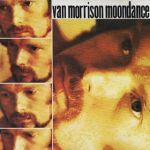
On Our Top Copy of Moondance, How Did We Recognize that One Side Was Not as Tubey?

Hot Stamper Pressings of the Music of Van Morrison Available Now

We described our most recent shootout winning pressing this way:

A Moondance like you’ve never heard, with Shootout Winning Triple Plus (A+++) grades or close to them on both sides of this early Green Label pressing.

Here are just a few of the things we had to say about this killer copy in our notes: “silky and 3D and present”…”sweet and breathy vox”…”spacious and rich”…”huge and lively”…”jumping out of the speakers.”

Drop the needle anywhere on the album for a taste of early-70s Tubey Magical analog, not to mention the kind of blue-eyed soul that will remind some of you just how good music on vinyl used to be.

Side one was killer in every way, and the way we know that is we played a bunch of copies and nothing could beat it. This side one took top honors for having exactly the sound we described above.

Side two is another matter. We came across a side two that was slightly better than the side two you see here.

When we played the two best copies back to back, side one of this copy came out on top, earning a grade of 3+. However, the side two of another pressing showed us there was even more Tubey Magic in the recording than we’d noticed the first time around.

With another copy earning a better grade for having even more Tubey Magic, the full 3 pluses, we felt the right grade for this side two was 2.5+.

Helpful Advice

To aid you in doing your own evaluations, here is a list of records that we’ve found to be good for testing Tubey Magic.

This is exactly why we do shootouts. If you really want to be able to recognize subtle (and not so subtle!) differences between pressings, you must learn to do them too.

And make sure to take notes about what you are hearing, good and bad.

One more thing: stick with the Green Label early pressings, they are the only way to fly on Moondance.

Mistakes Were Made

If you made the mistake of buying the Rhino pressing of Moondance, I hope you heard what we heard: a complete lack of Tubey Magic! This on one of the most Tubey Magical analog recordings we’ve ever played. You can thank Kevin Gray for helping you flush your record money down the drain. When we first reviewed the remaster in 2014, we wrote:

Where is the Tubey Magic of the originals? The sweetness? The richness? And why is there so little ambience or transparency? You just can’t “see” into the studio on this pressing the way you can on the good originals, but that’s fairly consistently been the knock on these remastered Heavy Vinyl records. We noted as much when we reviewed Blue all the way back in early 2007, so no surprise there.

We also complained that the Heavy Vinyl reissue gets the voice wrong.  When the voice is wrong on a Van Morrison record, you have yourself a completely worthless piece of vinyl. 180 grams or 120 grams or any other number of grams, vinyl with sound this bad should hold no appeal to the audiophile. The record collector, maybe, but collecting for the sake of collecting has never been our thing and we hope it’s never been yours.

(more…)

These Are the Kinds of Things You Say When You Haven’t Actually Played the Record

Hot Stamper Pressings of the Music of Van Morrison Available Now

From the brain trust at Music Direct.

[Italics added by yours truly.]

Van Morrison’s Moondance is that rare rock album where the band has buffed the arrangements to pure perfection.

And now, you can experience it on the finest-sounding pressing that’s ever been made courtesy of this 180g LP, remastered at Acoustech from the original analog tapes by Kevin Gray and Steve Hoffman.

Practically every audiophile press outlet in the world has sung its praises. Moondance has never had such power.

The power to make me wonder how anyone in his right mind would release a record that sounds this bad, that power?

Then there’s this guy, 51nocaster:

As for Moondance, the reissue is very good, but I still prefer the original. Steve Hoffman was involved in mastering the Moondance reissue and like some of the DCC reissues, he seems to favor the lower mids over the upper mids.

As a rule that’s true about DCC records, his awful Creedence records being the best examples, but boy, that’s not what I heard on my copy. Just the opposite. Morrison’s voice on the new reissue has no lower mids. It’s all mids and upper mids.

I suspect a download on ITunes would be more tonally correct in the midrange.

In summary, please count us as one of the outlets not singing this record’s praises, which is why you can find it in our audiophile hall of shame, along with others that — in our opinion — qualify as some of the worst sounding records ever made.

(more…)

Moondance on Heavy Vinyl Is a Disgrace to Audiophiles and Record Lovers All Over the World

Hot Stamper Pressings of the Music of Van Morrison Available Now

The original grade I gave out in 2015 when I last played this remastered version as part of a shootout was “D.” I explained at the time:

Just listen to how strange Van’s voice sounds, so lean, hard and sour. That alone qualifies it for an “F,” but considering how bad most pressings of this album are, let’s be fair, if not downright generous, and call it a “D.”

I just revisited the record in a current shootout, and after giving it some thought I have decided that the right grade is in fact “F.” It cannot be any other, for reasons I discuss below.

In 2014 I had written:

Where is the Tubey Magic of the originals? The sweetness? The richness? And why is there so little ambience or transparency? You just can’t “see” into the studio on this pressing the way you can on the good originals, but that’s fairly consistently been the knock on these remastered Heavy Vinyl records. We noted as much when we debunked Blue all the way back in early 2007, so no surprise there.

Having just played a marvelous shootout-winning early pressing, this time around I found the reproduction of Van’s voice on the reissue to be so leaned-out, artificial and unpleasant that I could hardly stand to listen to it.

We had reset the VTA correctly; the overall tonal balance of the recording from top to bottom was correct. It was only the voice that sounded so off. All the other shortcomings I had mentioned before were still true of course, but none of that mattered. The singer on this record just sounded awful.

As you know, we are constantly making improvements to our playback system. The real Moondance we had just played sounded better than ever. The fake Moondance, however, was sounding worse than ever. That’s what higher quality playback can do for you. It makes your good records sound better than they’ve ever sounded, and shows you just how bad your bad records really are.

Do I have a bad copy of the Heavy Vinyl pressing? Maybe, can’t say I don’t. If any of you out there in the real world have a copy of this pressing that you like, and would be willing to send it to me to hear for myself, I would be more than happy to give it a listen and report my findings on this blog.

Short of that I’m not sure what more I can do. I certainly do not feel the least bit inclined to waste a nickel of my hard-earned money on another copy of this ridiculously badly-mastered crap vinyl.

If you want to read about other records that have these same shortcomings, there are links below to the ones we’ve auditioned and identified to date. Our advice would be to avoid them, and if you own some of these pressings, perhaps now is the time to give them another listen and see if you don’t hear the same faults we did.

And, of course, the Hot Stamper pressings we offer, when played side by side with any of these Heavy Vinyl remasters, can help you to see more clearly just where these new records are going wrong, or, in the case of Moondance, completely off the rails.

(more…)

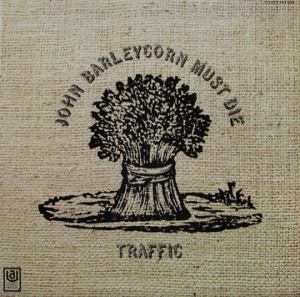
Traffic – John Barleycorn Must Die (Domestic)

More of the Music of Traffic

  • An outstanding copy (only the second to hit the sit in two years) with solid Double Plus (A++ ) sound from start to finish
  • These sides have the vintage analog sound we love – they’re full-bodied and smooth, with plenty of Tubey Magic, gobs of studio space, and the right balance of richness and the clarity that is the key to getting top quality sound for John Barleycorn
  • Arguably the band’s best album, certainly their most groundbreaking, original and involving – Low Spark would rank a not-especially-close second
  • “…the band sounds utterly grounded. As the grooves percolate effortlessly along, it becomes clear that unity, not any technical skill, is what makes the music levitate.”
  • This is a Must Own title from 1970, a great year for rock and pop music

(more…)

It’s Official – The Audiophile World Has Lost Its Mind

Hot Stamper Pressings of the Music of Black Sabbath Available Now

A little more than a year ago, back in June of 2023, we reviewed The Cars first album Rhino released on Heavy Vinyl. Here is our review.

We didn’t see the point in pulling our punches — when a record sounds as bad as that Cars album, somebody should stand up and say so, so we did.

We said it was possibly the worst version of the album ever made, its only competition being the Nautilus pressing from 1980, one of those bottom-of-the-barrel I-hope-we-all-learned-our-lesson Half-Speeds from back in the salad days of the remastered audiophile record craze.
(Yes, I admit I bought plenty of that crap back then, and I can’t even say for sure that I could tell how awful the remastered Nautilus pressing sounded. I believed what I was told — that the original pressings needed the ministrations of some guys with a lathe who thought they knew more than the engineers at Sterling when it came to cutting good sounding records. I must have been completely clueless to believe any of it, and now that I look back on those days, it’s obvious I was.)

But enough about me. Let’s talk about the hack who cut this godawful record. If you will allow me to quote myself from my Cars review:

Kevin Gray has struck again. He’s a modern one-man demolition crew, taking exceptionally well recorded analog albums and turning them into the vinyl equivalent of CDs, and bad CDs at that.

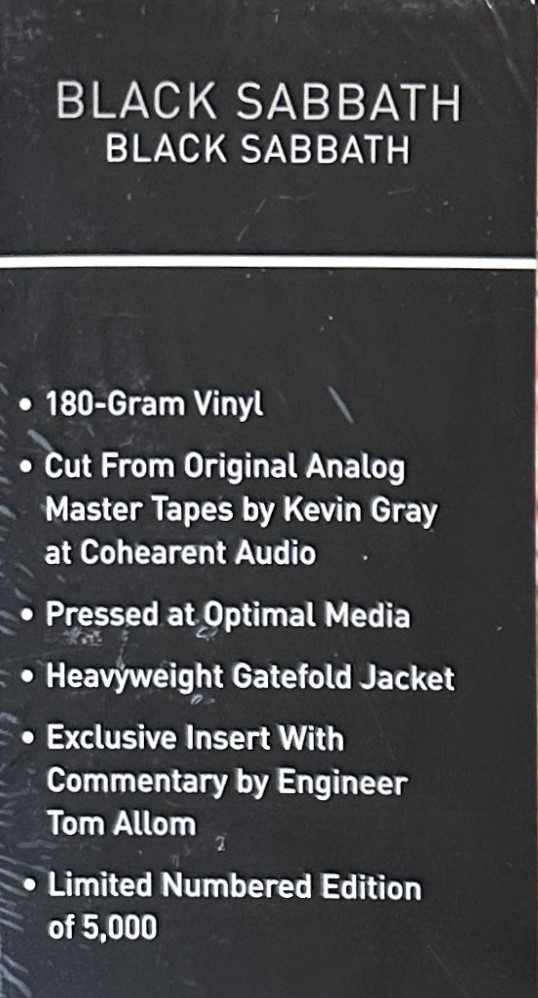
What we heard on side one of the new Black Sabbath remaster can be seen from our notes as reproduced below.

  • Nasal, upper midrange boost
  • No real space
  • Hard and smeary
  • Sizzly rain intro
  • Vocals are very present in a harsh and unpleasant way
(more…)

Listening in Depth to John Barleycorn Must Die

The toughest test on side two is the first track, Stranger to Himself.

Getting the voices right is practically impossible. If the voices are full, smooth, yet breathy and clear, you have that rare copy that actually gets the midrange right. Not many do.

Side One

Glad

The last portion of this track has some really interesting percussion and organ effects. Traffic were trying to break out of the standard pop song format by letting this song wander into psychedelic territory for a few minutes at the end. It’s now become my favorite part of the song.

The reason you want to pay close attention to this part is because it helps you to judge the transparency, immediacy, and top end extension for the whole side. It should be amazingly clear and open-sounding. On too many pressings, the percussion instruments are blurred and lost in the mix. On a Hot Stamper copy they’ll be right in front of you, allowing you to appreciate the interplay among the musicians as they contributed their various parts.

Freedom Rider

You’ll need lots of top end extension for this song to sound right. On many copies the double tracked flute solo in the middle of the song will be aggressive and irritating, but on a Hot Stamper pressing, the flutes will sound airy and breathy with a reasonably good sustain.

Empty Pages

The quality of the voice is what really sets the best copies apart. Winwood is much more present on the better copies. He’s recessed on most and that’s just not where he needs to be for the song to work musically. He needs to be right up front, surrounded by the air and ambience of the studio. The transparency found on the better copies will give you precisely that.

Side Two

Stranger to Himself

John Barleycorn

The acoustic guitars that open up this song are absolute perfection on the best copies — this is the sound of Tubey Magical analog at its best.

This is the real test for side two.

The acoustic guitars should sound rich and sweet. You’ll notice at the beginning of the song that they are a little dull. The last thing in the world you want to do, however, is to brighten them up, because when you do that, as some mastering engineers have in the past, the harmony vocals and the percussion and the tambourine become much too bright later on in the song.

You have to strike a balance between all the elements. That means Steve’s voice at the beginning needs to be a little reserved so that the harmony vocals later on will come in right.

(more…)

Lee Hulko Cut All the Best Sounding Cat Stevens Albums, Regardless of Label

Hot Stamper Pressings of the Music of Cat Stevens Available Now

UPDATE 2020

This commentary was written many years ago, circa 2005 I would guess.

Way back then, doing Hot Stamper shootouts was much more difficult than it is now. We didn’t have the right cleaning machine, and we hadn’t discovered the Prelude Record Cleaning System.


Is the Pink Label Island original pressing THE way to go? That’s what Harry Pearson — not to mention most audiophile record dealers — would have you believe.

But it’s just not true. And that’s good news for you, Dear (Record Loving Audiophile) Reader.

Hot Stamper Commentary for John Barleycorn

Since Barleycorn is a Lee Hulko cutting just like Tea here, the same insights, if you can call them that, apply.

Here’s what we wrote:

Lee Hulko, who cut all the Sterling originals, of which this is one, cut this record many times and most of them are wrong in some way. A very similar situation occurred with the early Cat Stevens stuff that he cut, like Tea & Teaser, where most copies don’t sound right but every once in a while you get a magical one.

Lee Hulko cut all the original versions of this album, on the same cutter, from the same tape, at the same time.

(more…)

If You Want to Hear The Band Playing Live in the Studio, Just Turn Up Your Volume

Hot Stamper Pressings of the Music of Black Sabbath Available Now

We played the album very loud, as loud as we could, and still we wanted more volume!

That’s what a good record is all about — the louder you play it the better it sounds.

If you like the raw, rockin’ sound of early Zep, you should have a blast with this album. It’s a shockingly good recording, and the music is of course as heavy as it gets for 1970.

This Warner Brothers Green Label domestic pressing DESTROYED the import copies we played it against, with startling immediacy, tons of ambience, and loads of texture.

The soundfield is HUGE — back wall to front wall, floor to ceiling, and WIDE.

The bass is deep, well-defined, and punchy.

If you want to feel this effect:

“Sabbath’s slowed-down, murky guitar rock bludgeons the listener in an almost hallucinatory fashion, reveling in its own dazed, druggy state of consciousness.”

You need a copy that sounds the way our best Hot Stamper pressings do.

(more…)