stan-ricker-all

John Klemmer – Straight from the Heart

More John Klemmer

Audiophile Recordings with Surprisingly Good Sound

  • An outstanding copy with solid Double Plus (A++) sound on both sides, an Audiophile Jazz Demo Disc of the highest quality – fairly quiet vinyl too
  • Tubey Magical, lively and clear, with three-dimensionality that will fill your listening room from wall to wall
  • A record that fulfills the promise of the Direct to Disc recording technology
  • Real jazz music make this a Must Own Audiophile disc
  • If you are looking for a shootout winning copy, let us know, with music and sound like this, we hope to be able to do this shootout again soon

This is one of the best Direct-to-Disc recordings we know of, and it’s actually REAL JAZZ — a remarkably unusual combination in the World of Audiophile Records, if my experience over the last thirty-five years can serve as a guide.

Both sides here really get this music right. They’ve got big, full bottom ends and great top end extension, along with a surprising amount of transparency — you can really hear back to the piano behind the horns.

(more…)

The Tony Bennett / Bill Evans Albums – More Mistaken MoFi EQ

Hot Stamper Pressings of Pop and Jazz Vocals Available Now

Sonic Grade: F

That weird boost around 10k that Stan Ricker likes to add to practically every record he masters wreaks havoc on the sound of Tony Bennett’s voice.

I would be very surprised if the current in-print Compact Disc doesn’t sound more tonally natural, and for us audiophile record lovers – not lovers of audiophile records, but guys who love records with audiophile sound – that’s simply another nail in the coffin for one of the most laughably inept remastering labels in the history of that sad enterprise.

If you love this album, and you should, the regular early Fantasy pressings are the only game in town.

Fleetwood Mac / Self-Titled – A MoFi Winner

Another MoFi LP reviewed, and this one is actually pretty good

The Mobile Fidelity pressing of this album can actually sound quite good (if you get hold of a decent copy that is). Audio perfection it ain’t, but all in all it’s a very enjoyable record. Its strengths are many and its faults are few. Let’s give credit where credit is due; the MoFi is rich, transparent, sweet, and natural, and you won’t hear us saying that about very many MoFi pressings.

It belongs in their Top Ten, toward the bottom I would guess, due to its own sloppy bottom, but that’s half-speed mastering for you.

Like most new audio technologies it was a giant step in the wrong direction: backwards. (more…)

Hall, Oates and Mobile Fidelity – A Counterfactual Approach to Remastering

Hot Stamper Pressings of the Music of Hall and Oates Available Now

We here present a set of ideas about remastering that Mobile Fidelity could have used to guide them as they went about cutting their version of Hall and Oates’ masterpiece, Abandoned Luncheonette.

This is the approach they could have taken when it came time to produce an audiophile pressing of Abandoned Luncheonette, an album originally released in 1973.

By the time Mobile Fidelity released their version of the album in 1980, the record was already being offered as a Super Saver reissue, of minimal quality at a reduced price, produced solely for the purpose of keeping record store bins stocked with back catalog. (In our experience it is the rare Super Saver pressing that is worth the vinyl it’s pressed on.)

However, there is nothing inherently wrong with such a budget release. And the Super Saver version may even have some merit. But let’s assume for a moment that it does not.

Why Abandoned Luncheonette?

Now imagine that Mobile Fidelity knows, or at least believes, two things.

One, the album is a Masterpiece that belongs in any right-thinking audiophile’s collection, and two, the current version does not sound very good. The wise men at MoFi recognize that an opportunity to do some good for the audiophile community and make a buck at the same time has presented itself.

Audiophiles may not know it, but they are in need of a good sounding copy of this brilliant album, and they deserve one that sounds every bit as good as the shockingly good sounding originals (like the ones we sell).

In addition, we at MoFi can go Atlantic’s original one better.

We can now press the album on quieter vinyl than Atlantic ever could.

Next, Mobile Fidelity greenlights this project and gets a real master tape from Atlantic. (There are many tapes that masquerade as masters and aren’t any such thing, but let’s assume for the moment that Mobile Fidelity did get a real tape.)

They would also need a nice batch of original pressings, which in our opinion are the best, and would easily be recognized as being the best sounding by anyone playing the album on good equipment. The best originals are lively, rich and smooth, befitting an expensive, high quality studio recording from the era.

So instead of Mobile Fidelity trying to create a new sound for this album, they could have taken a different approach. They could’ve just said to themselves: let’s make a copy of the record that sounds as good as the original, and because we can press it on expensive, high-quality Japanese vinyl, we can justify selling it at a premium price to audiophiles looking for the best sound and quiet vinyl.

They could then cut a number of reference lacquers trying to re-create the best qualities of the originals, and then test those lacquers up against the best originals, in something that might be called a “shootout” long before the term was commonly used bu audiophiles of our persuasion.

The Counterfactual Part

This is what they could have done. That’s why we are calling this commentary a counterfactual.

They did something else entirely.

They tried to make the record sound better than any of the copies they had at hand. They tried to fix the sound. In trying to fix the sound, they made it worse because they simply were not capable of recognizing how right the good originals were.

They must have thought them dull, because the Brain Trust at Mobile Fidelity boosted the hell out of the upper midrange and top end. (Using the concept of reverse engineering, I assume their playback equipment was dull, a fairly safe assumption considering how many Mobile Fidelity records are bright enough to peel the paint.)

They Were on a Mission

They of course would never have been able to get the bass right, because half speed mastering always causes problems down low.

But they could have made the record tonally correct, and fairly transparent in the midrange, and then could have pressed that sound onto state-of-the-art Japanese vinyl.

But none of these things interested Mobile Fidelity at the time. They were hell-bent on making everything they touched better. In the process, practically everything they touched got worse, as anyone with good equipment and two working ears who has played a large selection of their records can attest.

(more…)

Night Moves – MoFi Reviewed

More of the Music of Bob Seger

Sonic Grade: F

An Audiophile Hall of Shame pressing and another MoFi LP reviewed and found seriously wanting.

The last time I played a copy of the MoFi pressing I could not believe how ridiculously bright it was.  

It’s interesting to note that some of the brightest records this atrocious label ever released came out about the same time as this one.

Aja is number 033

Night Moves here is number 034.

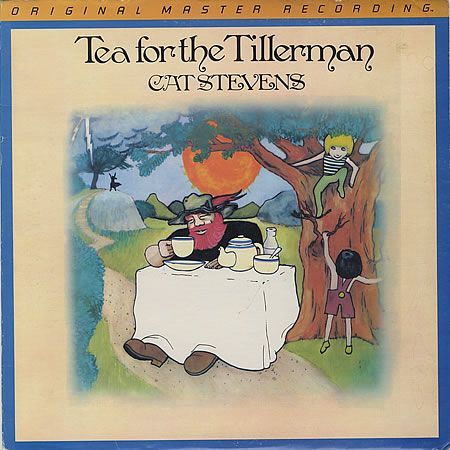
Tea for the Tillerman is number 035

Are you seeing a pattern here?

Three dogs in a row, all suffering from the same problem: they’re way too bright!

Did MoFi buy some dull studio monitors right before they mastered these awful pressings? Did a tweeter or two blow?

Did Stan Ricker have too much wax buildup in his ears?

What could account for records that are bright enough to peel the paint?

Some mysteries will never be solved, and I would bet this is one of them.

But really, what difference does it make? We should all know to avoid this company’s products by now, and that includes all three eras of records produced by this label:

That should pretty much cover it.

Never buy any record on this label (except the one we sell) if you are interested in top quality sound, and if you own any, get rid of them and replace them with records that actually sound good, like the ones we sell.

(more…)

Cat Stevens and His Sparkling Acoustic Guitars?

More of the Music of Cat Stevens

In the commentary for America’s first album we noted that:

The guitars on this record are a true test of stereo fidelity. … most of the pressings of this record do not get the guitars to sound right. … on a copy with a bit too much top end they will have an unnatural hi-fi-ish sparkle. 

This kind of sparkle can be heard on many records Mobile Fidelity made in the ’70s and ’80s. Tea for the Tillerman, Sundown, Year of the Cat, Finger Paintings, Byrd at the Gate, Quarter Moon in a 10 Cent Town — the list of MoFis with sparkling acoustic guitars would be very long indeed, and these are just the records with prominent acoustic guitars!

(On a side note, if you want a very different sounding Mobile Fidelity record, try anything mastered by Jack Hunt. They are every bit as wrong, but in the tonally opposite direction: murky, fat and way too smooth. This is the sound favored by another audiophile label, this one, and the fact that audiophiles actually buy into this kind of third-rate sound is confounding to say the least.)

Next time you drop the needle on a Mobile Fidelity record — one of the ones pressed in Japan and mastered by Stan Ricker; the Anadisq series tends to have the opposite problem, no top end at all — listen carefully to the acoustic guitars and tell me if you don’t think they sound a tad sparkly.

We’ve all heard acoustic guitars up close, at parties and coffee shops and what-have-you. They don’t really sound like that, do they? I should hope not.

(more…)

Listening for Tubey Magic, Track by Track on Straight from the Heart

More of the Music of John Klemmer

Presenting another entry in our extensive Listening in Depth series with advice on what to listen for as you critically evaluate your copy of Straight from the Heart. Here are more albums currently on our site with similar Track by Track breakdowns.

The best copies give you dynamics and immediacy like you have rarely heard outside of the live event.

Hell, this record IS live; it’s live in the studio. It’s a direct to disc recording, what else could it be?

There is simply nothing getting in the way of the music. If you have the system for it, you can recreate the live sound of this session in a way that few other recordings allow you to do.

This copy had one quality not heard on most of the others: Tubey Magic. The sound is rich and full-bodied, practically free of grit and grain – this is the kind of sound one hears occasionally on the best tube equipment and practically nowhere else. Of course this is an all-transistor affair, but tubey sound is what ended up on the record, so go figure.

Many copies were slightly lean, making the sax a bit aggressive in places. The killer copies fill out the horn sound, giving it the needed weight and body that the real instrument would have, without adding a euphonically artificial richness that the real instrument wouldn’t.

(more…)

A Reviewer Liked this London a Whole Lot More Than I Did

Hot Stamper Orchestral Imports on Decca & London

While digging around the web I ran into a site called From Miles to Mozart, which purports to be “An exploration of the incredible world of classical and jazz recordings”

Fair enough. Here is what the reviewer had to say about a London we did not think sounded very good, CS 6357. At the time, he was most of the way through a fairly complete survey of London Bluebacks, and when those were done he went on to review a Whiteback pressing of this London, which appears to be the only pressing he had on hand. (We of course had only the one as well.)

I’d run out of blue so next up was CS 6357 with its retro FFSS label, a white back FFSS. Clifford Curzon scores a knockout with the Dvorak Quintet with a very refined late Blueback sound; truly transcendental sound of the highest order. Another white back FFSS followed in CS 6379 Mozart Clarinet Quintet with a magical clarinet but some edginess at times with some of the instruments. Overall the Clarinet Quintet had very strong sound to rival most any Blueback. Unfortunately, the Mozart Divertimenti on side 2 was not as assured with quite a few signs of strain in the highs indicative some early transistor changing the precious Blueback sound. CS 6379 was recorded by Smith and Parry October, 1963 at Sofiensaal, Vienna with the LP coming out in May of 1964. CS 6357 was recorded in Sofiensaal, Vienna by Culshaw and Parry in October 1962 with the LP in October 1963. Overall two strong LP’s without a Blueback! (Well, CS 6357 does exist with a Blueback.)

He has some ideas about “precious Blueback sound” and the half-speed mastering setup used to achieve them. I will leave that for others to discuss, mostly because I could not seriously entertain this fellow’s writing once I found out what he had to say about one of Mobile Fidelity’s earliest half-speed mastered releases:

Zubin Mehta Conducts Music from Star Wars and Close Encounters of the Third Kind (MFSL 1-008)

Comments: If you want to hear what audiophile vinyl sounds like, this is a great way to start. Whether you like science fiction movies or not, this record is a must hear … and try to turn up the volume if you can. This Mobile Fidelity Sound Lab pressing of Decca SXL 6885 (London ZM 1001) is one of the most incredible sounding orchestral recordings I have ever heard. It may not be the recording used for the movies (John Williams conducted those himself), but it sounds significantly better in terms of recording quality. Talk about lifelike presence, huge dynamic range, bass depth with real visceral impact — this record has DEMONSTRATION written all over it. Even the Cantina Band track gives you the impression of an alien jazz/pop band playing right before you. I was fortunate enough to get my copy for free from a friend, and only recently did I realize that this album sells for some money. Looking for a change from the same old EMI, Decca, RCA, Mercury, DG, or Philips? Try this one.

(more…)

Half-Speed Mastered, But Why?

diresbrothMore of the Music of Dire Straits

Sonic Grade: D

The Warner Brothers 180g Double LP pictured above was mastered by Stan Ricker at Half-Speed.

Most of the time Stan Ricker’s approach to Half-Speed mastering results in a record that is too bright, with sloppy bass.

And what do you know, this pressing IS too bright and the bass IS sloppy. Imagine that!

We often discuss the unpredictability of records, but when it comes to Half-Speed Mastered pressings, their faults are fairly consistent and easy to spot once you know what to listen for.   

Abandoned Luncheonette – More Stone Age Audio EQ from MoFi

Hot Stamper Pressings of the Music of Hall and Oates Available Now

Those of you who have had the misfortune to play the MoFi LP know that they absolutely ruined this album. They boosted the hell out of the top end, the last thing in the world this recording needed. 

Actually, that’s probably not true. People who collect MoFi records apparently like the kind of phony sound found on the MoFi of this title and hundreds of others. If they didn’t, why would they keep buying them?

To the extent that a MoFi collector is not happy with the sound, my guess is he would more than likely place the blame on the recording, not the mastering.

Of course, since such a collector would never lower himself to buy a standard domestic copy of the record, he would have no way of knowing that it trounces his so-called audiophile pressing. If your stereo likes that MoFi sound in this day and age, you shouldn’t be buying records. You should be buying new equipment, which hopefully will allow you to recognize bad records when you play them.

(more…)