obsess

The albums you see here played an important role in helping me improve my stereo, some of them starting as far back as the mid-’70s.

By the 2000s, we had a heavily-treated, dedicated room, and later still a custom built studio. The challenges posed by these recordings were instrumental in helping us make improvements in every aspect of playback.

The better the stereo got, the more these records showed us just how amazing the right pressings (we call them Hot Stampers) could sound.

Having played so many copies of these albums for so many years, I credit them with teaching me most what I know about records and equipment.

An Overview of The Soft Parade

Our vintage Doors pressings — either on the Elektra Gold or Big Red E Label, nothing else will do — have the kind of Tubey Magical midrange that modern records are almost never able to reproduce.

Folks, that sound is gone and it sure isn’t showing any sign of coming back.

One of The Records That Did It For Me

Perhaps hearing Dark Side was what made you realize how good a record could sound. Looking back over the last forty years, it’s clear to me now that this album, along with scores of others, is one of the surest reasons I became an audiophile in the first place, and stuck with it for so long. What could be better than hearing music you love sound so good?

It’s clearly an album we are obsessed with. We have written extensively about quite a number of them to date. It is our contention that to be any good at this hobby, you have to become obsessed with well-recorded albums and work out the consequences of those obsessions for yourself.

The Soft Parade was one of those albums that blew my fifteen-year-old mind. Songs for Beginners was another one.

We also wrote about the subject of being obsessed with music here. An excerpt:

(more…)

Ziggy Stardust Broke the Price Barrier in 2007

UPDATE 2024

The following is our 2007 commentary for the best Ziggy Stardust we had ever heard up to that time. Note that for the most part we were playing early British pressings back in those days, a mistake we did not know we were making. (Heroes was the same way, and it took us another ten years to figure out that one.)

In 2007, all we had to go by was the conventional wisdom that the original UK pressings on the RCA orange label should be the best, so that’s mostly what we were playing. I’m not even sure what pressing won this long-ago shootout. 

Looking back in 2024, it’s obvious to us that we had a great deal more research and development to do.

As best as I can tell, it would take us about ten more years to discover the pressings, like this one, that, based on our database going all the way back to 2017, consistently win our shootouts.


This RCA Import has DRAMATICALLY better sound than any Ziggy LP we’ve ever played here at Better Records. Whatever you think you know about the sound of this record, THINK AGAIN. The sound of this copy is so far beyond any expectation I had that hearing it was nothing short of a REVELATION. It’s TWO FULL GRADES better than any copy we played in our shootout.

After hearing this copy we had to lower our grades for every other pressing we had played. This was a completely new standard. (more…)

Listening in Depth to the White Album

Hot Stamper Pressings of The White Album Available Now

It’s exceedingly difficult to find audiophile quality sound on The White Album. The Beatles were breaking apart, often recording independently of each other, with their own favorite engineers as enablers, and George Martin nowhere to be found most of the time. They were also experimenting more and more with sound itself, which resulted in wonderful songs and interesting effects. However, these new approaches and added complexity often result in a loss of sonic “purity.”

Let’s face it, most audiophiles like simplicity: A female vocal, a solo guitar — these things are easy to reproduce and often result in pleasing sound, the kind of sound that doesn’t take a lot of expensive equipment or much effort to reproduce.

Dense mixes with wacky EQ are hard to reproduce (our famous difficulty of reproduction scale comes into play here), and the White Album is full of that sound, taking a break for songs like Blackbird and Julia.

Some of the Tubey Magic that you hear on Pepper is gone for good. (Play With a Little Help from My Friends on a seriously good Hot Stamper pressing to see what has been lost forever. Lovely Rita would probably work just as well, too.)

Side One

Looks at the lineup for side one. Is there a rock album on the planet with a better batch of songs?

Having done shootouts for the White Album by the score, we can also say with some certainty that side one is the most difficult side to find White Hot stamper sound for. It’s somewhat rare to find a side one that earns our top Triple Plus (A+++) sonic grade, even when all the other sides do. (Actually what happens more often than not is that we take the best second discs and mate them with the best first discs to make the grades consistent for the whole album. But don’t tell anybody.) (more…)

Are Your Cellists Digging In on I Am the Walrus?

This commentary was written many years ago.

Over the last decade I Am The Walrus has evolved into a good test for side one, a fact that came as a complete surprise to me. As I was listening to the various copies in a shootout years ago I noted that the opening cellos and basses in the right channel were often tonally identical from copy to copy, but sounded quite a bit more lively and energetic on some pressings relative to others. Was it EQ? Level? Compression?  

Why so much more passion from the players on some copies and not others?

As I tried to puzzle it out, playing first one copy and then another, it became clear to me what was happening. The cellists and the bassists were just plain digging HARDER into the strings on the best copies. When you see live classical music, the cellists at the front of the orchestra are usually sawing away with abandon when the music is really going. They dig their bows hard into the strings to make them vibrate as loud as possible. To make their instruments heard in the back row it becomes a matter of muscle, of pure physical exertion.

So armed with the copies where the string players are working the hardest, I checked the other tracks. Sure enough, the opening cut, MMT, jumped out of the speakers with the most energy I had heard on any copy. As I went through the tracks one by one, they had the most life of any of the copies I had been listening to. To use a word that was popular at the time, the music was HAPPENING.

This was the final piece to the puzzle. Tonality always comes first. Frequency extension; lack of distortion; rich, powerful bass — these are important qualities as well. But the life of the music is in the micro and macro dynamics, and that is what I had not been paying sufficient attention to during the shootout.

That was until I listened to Walrus and heard the players working up a good healthy sweat. Then I knew I had a Hot Stamper. And when I played the not-so-Hot Stampers, the string guys sounded like session musicians picking up a paycheck.

Where was their passion? Didn’t they realize they were making a classic?

If you get the right pressing they sure were!

(more…)

Reproducing the Phenomenal Size and Space of Time Out

More Columbia 30th Street Studio Recordings

Time Out is a jazz album that’s been a personal favorite of mine for a very long time, as well as a record I’ve been obsessed with for decades. I spent a lot of time working on my system in order to get this album to sound its best.

It taught me a lot, and for that reason it is a recording that deserves a fair amount of credit for helping me become a better listener.

Here is how we described a copy that won one of our shootouts a while back:

Spacious and transparent, this copy has the big three-dimensional soundstage that makes this record such a joy to listen to. The piano has weight and heft, the drums are big and dynamic, and everything is relaxed and sweet — in short, this copy is doing pretty much everything we want a top quality Time Out to do. 

Listen to the drums on Everybody’s Jumpin’. This album was recorded on a big sound stage and there is a HUGE room which can clearly be heard surrounding the drum kit. Add to that that some of the drums are in the left channel and some of the drums are in the right channel and you have one big drum kit — exactly the way it was intended to sound.

Size and Space

One of the qualities that we don’t talk about on the site nearly enough is the SIZE of the record’s presentation. Some copies of the album just sound small — they don’t extend all the way to the outside edges of the speakers, and they don’t seem to take up all the space from the floor to the ceiling. In addition, the sound can often be recessed, with a lack of presence and immediacy in the center.

Other copies — my notes for these copies often read “BIG and BOLD” — create a huge soundfield, with the music positively jumping out of the speakers. They’re not brighter, they’re not more aggressive, they’re not hyped-up in any way, they’re just bigger and clearer.

And most of the time those very special pressings just plain rock harder. When you hear a copy that does all that, it’s an entirely different listening experience.

More letters, reviews and commentaries for recordings made at Columbia’s 30th Street studio.

(more…)

You Simply Cannot Record a Piano Better than Roy DuNann

The piano sounds uncannily lifelike right from the start, a beautiful instrument in a natural space, tonally correct from top to bottom. I can’t think of any record off the top of my head that gets a better piano sound than this one.

Listen to the tambourine on the third track on side one. Shelly Manne messes about with lots of percussion instruments on this album and all of them are recorded to perfection.

Not to leave Red Mitchell out, check out the bass; it’s deep and note-like throughout the album.

Better Than a Dream, the second track on side two, has one of the best sounding jazz pianos I have ever heard. My notes say “you cannot record a piano any better” and I stand behind that statement one hundred percent.

There is not a modern reissue on the face of the earth that can hold a candle to the sound of this record.

For any of you out there who doubt my words please take this record home and play it against the best piano jazz recordings you own. If it doesn’t beat them all we are happy to pay the domestic shipping back.

Even our amazing sounding 45 RPM pressing of The Three does not present the listener with a piano that sounds as real as the one on this record.


(more…)

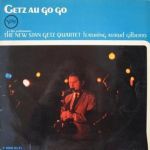
Getz Au Go Go – Critical Listening Exercise

Hot Stamper Pressings of Bossa Nova Albums Available Now

This album works wonderfully well as a test disc.

The third track on side 2, The Telephone Song, has a breathy vocal by Astrud, soon followed by Getz’s saxophone solo. If those two elements in the recording are in balance, your system is working, tonally anyway. Lots of other tracks are good for testing, and you can read about them below.

Side One 

Corcovado (Quiet Nights Of Quiet Stars) 

On the best copies the voice is perfection. The horn is always a bit hard sounding on this track though.

It Might As Well Be Spring

The best copies are warm, rich and sweet here, with much better sound for Getz’s sax. This track has some of the tubiest Tubey Magic you will find on the album.

Eu E Voce (Me and You)
Summertime

This one has real dynamics — the playing and the sound are lively, but somehow still so cool…

Nix-Quix-Flix

(more…)

Rockin’ the Mandolin with Loggins and Messina

Hot Stamper Pressings of the Music of Loggins and Messina Available Now

A recent White Hot Stamper pressing of L&M’s fourth release demonstrated pretty convincingly just what an amazing Demo Disc this album can be.

When Jim Messina rips into his mandolin solo halfway through Be Free, your jaw is likely to hit the ground. On the best copies it positively leaps out of the left speaker.

I can’t recall another pop or rock recording that captures either the plucked energy or the harmonic nuances of the instrument better. To hear such a well-recorded mandolin on a copy of this quality is nothing less than a thrill.

This copy showed us:

  • A full-bodied piano
  • Rich, lively vocals, present between the speakers and brimming with enthusiasm
  • Harmonically-rich guitars, mandolins, dobros and the like, as well as a
  • Three-dimensional soundstage that revealed the space around them all

What to Listen For

What typically separates the killer copies from the merely good ones are three qualities that we often look for in the records we play: transparency, speed, and lack of smear.

(more…)

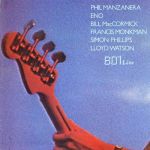
801 Live – None Rocks Harder

Hot Stamper Pressings of the Music of Brian Eno Available Now

I listened to this album from start to finish just yesterday (5/31/2024), so I thought it only fitting that I share my enthusiasm for this absolutely amazing record with those who read this blog.

The best Island copies of this album rock harder than practically any record we’ve ever played. If you have the system for it, this amazing Rhett Davies recording will bring a live art rock concert right into your living room.

This is a big speaker record. It requires a pair of speakers that can move air with authority below 250 cycles and play at fairly loud levels. If you don’t own speakers that can do that, this record will never really sound the way it should.

It’s right at the top of the list of my favorite rock albums — a desert island disc if ever there was one. I stumbled across it more forty years ago and I’ve loved it ever since. It all started when a college buddy played me the wildly original Tomorrow Never Knows from the album and asked me to name the tune before the vocals kicked in. Eno’s take is so different from The Beatles version that I confess it took me an embarrassingly long while to catch on.

Demo Disc Quality Sound

This is a true Demo Disc in the areas of sound reproduction listed below. Other records with these important qualities can be seen by clicking on any of these links.

Adventures in Music and Sound

Phil Manzanera and Brian Eno were founding members of Roxy Music. AMG calls Roxy Music the “most adventurous rock band of the early ’70s” and I’m inclined to agree with them.

Those who played in Roxy Music are certainly some of the most influential and important artists in my growth as a music lover and audiophile, joining the ranks of 10cc, Steely Dan, Yes, James Taylor, Peter Gabriel, David Bowie, America, Fleetwood Mac, Supertramp, Eno, Talking Heads, The Doors, Jethro Tull, Elton John, The Beatles, Santana, Crosby, Stills and Nash, Little Feat, Traffic, Nilsson, Elvis Costello, Sergio Mendes, Neil Young, The Eagles, Frank Zappa, Pink Floyd, Joni Mitchell, The Cars, Peter Frampton, Led Zeppelin, Cat Stevens and countless others.

These musicians and bands were clearly dedicated to making high quality recordings, recordings that could only come to life in the homes of those with the most advanced audio equipment.

My system was forced to evolve in order to reproduce the scores of challenging recordings issued by these groups in the 60s and 70s.

The love you have for your favorite music has to be the strongest driving force if you actually want to be successful in this hobby.

Some of the records that did the most to help me advance in audio can be found here.


Want to find your own top quality copy?

Consider taking our moderately helpful advice concerning the pressings that tend to win our shootouts.

(more…)

Stomping and Clapping with the Fans on News of the World

Hot Stamper Pressings of the Music of Queen Available Now

Side one starts out with Queen’s back-to-back anthemic classics, “We Will Rock You” and “We Are the Champions.” Does it get any better for a Queen fan? Hell no! 

The stomps and claps that introduce the former should make you feel like you are in a stadium full of people with a single goal – to rock you.

Those stomps and claps need weight and clarity, an unusual combination. One without the other is not going to cut it.

The record needs to be able to reproduce the room everybody is in, while still conveying the tremendous impact and power. Most domestic pressings are severely lacking in these areas. This kind of anemia can be frustrating — you want to rock but the sound won’t let you.

Another quality our best copies excelled in was the sound of Brian May’s guitar during his solo toward the end of the song. Here his tone is very boxy with no real highs or lows, but when that sound is exaggerated by bad mastering, it sounds like there are mattresses sitting in front of his amplifiers. The best copies had extension on the high end, restoring the clarity and complimenting his distinctive technique.

(more…)