1962-rev

Presenting a select group of reviews and commentaries for albums recorded or released in 1962, a great year for analog.

Tchaikovsky / Piano Concerto No. 1 – Our First Shootout Winner – 2008

Hot Stamper Pressings of the Music of Tchaikovsky Available Now

This fairly quiet Large Tulips early DG pressing in the heavy cardboard outer sleeve has THE BEST SOUND we have ever heard for this recording! Believe me, they don’t all sound like this! This copy is airy and sweet; just listen to the flutes — you can really hear the air moving through them. There is still some congestion in the loudest passages, but that’s unfortunately not something we can do anything about. Since it’s on every copy we’ve ever played we just have to assume it’s part of the recording.

Of the twenty or so clean copies we’ve auditioned over the last year or two, this one is clearly in a league of its own, with a price to match.

THE Tchaikovsky First

Since this is the best performance of the Tchaikovsky First Piano Concerto of all time, the minor shortcomings in the sound are easy to overlook. The piano sounds solid and full bodied. I don’t know of another performance of this work that gets the sound of the piano better. You can really hear the percussive quality of the instrument. It’s amazing how many piano recordings have poorly mic’ed pianos. They’re either too distant, lack proper reproduction of the lower registers, or somehow smear the pounding of the keys into a blurry mess. The piano sound is what first impressed me when a friend of mine brought the record over for me to hear. Of course I bought it on the spot.

And the texture of the strings is out of this world — you won’t find a DG that gets with better string tone, and 99% of them are worse. This record does not sound like your typical DG: hard, shrill, and sour. DG made good records in the ’50s and ’60s and then proceeded to fall apart, like most labels did. This is one of their finest recordings. It proves that at one time they knew what they were doing.

This recording really only has one shortcoming, which is that in some sections, when it gets loud, it tends to be a bit congested. Other places are very dynamic. I’m guessing somebody dialed in too much compression in those spots, but who’s to say?

[Not sure we would agree with that in 2024. The best copies are not congested when cleaned and played back properly.]

(more…)

Very Tall and Very Awful on MFSL Anadisq

Reviews and Commentaries for Mobile Fidelity Records

If you made the mistake of buying the atrocious Anadisq pressing MoFi put out in the ’90s, our Hot Stamper pressings will let you hear what a wonderful recording Val Valentin cooked up with these cats back in the day.

FURTHER READING on Half-Speed Mastered Records

The best place to start is here:

How come you guys don’t like Half-Speed Mastered records?

To learn more about records that sound dramatically better than any Half-Speed ever made (with one rare exception, John Klemmer’s Touch), please consult our FAQs:

More Frequently Asked Questions (FAQ)

Below you will find our breakdown of the best and worst Half-Speed mastered records we have auditioned over the years.

(more…)

LSC 2603 on Classic Records Is Airless, Smeary and Low-Rez

Hot Stamper Pressings with Jascha Heifetz Performing Available Now

It should go without saying that a good original pressing kills the Classic reissue, and the Classic version is one of the better Classics.

It might earn a grade of D or C, simply because it might sound about as good as the typical Red Seal reissue from the 70s.

Still, it’s no match for the real thing, not even close.

The Classic is low-rez, with smeary strings, which means that all the subtleties of the music — and the performance — will be much more difficult to appreciate. 

(more…)

Nat King Cole Sings / George Shearing Plays – Mono Vs. Stereo

More of the Music of Nat “King” Cole

The reissue pressings rarely sounded right to us.

In addition, the mono copies were uniformly awful — small, congested and gritty.

Our Hot Stamper pressings — even the lowest-graded copies we offer –are sure to give you fuller vocals, more transparency, more weight to the piano and, of course, the tubey warmth of vintage analog.

(more…)

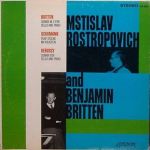
Britten / Debussy / Schumann / Cello Sonatas / Rostropovich – Reviewed in 2011

Hot Stamper Pressings of the Music of Claude Debussy Available Now

Both sides of this promo London Blueback pressing (CS 6237) of piano and cello music have SUPERB sound. If you’re a fan of the cello, the piano, or chamber works in general, you will have a hard time finding a better sounding recording than this.

Notice especially that there is practically no smear on the piano — the notes are clear, with their transients fully intact, something one rarely hears anywhere but in a live setting. The tonality of the piano is also correct from top to bottom.

Lately we have been writing quite a bit about how pianos are good for testing your system, room, tweaks, electricity and all the rest, not to mention turntable setup and adjustment.

  • We like our pianos to sound natural (however one chooses to define the term).
  • We like them to be solidly weighted.
  • We like them to be free of smear, a quality that is rarely mentioned in the audiophile record reviews we read.

This is an Older Classical/Orchestral Review

Most of the older reviews you see are for records that did not go through the shootout process, the revolutionary approach to finding better sounding pressings we started developing in the early 2000s and have since turned into a veritable science.

We found the records you see in these older listings by cleaning and playing a pressing or two of the album, which we then described and priced based on how good the sound and surfaces were. (For out Hot Stamper listings, the Sonic Grades and Vinyl Playgrades are listed separately.)

We were often wrong back in those days, something we have no reason to hide. Audio equipment and record cleaning technologies have come a long way since those darker days, a subject we discuss here.

Currently, 99% (or more!) of the records we sell are cleaned, then auditioned under rigorously controlled conditions, up against a number of other pressings. We award them sonic grades, and then condition check them for surface noise.

As you may imagine, this approach requires a great deal of time, effort and skill, which is why we currently have a highly trained staff of about ten. No individual or business without the aid of such a committed group could possibly dig as deep into the sound of records as we have, and it is unlikely that anyone besides us could ever come along to do the kind of work we do.

The term “Hot Stampers” gets thrown around a lot these days, but to us it means only one thing: a record that has been through the shootout process and found to be of exceptionally high quality.

The result of our labor is the hundreds of titles seen here, every one of which is unique and guaranteed to be the best sounding copy of the album you have ever heard or you get your money back.


Side One

Britten – Sonata in C for Cello and Piano
Schumann – Funf Stucke Im Volkston

Side Two

Schumann – Funf Stucke Im Volkston
Debussy – Sonata for Cello and Piano

Benjamin Britten

Britten was an accomplished pianist, frequently performing chamber music and accompanying lieder and song recitals. However, apart from the Holiday Diary (1934), Piano Concerto (1938), Young Apollo (1939), Diversions (written for Paul Wittgenstein in 1940), Scottish Ballad (1941), he wrote relatively little music that puts the piano in the spotlight, and in a 1963 interview for the BBC said that he thought of it as “a background instrument”.

One of Britten’s best known works is The Young Person’s Guide to the Orchestra (1946), which was composed to accompany Instruments of the Orchestra, an educational film produced by the British government, narrated and conducted by Malcolm Sargent. Its subtitle is Variations and Fugue on a Theme of Purcell, the theme is a melody from Henry Purcell’s Abdelazar. Britten gives individual variations to each of the sections of the orchestra, starting with the woodwind, then the string instruments, the brass instruments and finally the percussion. Britten then brings the whole orchestra together again in a fugue before restating the theme to close the work. The original film’s spoken commentary is often omitted in concert performances and recordings.

Britten’s church music is also considerable: it contains frequently performed ‘classics’ such as Rejoice in the Lamb, composed for St Matthew’s Northampton (where the Vicar was Revd Walter Hussey), as well as A Hymn to the Virgin, and Missa Brevis for boys’ voices and organ.

As a conductor, Britten performed the music of many composers, as well as his own. Among his celebrated recordings are versions of Mozart’s 40th Symphony and Elgar’s The Dream of Gerontius (with Pears as Gerontius), and an album of works by Grainger in which Britten features as pianist as well as conductor.

Early in his career, Britten made a conscious effort to set himself apart from the English musical mainstream, which he regarded as complacent, insular and amateurish. Many contemporary critics distrusted his facility, cosmopolitanism and admiration for composers such as Mahler, Berg, and Stravinsky, not at the time considered appropriate models for a young English musician.

Britten’s status as one of the greatest composers of the 20th century is now secure among professional critics.

Wikipedia

The Nutcracker – Side to Side Notes Included

Hot Stamper Pressings of the Music of Peter Ilyich Tchaikovsky

Our favorite combination of performance and sound can be found on the Decca recording of the work from 1959 performed by Ansermet and the Suisse Romande.

This review was written for our last (and probably final) shootout for the Dorati from about ten years ago. We no longer buy these Mercury pressings because the vinyl tends to be too noisy for most audiophiles. I have a high tolerance for noise, but most of our customers do not.

Hot Stamper pressings of Mercury classical and orchestral recordings can be found here.

Click on the link to see more records for which we’ve detailed the strengths and weaknesses of a specific shootout copy.

Our Review from from the 2010s

This London Symphony recording is without a doubt THE BEST SOUNDING Nutcracker we have ever played here at Better Records, and that includes not only the full ballet but the suites and excerpts as well. The sound in a word is GLORIOUS. This copy, with 8 1/2 pluses total for the four sides, has DEMO DISC quality sound on three out of four sides.

We shot out nine original maroon label copies (and one oval label Philips pressing) so we had our work cut out for us when it came to this masterwork of Tchaikovsky’s.

It was an absolute JOY to hear his sublime orchestration recorded so faithfully and naturally by the Mercury team, using 35MM film no less. 

A top performance with top quality sound. Let’s get right to each of the four sides.

Side One

A TRIPLE PLUS sound, the best in show. The stage is huge and 3-D, there’s tons of energy, the string texture — always a worry with Mercury — is excellent as well, and the sound of the orchestra is full-bodied and solid.

The sound of the strings is what put this side over the top. When have you ever heard Mercury strings sound so rich and tubey-magical as they do here? We were gobsmacked at the lushness of the string tone, something you hear often wiht Golden Age recordings on Decca and RCA but almost never on Mercury.

Side Two

A+ to A++, the weakest side here. Some smear to the strings and a bit too much of that old school tubey-magical overly smooth sound.

Side Three

At A++ this was another wonderful side, with especially full-bodied, solid horns. The strings got a little ragged when playing in the loudest passages, so we took off a plus. Otherwise this side is killer and getting it right from top to bottom.

Side Four

A little smear but so rich and tubey magical, this one had to earn at least two pluses for sound, A++. The sound is wall to wall and so sweet. With a little more pluck to the harp and bite to the strings this one would have been White Hot.

(more…)

Mendelssohn & Schubert / Symphony No. 4 & Symphony No. 5

Hot Stamper Pressings of the Music of Felix Mendelssohn Available Now

The strings are rich, with lovely rosiny texture and virtually no tube smear. Played with zest and the recording is every bit as lively. 

The grade on side one could even be better than Two Pluses — we just don’t have enough clean copies to know. Big bass at the end, powerful dynamics too.

Side two was good but nothing like this amazing side one. Too much smear hurts it badly, and the mark is not helping either.

We’re pricing this one for just the one side. Fortunately it’s the complete symphony, one of Mendelssohn’s most famous works.

(more…)

Letter of the Week – “I’m surprised you parted with this one”

Hot Stamper Pressings of the Music of Tchaikovsky Available Now

Phil is a long time customer who shares my love for Richter and Karajan’s powerful and exceptionally well-recorded performance of Tchaikovsky’s 1st Piano Concerto.

He knows full well how bad most copies sound — he has a few of his own to prove it. When he saw this beauty in the mailer he did what any self-respecting record lover would do: he jumped on it. Even at $500 he feels he got his money’s worth, and that’s a lot of money for a Deutsche Grammophon record, the kind that no record store in the world would charge more than ten or twenty dollars for. If only we could find more like it…

Phil writes: 

You called it exactly right. The opening salvo by the orchestra gave me chills, and I knew I was hearing something extraordinary. In spite of tutti mayhem, the sound and performance is operatic and thrilling. I’m surprised you parted with this one.

Phil, years ago I used to say on the site that the best copies go in my collection, but that hasn’t been true for quite some time now. I have about ten records in my collection that I’m keeping for one reason or another, and everything else goes into the shootouts we do around here. (I may list my own collection on the site one of these days. You could type up the whole list in twenty minutes.)

Good records should be played, and when do I have time to play records for myself? We spin the damn things all day long. Monday through Friday, the VPI is booked. On the weekends I like a little peace and quiet; can you blame me? So better that you have an amazing record like that to play. I’ll just be content with the memory of the sound — until we do the next shootout of course. Then we’ll play it all day long and I’ll have a chance to really get back into again.

The performance on that record is really one for the ages. I hope we find a Hot Stamper that sounds as good as the one you bought. I don’t expect to, but it sure would be nice for someone else to have the chance to hear that recording at its best.

Dvorak / Symphony No. 9 – Pros and Cons

More of the music of Antonin Dvorak

Presenting yet another remarkable Demo Disc from the Golden Age of Vacuum Tube Recording Technology, in this case 1961, with the added benefit of mastering courtesy of the more modern equipment of the ’70s, in this case 1970. (We are of course here referring to the good modern equipment of 40 years ago, not the bad modern mastering equipment of today.) 

Dvorák draws the musical threads together in the last movement, weaving new material with moods and themes from previous movements into a grand finale that resulted in extended cheering from the New York audience at its December 1893 premiere.

The New York critic W. J. Henderson raved: “It is a great symphony and must take its place among the finest works in the form produced since the death of Beethoven.”

This combination of old and new works wonders on this title as you will surely hear for yourself on either of these Super Hot sides. And the 1970 British vinyl plays mostly Mint Minus!

Side One

A++ to A+++, just shy of the sound of White Hot shootout winning side. The hall is huge, so wide and deep, spacious and open. The perspective is above all natural. A little more extension up top and this side would have been impossible to beat.

Solid, powerful tympani whacks — listen for them. Sweet woodwinds too.

Side Two

A++, big and lively, with good weight down low for the lower strings and percussion. The sound is slightly blurry and veiled, but about an inch in or so the highs come in stronger, the sound opens up and there is less smear.

A little more weight in the climactic fourth movement would have put this side over the top.

(more…)

The Stardust Session – Notes for All Four Sides

More of the Music of John Coltrane

Reviews and Commentaries for the Music of John Coltrane

Superb sound quality courtesy of Rudy van Gelder (1958) and the brilliant mastering of David Turner (1972). The combination of old and new works wonders on this title as you will surely hear for yourself on these incredibly Hot sides.

We were impressed with the fact that these pressings excel in so many areas of reproduction. What was odd about it — odd to most audiophiles but not necessarily to us — was just how rich and Tubey Magical the reissue can be on the right pressing.

The record takes its material from three John Coltrane albums: ‘Bahia’, ‘Stardust’ and ‘Standard Coltrane.’ We would be surprised if the originals of any of them can beat the sound of this reissue. (more…)