Clear Thinking

Practically everything we know about record pressings we learned by playing them, in record shootout after record shootout, starting way back in 2004.

Once you implement a scientific approach to evaluating record pressings, most of the thinking stops and the real learning begins.

Do the “Wrong Stampers” Sometimes Win Shootouts?

mendestill_depth_1102533608More of the Music of Sergio Mendes and Brasil ’66

Soren has some questions about shootouts and our White Hot Stamper pressing of Stillness. His questions are indented, our answers are not.

Tom,

Does it ever bug you to realize, maybe one or two years down the road and with (as Tom mentions) better playback/cleaning technology, that stampers which you dismissed in a shootout turn out to win the next one, meaning that you could have let many possible hot stampers go?

Soren,

We talk about that a bit here: which is better: Phil DeLancie digital or George Horn analog?

But being bugged by it does no good. It is a reality that must be accepted.

Because we know how easy it is to be wrong, or, more precisely, to not know everything we would like to know, we never stop doing research and development for the titles we sell.

We tell people all the time, go play your Heavy Vinyls and Half-Speeds that you haven’t played recently. If you’ve made improvements to your system, they will often start to show themselves to be not nearly as good sounding as you remember, and that means you are making progress.

I was actually reaching out to you to inquire whether the super hot Sergio Mendes Stillness that I bought from you a couple of years ago is the version with the phase reversed on side 2?

I ask because I don’t recall a phase issue on this specific title was ever mentioned on your site back when I bought it (i would have remembered, I think) so maybe you only found out recently?

Side 1 on the record sounds better to me than side 2. The matrix on this side 2 ends in “M3”.

Both M2 and M3 are in correct polarity.

M3 used to win shootouts by the way. For the longest time, at least ten years, I thought M3 was the ultimate side two.

(more…)

An Experiment Apparently Not Worth the Trouble

Hot Stamper Pressings of the Music of Steely Dan Available Now

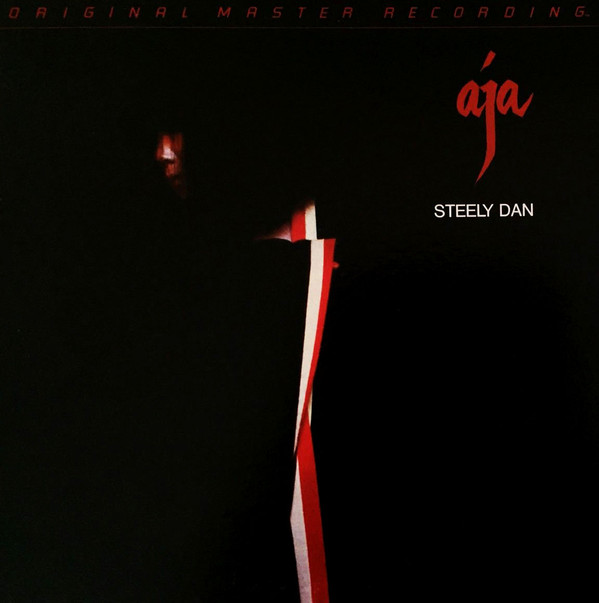
A couple of years ago, an interested party inquired about a Hot Stamper pressing of Aja he had seen on our site, specifically whether we were selling the AB first pressing or the AA reissue. You can find the discussion that ensued here.

As a kind of a postscript, we added:

By the way, [Joe] ended up not buying our Hot Stamper pressing. When you have to have an original, you have to have an original and that’s all there is to it.

If Joe was of a more scientific or skeptical bent — in other words, if he were more like me — he would have acquired an original, and then ordered our Hot Stamper in order to compare the two.

This is the subject I want to talk about today.

Audiophiles tend to subscribe to widely-held, conventional theories about what kinds of records are most likely to have the best sound. Outside of those of us who write for this blog, you will find very few audiophiles who believe that a substantial percentage of vintage reissues — not the modern ones, we’re talking about the ones from the 60s, 70s and even the 80s — are superior to their more original brethren.

Assuming Joe wanted the best sound — nobody who pays our prices could possibly be interested in anything else, right? — then he was simply making the point that since he wanted the best, and an original pressing absolutely had to be the best, nothing else would do, and that was that.

Joe could have done the experiment for himself easily enough. Had he asked us to send him our best AA pressing, we could have done that, and he could have compared that pressing to the original he no doubt owns, or, in the case that he had no original, acquiring one or more could have easily been arranged. They made them by the millions.

And that experiment might have resulted in an interesting learning experience, or not — who can say what the best pressing would have been on Joe’s stereo, with Joe’s ears doing the listening? It could have gone any which way, but something would have been gained in the act of sitting down to find out, for a fact, what pressing sounded better.

With all this in the back of my mind. just recently we did a shootout for Aja, and I checked the stampers for the two top copies.

Sure enough, the stampers found on the AB pressings won.

But those same stampers are found on the AA pressings for one of the titles, and one of the sides for the other title.

I could not even tell you for sure which pressings — AB or AA — actually won, because we rarely keep track of that information.

We only buy early pressings on the original labels because those are the only ones that sound good to us.

We don’t pay attention to the catalog number on the label because that doesn’t tell us anything of value. Playing the records is how we know what they sound like, and unless all the AB pressings beat all the AA pressings, or vice-versa, then that information is none of our concern.

Even if all the AB copies beat all the AA copies, we still have to buy, clean and play the AA copies in our shootouts because some of them are going to do well and can be offered to the customers who don’t want to spend the big bucks the top copies command.

We are generally opposed to having one-size-fits-all theories about the messy world of records, and you can find some of the commentaries we written about that subject here.

(more…)

Crosby, Stills and Nash – You Do the Best You Can with What You’ve Got to Work With

Hot Stamper Pressings of the Music of Crosby, Stills and Nash Available Now

The founding members of CSN chose the Albert brothers to engineer this 1977 reunion.

Their most famous album is Layla. Ever heard a great sounding Layla? Me neither. Can you hear the sound of Layla in your head? That’s more or less what this album sounds like. There are better and worse Layla’s — we’ve done the shootout many times — just as there are better and worse CSNs, but we have never played amazing Demo Disc pressings of either and I doubt we ever will.

The problem with the sound cannot be “fixed” in the mastering, and here’s how we know: on either side some songs have wonderful sound — the midrange magic, the “breath of life” that makes the first Crosby, Stills and Nash album such a special listening experience — and some don’t.

That’s a recording problem.

It sounds like too many generations of tape were used on songs like Shadow Captain and Dark Star, among others.

But Just a Song Before I Go on side two can sound wonderful: rich, sweet, present and surrounded by lovely studio ambience.

So we listen for the qualities of a specific song that help us pinpoint what the best copies do well and the rest do less well and grade them accordingly, on a curve.

Animals will never sound like The Wall. You do the best you can with what you’ve got to work with.

(more…)

Chad Has Served Poor Jethro Tull Most Barbarously

Hot Stamper Pressings of the Music of Jethro Tull Available Now

With a nod to our old friend, John Barleycorn.

We were finally able to get our hands on Analogue Productions’ newly remastered Stand Up, an album we know well, having played the British copies from every era by the score. Our notes for the sound can be seen below.

If ever a record deserved a “no” grade, as in “not acceptable,” this new 45 RPM pressing mastered by Kevin Gray deserves such a grade, because it’s just awful. (This link will take you to a great many more records best avoided by audiophiles in search of better sound. Although we’ve only linked to about 75 pressings here on the blog, it should be noted that the world is full of bad sounding records.)

But let’s put that grade in context. The last time a good sounding version of Stand Up was released, as far as we can tell, was 1989, and that version was the Mobile Fidelity Gold CD. I bought mine soon after it came out. I wasn’t even planning on buying a CD player when the Compact Disc was first invented, but then Mobile Fidelity played a dirty trick on me. Instead of releasing Loggins and Messina’s first album on vinyl, they put it out exclusively on CD as part of their Silver MFCD series.

As a die-hard MoFi fan, that sealed the deal: now I had to buy a CD player. I picked up a cheap Magnavox player, the 1040. I think it ran me less than $100, and played my new Sittin’ In CD, which, as I recall, sounded pretty good. (One of my other early CD purchases was Tumbleweed Connection, the regular label release, and it was dreadful.)

I still own Stand Up on Gold CD, and I still find it superb in every way. (Many of the MFSL Gold CDs from this era are excellent and worth seeking out.)

It sounds nothing like this new vinyl release, and that’s a good thing.

On vinyl, Stand Up has rarely been given the care it deserved. The last version of Stand Up to have sound we would want to listen to was pressed in the UK in the early ’70s. That was close to fifty years ago.

We sold some domestic pressings of the album back in the early 2000s, describing them at the time as made from dub tapes with all the shortcomings that entails, but mastered very well from dub tapes. The best domestic pressings are rich, smooth, tonally correct and natural sounding. They’re too dubby to sell as Hot Stampers, but they are not bad records. Some later Chrysalis pressings are big and open, but often they are too thin and bass-shy for the music to work. We’ve never taken them seriously.

It wasn’t long before we’d eliminated everything but the early UK pressings for our shootouts, and we quickly discovered that the earliest of the UK pressings on the older Island label were not good at all. We wrote about the problem with some originals more than ten years ago.

What was surprising about the shootouts we had done in past years was how disappointing most of the early British pressings we played were. They were flat, lacked energy and just didn’t rock the way they should have.

We learned the hard way that most British Pink label pressings aren’t especially rich, that some are small and recessed, and some are just so smeary, thick and opaque that they frustrate the hell out of you as you’re trying to hear what any of the musicians other than Ian Anderson is doing.

So when a reviewer comes along and says something positive about the new pressing compared to some unidentified original, we appreciate the problem that is at the root of his mistaken judgments:

Here’s the deal: if the goal was to duplicate the original pink label Island sound, this reissue misses that, which is good because this new double 45 reissue is far superior to the original in every possible way.

The tape was in great shape, that’s for sure. Clarity, transparency, high frequency extension and especially transient precision are all far superior to the original. Bass is honest, not hyped up and the mastering delivers full dynamics that are somewhat (but only slightly), compressed on the original. Ian Anderson’s vocals are naturally present as if you are on the other side of the microphone. Most importantly, the overall timbral balance sounds honest and correct. But especially great is the transient clarity on top and bottom.

If you’re fortunate to have an original pink label Island, at first you might think the sound is somewhat “laid back”, but that’s only because the mids and upper mids are not hyped up as they are on the original. That adds some excitement, but it clouds the picture and greatly obscures detail.

If you scroll down to our notes, you will see what we thought of the “laid back” sound this reviewer talks about. (Keep in mind that we first read the above review mere moments ago.)

We think “smaller, thick and stuck in the speakers” may be someone’s idea of “laid back,” but, just so there is no misunderstanding, it’s our idea of “awful.”

None of these are good things. Our Hot Stamper pressings are never small, thick or stuck in the speakers. They’re the records with the opposite of that sound. Our records are big, transparent and open. That’s why we can charge so much money for them and have people scooping them up from our Wednesday mailer the moment they become available.

They deliver the big, bold sound that the brilliant engineer for the album, Andy Johns, was known for. Laid back was not in his vocabulary.

Here is more of what we heard on side one.

Jeffrey Goes to Leicester Square

“Transients are sharp but body is dull. Kinda phony.”

Phony sound is the key here. Messing with the EQ in the mastering benefits some aspects of the sound at the expense of others.

Nothing new there. Audiophile pressings with wacky EQ are the norm. I would be surprised if any common Reprise pressing from back in the day wouldn’t sound more “right,” more tonally correct, more seamless. I’ve played quite a few and I don’t recall ever hearing one sound “phony.”

On side two we played the first two tracks.

(more…)

Forget Your Theories, Just Get More Data

More Entries in Our Thinking About Records Series

The idea of Hot Stamper pressings make more sense once you have a better understanding of statistical distributions.

Why statistics you ask?

Simple. We can’t tell what a record is going to sound like until we play it.

For all practical purposes, we are buying them randomly and “measuring” them to see where they fall on a curve.

We may be measuring them using a turntable and registering the data aurally, but it’s still very much measurement and it’s still very much data that we are recording (admittedly with a healthy amount of interpretation of the data involved, but that’s what we get paid to do, right?).

Many of these ideas were addressed in the shootout we did many years ago for BS&T’s second album. We played a large number of copies (the data), we found a few amazing ones (the outliers), and we tried to determine how many copies it really takes to find those records that sound so amazing they defy not only conventional wisdom, but our understanding of the recording itself.

We don’t know what causes some copies to sound so good.

(Here are some recent examples of shockingly good sounding pressings we discovered while doing shootouts.)

We know them when we hear them and that’s pretty much all we can say we really know. Everything else is speculation and guesswork.

We have data. What we don’t have is a theory that explains that data.

And it simply won’t do to ignore the data because we can’t explain it. Hot Stamper deniers are those members of the audiophile community who, when faced with something they don’t want to be true, simply manufacture reasons why it can’t be true or shouldn’t be true. That’s not science. It’s the very opposite of science.

Practicing science means following the data wherever it leads.

The truth can only be found in the record’s grooves and nowhere else. 

If you don’t understand record collecting as a science, you won’t be able to do it well and you certainly won’t achieve the success that’s possible by using a scientific approach.

(more…)

Rickie Lee Jones – Good Demo Disc / Bad Test Disc

Hot Stamper Pressings of the Music of Rickie Lee Jones Available Now

RLJ’s first album is what we would consider a Good Demo Disc but a Bad Test Disc.

Meaning that this record can sound good on really crappy stereos — which explains why it is so often heard at stereo stores and at shows, where really crappy stereos are unusually plentiful.

But it’s not what the System Doctor ordered if the goal is to work out some problem or fault with the reproduction of all your other recordings. In other words, records like this can be misleading. 

Of course, all records have that quality to one degree or another, which is why you need to use a basket of recordings to make judgments about equipment.

Don’t rely on any given recording to be The Truth. None of them are.

Wait a minute. Perhaps I spoke too soon. (more…)

A Bad Pressing Tells You… What, Exactly?

Hot Stamper Pressings of the Music of Peter Gabriel Available Now

I wrote this commentary many years ago after a review I spotted online prompted me to crack open one of the Classic Records 200 gram Peter Gabriel titles and play it.

Let’s just say the results were less than pleasing to the ear.

Bernie Grundman had worked his “magic” again. As usual I was at a loss to understand how anyone could find his mastering in any way an improvement over the plain old pressings, even the domestic ones.


[UPDATE 2022: This is a foolish statement on my part, since the domestic pressings are by far the best sounding versions of the album. Live and learn, right?]


The Original Commentary

I had a discussion with a reviewer for an audiophile web magazine concerning his rave review for the Peter Gabriel records that Classic pressed.

I have just now played one, and it’s not as bad as I thought it would be. But of course it’s not very good either.

Not surprisingly, reviewers have a tendency not to notice these things. I’m not exactly sure how these people are qualified to review records when the most obvious tonal balance problems seem to go unnoticed.

The Classic is brighter and less rich.

Like a lot of the records that Bernie Grundman has cut in the modern era, the tonality is off. It is simply too lean.

This is not the right sound for this album.

That’s Bernie for you. After all these years, no amount of mischief he did for Classic — or any other label — surprises me.

A Bad Record Tells You… What?

Which brings up something else that never fails to astonish me. How can an equipment review be trusted when the reviewer uses bad sounding records to evaluate the equipment he is testing? Aren’t we justified in assuming that if a reviewer can’t tell he is listening to a bad record, he probably can’t tell whether the equipment under review is any good either?

Here is a good example of a reviewer raving about a mediocre-at-best pressing in an equipment review.

A bad record tells you nothing about the equipment it is playing on.

Worse, it might complement the faults of the gear and end up sounding tonally correct. If you use So Long So Wrong as a test disc, what are you testing for, the hyped-up vocals or the harmonically-challenged guitars?

(more…)

Bella Donna – Speculate Shmeculate

Hot Stamper Pressings of Stevie Nicks’ Music Available Now

The sound of the typical copy can best be summed up in three words: thin, hard and bright.

When the sound is thin or hard or bright, the fun factor of this mainstream rock, at least for us audiophiles, drops to zero.

Stop Draggin’ My Heart Around and Leather And Lace both sound great on the radio, why not on Warners vinyl?

We sure can’t blame Sheffield Labs, the original cutting house: all the copies we played — good, bad and otherwise — were originals and mastered by them.

Could it be the vinyl?

It could. It could be a lot of things, but speculating about them doesn’t really get us (or you) anywhere, so I’m going to stop doing it and just say we played a big pile of records and heard a lot of unpleasant sound. If you own the record you probably know what I’m talking about.

Our Approach

In order to do the work we do, our approach to audio has to be fundamentally different from that of the audiophile who listens for enjoyment. Critical listening and listening for enjoyment go hand in hand, but they are not the same thing.

The first — developing and applying your critical listening skills — allows you to achieve good audio and find the best pressings of the music you love.

Once you have a good stereo and a good record to play on it, your enjoyment of recorded music should increase dramatically.

A great sounding record on a killer system is a thrill.

A Heavy Vinyl mediocrity, played back on what passes for so many audiophile systems these days — regardless of cost — is, to these ears, an intolerable bore.

If this sounds arrogant and elitist, so be it.

We set a higher standard. Holding our records to that higher standard allows us to price our records commensurate with their superior sound and please the hell out of the people who buy them.

For those who appreciate the difference, and have resources sufficient to afford them, the cost is reasonable. If it were not we would not grown to have a staff of ten doing the work we do. We would have gone out of business years ago. Businesses that do not satisfy the needs of their customers do not stay in business for long.*

Hot Stampers are not cheap. If the price wasn’t more than justified by the better sound quality and quieter surfaces, who in his right mind would buy them? We can’t really be fooling that many audiophiles, can we?

Some folks think the whole Hot Stamper thing is hogwash, a case of mass hysteria, a psychological syndrome that does exist and cannot be ruled out as a possibility. Maybe our customers are as delusional as most forum posters think they are.

Keep in mind that virtually none of the folks who write about us have ever heard one of our records, so that should help you decide how much confidence you should put in whatever explanations they might have to offer.

(more…)

Letter of the Week – Uncleaned Ah Um Originals vs. Cleaned Reissues

More of the Music of Charles Mingus

The letter below sheds some light on a vitally important mastering issue: specifically, the answer to the question, Which are better sounding, originals or reissues?

The letter finishes this way.

Incidentally, just a couple of days ago I conducted my own shootout between the Red Label “Mingus Ah Um” I bought from you a few weeks back and my pristine, Six Eye White Label Promo original. To my surprise, you were absolutely right about the greater clarity of the former (starting with the snare drum on the first track).

If I had to choose between them when selecting half a dozen “desert island” LPs (and “Mingus Ah Um” would definitely be one), the Red Label version would be the pick. Much obliged for the edification.

We of course could not agree more. We wrote back:

Once you hear the sound of “old school mastering” and get to know it, you can recognize it for what it does right and what it too often does wrong. Then, and only then, can you appreciate what is really happening when switching from newer to older pressings, what is being gained and what is being lost.

It’s the kind of Home Audio Exercise we constantly talk about on the site. And there’s a good reason for that.

As we never tire of saying, hearing is believing.

Update 2022

We do not want to give the wrong impression about Ah Um. At least one of the original stereo pressings, properly cleaned, assuming we have a few to play, will win the shootout every time.

Which one will win we never know. But one of them will.

No Red Label pressing from the 70s will beat a top quality Six-Eye.

But if you have an original and it is not cleaned right, which is almost always going to be the case, since most cleaning fluids and machines these days do not do a very good job of making your records sound the way they should, then our Red Label reissue can beat your copy. Which is what our letter writer found to be true.

(more…)

Tom Port Discusses Robert Brook’s Recent Shootout for Abraxas

Hot Stamper Pressings of the Music of Santana Available Now

Robert Brook has a blog which he calls

A GUIDE FOR THE DEDICATED ANALOG AUDIOPHILE

If you are new to the audio game, and even if you aren’t, we think you will find much of value there. (If you already think you know it all, his blog will be of little use, but of course neither will mine. You already know it all!)

This link will take you to a comparison Robert Brook carried out between some copies of Abraxas: his own and a Hot Stamper pressing he borrowed from a friend.

I wrote to him about a few issues I had with his commentary.

Dear Robert,

Of course we love it when one of our records gives you the experience you had.

But there are some fine points we must keep in mind, so that our approach is presented as correctly as possible, with nothing that could be construed as hype or misinformation.

To start with, I would not say you can’t hack a hot stamper.

I would say it is very hard.

You could say something like: “Tom says his superior cleaning techniques make it hard to compete with him. If you have a copy with the same stampers as his, his will sound better most of the time simply because the right cleaning noticeably improves the sound’

Which means that you need a different stamper to beat mine. You need the stamper of the record that won our shootout, not the one that came in at 2+!

Anyone can do it is our motto.

It’s hard is also our motto. (We have a lot of mottos.)

We only beat your other copies on one side, so imagine if the copy you heard did not have that one great side? That is something to think about!

(more…)