*Pressing Advice, by Title

Is The Pink Label The Hot Ticket for Jethro Tull’s Brilliant Stand Up Album?

Hot Stamper Pressings of the Music of Jethro Tull Available Now

Well, it certainly can be, but sometimes it isn’t, and failing to appreciate that possibility is a classic case of misunderstanding a crucially important fact or two about records. Audiophile analog devotees would do well to keep these facts in mind, especially considering the prices original British pressings are fetching these days.

Simply put: Since no two records sound alike, it follow that the right label doesn’t guarantee the right sound.

A shootout years ago illustrated both of these truths.

We had a number of Pink Island British pressings to play — if you hit enough record stores often enough, in this town anyway, even the rarest pressings are bound to show up in clean condition from time to time — along with Sunrays (aka Pink Rims), later Brits, early Two Tone domestics and plain Brown Label Reprise reissues. All of them can sound good. (We do not waste time with German and Japanese pressings, or any of the later Chrysalis label LPs. Never heard an especially good one.)

What surprised the hell out of us was how bad one of the Pink Label sides sounded. It was shockingly thin and hard, practically unlistenable.

Keep in mind that during our shootouts the listener has no idea which pressing is being played, so imagine hearing such poor reproduction on vinyl and then finding out that such bad sound was coming from a copy that should have been competitive with the best, on the legendary Pink Island label no less. (Of course the other Pinks were all over the map, their sides ranging from good to great.)

Hearing one sound this bad was completely unexpected, but hearing the unexpected is what we do for a living, so I suppose it shouldn’t have been. Having dubious looking reissues and the “wrong” pressings beat the originals and the so-called “right” pressings from the “right” countries is all in a day’s work here at Better Records.

The audiophiles who collect records by label are asking for trouble with Stand Up.

Assuming they want the best sound, that is.

(more…)

Billion Dollar Babies Often Suffers from a Case of 70s Warner Bros. House Sound

More of the Music of Alice Cooper

The last White Hot Stamper copy we put up had the two best sides back to back we heard in our shootout, with a killer side two that really brought this music to life.

Which is not easy to do, given that the average copy of this album is a sonic mess —

There are a lot of green label Warner Bros. records from the 70s that sound like that, one might even call it their “house sound.”

When you play most of the later pressings, it’s obvious that they’ve gone overboard in cleaning up the murk, leaving a sound that is lean, flat and modern — in other words, unmusical, inapt and more often than not disastrous.

Finding the right balance of fullness and clarity, especially on this album, may not be easy, but it can be done. This side two was far and away the best we heard and proves that the album can sound good.

(more…)

The Warm Moods – The Reissue Is So Good, How Can the Original Be Better?

Our review from years ago for the Discovery reissue of The Warm Moods can be found below.

We loved the sound, so much so that we found it hard to fault.

Imagine our surprise when we discoverd that that the original was clearly better.

Much better. At least a full grade better.

When we did the shootout again, a rare (in stereo anyway) original Reprise showed us just how wrong we were.

The best original pressing we found took the sound of The Warm Moods to another level, and a pretty high one at that.

It’s yet another example in which the most important question in all of audio had been overlooked: compared to what?

Who knew the recording could sound any better than the wonderful Discovery pressing we’d played?

(more…)

For the Best Kinks Sound, Stick with the Tri-Tone Mono Pressings

Hot Stamper Pressings of the Music of The Kinks Available Now

This Pink and Green Reprise original MONO pressing is lively, balanced and vibrant, with a healthy dose of the Tubey Magical richness The Kinks’ recordings need in order to sound the way we want them to, which is less irritatingly bright, thin and harsh.

“Tired of Waiting For You” is the big hit here, and like most Kinks albums from back in the day, they put the hit at the end of the side, so you had better make sure whatever copy you find has not been played much or it will be full of inner groove distortion.

Inner Groove Distortion caused by the non-anti-skate-equipped turntables of the day is a chronic problem with rock and pop records from this era. We check all our records for Inner Groove Damage (IGD) as a matter of course when condition checking the surface quality of the vinyl.

The Poster Boy for Inner Groove Distortion is the song “Thank You” on this album from 1969. That record got played a lot back in the day, on the only turntables that we had available to us at the time, crappy ones.

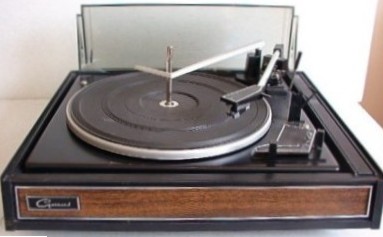
My first “audiophile” table was the extremely plasticky Garrard 40B. I think I bought mine in 1973  and I probably paid about $69 for it. As I recall, this was their entry level model. If any table had been cheaper I would have bought it, which shows you what my starving-college-student budget must have been. Sounded just fine to me, though. What did I know about sound in 1973?

By 1976 I would have some of the best audiophile electronics in the world and the massive speakers you see below. That’s some head-spinning progress if you ask me. Once I had heard how good all my favorite albums were sounding, I got very motivated. This is key: For real progress to occur, the music must do the driving.

(more…)

Listening in Depth to Bare Trees

More of the Music of Fleetwood Mac

Reviews and Commentaries for the Music of Fleetwood Mac

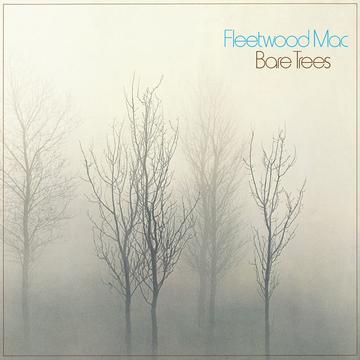
Presenting another entry in our extensive Listening in Depth series with advice on what to listen for as you critically evaluate your copy of Bare Trees.

Here are some albums currently on our site with similar Track by Track breakdowns.

Side One

Child of Mine

A real rocker from Danny Kirwan. If the electric piano is rich on your copy and you have some top end and space you are probably off to a very good start.

The Ghost
Homeward Bound
Sunny Side of Heaven

A wonderfully poignant, even melancholy instrumental track by Bob Welch. Not sure if that’s him on guitar but the playing is beautiful. The high point of side one.

Side Two

This is where most of the best music on Bare Trees can be found. We like every song on this side.

Bare Trees

If this song doesn’t get your blood pumping, you need to turn up the volume another click or two. There is tremendous energy and joy in this song, and it needs to be played loud to get those feelings across.

Sentimental Lady
Danny’s Chant
Spare Me a Little of Your Love

This is a tough track to get right. The Brit is smoother and sweeter, which works on this song. Bad copies can sound hard on Christine’s vocals as well as the chorus.

Dust

One of my all time favorite Fleetwood Mac songs. On a good copy this track sounds so sweet. The texture to the voices is right on the money — neither grainy nor dull.

Thoughts on a Grey Day (more…)

McDonald and Giles – A Sleeper Prog Album from 1970

Hot Stamper Pressings of Prog Rock Albums Available Now

More Recordings Engineered by Brian Humphries

Brian Humphries engineered the album, and although you may not be familiar with that name, if you’re an audiophile you should get to know his work better, as this guy recorded some amazing sounding albums.

Take a gander at this group:

  • Black Sabbath – Paranoid
  • Pink Floyd – Wish You Were Here
  • Traffic – John Barleycorn Must Die
  • Traffic – The Low Spark Of High Heeled Boys 

Two are of course on our Top 100 Rock and Pop List, and all four — five if you count McDonald And Giles — qualify as State of the Art Rock Recordings from the era.

Demo Disc Quality Sound

If you’re looking to demonstrate just how good the best early Island Label recordings can sound, this killer copy should do the trick.

This UK pressing is super spacious, sweet and positively dripping with ambience. Talk about Tubey Magic, the liquidity of the sound here is positively uncanny. This is vintage analog at its best, so full-bodied and relaxed you’ll wonder how it ever came to be that anyone seriously contemplated trying to improve it.

This IS the sound of Tubey Magic. No recordings will ever be made like this again, and no CD will ever capture what is in the grooves of this record. There may well be a CD of this album, but those of us in possession of a working turntable and a good collection of vintage vinyl could care less.

(more…)

Made in Japan – One of the All Time Great Sounding Live Rock Albums

deeppmadei_1606_1152215422More of the Music of Deep Purple

Machine Head Live? That would not be far off, and the fact they brought Martin Birch along with them all the way to Japan in order to engineer a live album that was only supposed to sell to the Japanese market (!) could not have been more fortuitous for us audiophiles.

Machine Head is clearly one of the best sounding hard rock records ever made, and Made In Japan, its successor, sounds more like a top quality studio production than any live album I’ve ever heard. It’s shocking how clean and undistorted the sound is. Equally shocking is the fact that it’s every bit as big and lively as a Hard Rockin’ Live Album should be.

This is a combination the likes of which we hear far too rarely.

We’ve raved about a number of live albums over the years. Some of the better sounding ones that come readily to mind (in alphabetical order) are listed below. Fans of any of these bands can be proud to have a Hot Stamper pressing of any of these albums in their collection.

The albums I would want in my personal collection are noted with an asterisk [*].

  • The Band / Rock of Ages*
  • Harry Belafonte / At Carnegie Hall*
  • David Bowie / David Live*
  • Johnny Cash / At San Quentin
  • Cheap Trick / At Budokan
  • Eric Clapton / Just One Night*
  • Deep Purple / Made in Japan
  • Donny Hathaway / Live*
  • Jimi Hendrix / The Jimi Hendrix Concerts
  • Humble Pie / Performance – Rockin’ The Fillmore
  • Albert King / Live Wire – Blues Power
  • Little Feat / Waiting For Columbus*
  • Lou Rawls / Live!*
  • The Rolling Stones / Get Your Ya-Ya’s Out* 
  • The Who / Live at Leeds*

Having just played a stack of copies of Made In Japan, I’d put it right up there with the best of the best.

In terms of Tubey Magic, richness and naturalness — qualities that are usually in very short supply on live albums — I would have to say that the shootout winning copies of Made In Japan might just take Top Honors for Best Sounding Live Rock Album of All Time. Yes, the sound is that good.

Want to find your own top quality copy?

Consider taking our Moderately Helpful Advice about the pressings that have tended to win shootouts over the years.

(more…)

Roy Orbison – Mono? Original? What’s the Best Way to Go?

Records that Sound Their Best on the Right Reissue

Hot Stamper Pressings that Sound Their Best on the Right Reissue

If you think that buying original pressings of an album like this one is the way to find the best sound, you are sorely mistaken. The originals and most reissues on the Monument label are rarely any better than dreadful sounding.

The monos sound bad and the originals sound bad, which means that all the conventional wisdom of record collectors and audiophiles alike has failed to produce the desired result: a good sounding pressing of the album.

What’s a mother to do? 

Well, you could do what we did: try them all! If you keep at it long enough eventually you will run into the right pressing, and then you can focus on getting a large enough batch which will allow you to find one that sounds great and plays quietly.

(more…)

Listening in Depth to Sounds of Silence

More of the Music of Simon and Garfunkel

Presenting another entry in our extensive Listening in Depth series with advice on what to listen for as you critically evaluate your copy of Sounds of Silence. Here are some albums currently on our site with similar Track by Track breakdowns.

Sounds of Silence is made from a second generation tape, as we explain below. Since we listen to all the records we sell, we like to point out such things so our customers know what they are getting.

This album is the proverbial tough nut to crack, a mix of folkie tracks and ambitious big production numbers, all recorded on a four track machine and bounced down maybe just a few too many times along the way. Some got handed a troublesome case of Top 40 EQ — hey, this is 1965, it’s the way they thought pop records should sound.

But many of the best tracks survived just fine. They can sound wonderful, it’s just that they rarely do. This is precisely where we come into the picture.

The key to good sounding pressings of this record is to look for the ones with a top end. Now of course you can’t see the top end when you buy the record. But most of the copies of this album you pick up are going to sound like cassettes. There won’t be much over 8K, and that means hard, harsh, transistor radio sound. You need extended highs to balance out the upper midrange.

(more…)

Animal Notes – These Big, Lively Choruses Are a Thrill

Hot Stamper Pressings with Huge Choruses Available Now

The best vintage rock recordings usually have something going for them that few recordings made after the ’70s do: their choruses get big and loud, yet stay smooth, natural and uncongested. 

We’ve mentioned it in countless listings. So many records have — to one degree or another — harsh, hard, gritty, shrill, congested choruses. When the choruses get loud they become unpleasant, and here at Better Records you lose a lot of points when that happens.

This recording, more specifically this pressing of this recording, has exceptionally big, smooth and natural choruses for many of the songs. Rangers at Midnight comes to mind immediately. Credit our man Shelly Yakus below for really getting the choruses right on this album.

Fun tip: Listen for the Elton John-like piano chords on the first track. Can you name that song? (Hint: it’s on Tumbleweed Connection.)

Choruses Are Key

Watch out for too many instruments and voices jammed into too little space in the upper midrange. When the tonality is shifted-up, even slightly, or there is too much compression or distortion, there will be too many upper midrange elements — voices, guitars, drums — vying for space, resulting in congestion and a loss of clarity.

With the more solid sounding copies, the lower mids are full and rich. Above them, the next “level up” so to speak, there’s plenty of space in which to fit all the instruments and voices comfortably, without piling them on top of one another as so often happens. Consequently, the upper midrange “space” does not get overwhelmed with musical information.

Also watch for edge on the vocals, which is of course related to the issues above. Most copies have at least some edge to the vocals — the band wants to really belt it out in the choruses, and they do — but the best copies keep the edge under control, without sounding compressed, dark, dull or smeary.

The highest quality equipment, on the hottest Hot Stamper copies, will play the loudest and most difficult-to-reproduce passages with virtually no edge, grit or grain, even at very loud levels.

(more…)