Label Advice

Some of the titles listed here have better sound on labels that many record collectors would probably not assume would be the best.

Other titles have inferior sound based on the labels we’ve identified in these listings.

Keep in mind that all the practical advice you see here is based solely on the numerous experiments we’ve run and the data we’ve collected from them.

Another Unimpressive Reissue Pressing of Coltrane’s Music — What Is Going On?

Hot Stamper Pressings of the Music of John Coltrane Available Now

We had an early Blue Label Prestige mono pressing that was not as awful as the original Yellow Label mono we played, but it’s not very good either. Our grade for a record that earns one plus on both sides is passable.

Which means you could listen to it, maybe even enjoy it, but you would have no idea just how well Rudy Van Gelder recorded the sessions in 1958 that went into the making of the album, which as you know was not compiled for release until 1962.

As you can see from the notes above, it was crude, smeary and thick. We don’t sell records that sound like that.

I can’t say that most modern remastered records are crude, although some of them are, but a great many we’ve played are smeary, and almost all of them are thick — that is, lacking in transparency — to some degree. That last quality — a lack of transparency — may be the most irritating of all, a subject we discuss here.

(A great many records we’ve auditioned over the years are good for testing transparency. Those wanting to improve this aspect of their playback should consider making use of them.

(more…)

Reposted in Honor of Ozzy’s Passing — Import or Domestic on Paranoid?

Hot Stamper Pressings of the Music of Black Sabbath Available Now

The domestic copies we’ve played over the years for all the Black Sabbath titles are clearly better sounding than any import we’ve ever auditioned. It may be counterintuitive, but these are exactly the kinds of things you find out when doing blinded shootouts.

We have little use for intuitions (UK recording, UK pressing) and rules of thumb (original = better sound). We call that way of approaching the search for better sounding pressings mistaken audiophile thinking. 

Hard data — the kind you get from actually playing the records — trumps them all.

(We recently posted a lengthy commentary about conventional wisdom, attempting to make the case that, although the most common record collecting approaches are more often right than wrong, there is simply no way to know when any given approach will work for any given title.)

Want to find your own killer copy?

Consider taking our moderately helpful advice for how to find your own shootout winners.

(more…)

Emerson, Lake & Palmer – Islands Vs Cotillions

Hot Stamper Pressings of the Music of Emerson, Lake and Palmer Available Now

UPDATE 2020

This commentary was written many years ago, around 2010 I would guess.

It was updated in 2020 when we realized we were wrong about the domestic pressings being superior on side two. At one time we thought they were, and now, with many more shootouts under our belts, we are pretty sure they are not. But you never know!

The findings from the latest shootouts have shown us the error of our ways, yet another example of live and learn.


This is what we used to think:

The Brit copies may take top honors for side one (“sweetness, openness, tubey magic, correct tonality, presence without aggressiveness, well-defined note-like bass, extended airy highs”) but the Hot Stamper Cotillion copies KILL on side two. They really ROCK, with greater dynamic contrasts and seriously prodigious bass, some of the best ever committed to vinyl.

The Brits tend to be a bit too “pretty” sounding. They’re too polite for this bombastic music. This music needs the whomp down below and lots of jump factor to work its magic.

The Brits are super-low distortion, with a more open, sweeter sound, especially up top, but the power of the music is just not as powerful as it can be on these very special Cotillions.

We prefer the British pressings on both sides now. After years of improvement to our playback, they have shown themselves to be a step up over even the best domestic pressings. The Cotillions don’t win shootouts now and would be very unlikely to win one in the future. At best they tend to earn Super Hot Stamper grades.

A top copy might be described this way:

  • This UK Island Pink Rim pressing makes the case that ELP’s debut is clearly one of the most powerful rock records ever made, here with incredible Nearly Triple Plus (A++ to A+++) grades from top to bottom – just shy of our Shootout Winner
  • Spacious, rich and dynamic, with big bass and tremendous energy – these are just some of the things we love about Eddie Offord‘s engineering work on this band’s albums
  • Analog at its Tubey Magical finest – you’ll never play a CD (or any other digitally sourced material) that sounds as good as this record as long as you live
  • “Lucky Man” and “Take A Pebble” on this copy have Demo Disc quality sound like you won’t believe
  • Our White Hot pressing had a one half plus better grade on one side and sold for $849, making this copy a “relative bargain,” if there could ever be such a thing on this site – but what an amazing sounding record!

Without a doubt this record belongs in our Top 100 Rock and Pop section.

I’d even say it belongs in the Top Ten (which of course is where you can find it, where it belongs).

The organ on this album is wall to wall and floor to ceiling. The quiet interlude during “Take A Pebble” is about as quiet as any popular recording can ever be — the guitar is right at the noise floor. It’s amazing! (Which explains why so many domestic copies have groove damage. The record is just too hard to play for the average turntable. Hell, it’s hard to play with an audiophile turntable.)

Credit engineer Eddie Offord, who would later go on to enormous and entirely justifiable fame with Yes.

(more…)

How Is It that the Earliest Pressings from the Tube Era Often Lack the Sound of Tubes?

Hot Stamper Pressings of Music on Island Records Available Now
Please note that the album you see pictured on the left is not the one we are discussing here.

It has been our experience going back many years that the earliest pressings for many records on the Island label are not very good.

To be fair, this one — again, not Mr. Fantasy — is not a bad sounding pressing.

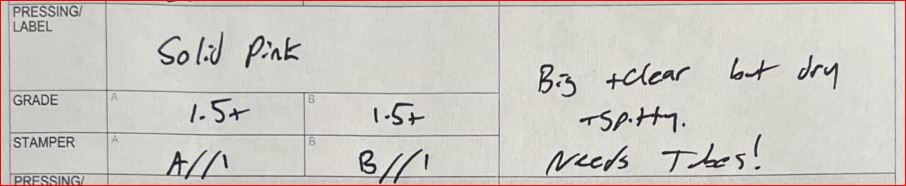
With grades of 1.5+ on both sides, it fits comfortably in our section for good, not great sounding LPs. But the right reissues are a big step up in class sonically. They’re the ones that win shootouts, not these Pink Label LPs.

It’s big and clear but dry and spitty and badly needs tubes — or the sound of tubes — in the cutting chain.

That’s not supposed to happen, the early pressings are supposed to be the most Tubey Magical ones, with the reissues being less Tubey Magical — but in the world of records, when has that rule of thumb ever counted for anything?

Been There, Done That

We’ve run into so many sonically-flawed Pink Label Islands by now that hearing one sound lackluster if not actually awful doesn’t phase us in the least. Some of the other Pink Labels that never win shootouts can be found here.

(more…)

On Waka/Jawaka Transparency Is Key

Hot Stamper Pressings of the Music of Frank Zappa Available Now

Not long ago we discovered the secret to separating the men from the boys on side one: TRANSPARENCY.

On the lively, punchy, dynamic copies — which are of course the best ones — you can follow the drumming at the beginning of ‘Big Swifty’ note for note: every beat, every kick of the kick drum, every fill, every roll.

It’s all there to be heard and appreciated. If that track on this copy doesn’t make you a huge fan of Aynsley Dunbar, I can’t imagine what would. The guy had a real gift.

Big Swifty!

The 17-plus-minute-long Big Swifty is a suite in which each section slowly, almost imperceptibly blends into the next, so that you find yourself in a completely new and different section without knowing how you got there — that is, until you go back and play the album and listen for just those transistions, which is what makes it worth playing hundreds and hundreds and hundreds of times.

Big Swifty is a jazz suite with amazingly innovative work by Sal Marquez on trumpet. He single-handedly turns this music into a work of brilliance. I can’t imagine a more talented player.

Zappa on guitar is excellent as well. Aynsley Dunbar plays his ass off, only falling short when it comes time to do his drum solo on Waka/Jawaka.

The interplay of each of these rock musicians is in the tradition of the greatest jazz artists stretching all the way back to the 50s.

And since the drumming throughout this record is so crucial to the music itself, a copy that really gets that right is one that probably gets everything right.

(more…)

An Extraordinary Recording of the Carmen Fantasie – This Is Why You Must Do Shootouts

It has been years since a Whiteback pressing on the later label won a shootout. Some reissue copies of CS 6165 have earned Nearly White Hot Stamper grades, but we would be very surprised if one of the Blueback originals we play in the next shootout does not come out on top. They are just too good.


This London Whiteback LP has DEMO DISC sound like you will not believe, especially on side two, which earned our coveted A Triple Plus rating. The sound is warm, sweet and transparent; in short, absolutely GORGEOUS. We call it AGAIG — As Good As It Gets!

As this is one of the Greatest Violin Showpiece Albums of All Time, it is certainly a record that belongs in every right-thinking audiophle’s collection. (If you’re on our site and taking the time to read this, that probably means you.) Ruggiero Ricci is superb throughout.

And side one was just a step below the second side in terms of sound quality, with very solid A++ sound. To find two sides of this caliber, on quiet vinyl no less, is no mean feat. You could easily go through ten copies without finding one as consistently good sounding as this one.

A True Demo Disc, Or Was It?

Ricci’s playing of the Bizet-Sarasate Carmen Fantasie is OUT OF THIS WORLD. There is no greater perforrmance on record in my opinion, and few works that have as much Audiophile Appeal.

Which is why I’ve had a copy of this record in my own collection for about fifteen years marked “My Demo Disc.” But this copy KILLED it. How could that be?

It just goes to show: No matter how good a particular copy of a record may sound to you, when you clean and play enough of them you will almost always find one that’s better, and often surprisingly better.

Shootouts are the only way to find these kinds of records. That’s why you must do them.

Nothing else works. If you’re not doing shootouts (or buying the winners of shootouts from us) you simply don’t have top quality copies in your collection, except in the rare instances where you just got lucky. In the world of records luck can only take you so far. The rest of the journey requires effort.

(more…)

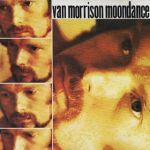
On Our Top Copy of Moondance, How Did We Recognize that One Side Was Not as Tubey?

Hot Stamper Pressings of the Music of Van Morrison Available Now

We described our most recent shootout winning pressing this way:

A Moondance like you’ve never heard, with Shootout Winning Triple Plus (A+++) grades or close to them on both sides of this early Green Label pressing.

Here are just a few of the things we had to say about this killer copy in our notes: “silky and 3D and present”…”sweet and breathy vox”…”spacious and rich”…”huge and lively”…”jumping out of the speakers.”

Drop the needle anywhere on the album for a taste of early-70s Tubey Magical analog, not to mention the kind of blue-eyed soul that will remind some of you just how good music on vinyl used to be.

Side one was killer in every way, and the way we know that is we played a bunch of copies and nothing could beat it. This side one took top honors for having exactly the sound we described above.

Side two is another matter. We came across a side two that was slightly better than the side two you see here.

When we played the two best copies back to back, side one of this copy came out on top, earning a grade of 3+. However, the side two of another pressing showed us there was even more Tubey Magic in the recording than we’d noticed the first time around.

With another copy earning a better grade for having even more Tubey Magic, the full 3 pluses, we felt the right grade for this side two was 2.5+.

Helpful Advice

To aid you in doing your own evaluations, here is a list of records that we’ve found to be good for testing Tubey Magic.

This is exactly why we do shootouts. If you really want to be able to recognize subtle (and not so subtle!) differences between pressings, you must learn to do them too.

And make sure to take notes about what you are hearing, good and bad.

One more thing: stick with the Green Label early pressings, they are the only way to fly on Moondance.

Mistakes Were Made

If you made the mistake of buying the Rhino pressing of Moondance, I hope you heard what we heard: a complete lack of Tubey Magic! This on one of the most Tubey Magical analog recordings we’ve ever played. You can thank Kevin Gray for helping you flush your record money down the drain. When we first reviewed the remaster in 2014, we wrote:

Where is the Tubey Magic of the originals? The sweetness? The richness? And why is there so little ambience or transparency? You just can’t “see” into the studio on this pressing the way you can on the good originals, but that’s fairly consistently been the knock on these remastered Heavy Vinyl records. We noted as much when we reviewed Blue all the way back in early 2007, so no surprise there.

We also complained that the Heavy Vinyl reissue gets the voice wrong.  When the voice is wrong on a Van Morrison record, you have yourself a completely worthless piece of vinyl. 180 grams or 120 grams or any other number of grams, vinyl with sound this bad should hold no appeal to the audiophile. The record collector, maybe, but collecting for the sake of collecting has never been our thing and we hope it’s never been yours.

(more…)

John Coltrane – Expression on the Green Label

Hot Stamper Pressings of the Music of John Coltrane Available Now

The best pressings have huge space, size and clarity, with Tubey Magical richness befitting the 1967 recording dates of these sessions at Van Gelder Studio.

That Tubey Magic is surely long gone by now, so those of you looking for this kind of sound on a modern pressing should face facts — that ship has sailed.

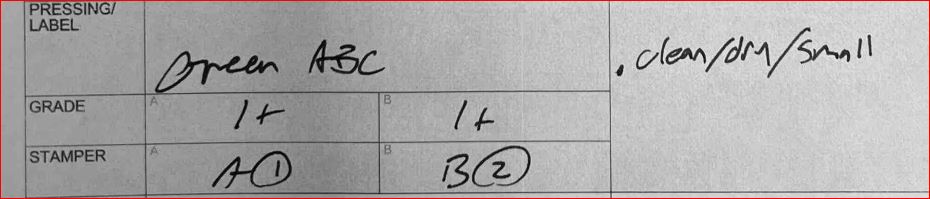
The Green Label ABC/Impulse label pressings did not retain much of the magic that we heard on the  real Impulse pressings, so best to avoid them.

They’re clean but dry and small, not big and bold like the real thing. The CD is probably better.

4 stars: “Recorded at two sessions in early 1967, Expression represents John Coltrane’s final recording sessions just months before his death. It’s remarkable that [the album] is not some world-weary harbinger of death and sickness, but an endlessly jubilant affair. Even in what must have been a time of tremendous pain and darkness, Coltrane’s single-minded quest for understanding and transcendence took him to places of new exploration and light.”


(more…)

On Barney Kessel’s Easy Like, Stick With the Earlier Contemporary Pressings

Hot Stamper Pressings of Contemporary Jazz Albums Available Now

The Shootout Winning pressing we played in 2024 was yet another killer Barney Kessel recording from the Golden Age of Tube Recording:

Both sides of this vintage Contemporary pressing were giving us the rich, sweet and tubey MONO sound we were looking for, earning INCREDIBLE Shootout Winning Triple Plus (A+++) grades or close to them

Roy DuNann (at the console on select tracks, with Val Valentin handling engineering duties on the others) always seems to get phenomenally good sound out of the sessions he recorded – amazingly realistic drums in a big room; Tubey Magical guitar tone; deep, note-like string bass, and on and on

For some reason, the guitar sound from this era of All Tube Chain Recording seems to have died out with the times – it can only be found on the best of these vintage pressings, and, as you may imagine, the better the guitar sounds, the more likely it is that the record will win our shootout

If you don’t have an electric guitar jazz record with this kind of off-the-charts Tubey Magical sound, maybe it’s time you got one

You would never know how good the recording was by playing this D14/D9 pressing on the original label.

The sound was hollow and dry with a boosted top end. The 1+ grade awarded to this side two means it’s simply not that good, early label or no early label.

This Is Why

This is why we do shootouts, and why you must do them too, if owning the highest quality pressings is important to you.

Fortunately for readers of this blog, our methods are explained in detail, free of charge.

We’ve also written quite a few commentaries to help audiophiles improve the way they think about records.

I implore everyone who wants to make progress in this hobby to learn from the mistakes we’ve made. There are 146 “we were wrong” listings on the site as of this writing, and we learned something from every damn one of them.

(more…)

White Dogs or Shaded Dogs on the Brahms Piano Concerto No. 2?

Hot Stamper Pressings of Living Stereo Titles Available Now

UPDATE 2024

The review you see below is quite old. We no longer agree with the statement we made back then that the White Dog pressings are better sounding than the Shaded Dogs.

In our recent shootout, the first one I can remember since 2005 — that was 20 years ago! — the White Dogs did not do nearly as well as the Shaded Dogs we played.


This White Dog pressing is the best sounding copy I’ve ever heard, much better than the earlier pressings. The piano doesn’t break up like it does on those, especially in the second movement.

Finally the piano sounds right – solid and with the correct overtones. It goes without saying that this is an exceptionally good performance as well.

One of the best of the Cliburn recordings which, as you may know, are rarely any good, the worst of them being LSC 2252 and the best of them being, probably, LSC 2507.

Seems we got some of this one wrong. Live and learn is our motto, with mea culpa running a close second.

It’s possible that our mistaken judgment about the superiority of the White Dog pressings in 2005 was mostly the result of sample sizes that were much too small. However, I was operating as a one man band back when I was doing all the classical shootouts, so my chances of getting the wrong answer were fairly high, a reality I have documented on this blog in some detail.

I also was not able to clean the records under comparison very well, a problem that has been solved — and then some — by a great many improvements in techniques, machinery and fluids over the last twenty years.

What we could do back then and what we can do now, after twenty years of constant improvement, are as different as night and day, a subject we write about quite a bit under the heading of audio progress.

I’ve also made a habit of admitting my mistakes in the hopes that other audiophile reviewers would consider following suit. To my knowledge this has yet to happen, but hope springs eternal!

(more…)