*Experimenting with Records

Experimenting with records is the only way to learn much about them of any real value.

Porgy and Bess – “This is a serious step up! Crazy good.”

More of the Music of Harry Belafonte

A Living Stereo knockout. We often forget to spend time with records like this when there are Zeppelin and Floyd records to play. We’ve always enjoyed Belafonte At Carnegie Hall, but when we’ve dug further into the man’s catalog we’ve been left cold more often than not.

However, when we finally got around to dropping the needle on a few of these we were very impressed by the music and completely blown away by the sound on the best pressings.

Our Shootout Winner showed us everything we could ever want in this kind of recording and more. More, in this case, was a side two that was a step up over our best side one. We used to give records with a side two like this one a grade of A++++, but we stopped doing that years ago. (We discuss the subject of outliers down below.)

The notes for side one read:

Track One

Big, dynamic and rich vocals. Very full and rich.

Track Four

Good bass, rich and note-like.

Vocals are silky and present and hi-rez.

The notes for side two read:

Track Two

Dynamic, three-deimensional vocals.

Frequencies extend high and low.

Sweet and breathy flutes and vocals. Tubey.

Track One

So sweet and rich, can’t complain.

This is a serious step up! Crazy good.


If you want to hear a record with sound like that, focus your attention on the pressings made in 1959 – that’s where that sound can be found, and you will have a hard time finding it on any record made in the last 50 years, no matter what anybody may tell you.

If someone disagrees with that assessment, have them play you the record that beats this one, something they will have a devil of a time managing to do.

1959 Tubes?

You just can’t beat ’em.

(more…)

Thoughts on a Direct to Disc Recording, Its Strengths and Weaknesses

Hot Stamper Pressings of Direct-to-Disc Recordings Available Now

In a shootout we conducted more than ten years ago, two White Hot Stamper pressings tied for the best side two we had ever heard.

In the final round it simply came down to the fact that the other copy was a little more clear, this one is a little richer.

They were both so amazing we couldn’t decide which we preferred so we gave them both White Hot Stamper grades.

In our experience this rarely happens.

Most of the time one side of one of the records in the shootout will show itself to be the clear winner, doing everything — or almost everything; there is no such thing as a perfect record — right.

When you play enough copies, eventually you run into the one that shows you how the music wants to be heard, what kind of sound seems to work for it the best. The two side twos we liked were variations, and fairly subtle ones at that, on a theme — a little richer here, a little clearer there, but both so good.

To be honest, most copies of this title were quite good. Few didn’t do most things at least well enough to earn a Hot Stamper grade. This has not been the case with many of the Sheffield pressings we’ve done shootouts for in the past. Often the weaker copies have little going for them. They don’t even sound like Direct Discs.

Some copies lack energy, some lack presence, most suffer from some amount of smear on the transients.

But wait a minute. This is a direct disc. How can it be compressed, or lack transients? Aren’t those tape recorder problems that are supposed to be eliminated by the direct to disc process?

(more…)

This Is Why We Love Columbia in the 60s

More of the Music of Al Kooper

More of the Music of Michael Bloomfield

Please excuse the copying and pasting from previous listings. When records are this good, we tend to say the same things about them, because they are doing all the things we want them to do.

From time to time a record comes our way that sounds absolutely amazing, “Way better than it used to sound” amazing. Progress in audio is a feature, not a bug, of record collecting and music reproduction at the most advanced levels.

If it’s the kind of record that sounds like the best copy of The Live Adventures of Bloomfield and Kooper from our most recent shootout, we might even let our enthusiasm for its superb fidelity get the better of us. That’s the effect a record as good as the copy we played can have. You just can’t stop yourself from saying one great thing after another about it.

Our over-the-top notes, like those you see below, attempt to convey what it’s like to experience the superb sound we were hearing.

But where is the harm in that? These are notes that no one outside of the staff are ever expected to see. They are helpful to us in writing our commentary and pricing the specific copy we auditioned, but they are practically never quoted in the listings.

The Live Adventures of Bloomfield and Kooper is an example of one of those recordings that comes along from time to time in order to show us sound that we’d almost forgotten was possible.

Oh yes, with the rare properly-cleaned, properly-mastered, properly-pressed vintage vinyl LP, played back on top quality equipment in a heavily treated, dedicated soundroom, we can assure you it is very possible indeed. Allow us to make the case with the Shootout Winning original pressing you see below.

The notes for side one read: 

  • Big, Tubey and jumping out
  • Breathy vocals
  • Deep, sustained bass

Side two:

  • Spacious
  • Glowing and rich drums are weighty and 3-D
  • No congestion
  • Extending high and low
  • Silky and present vocals

Side three:

  • Weighty and rich
  • No hardness
  • Extending high and low

Side four:

  • Rich and ? and space
  • More dynamic and 3-D
  • All around good weight

You know what’s unusual about these notes?

They’re the kind of notes we have never written for any Heavy Vinyl reissue, even for the one that won our shootout not long ago.

(more…)

Our First Shootout for The Voice from 2007

More of the Music of Frank Sinatra

By 2007 we were doing regular shootouts for albums such as Sinatra’s The Voice (1955) whenever we had the stock, and of course we naturally would throw the Classic Records pressing in the mix to see how it compared to the real thing.

I was selling the Classic when it was in print back in 1999 although it had never impressed me much at the time. It was a “good enough” record for $30 back then.

We used to tolerate the differences between good vintage pressings and Classic Records reissues, but by 2007 the sound of many of these remastered titles was just too second- and third-rate to ignore, when they weren’t just awful as in the case of most of their orchestral titles.

By 2007 we had much better equipment, a better sounding room due to the room treatments we had purchased, and others we had developed, better cleaning technologies with our discovery of the Enzyme Record Cleaning System, and probably a lot of other things to go with them.

Looking back, 2007 seems to have been a milestone year for us here at Better Records, although we certainly did not know it at the time.

Our review from 2007 follows.

This is a Six Eye Mono Original Columbia pressing. These originals have the Tubey Magical Midrange that is missing from the Classic Records heavy vinyl pressing.

In our experience these Six Eye Mono Original Columbia pressings are the only ones with any hope of having the Midrange Magic that is fundamental to the sound of Frank’s early Columbia LPs — and is clearly missing from the Classic Records heavy vinyl pressing. The Classic is clean and clear and tonally correct like a CD. Without the warmth and sweetness of analog and, in this case, tube mastering, the sound just isn’t “the real Frank”.

(more…)

The Four Pillars of Success

What Exactly Are Hot Stamper Pressings?

Finding Hot Stampers is all about doing shootouts for as many copies of the same album as you can get your hands on.

There are basically four steps in this process. In order to discover your own Hot Stampers, you must take great pains with all four if you are going to find success in evaluating the pressings you’ve found.

We discuss each and every one of them in scores of commentaries and listings on this very site. Although none of it will come as news to those of you who spend much of their time on this blog, our commentary here is simply lays out the basic formula for the process. 

If you want to make judgments about recordings — not the pressing you have in your collection, but the actual recording it was made from — you have to do some work, and you have to do it much more thoroughly than most audiophiles and record collectors think is necessary.

The Four Cornerstones of Hot Stampers

The work required to find Hot Stamper pressings comprises these four steps.

  1. You must have a sufficient number of copies to play in order to find at least one “hot” one.
  2. You must be able to clean your copies properly in order to get them to sound their best.
  3. You must be able to reproduce your copies faithfully.
  4. You must be able to evaluate them critically.

How It Used to Be

It’s an open question whether before, say, 2010 we could have done shootouts for many of the albums you’ve seen come to the site since then. Frankly, I have my doubts.

But the good news in audio is that things change. It’s amazing how many records that used to sound bad now sound pretty darn good. The site is full of commentaries about them. Every one of them is proof that comments about recordings are of limited value.

The recordings don’t change. Our ability to find, clean and play the pressings made from them does, and that’s what the Hot Stamper Revolution is all about.

You have a choice. You can choose to take the standard audiophile approach, which is to buy the record that is supposed to be the best pressing and consider the case closed. You did the right thing, you played by the rules, you bought the pressing you were told to buy, the one you read the reviews about, the one on the list, the one they said was made from the master tape, the one supposedly pressed on the best vinyl, all that kind of stuff. Cross that title off and move on to the next.

(more…)

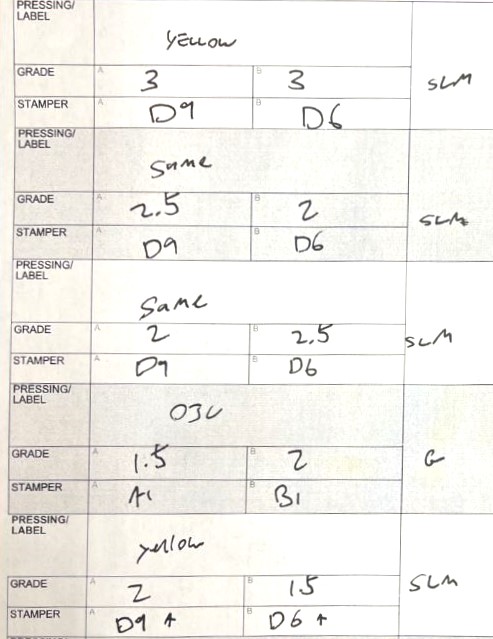
How Can the Best Stampers Also Be the Worst Stampers?

Hot Stamper Pressings of Contemporary Jazz Available Now

Recently we conducted a shootout for a superb Contemporary recording, one that we had auditioned a couple of times before and one which we felt we knew the music and the quality of the sound well.

It’s not the record you see pictured.

For now we’re keeping the title a mystery, consistent with the idea that we give out lots of bad stampers on this blog, but almost never do we give out the good ones.

Why, you ask?

The cost of discovering the right stampers is usually high, can take decades, and is fundamentally at the heart of how we make our money: by finding amazing sounding pressings with stampers we know to be good, cleaning them up, playing them, and offering those that, for whatever mysterious reasons that no one has figured out, including us, tend to have the best sounding grooves.

This time around we kept track of the stamper numbers for all the pressings we played, something we are making a habit of doing these days and using to highlight discoveries in the sound of the records we play.

In this case, we discovered an anomaly we thought we would bring to the audiophile world’s attention: the fact that the stampers for the best souding pressing were also the stampers for the worst sounding pressing, because they were the stampers for all the pressings.

One copy earned our White Hot Stamper grade, our highest, for its clearly superior sound, and another one earned our lowest Hot Stamper grade of 1.5+. The rest were quite good, in between those two, which is a very common outcome for most of our shootouts: lots of records in the middle of the distribution, some winners at the top and some losers at the bottom.

(more…)

Heretics and True Believers Clash on the Battlefield in Cyberspace, Part Two

More Letters from Customers and Critics Alike

Part one of this conversation can be found here. [Some bolding and such added.]

Hi, Tom,

Are there other great sounding stereos out there? I’m sure there are. Just as there are great sounding records still to be found out in the wild.

But, the stereo I’ve built by rapidly copying what you did painstakingly over decades is giving me better sound from recorded music than I’ve encountered almost anywhere else, including on far more expensive systems. It’s also more honest, direct, and revealing than stereos usually are.

First, I trusted you on records, and you were right. Then, I trusted you on stereos, and you were right again.

As for how people can find great sounding records. I expressed three pieces of the advice I’ve come to realize are true. All controversial enough, apparently, to get a thread shut down.

First, they can buy records from you.

If they don’t yield sound commensurate with price, just return the darned thing. A couple Better Records a year will probably build somebody a better-sounding vinyl collection than the same amount of money dumped in a shop or on Discogs. Tom, I have never encountered a disappointed *customer* of yours.

Second, don’t ascribe to hard and fast rules.

No, it is not true that all records from a given pressing house or mastering engineer are the definitive versions. There are better-sounding copies sitting in bins at used shops. Not all of them, but some, and they are often cheaper. This is a reality that is hard to find online, because it turns out it is hard to state it online.

Third, if you want to find great-sounding records on your own, plan to buy lots of copies of a particular title.

Avoid original pressings – those are not guaranteed to sound better, and they come at a premium.

[I take issue with this idea, see below.]

Play them all, pick your favorite (one, in my experience, is likely to stand out). Then, hope that your local shop takes returns, or that you are able to unload them on Discogs. Might somebody save themselves some money doing it this way, compared to buying a record from you? Maybe? But then, if they decide to “check their work” by buying a record from you, yours is going to sound better.

When I offered this advice on that forum, I got told I was wrong. Instead, those guys have a formula that works for them. I’d say it’s a formula for ending up with Pretty Good Records. First, you search the forums to find the deadwax for a copy that somebody has commented is THE one to have.

They usually don’t mention what type of equipment they have, or how many other copies of that record they’ve heard, or even what in particular about it sounds good. For me, going after pressings recommended online has never been a reliable way to find a great-sounding record.

And, when I get a Better Record, I check to see if it is a stamper that’s already known to sound good. Almost always, there’s no mention of it anywhere. Second piece of accepted wisdom on the forums: NM always sounds better than VG+. Here’s something I said that seemed to really piss people off: Good-sounding records got played a lot. Somebody really took me to task for suggesting that I had purchased from you a copy of a record I love that would probably grade VG+ based on the appearance of its surfaces, but that was delivering sound so good, I had zero desire to hunt for another copy, even the same deadwax in NM condition. Sure, I’d buy it if I ever came across it, but I would not expect it to sound better than the copy I already had. So, even among a group of seasoned vinyl listeners that understand certain truths they still seem to live by certain principles in collecting records that simply do not work consistently.

I’ve spent a lot of time blaming myself for the money and time I wasted on pretty-good records, played on a pretty-good stereo. I trusted the magazines and the salesmen. I don’t think they were being disingenuous; I just think they didn’t know any better. I trusted the splashy websites, the satisfied customer reviews, the youtube gushes, and the forum posters. This many people can’t all be wrong. They must know what they are talking about. And, I wasn’t hearing any other information.

Now I know why I wasn’t hearing any countervailing views – they get deleted. For somebody who wants to attain better sound, there’s your shop, and more importantly, your blog. I know the vast majority of people who come across either of these will dismiss them outright. Their loss. A few will return, and be better off for it – even, financially.

The most painful accusation I encountered on the forum was that I am doing people a disservice by leading them to spend their money and not get anything in return. It hurt to read that. Of course, I would never want to do that. To anybody who becomes your customer because I said they should give it a try, I’d give them the same advice you gave me early on: Take it slow. Once you discover how good these records can sound, there’s a real urge to start snapping them up. Instead, just take it slow. Enjoy each one. Better Records isn’t going anywhere.

(more…)
This Is Why We Love Rudy Van Gelder in the 60s

Hot Stamper Pressings of Rudy Van Gelder Recordings Available Now

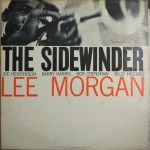
The top copy from our most recent shootout went for $1500 and, in our opinion, was worth every penny of that amount, being one of the best sounding jazz records we have ever played

It probably took us ten years to get this shootout going, but the best copies we played were so impressive that they made all the time and money it took to pull it off worth the effort — what a record!


The notes on side one read: 

Track Two

  • Fingered plucky bass
  • Rich and spacious
  • Extending (high and low)
  • Horns are rich and breathy

Track One

  • Fat, rich bass and drums
  • So big and lively and no hardness

The notes on side two read: 

(more…)

We Were So Sure We Had The Pink Floyd’s Ticket, But We Were Wrong

Hot Stamper Pressings of the Music of Pink Floyd Available Now

In a reply to some questions Robert Brook asked about Revolver and Sticky Fingers — see here and here — I made mention of the advice, found on Hoffman’s forum and other sites, that is commonly offered regarding the superiority of specific pressings of albums discussed by those who post there and purport to know well.

This often-arcane advice includes labels, pressing plants, stamper numbers, specific mastering credits, etc. The practice is so common that audiophiles “in the know” are now expected to share their findings with other members for the benefit of all.

That’s the background for my comment below. I was explaining where I stood with respect to the recommendations I often read, in my typically undiplomatic language:

We do not respect the opinions of those who appear to have little understanding of records and their pressing variations. The faulty conclusions they invariably arrrive at lack evidentiary support because they don’t know how to do what we do and can’t be bothered to learn.

Regardless of what these folks believe, by now we’ve heard dozens and dozens of amazing originals [referring to Sticky Fingers]. This made us extremely skeptical that any other mastering house could compete with the right original’s sound. It was just too good.

Yes, we were skeptical, and it has turned out, at least so far, that we were right to be skeptical. Nothing has come close to the best early domestic pressings of Sticky Fingers, the ones that win shootouts and that we have long known to be the best pressings of the album.

But sometimes we are skeptical and we turn out to be wrong.

Specifically we were wrong about some albums by Pink Floyd (but not the title you see pictured). I wrote:

We’re not always correct about these things. We were dead wrong about a couple of famous Pink Floyd albums from the “wrong” country that we’d heard good things about.

They have been winning shootouts for many years now.

Our judgments concerning the best sounding pressings for any given title must be seen in the light of any information arrived at scientifically: it’s considered provisionally true. (We may not be the smartest guys in the room, but we’re sure as hell smart enough to know that much.)

I felt it was important to point all this out. The impression I did not want to leave in the reader’s mind is that we know all the answers.

(more…)

The Talking Heads Were Hard to Beat in 77

Hot Stamper Pressings of the Music of Talking Heads Available Now

For some recent listings for the album, we noted:

If I were to compile a list of my favorite rock and pop albums from 1977, this album would definitely be on it.

In the four years since we last played it, we’d forgotten how amazing this album can sound on the best pressings. I’d even say that it’s a sonic step up from Fear Of Music and Remain In Light, probably tying with More Songs About Buildings and Food and Little Creatures for top Talking Heads honors.

That seems to have undersold just how good this album can sound on the right pressing. Having just done the shootout in our new custom-built studio, we could not have been more impressed with the recording, as you can see from the notes for the winning copy shown below.

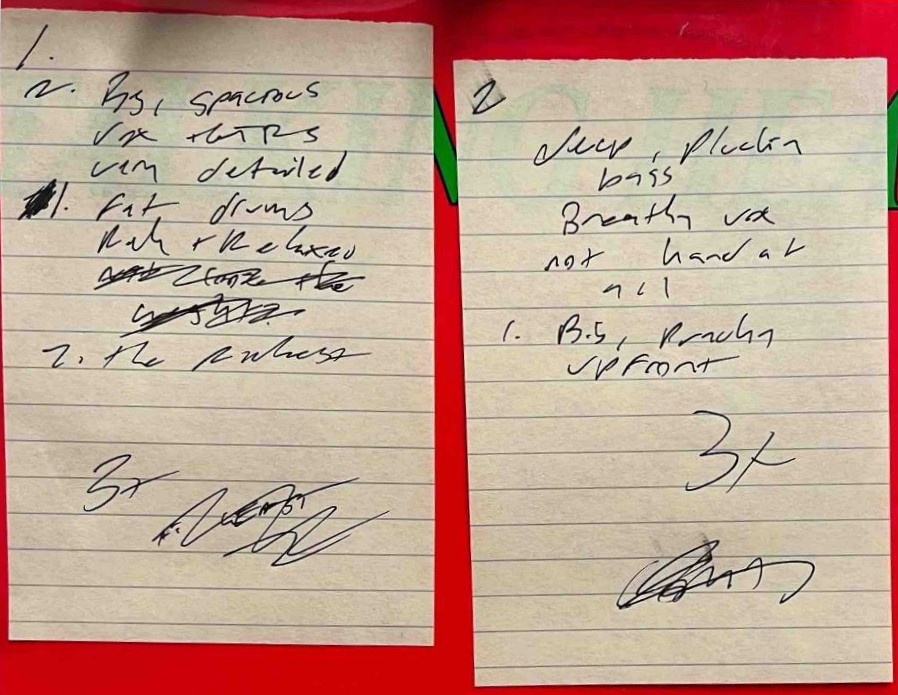
Side One

Here are our notes for side one, for those who have trouble reading our scratch. We started off with track two.

Track two

  • Big, spacious vocals and guitars
  • Very detailed

Track one

  • Fat drums
  • Rich and relaxed

The initial grade was one we often give out, “at least 2.” We knew the sound was great, but how great? We would need to play more copies to see how this one compares to the others that seem to be doing everything right, everything being the operative word. What is everything, and how right can it get?

Yes, that’s right, we needed to answer the most important question in all of audio: Compared to what?

We typically take the two or three best side ones — we call them “contenders” — and listen to them again to see which of them has the real Shootout Winning magic in its grooves, the one that does everything right and then some.

(more…)