Performers

Brahms / Piano Concerto No. 2 / Cliburn / Reiner

More of the Music of Johannes Brahms
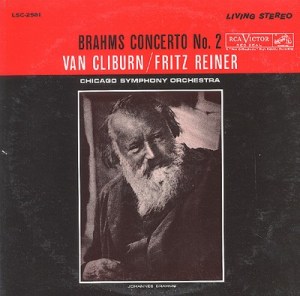
  • Van Cliburn’s exceptional performance of Brahm’s Piano Concerto No. 2, here with solid Double Plus (A++) Living Stereo sound or close to it throughout this early Shaded Dog pressing
  • It’s also fairly quiet at Mint Minus Minus, a grade that even our most well-cared-for vintage classical titles have trouble playing at
  • This side one is big, full-bodied, clean and clear, with a wonderfully present and solid piano, and plenty of 3D space around it, and side two is not far behind in all those areas
  • One of the best of the Cliburn recordings – most are not very good, the worst of them being LSC 2252 and the best of them being, probably, LSC 2507 with this one right up there with it
  • We’ve liked LSC 2296 with Rubinstein and Krips in the past, but after doing this shootout we have to say that Cliburn and Reiner set a higher standard for a recording of the work
  • On the right shaded dog pressing, LSC 2581 is yet another Must Own orchestral recording from 1962

Our main listening guy made some notes about the sound of the best pressings he heard. Here is what he wrote:

This LP might be tough for some customers to reproduce. The big peak at the end of track one on side one can have some tube/compressor distortion. Only the fullest, richest copies can properly reproduce this section without the piano and low end getting lost.

(more…)

Schubert – The Trout Quintet / Curzon / Vienna Octet

More of the Music of Franz Schubert

  • Boasting two seriously good Double Plus (A++) sides, this vintage Ace of Diamonds pressing is doing just about everything right
  • It’s simply bigger, more transparent, less distorted, more three-dimensional and more REAL than most of what we played – this is music you cannot help but be drawn into
  • The 1958 master tape has been transferred brilliantly using “modern” cutting equipment (from 1968, not the low-rez junk they’re forced to make do with these days), giving you, the listener, sound and surfaces that are hard to fault
  • When you hear how good this record sounds, you may have a hard time believing that it’s a budget reissue from 1968, but that’s precisely what it is.
  • Some budget reissues are so good, they can actually win shootouts

The cello does not have that “fat” sound some audiophiles seem to like – Decca knew more about recording chamber music in 1958 than practically all the audiophile labels that would come along later, the ones that managed to make a mess of the very idea of audiophile quality sound (you know who I mean)

The piano and the strings have that Golden Age Tubey Magical sound we love. It’s been years since I’ve had the opportunity to play this record; most copies are just too beat up to bother with, so I was glad to find a number in minty condition.

Now what I hear in this recording is sound that is absolutely free from any top end boost, much the way live music is. There’s plenty of tape hiss and air; the highs aren’t rolled off, they’re just not boosted the way they often are in a recording.

A few years back I had a chance to see a piano trio perform locally; they even played a piece by Schubert. The one thing I noticed immediately during their live performance was how smooth and natural the top end was. I was no more than ten feet from the performers in a fairly reverberant room, and yet the sound I heard was the opposite of what passes in some circles for Hi-Fidelity.

This is the opposite of those echo-drenched recordings that some audiophiles seem to like, with microphones placed twenty feet away from the performers so that they are awash in “ambience.” If you know anything about us, you know that this is not our sound.

I have never heard live music sound like that and that should settle the question. It does in my mind anyway. The Chesky label (just to choose one awful audiophile label to pick on) is a joke and always will be. How anyone buys into that phony sound is beyond me, but any audio show will prove to you that there is no shortage of audiophiles who love the Chesky “sound,” and probably never will be.

(more…)

Mozart – Violin Concertos / Milstein

More of the Music of Mozart

  • Milstein’s virtuoso performance of Mozart’s violin concertos, here with an INCREDIBLE Shootout Winning Triple Plus (A+++) side one mated to a solid Double Plus (A++) side two on this vintage Blue Angel Stereo pressing
  • This pressing has all the qualities that make analog so involving and pleasurable – the warmth, the richness, the naturalness, and above all the realism
  • The sound here has the power to transport you completely, with solid imaging and a real sense of space, qualities that allow us to forget we are sitting comfortably in our listening rooms and not in the concert hall
  • Milstein’s violin is immediate, real and lively here – you are in the presence of greatness with this recording

(more…)

Is the 1s Pressing Always the Best on the Brahms Violin Concerto with Heifetz?

Hot Stamper Pressings that Sound Their Best on the Right Reissue

This early Shaded Dog pressing of the 1958 recording has surprisingly good sound on side two. On the second side the sound opens up and is very sweet, with the violin becoming much more present and clear.

The whole of side two is transparent with an extended top. Usually the earliest Living Stereo titles suffer from a lack of top end extension, but not this one.

Maybe the 1s pressing is also that way. For some reason audiophiles tend to think that the earliest cuttings are the best, but that’s just more mistaken audiophile thinking if our experience can serve as any guide, easily refuted if you’ve played hundreds of these Living Stereo pressings and noted which stampers sound the best and which do not.

The 1s pressings do not consistently win our shootouts.

About half the time, maybe less would be my guess.

Of course, to avoid being biased, the person listening to the record doesn’t know the stamper numbers, and that may help explain why the 1s loses so often.

If you are interested in finding the best sounding pressings, you have to approach the problem scientifically, and that means running record experiments.

Practically everything you read on this blog we learned through experimentation.

When we experimented with the Classic Records pressing of LSC 1903, we were none too pleased with what we heard. Our review is reproduced below.

(more…)

What Can You Learn from a Mercury Shootout Like This One?

Hot Stamper Pressings of Mercury Classical Recordings Available Now

The short answer is that you can’t learn much from this shootout, because we’re not telling you which title the stampers you see below belong to.

Be that as it may, in the case of this mystery title the conventional wisdom turns out to be correct — the earlier numbered pressings did better than the later numbered pressings, and the early labels did better than the later labels.

That happens a lot, and we are happy to admit that it does. Why? Because the experimental evidence — the data — say that is what happened.

As usual for posts in which the stamper sheet from a shootout is reproduced in its entirety, the stamper numbers shown below will belong to a different album than the one you see pictured.

These can be found under the heading of Mystery Stampers. Most of these posts will illustrate something to be learned from a Hot Stamper shootout, but because the information reveals the shootout winning stampers, the actual title of the record is rarely revealed.

Much more useful stamper information can be found using this link, which includes plenty of stamper numbers for specific titles that are best avoided by audiophiles looking for top quality sound. In addition, we post the winning and losing stampers for some titles that are an unreliable guide to good sound. Unreliable stampers are also quite common.

(more…)

Grieg / Piano Concerto – Speakers Corner

Hot Stamper Pressings of the Music of Edvard Grieg Available Now

We used to think this was one of the better Speakers Corner Deccas.

We haven’t played a copy of this record in years, but back in the day we liked it, so let’s call it a “B” with the caveat that the older the review, the more likely we are to have changed our minds. Not sure if we would still agree with what we wrote back in the ’90s when this record came out, but here it is anyway.


One of the best Deccas — superb sound and music that belongs in your life!

This performance also includes Franck’s “Variations Symphoniques” and Litolff”s “Scherzo from Concerto Symphonique, Op. 102”.


Our two favorite recordings of the Grieg Piano Concerto are the Decca with Lupu and Previn from 1973 and Rubinstein’s for RCA in 1962.

This Speakers Corner title may be good, but our Hot Stamper classical and orchestral pressings will be dramatically more transparent, open, clear and just plain REAL sounding, because these are all the areas in which Heavy Vinyl pressings tend to fall short in our experience.  For more on that subject, see here and here.

(more…)

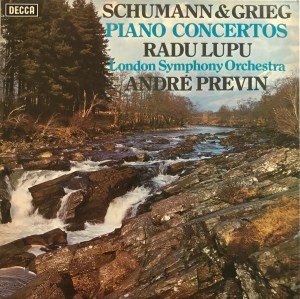
Schumann and Grieg Piano Concertos / Lupu / Previn

More of the Music of Edvard Grieg

  • A superb UK Decca pressing of this wonderful classical masterpiece with Double Plus (A++) sound from start to finish
  • Both sides boast full brass and an especially clear, solid, present piano, one with practically no trace of vintage analog tube smear
  • Dynamic, huge, lively, transparent and natural – with a record this good, your ability to suspend disbelief will require practically no effort at all
  • Back in the days when the TAS Super Disc List meant something, this record was on it and deservedly so
  • The London pressings of the same album can be very good in their own right, but they don’t win shootouts – only the best of these Decca pressings do, a subject we discuss in some of these listings
  • Our two favorite recordings of the Grieg Piano Concerto are this one and Rubinstein’s for RCA in 1962
  • There are about 150 orchestral recordings we think offer the best performances with the highest quality sound. This record is certainly deserving of a place on that list.

(more…)

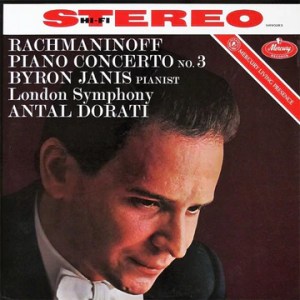
Rachmaninoff – Piano Concerto No. 3 / Janis / Dorati

More of the Music of Sergei Rachmaninoff

  • Outstanding sound for this classic Byron Janis Mercury album, with both TAS-approved sides earning solid Double Plus (A++) grades or BETTER
  • The piano is huge and weighty, the strings rich and highly resolving, and the overall presentation is powerful, balanced, dynamic and exciting like few other piano concerto recordings we have ever had the pleasure to audition
  • Not only is this the consistently best sounding copy we have had to offer in years, but we are happy to report that the vinyl is reasonably quiet for a Mercury stereo pressing of this vintage
  • If you have the system to play a record as big and powerful as this Mercury from 1961, we cannot recommend it any more highly
  • There are about 175 orchestral recordings we’ve awarded the honor of offering the best performances with the highest quality sound, and this record certainly deserve a place on that list.
  • This is one of the two Must Own Mercury piano concerto recordings, the other being SR 90300, which often suffers from inner groove distortion — not to worry, as a matter of grading policy, we check the inner grooves of every record we offer on the site

Not only is the sound amazing — yes, it’s on the TAS Super Disc list, and for good reason: a copy as good as this one really is a Super Disc — but this copy has another vitally important characteristic that most copies of the record do not: no Inner Groove Distortion.

We can’t begin to count the times we have had to return (or toss) a copy of one of these famous Byron Janis records because the piano breakup for the last inch or so of the record was just unbearable. That’s a sound no serious listener could possibly tolerate, yet I would venture to guess that a great many Mercury piano concerto recordings suffer from this kind of groove damage.

Enough about those typically bad copies, let’s talk about how good this one is.

This is an early Mercury Plum label stereo pressing of one of Byron Janis’s most famous performances (along with the Rachmaninoff 1st; it’s also a longtime member of the TAS super disc list).

The sound is rich and natural, with lovely transparency and virtually no smear to the strings, horns or piano. What an amazing recording! What an amazing piece of music.

The recording is explosively dynamic and on this copy, the sound was positively jumping out of the speakers. In addition, the brass and strings are full-bodied, with practically no stridency, an unusual feat the Mercury engineers seem to have accomplished while in Russia.

Big, rich sound can sometimes present problems for piano recordings. You want to hear the percussive qualities of the instrument, but few copies pull off that trick without sounding thin. This one showed us a piano that was both clear and full-bodied.

With huge amounts of hall space, weight and energy, this is Demo Disco quality sound by any standard. Once the needle has dropped you will quickly forget about the sound (and all the money you paid to get it) and simply find yourself in the presence of some of the greatest musicians of their generation, captured on the greatest analog recordings of all time.

(more…)

Better Front Ends Actually Reduce Surface Noise

Hot Stamper Pressings of the Music of Tchaikovsky Available Now

This record has no marks that play appreciably, but that RCA vinyl is up to its old tricks again.

Mint Minus Minus with constant light surface noise underneath the music in the quieter sections is the rule. The first half inch of side two is where you will notice it the most.

We are of the opinion that good sound and good music allow you to pretty much ignore surfaces such as these (scratches being another thing entirely of course). 

Better Front Ends

I would make the further point that the better your front end is, the less likely you are to have a problem with vinyl like this, which is the opposite of what many audiophiles perceive to be the case. In other words, some of the cheaper tables and carts seem to make the surface noise more objectionable, not less. (They also tend to collapse completely under the weight of a mighty recordings.)

On the other hand, some pricey cartridges — the Benz line comes to mind — are consistently noisier than those by Dynavector, Lyra and others, in our experience anyway.

Vintage Vinyl

As long as vintage vinyl is the only vinyl with sound worth pursuing, as is surely the case these days and will be the case for the forseeable future — we have ample evidence to support this statement for this who are interested in that lamentable reality — a quiet cartridge and a very high quality arm are essential to your being able to recognize good records and reproduce them properly.

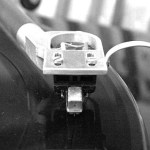
Our Dynavector 17Dx gets down deep into the groove, where vintage used records have the least number of problems created by their previous owners.

And we run it nude for even better sound. I discovered this possibility more than a decade ago — so long ago that I cannot remember where I came by the information — but the sound was immediately so much better that all questions were answered moments after dropping the needle.

Not a lot of things are obvious, but that sure was.

(more…)

Don’t Waste Your Money on this Living Stereo from 1962

Hot Stamper Pressings of Living Stereo Recordings Available Now

The sound of the copies we’ve played of LSC 2605, Highlights from Rubinstein at Carnegie Hall, released by RCA in 1962, have never impressed us sonically.

We didn’t listen to the music critically because our primary purpose here at Better Records is to evaluate recordings for their sound quality first (hence the name of our business), and if the sound isn’t good enough, we have to move on to titles with better sound that our customers might find more to their liking.

1962 was surely one of the truly glorious years for analog recordings, but the sound of the most recent copy of the album we played may have been rich, but unfortunately is was also opaque.

We would consider the sound no better than passable, and therefore it’s not a title we would consider offering to our customers.

Unless…

Unless you somehow managed to come across a copy noticeably better than the ones we’ve played over the last twenty or more years — a possibility that, although unlikely, cannot be ruled out — we would advise those interested in a top quality piano recital recording to look elsewhere.

Leave this RCA to the people who love collecting records. It’s perfect for record collectors — it’s from the right company, made in the right era, and it has the right original label — but it’s really not suitable for those of us who love playing good sounding records. It will of course sit happily on a shelf, to be pulled out and shown to other like-minded souls, but it is unlikely to spend much time spinning on a turntable platter with a needle tracing its grooves.

Some audiophiles are of the opinion that vintage Living Stereo recordings on the original Shaded Dog label can do no wrong, but we have never subscribed to that view. We’ve played too many that did plenty wrong. Maybe one out of three are good enough for the audiophile who wants to experience music reproduced at a highest levels of sound quality.

There are quite a number of records that we’ve run into over the years with more shortcomings than this one. Here are some of them, a very small fraction of the titles we’ve played, broken down by label.

  • London/Decca records with weak sound or performances
  • Mercury records with weak sound or performances
  • RCA records with weak sound or performances

(more…)