Mobile Fidelity

Labels with shortcomings – Mobile Fidelity

Parallel Lines – MoFi Reviewed

Hot Stamper Pressings of the Music of Blondie Available Now

I became a giant fan of this album the moment I heard it, but I always felt that the sound of my old original left something to be desired. So many copies are thick and lifeless; the music wants to cook but the sound seems to be holding it back.

The record I had in the ’70s was probably not that good anyway. Fortunately, it only took us another 35+ years to figure out how to find the best pressings.

And like an idiot I’m sure I had traded my original domestic pressing in for the MoFi when it came out in the early ’80s, the kind of dumbass audiophile move I discuss in the commentary What Kind of Fool Was I?

As previously noted, the MoFi, one of those Jack Hunt turgid muckfests (check out City to City for the ultimate in murky MoFi sound), is incapable of conveying anything resembling the kind of clean, clear, oh-so-radio-friendly pop rock sound that Mike Chapman and the band were aiming for.

The recording has copious amounts of Analog Richness and Fullness to start with. Adding more is not an improvement; in fact it’s positively ruinous.

Is it the worst version of the album ever made?

(more…)

One of the Great Audio Disasters, Courtesy of Mobile Fidelity

More of the Music of Steely Dan

We recently amended this listing. Scroll down to see what we have to say about it in 2023.

More MoFi bashing, but boy does this MoFi deserve it. In our estimation, it is tied with the Cisco 180g pressing (2007) for the worst version ever.

I remember back in 1977 when Aja was released. I was a big Steely Dan fan by then, having been turned on to their albums with Countdown to Ecstasy in 73. With each new Dan record I became more impressed with their music, from Pretzel Logic to Katy Lied to Royal Scam and finally on to this, their commercial breakthrough.

At the time I thought the album sounded pretty good on my plain old ABC original.

Then I got a copy of the Mobile Fidelity pressing and I thought it sounded much, much better.

Side two of the MoFi had bass that was only hinted at on my domestic copy. Wow! Listen to all that bass!

Sometime in the 80s, I realized that the MoFi was hideously phony sounding, and that all the bass on side two was boosted far out of proportion to what must be (I’m guessing) on the master tape.

If I May

How much bass is on the master tape is of course of no concern to anyone not mastering the record. The bass has to be right on the record, not the tape.

The song Home At Last has at least an extra three or four DBs added around 50 cycles. It’s ridiculous.

And that’s just the bottom end; the highs are every bit as wrong.

(more…)

Ridiculously Phony and Compressed Sound – The White Album on MoFi

An audiophile hall of shame pressing and another MoFi LP reviewed and found seriously wanting. The phony sound here is perfectly suited to the stone age stereos of the past. I should know. I had a stereo like that back in 1982 when this record came out, and I thought it sounded great.

The last time I played a copy of the MoFi, I could not believe how ridiculously bright, phony and compressed it was.

As sibilant as any Beatles record they ever did. Cry Baby Cry spits like crazy!

And to think I used to like their version when it came out back in the 80s.

A good example: on Yer Blues, the MFSL pressing positively wreaks havoc with all the added bass and top end The Beatles put on this track. The MoFi version is already too bright, and has sloppy bass to start with, so the result on this track is way too much BAD bass and way too much BAD spitty 10k-boosted treble. The MoFi is nothing like the good imports, which have way too much GOOD bass and treble.

Yer Blues ROCKS! Listen to the big jam at the end of the song, where John’s vocal mic is turned off but his performance is still caught by a room or overheard mic. They obviously did this on purpose, killing his vocal track so that the “leaked” vocal could be heard. (We have since learned from Ken Scott that it was mistake, but one they liked and left in.)

Those crazy Beatles! It’s more than just a cool “effect.” It actually seems to kick the energy and power of the song up a notch. It’s clearly an accident, but an accident that works. I rather doubt George Martin approved. That kind of “throw the rule book out” approach is what makes Beatles recordings so fascinating, and The White Album the most fascinating of them all.

The EQ for this song is also a good example of something The Beatles were experimenting with, as detailed in their recording sessions and later interviews with the engineers. They were pushing the boundaries of normal EQ, of how much bass and treble a track could have. This track has seriously boosted bass, way too much, but somehow it works.
(more…)

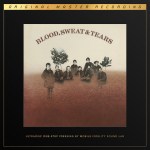
Robert Brook Hears Something Funny on the MoFi One-Step of B,S&T

Robert Brook has a blog which he calls

A GUIDE FOR THE DEDICATED ANALOG AUDIOPHILE

Below is a link to a review Robert Brook has just written for the MoFi One-Step pressing of one of our favorite albums of all time, BS&T’s second album.

I do not doubt for a minute that it’s every bit as awful as Robert says it is. Probably worse! I made some rather extensive notes in the comments at the end of his review you may find of interest.

Blood, Sweat & Tears: How Do MoFi’s 2 Disc 45 rpm’s STACK UP?

We’ve written quite a bit about the album, played copies of it by the score as a matter of fact, and you can find plenty of our reviews and commentaries for the album on this very blog.

Based on everything I am reading these days from Robert Brook, he has a good stereo, two working ears, and knows plenty about records and what they are supposed to sound like.

(more…)

Teaser and the Firecat and the Mobile Fidelity Hall of Shame

Hot Stamper Pressings of the Music of Cat Stevens Available Now

Our Mobile Fidelity hall of shame listings totaled more than 40 back in 2010, and we noted at the time that the real number would be at least double that and probably more like triple that figure if we took the time to make listings for all the bad records this label has released, It stands at 50 or so as of 2022.


UPDATE 2026

As of 2026 the number is 58, and we have a couple of real dogs waiting in the wings to list.

Since I’ve retired, the crew has been playing many of the newer Heavy Vinyl releases from many different labels (including Mobile Fidelity of course) and finding the sound is every bit as bad or worse these days since this commentary was written.


In case you don’t already know, one of the worst sounding, if not THE worst sounding pressing of all time, of our beloved Teaser and the Firecat is the Mobile Fidelity Anadisq pressing that came out in the ’90s.

If you own that record, you really owe it to yourself to pull it out and play it. It’s just a mess and it should sound like a mess, whether you have anything to compare it to or not.

If I were in charge of the TAS Super Disc List, I would strike this record from it in a heartbeat.

Here are some others that we do not think qualify as Super Discs.

We offer a number of Hot Stamper pressings of TAS List titles that actually have audiophile sound quality, guaranteed. And if for some reason you disagree with us about how good they sound, we will be happy to give you your money back.

American Beauty – An Honest-to-Goodness Killer MoFi LP

Hot Stamper Pressings of the Music of The Grateful Dead Available Now

Sonic Grade: B+

This is a Mobile Fidelity LP with SURPRISINGLY GOOD SOUND. The transparency and presence in the midrange is outstanding for a MoFi. This copy does not have the usual midrange suckout that ruins so many of their records.

The bass actually sounds mostly in control on this copy — there’s much less of the typically bloated bass caused by Half-Speed mastering to be found here.

This is the best sounding Mobile Fidelity American Beauty we have ever heard. It’s not perfect by any means, but it’s hugely better than we expected.

Any original Green Label domestic pressing is sure to be better, but sure to be noisier too, so if you must have quiet vinyl, you can do a lot worse than this MoFi.

Which means it belongs on our list of the best sounding Mobile Fidelity records we’ve ever played.

MoFi Misses The Mark by a M I L E with Kind Of Blue

Hot Stamper Pressings of Miles’s Albums Available Now

One of our good customers, Robert Brook, writes a blog which he calls

A GUIDE FOR THE DEDICATED ANALOG AUDIOPHILE

Below is a link to the review he wrote recently for one of our favorite records, Kind of Blue. (To be clear, we love the album, just not the MoFi pressing of it.)

MoFi Misses The Mark by a M I L E w/ Kind Of Blue

One of our other good customers had this to say about the Mobile Fidelity pressing:

Last night I listened to my 2015 Mobile Fidelity 45 RPM pressing.

I couldn’t get through the first cut.

Closed, muffled and flat as a pancake. No life or energy whatsoever.

I agreed and added my two cents:

My notes for their pressing read:

  • Thick, dark, flat.
  • Lacks air, space, presence.
  • Not a bad sound but it’s not right.

Later I added:

Having listened to the record more extensively, I see now I was being much too kind.

A longer review will be coming soon I hope. I think I may know why some audiophiles like the sound of this record, and will be exploring that notion in a future commentary.

The last line about the MoFi not having “a bad sound but it’s not right” reminded me of of the mistakes I made in my original review of Santana’s first album on MoFi: we owe you an apology

Kind of Blue is an album we admit to being obsessed with — just look at the number of commentaries we’ve written about it.

(more…)

Dire Straits Gets the Mobile Fidelity Treatment (Just Updated)

More of the Music of Dire Straits

Geoff Edgers watched me and my lovely assistant, Sunshine, do a lengthy shootout for Dire Straits first album, but licensing problems prevented the Washington Post from using the footage. You can still see Sunshine in the video, and the yellow Phonogram label you see at one point is attached to one of the Dire Straits pressings we played that day.

Toward the end of the shootout for the first side, we put on the Mobile Fidelity pressing, and, interrupted from time to time by the sound of howling and gnashing of teeth, I pointed out for Geoff’s edification everything that was wrong with their pressing.

This took some time.

I will be writing more about their dismal effort one of these days, but for now let me leave you with this thought.

When you read the comments section for the article, it seems that quite a number of those discussing my lifelong interest in the world of audio and records go out of their way to state the obvious: that folks my age cannot hear high frequencies.

This is true, and I have never denied it. Case in point: After playing the MoFi pressing of Dire Straits, Sunshine, sitting at the turntable, asked what all that weirdly high-pitched, swirling, shusshing sound was. It wasn’t on the Phonogram pressings she had played. Only the MoFi.

I looked at her and asked “What shusshing sound?”

Sunshine had clearly heard it, Geoff may have, I don’t remember, but I had no idea there was anything untoward happening way up in that area of the frequency range. [1]

In my defense, not that I need one, I had no trouble telling how bad that Mobile Fidelity pressing was, or which of the five Dire Straits pressings sounded the best, or what each of them were doing, good, bad and otherwise.

What I was noting and explaining about the sound of these identical-looking UK pressings, their strengths and weaknesses, was clear enough for everyone in the room to hear over the course of the hour or so we spent doing it.

My goal was to walk Geoff through the steps of the shootout, and as far as I could tell he was with me all the way.

Those commenting about high frequency hearing loss are engaging in the fallacy of “begging the question,” assuming what they are trying to prove instead of proving it, which I suppose is the kind of thing you can expect to read in the comments left by those with a great deal of regard for their own opinions but little for the evidence required to support them. More here.


Robert Brook has a blog which he calls

A GUIDE FOR THE DEDICATED ANALOG AUDIOPHILE

Below you will find his review of a record I too know a fair bit about, the first Dire Straits album on Mobile Fidelity. I hope to write my review of the Mobile Fidelity pressing soon.

Ugh! Mobile Fidelity’s Remaster of DIRE STRAITS

As of 2015, this label may have entered a new and even more disgraceful era, but considering how bad their records have been from the very start — something that should be obvious to any audiophile with a high quality playback system, the kind of system that should have no difficulty exposing the manifold shortcomings of their remastered pressings — how much lower can they possibly fall?

Only time will tell.


[1.] Did Mobile Fidelity’s engineers hear this high-frequency hash? Will any audiophile come forward to expose this problem? The answers to both questions are very likely to be no.

The Doors’ Debut – MoFi Reviewed

More of the Music of The Doors

Sonic Grade: D 

If anyone still thinks that this pressing is anything but a bad joke played on the audiophile public — so sucked out in the midrange, bass shy and compressed to death — that person still has a way to go in this hobby.

A very long way.

You can hear that something is off with this pressing from another room. The sound is bad enough to have earned a place in our Mobile Fidelity Hall of Shame.

But wait just a gosh darn minute.

I liked the MoFi just fine when it came out. I guess I had a way to go in this hobby too.

That was back in the early ’80s. I like to think I’ve learned a thing or two in the last forty years.

Some reviewers and a great many audiophiles may be stuck in the 80s, but I sure as hell don’t think I am one of them.

(more…)

The Nightfly on MoFi – More of the Same Old Same Old

Hot Stamper Pressings of the Music of Donald Fagen Available Now

More MoFi phony EQ on the top right around 10k and sloppy bass.

You should be able to do a whole lot better and you sure won’t have to work very hard to do it.

Robert Ludwig is the man who knows how to cut this album, not Stan Ricker.

The properly pressed, properly cleaned Robert Ludwig-mastered copies are right in a way that the typical Half-Speed mastered or Heavy Vinyl pressing rarely is. The more critically one listens, the more obvious this distinction becomes.

The real thing just can’t be beat, and you can be pretty sure that the real thing is an old record.

If you are buying these audiophile pressings, take the advice of some of our customers and stop throwing your money away on Heavy Vinyl and Half-Speed mastered LPs.

(more…)