Japanese Vinyl

Getz Au Go Go – Live and Learn

Hot Stamper Pressings of Bossa Nova Albums Available Now

A classic case of We Was Wrong.

Many years ago we had written these silly lines in a review:

Of course, you would never know this is a good recording by playing the average domestic copy. This Japanese LP is one of the few pressings that can show you that this wonderful smoky night club jazz LP really can have Demo Disc sound.

Ridiculous, right? Well, at the time we believed it. Now our understanding is quite a bit more sophisticated, in the sense that the Japanese pressing is clearly better than many originals, but certainly not all of them.

More importantly, there are amazing sounding domestic reissues of the album that we’ve auditioned over the last ten years or so that really blew our minds and helped to set an even higher standard for the sound of Getz Au Go Go.

Our old story:

Way back in 2005 I discussed this very subject when listing a sealed copy:

There are pressing variations for this title on Japanese vinyl, and there’s no way to know what this one sounds like but all of them are better than any other pressing I know of. As I played the open copy we have listed on the site (1/12/05) I couldn’t help but marvel at the quality of the sound.

These days we would crack open a sealed one, clean it up and shoot it out with any others we could lay our hands on, because finding a copy with sound like this is a positive THRILL.

I’m no fan of Japanese pressings as readers of this Web site know very well, but the Japanese sure got this one right!

The domestic copies of this album are mediocre at best — there’s simply no real top end to be found on any Verve pressing I have ever heard.

The top end is precisely where the magic is! Astrud Gilberto’s breathy voice needs high frequencies to sound breathy.

Gary Burton’s vibes need high frequencies to emerge from the mix, otherwise you can hardly hear them.

And Stan Getz’s sax shouldn’t sound like it’s being played under a blanket.

The only version of this album that allows you to hear all the players right is a Japanese pressing, and then only when you get a good one.

That was our understanding in 2005, after being seriously into audio and records for 30 years, as a professional audiophile record dealer for 18 of them. Clearly we had a lot to learn, and we were on the road to learning it, having embarked on our first real Hot Stamper shootout just the year before. (We had been doing them less formally since the ’90s of course. It was only in 2004 that we were able to do them with the requisite scientific protocols in place.)

In 2005, we simply did not have the cleaning system or the playback system capable of showing us what was wrong with the sound of the Japanese pressing we were so impressed by at the time.

(more…)

Beethoven – Piano Sonata No. 23 (“Appassionata”) / Kamiya – (45 RPM)

More of the music of Ludwig van Beethoven (1770-1827)

More TAS List Super Discs

  • This rare TAS-approved Japanese import LP boasts INSANELY GOOD Shootout Winning Triple Plus (A+++) DEMO DISC sound on both sides
  • You will have a hard time finding a better recording of the piano than this – it’s one of the all time great Direct-to-Discs
  • It’s simply bigger, more transparent, less distorted, more three-dimensional and more REAL than all of the other copies we played
  • All of which adds up to a top quality piano recording in every way
  • A famous resident of the TAS list, this album offers excellent music, performed with feeling, and recorded properly, the best of all possible worlds for us audiophiles
  • A friend of ours tells me that Kamiya plays this piece exactly the way Horowitz did, and that’s probably a good thing – good luck finding a Horowitz recording that sounds like this!

(more…)

Prokofiev / Lt. Kije (45 RPM)

More of the music of Sergei Prokofiev (1891-1953)

More Orchestral Spectacular Recordings

  • With INCREDIBLE Shootout Winning Triple Plus (A+++) sound or close to it on both sides, this Japanese import copy is guaranteed to blow the doors off any other recording of Lt. Kije you’ve heard – and it plays as quietly as any copy ever will (and far better than most)
  • This wonderful LP boasts our favorite performance for this popular 20th century work
  • Big, clear, present and transparent, with a HUGE bottom end, you better believe that this is some Demo Disc sound
  • When the brass is the way it is here – rich and clear, not thin and shrill – you have yourself a top quality DG pressing
  • Marks in the vinyl are sometimes the nature of the beast with these vintage LPs – there simply is no way around them if the superior sound of vintage analog is important to you

*NOTE: There is a mark that plays 18 times (10 moderate, 8 light) at the start of side 1. There is also a mark that plays 7 times at a moderate level at the end of side 2.

This Japanese 45 RPM remastering of our favorite recording of Prokofiev’s wonderful Lt. Kije Suite has DEMONSTRATION QUALITY SOUND. For starters, there are very few records with dynamics comparable to these. Since this is my favorite performance of all time, I can’t recommend the record any more highly.

Once the needle has dropped you will quickly forget about the sound and simply find yourself in the presence of some of the greatest musicians of their generation captured on some of the greatest analog recordings of all time.

This pressing fulfills the promise of the 45 RPM cutting speed so much in vogue these days. We had a pile of these 45s to play through. When we came upon this one halfway through our shootout, it was so big, so clear, so dynamic, so energetic, so extended on the top and bottom, we almost could not believe what we were hearing, especially compared to the others copies we played. There are very few records with dynamics that can compare with these.

The bass drum (drums?) here must be heard to be believed. We know of no Golden Age recording with as believable a presentation of the instrument as this. The drum is clearly and precisely located at the back of the stage. Even better, it’s as huge and powerful and room-filling as it would have been had you attended the session yourself. That’s our idea of hi-fidelity here at Better Records! Since this is my favorite performance of all time, I can’t recommend the record any more highly.

(more…)

Are You a Soundphile? I Used to Be One

More of the music of Joseph Haydn (1732-1809)

About 30 years ago I got hold of a Japanese pressing of Marriner conducting The Toy Symphony and was blown away by the quality of the sound. When listing the record for sale, I raved:

“DEMO QUALITY SOUND! This is the best sounding Toy Symphony you will ever hear!”

Now we know definitely that this is clearly not true.

We did the shootout in 2022 and found out that the best of the original EMI pressings are quite a bit better, a classic case of live and learn.

I believe I had at least one or two UK EMI pressings to play against the Japanese ones, but all the details of how I came to this conclusion — a proto-shootout, carried out long before I knew how to do a real one — are lost to the mists of time.

My stereo was dramatically less revealing back then, I had not learned how to clean records properly, and those two facts, combined with the underdeveloped listening skills that go with them, helped me to arrive at the wrong conclusion.

No, the Japanese pressing, specifically targeted to audiophiles, or “soundphiles” if you like, is not superior to a properly mastered and pressed UK LP.

If you have more than a handful of Japanese pressings in your collection, you can be sure that there is still plenty of room for improvement in your audio system.

(more…)

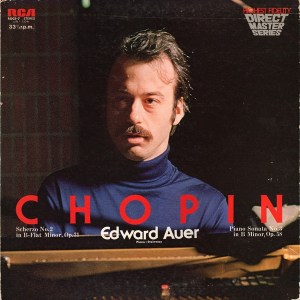
Chopin / Scherzo No. 2 / Auer – Direct to Disc

More of the music of Frederic Chopin (1810-1849)

More Direct-to-Disc Recordings with Hot Stampers

This is an IMMACULATE RCA Direct-to-Disc LP with SUPERB SOUND! This recording is every bit as good as the famous RCA Beethoven Direct Disc and ten times as rare. You will have a very hard time finding a better sounding solo piano recording.  [Or so we thought in 2008.]

The Three at 45 RPM – Our Four Plus Copy from 2013

Hot Stamper Pressings of The Three Available Now

We had six (yes, six!) of these 45 RPM pressings (and five Inner City’s and a couple of Eastwind 33’s — it was a big shootout), and this side one had the most ENERGY of any of them. This is a quality no one seems to be writing about, other than us of course, but what could possibly be more important? On this record, it took the performances of the players to a level beyond all expectations.

Our lengthy commentary entitled outliers and out-of-this-world sound talk about how rare these kinds of pressings are and how to go about finding them.

We no longer give Four Pluses out as a matter of policy, but that doesn’t mean we don’t come across records that deserve them from time to time.

This album checks off a number of important boxes for us here at Better Records:

Folks, you are looking at the BEST SOUNDING RECORD we have ever played here at Better Records, and the good news for you dear reader, whether you’re a true believer, a skeptic, or fall somewhere in-between, is that it can be yours. There was a time when a record like this would go directly into my collection. If I wanted to impress someone, audiophile or otherwise, with the you-are-there illusion that only Big Speakers in a dedicated room playing a LIVE recording can create, this would be the clear choice, possibly the only choice. There is simply nothing like it on vinyl in my experience. (more…)

Guilty – Bab’s Best

More of the Music of Barbra Streisand

This ain’t no zombie audiophile BS, the kind of sleep-inducing, reverb-drenched trash that passes for “female vocals” in bad audio showrooms around the globe. (Paging Diana Krall.) This is Barbra and The Bee Gees at the peak of their Pop Powers. It just doesn’t get any better.

This is THE BEST ALBUM Babs ever made, and you can take that to the bank. It’s also one of the best sounding, if not THE best sounding of her later Monster Pop Productions. Can’t say for sure as I haven’t played all that many. Her first album is a true Demo Disc as well, but that one’s all about the Tubey Magical ’60s Columbia era, the Golden Age of Natural Sound, a world away from Guilty and its layers and layers of tracks. Having said that, there are multi-tracks and then there are multi-tracks.

The engineers and producers here pull it off brilliantly.

If you don’t feel something deep inside when playing this record, open up a vein and let some of that ice water that passes for blood in your system run out.

It’s From WHERE?

This very copy was on the site for a long time. Nobody wanted to buy it even though it was quite cheap, and there’s a good reason nobody wanted to buy it: it’s a Japanese pressing.

That’s right, it’s one of those typically awful Japanese pressings that we criticize endlessly on the site, the purest form of audiophle BS vinyl in the history of the world. We played side one and heard the kind of sound that did not exactly float our boats. (Before it was cleaned it really sounded bad.)

But when we filpped it over we were positively KNOCKED OUT by the sound and decided it had to be part of our shootout. While evaluating the record the listening panel (mostly me) had no idea which pressing was playing. When the Side Two A Triple Plus Gold Star was awarded to this much-maligned Japanese pressing we were FLABBERGASTED.

(more…)

If You Are At All Serious About Audio, You Cop to Your Mistakes

Hot Stamper Pressings of the Music of Steely Dan Available Now

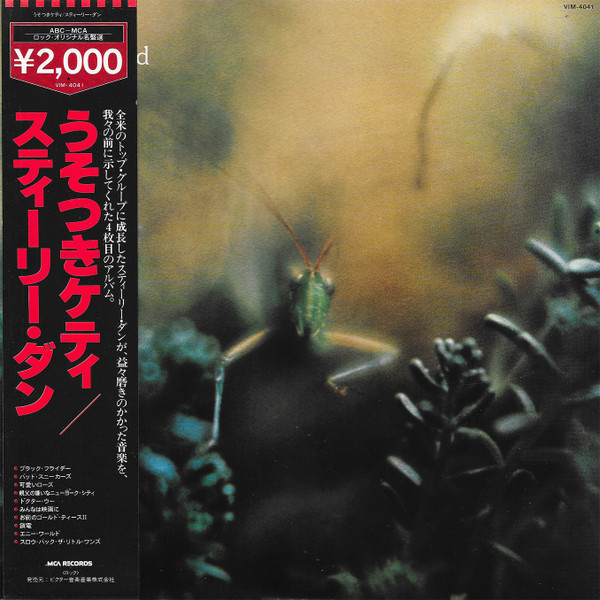
And to think I used to swear by this pressing of Katy Lied — specifically the 2000 Yen reissue, not the 1500 Yen original, which sounded dull, more like the average domestic original I was trying to better.

This one is brighter and cleaner, but at the cost of more distortion, more congestion and, now that I have a better understanding of records and their variations, an incorrect tonal balance. The Japanese tried to fix the smooth sound of the dubbed tape they were given and, in so doing, ruined what was good about the sound. 

Another example of just how wrong one can be — one, in this case, being me circa 1995.

Let’s Talk About Us

We happily admit to our mistakes because we know that all this audio stuff and especially the search for Hot Stampers is a matter of trial and error.

We do the trials; we run the experiments,

That’s the only way to avoid the kinds of errors most audiophiles make in their quest to find the best sounding pressings of their favorite albums,.

Being skeptical of every claim you have not tested for yourself is key to getting good results from this kind of work.

Of course, being human we can’t help but make our share of mistakes. More than our share; we’ve made them by the hundreds.

The difference is that we learn from them. We report the facts to the best of our ability for every shootout we do.

Every record gets a chance to show us what it’s made of, regardless of where it was made, who made it or why they made it. 

If we used to like it and now we don’t, that’s what you will read in our commentary. Our obligation is to only one person: you, the listener. (Even better: you, the customer. Buy something already and see what you have been missing.)

On every shootout we do now, if the notes are more than six months old, we toss them out. They mean nothing. Things have changed, radically, and that’s the way it should be.

With each passing year you should be hearing more of everything on your favorite LPs.

That’s the thrill of this hobby — those silly old records just keep getting better. I wish someone could figure out how to make digital get better. They’ve had forty years and it still leaves me wanting more. You too, I’m guessing.

(more…)

Beethoven’s ‘Appassionata’ – A Superb Direct to Disc Recording

More of the music of Ludwig van Beethoven (1770-1827)

More Direct-to-Disc Recordings

A famous resident of the TAS list, this album offers excellent music, performed with feeling, and recorded properly, the best of all possible worlds for us audiophiles.

A friend of mine tells me that Kamiya plays this piece exactly the way Horowitz did, and that’s probably a good thing. Good luck finding a Horowitz recording that sounds like this. Or plays this quietly.

You will have a hard time finding a better recording of the piano than this. It’s one of the all time great Direct-to-Discs.


Further Reading

For Misty, Stick with the Real Japanese Pressings

More Audiophile Recordings with Audiophile Quality Sound

Hot Stamper Pressings of Jazz Recordings Featuring the Piano Available Now

This is a highly recommended Three Blind Mice LP. We don’t like most Three Blind Mice albums, or jazz played by practically anyone who is not American. (Ever played Jazz at the Pawnshop? If so, did you enjoy your nap?)

But we like the music of Yamamoto well enough to recommend some of it. Midnight Sugar might actually be his most enjoyable album of them all.

The Heavy Vinyl versions are not as good, although the 45 RPM pressing probably comes the closest to the real Japanese pressing we review here.

Anything pressed at RTI is rarely better than second rate and should be avoided if at all possible.

We almost never like records Made In Japan that were not recorded in Japan. There are of course a few exceptions.

My First Time

This was the first Three Blind Mice recording I ever heard, over 20 [now close to 40] years ago. A fellow audiophile who went on to become a true audio guru for me (George Louis) played me this recording to demonstrate his stereo.

It had to be the most dynamic piano recording I had ever heard in my life. 

Yamamoto likes to tinkle the keys very softly, and then really pound them. And the Three Blind Mice engineers were able to capture both the quiet tinkling because of the Japanese vinyl, and the full-on pounding because of the audiophile recording equipment they used. It was an ear-opening experience.

Over the course of the next year or two, I sold off my Fulton Premiers and my Audio Research Electronics, because no matter how hard I tried, I couldn’t get Misty to sound like it did at George’s house.

I realized that it takes better equipment than those companies were making back then to get the sound of that record right, and that put me on, to quote Cat Stevens, ”the road to find out.”

And it wasn’t just the equipment that had to get better, a subject we address in our commentary Revolutionary Changes in Audio. An excerpt:

When I got started in audio in the early- to mid-70s, the following important elements of the modern stereo system did not exist:

  • Stand-alone phono stages.
  • Modern cabling and power cords.
  • Vibration controlling platforms for turntables and equipment.
  • Synchronous Drive Systems for turntable motors.
  • Carbon fiber mats for massive turntable platters.
  • Highly adjustable tonearms (for VTA, etc.) with extremely delicate adjustments and precision bearings.
  • Modern record cleaning machines and fluids.
  • And there wasn’t much in the way of innovative room treatments like the Hallographs we use.

A lot of things had to change in order for us to reproduce records at the level required to do our record shootouts and be confident about our findings, and we pursued every one of them about as far as time and money allowed.

For a further discussion of these issues, please click here.

(more…)