Japanese Vinyl

Who’s Next – An Overview

More of the Music of The Who

The following was written in the early 2000s. Some of the commentary has been added or modified.


Who’s Next has been remastered for audiophiles many, many times, more often than not quite badly in our opinion.

To be fair, we should point out that our opinion has changed quite a few times over the course of the last twenty years.

This then is our story.

MCA MASTERPHILE

Back in the days when I was foolishly in the thrall of half-speed mastered audiophile pressings, I thought that the MCA Masterphile was king. That was probably the mid to late ’80s.

BRITISH TRACK LABEL ORIGINALS

By the early 90s I had discovered how good the Black Label Original British Track pressings could be and started preferring those. A bit murky but Tubey Magical, full and rich, precisely the way a good British Rock recording (Faces, Jethro Tull) should be.

JAPANESE AND GERMAN

Of course by then I had played numerous Japanese and German pressings, none of which sounded right to my ears, then or now. The Japanese did what they like to do to most of the records they master, from whatever dub tapes are sent to them: they brighten up the sound.

When I had much darker, less-revealing system, the Japanese pressing did better than most of the other pressings I played.

But it was wrong, and the better my stereo got the more wrong it sounded. This process comes under the general heading of audio progress 

MCA HEAVY VINYL

In 1995 the MCA Heavy Vinyl version came out, mastered by Kevin Gray. I quite liked it at the time but no longer do; it’s brightened up, opaque, airless and much of the fine detail of the recording is missing, all due to the crude cutting system Kevin employed at the time. It’s also notoriously badly pressed, resulting in stitches in the vinyl that are audible on practically every copy. (more…)

Does It Seem to You That This Guy Knows Much About Dark Side of the Moon?

Hot Stamper Pressings of the Music of Pink Floyd Available Now

It doesn’t to me, but I admit to some bias when it comes to DSOTM. I must have played more than a hundred different pressings over the last forty-odd years.

Year after year I was sure I understood exactly which copies had the best sound, and again and again I was proved wrong. (To be clear, I proved myself wrong. Shootouts have a way of doing that kind of dirty work.)

We only found out what the best sounding versions were about five or six years ago [make that ten]. We did that by doing shootout after shootout with every version we could lay our hands on, starting around 2005. We even did a shootout for two different Mobile Fidelity pressings many years ago, which we think makes for some good reading to this day.

It’s especially good reading for those who don’t appreciate how dramatic pressing variations can be for even quality controlled limited editions. The comparison of the two MoFi’s centers around the idea that midrange tonality is by far the most important quality to listen for on Dark Side, and that, surprisingly to some audiophiles, but obviously not to us, there are MoFi pressings with a correct midrange and there are some without.

Is this fellow listening for midrange tonality? If you watch the video and he says he is, then you can let me know!  And if not, you can ask him in the comments why he wasn’t. Maybe he just likes the chiming clocks and the deep bass of the heartbeat.

Some audiophiles have been known to ignore fundamentals such as a proper midrange when comparing records.

And picking six random copies of six different pressings is not exactly approaching the problem scientifically either of course. It is a clear violation of the first cornerstone of Hot Stamper shootouts, which clearly states the following, accent on the must:

  1. You must have a sufficient number of copies to play in order to find at least one “hot” one.

Impressive Records? Not Really

Most of the versions of DSOTM that this individual is reviewing have never impressed us sonically. They are the pressings that most audiophiles have probably heard about and read about in the magazines and on forums. If you know practically nothing about the album going in, these might be the six pressings you would consider playing against each other in a shootout. To be charitable, I suppose you could call it a good start.

Our reviewer seems to be the type who puts a great deal of faith in so-called audiophile pressings — the Japanese Pro-Use Series, the UHQR — the kinds of records that sound more and more artificial and/or mediocre to us with each passing year.

If your stereo is not showing you what’s wrong with these kinds of records, you have your work cut out for you. This is especially true of some of the Ultra High Quality Records put out my Mobile Fidelity in the early ’80s, like this one.

Our Take on DSOTM Pressings

The domestic pressings we have auditioned over the years have never made it into a real shootout. They have always sounded far too flat and veiled to be taken seriously. There are some very good sounding Pink Floyd pressings on domestic vinyl — Wish You Were Here and The Wall can both sound amazing on domestic vinyl — but Dark Side is not one of them in our experience.

(more…)

An Amazing 45 RPM Discovery from 2015

More of the music of Sergei Prokofiev (1891-1953)

PLEASE NOTE:

We no longer give Four Pluses out as a matter of policy, but that doesn’t mean we don’t come across records that deserve them from time to time.


We award this copy our very special Four Plus A++++ grade, which is strictly limited to pressings (really, individual sides of pressings) that take a given recording to a level we’ve never experienced before and had no idea could even exist. We estimate that about one per cent of the Hot Stamper pressings we come across in our shootouts earn this grade. You can’t get much more rare than that.

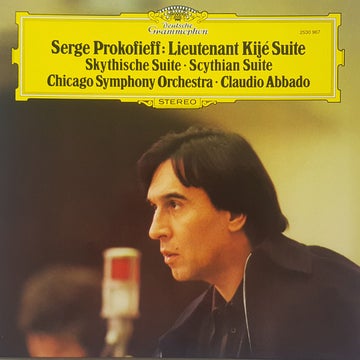
This Japanese 45 RPM remastering of our favorite recording of Prokofiev’s wonderful Lt. Kije Suite has DEMONSTRATION QUALITY SOUND. For starters, there are very few records with dynamics comparable to these. Since this is my favorite performance of all time, I can’t recommend the record any more highly.   

Most of what’s “bad” about a DG recording from 1978 is ameliorated with this pressing. The bass drum (drums?) here must be heard to be believed. We know of no Golden Age recording with as believable a presentation of the instrument as this.

When a particular pressing we’re auditioning takes the recording to a level significantly higher than our expectations, it gets our attention, big time. This can only happen with a record we know well. We thought we knew how good Lt. Kije on Japanese 45 could sound but we were wrong — this pressing is clearly better than the copy we would be proud to call White Hot, which means this one deserves an impossible sonic rating of eleven on a scale of one to ten.

Forget the logic. It’s not about that, it’s about the sound and the music, and we make no apologies for calling this copy Beyond White Hot. It blew our minds.

(more…)

Tsuyoshi Yamamoto Trio – Red Gardenia

  • Off the charts “Triple Triple” (A+++) sound for this classic Yamamoto Philips Direct to Disc album – both sides earned our top grade of Triple Plus – exceptionally quiet vinyl too
  • The piano is dynamic and solid – imagine a Three Blind Mice piano date recorded Direct-to-Disc – that’s the sound of this album
  • This is one of the few audiophile records worthy of the name. It’s also five times as rare as Blues to East and the music is better
  • There are two Stevie Wonder songs given a wonderful piano trio arrangement here that are just out of this world 

This group plays with tremendous vigor. They really swing and are tight as a drum. On this album there’s almost none of that “introspective noodling jazz” that the Japanese are infamous for. I love Midnight Sugar as much as the next guy, but too much of that kind of music is wearying.

Yamamoto’s Trio wants to show that it can play good old-fashioned straight ahead American lively piano jazz with the best of them. And they can. You will also be hard pressed to find better sound for a small ensemble like this. Since Rudy Van Gelder was not particularly adept at recording the piano, many of the great pianists cannot be heard properly on Prestige, Blue Note and other original label recordings.

Philips is one of the better direct disc labels from back in the day (although that isn’t saying much because most of them were mediocre at best). It was garnering rave reviews from TAS a couple of decades ago. Does anybody remember? Probably not, but I do. I flipped out when I saw this record in my local shop. They charged top dollar but I paid it, knowing what a rare and special record it is. (more…)

The Great Jazz Trio / Direct From L.A. – Reviewed in 2014

Hot Stamper Pressings of Direct-to-Disc Recordings Available Now

The album features some excellent jazz with outstanding drum work by Tony Williams (one of our favorite drummers here at Better Records).

If you have a good copy of The Three on Eastwind you will note the strong similarity in sound.

Side One

Super Hot. Solid and very dynamic. Side two of this very copy takes top honors for spaciousness.

Side Two

Huge and rich, with not a touch of smear, this is the sound of live jazz!

(more…)

Tsuyoshi Yamamoto Trio / Blues to East – Reviewed in 2015

More of the Music of Tsuyoshi Yamamoto

On this album there’s almost none of that “introspective noodling jazz” that the Japanese are infamous for. I love Midnight Sugar as much as the next guy, but too much of that kind of music is wearying. 

Yamamoto’s Trio wants to show that it can play good old fashioned straight ahead American piano jazz with the best of them. I hear echoes of Bill Evans in Yamamoto’s playing. Supposedly he was a big Errol Garner fan as well.

You will also be hard pressed to find better sound for a small ensemble like this. Since Rudy Van Gelder was not particularly adept at recording the piano, many of the great jazz pianists cannot be heard properly on their Prestige, Blue Note and other label recordings.

(more…)

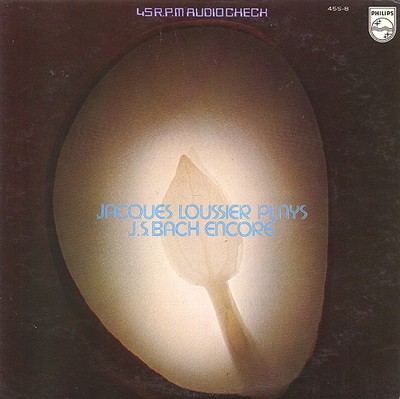
Jacques Loussier / Jacques Loussier Plays J.S. Bach Encore

This is a Japanese 45 RPM Audiocheck Pressing with DEMO DISC quality sound! This is absolutely one of the best sounding jazz records we have ever played here at Better Records!

For those of you who are not familiar with the Audiocheck 45 RPM series from Japan, these are albums remastered at 45 with some material left off by necessity, since the maximum for each side is closer to 12 minutes than the standard LP limit of 20 minutes.

These don’t come my way very often, so I hadn’t played one in quite awhile, but I have to tell you that this is one of the best sounding jazz records I’ve played in months. It sounds like a Direct to Disc recording! I knew the original albums that Jacques Loussier recorded for Philips had good sound but I never realized they had this kind of Demo Disc quality sound. (He also made a number of recordings for London previous to this one and most of those are mediocre in my estimation.) 

The music is lots of fun: Bach played in a jazzy style by a band that really swings. For music and sonics this record is an audiophile dream come true.


This is an Older Jazz Review.

Most of the older reviews you see are for records that did not go through the shootout process, the revolutionary approach to finding better sounding pressings we developed in the early 2000s and have since turned into a fine art.

We found the records you see in these older listings by cleaning and playing a pressing or two of the album, which we then described and priced based on how good the sound and surfaces were. (For out Hot Stamper listings, the Sonic Grades and Vinyl Playgrades are listed separately.)

We were often wrong back in those days, something we have no reason to hide. Audio equipment and record cleaning technologies have come a long way since those darker days, a subject we discuss here.

Currently, 99% (or more!) of the records we sell are cleaned, then auditioned under rigorously controlled conditions, up against a number of other pressings. We award them sonic grades, and then condition check them for surface noise.

(more…)

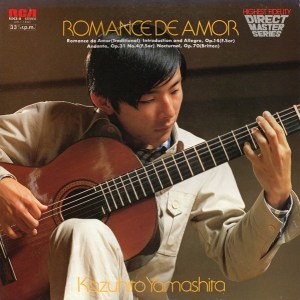
Yamashita / Romance de Amor – A Very Good Sounding RCA Direct to Disc Recording

Hot Stamper Audiophile Recordings

Reviews and Commentaries for Direct to Disc Recordings

This very nice looking RCA Direct-to-Disc LP of guitar music has excellent sound. 

This is an Older Classical/Orchestral Review

Most of the older reviews you see are for records that did not go through the shootout process, the revolutionary approach to finding better sounding pressings we started developing in the early 2000s and have since turned into a veritable science.

(more…)

The Three / Self-Titled – Our Direct Disc Copy from Way Back

Hot Stamper Pressings of The Three Available Now

DEMO QUALITY, MASTER TAPE SOUND (!) on BOTH SIDES!

Hey, wait a minute, this is the direct to disc version, there is no Master Tape. How can it have Master Tape Sound?

Simple. It’s the RARE copy that actually sounds like this one. Most Eastwind pressings — like pressings on any label — do not convey all the information of the master tape that you know must exist because you HEAR it on some copies. Some Direct Discs have much more of the sound that was cut live directly onto the acetate than others. This is one of those, one of the ones with MUCH MORE SOUND! 

This is my favorite piano trio record of all time. Joe Sample, Shelly Manne and Ray Brown only made one album together, this one, recorded direct to disc right here in Los Angeles for Eastwind in the Seventies. Joe Sample for once in his life found himself in a real Class A trio, and happily for jazz fans around the world he rose to the occasion. Actually it was more like an epiphany, as this is the one piano trio album I put in a class by itself. All three of The Three are giving us the best they’ve got on this one. When it comes to piano trio jazz, there is none better.

So Many Takes

There are two takes for the Direct Disc, the second of which is terrible and the first of which we are offering here. The wrong take is so bad I simply cannot stand to listen to it anymore, no matter how good the sound is. And most of the direct disc copies do not sound all that good anyway, truth be told.

The only combination of music and sound that makes any sense to us here at Better Records is take 1 of the direct disc, the 45 RPM from tape version and the 33 on Inner City.

(more…)

A True Audiophile Pressing at 45 RPM to Shame Them All

More of the music of Sergei Prokofiev (1891-1953)

Reviews and Commentaries for the Music of Sergei Prokofiev

This Japanese 45 RPM remastering of our favorite recording of Prokofiev’s wonderful Lt. Kije Suite has DEMONSTRATION QUALITY SOUND. For starters, there are very few records with dynamics comparable to these. Since this is my favorite performance of all time, I can’t recommend the record any more highly. 

Most of what’s “bad” about a DG recording from 1978 is ameliorated with this pressing. The bass drum (drums?) here must be heard to be believed. We know of no Golden Age recording with as believable a presentation of the instrument as this.

The drum is clearly and precisely located at the back of the stage; even better, it’s as huge and powerful and room-filling as it would have been had you attended the session yourself. That’s our idea of hi-fidelity here at Better Records.

Real Dynamics

Over the course of this and many other shootouts, we’ve discovered that it’s practically impossible to find the right volume setting for this album. It’s so dynamic that no matter what volume you set it at the loud portions get too loud. There is a huge amount of deep bass on this recording and that, coupled with the practically unparalleled dynamics, means that you must have a great deal of amplifier power to reproduce this one properly. Either that or a very efficient speaker such as a horn. I confess I would need a great deal more power than I have at my disposal to get the climaxes of this recording to play cleanly.

The Best DG Recording

(more…)