Heavy Vinyl Commentaries

Letters and commentaries on the subject of the modern remastered Heavy Vinyl pressing.

Julie Is Her Name – Now on Youtube

Hot Stamper Pressings of Pop and Jazz Vocals Available Now

One of our good customers has a blog which he calls

A GUIDE FOR THE DEDICATED ANALOG AUDIOPHILE

In the video below, Robert discusses how Tubey Magical his system is when playing an All Tube Chain recording from 1955, this without the benefit of any tubes in his system whatsoever. Quite the trick!

Everything was fine until he decided to track down a clean, quiet, good-sounding copy of Julie Is Her Name for a friend. As the saying goes, no good deed goes unpunished, and after buying scores of copies of Julie London’s records off the internet ourselves, we know firsthand how painful it is to have one noisy record after another arrive on our doorstep.

JULIE IS HER NAME: Worth the Effort!


(more…)

Led Zeppelin / II – Jimmy Page Remasters a Classic, Part III

Hot Stamper Pressings of the Music of Led Zeppelin Available Now

One of our customers did his own comparison with two pressings he had on hand. (Emphasis added.)


I briefly listened to the recent JP copy against the RL pressing I have from Presswell. I think that (according to Robert Brook) the Monarch or Specialty ones usually win your shootouts, and that the Presswells don’t often sound as transparent. The copy I have is pretty good but probably still falls into this category.

Having said that, my main takeaway was the almost complete absence of reverb on the JP copy. This was especially apparent when listening to the big drums and the vocals. The RL cut seems to give a much better sense of the studio and more space around the instruments, on my system.

The imaging and placement of the musicians is clear and distinct, but not as spacious as the RL pressing. The tonality and timbre on the JP cut are very good though, and the mix is not muddy and does not fall apart in loud complex passages like most other modern pressings I have heard. But this may have been his intention: to focus the instruments and tighten up the way the compositions come across without the “echoey” quality of the reverb and the overwhelming bass of the RL cut.

Also the JP cut is a bit more angular sounding and less tubey magic, but that could be my pressing — which is definitely tubey.

The overall sound of the JP is surprisingly good, but it sounds a more compressed to me than the RL, and the dynamic range also seems a bit more constricted.

Ian

Ian,

A lot of what you are hearing I would have to check again, since a lot of what you note is not something that stuck out to me, although it ties in to the one big issue that is fundamental to the difference in sound between the two pressings.

I’ve just been reading what different reviewers have said about the sound of the new album versus the old one, and most of it does not sound very much like the albums I played, but double-checking all this now that I live in GA is going to be hard!

I may have my main guy Riley give it another listen for some things, like reverb and compressed dynamics, and see what he thinks.

Best, TP

Click here to read the original story from January, 2023

(more…)

Robert Brook Shoots Out One Flight Up

Hot Stamper Pressings of Blue Note Albums Available Now

We have never heard the Tone Poets pressing that Robert played against the Van Gelder cutting he discusses in the commentary below.

We have one in stock and are just waiting to do the shootout for the album so that we can compare it to the better pressings we know we will find.


UPDATE 2025

We have now played the Tone Poets pressing for ourselves, and if anything, Robert is being too kind!


You may have read that we were knocked out by a killer copy way back in 2007. We expect to be no less knocked out in 2023.

Robert concludes with his take on the strengths and weaknesses of the two pressings. Here is a excerpt:

Overall, the Tone Poet is closed, distant and frankly boring to listen to. Where is the energy of the music? Where is the presence of these musicians? Where is the studio space?

He goes on in much more detail, but this is exactly the kind of sound we hear on one Heavy Vinyl pressing after another. For some reason, none of these shortcomings appears to bother the fans of the label. I get why this guy is missing the boat: he actually thinks a system with five inch woofers can play jazz. What possible excuses could these other people have? [1]

The complete review can be found below. If you are considering following the crowd and buying some of this label’s albums, you might want to take it slow. (Those of you with five inch woofers can charge right ahead. The sonic problems with the Tone Poets releases Robert Brook describes would barely be audible on such a system, so get while the gettin’s good. Just make sure you are never tempted to upgrade to big speakers. You could find yourself in the unfortunate position of needing a new record collection to go along with them. Unlike Tone Poets releases, good records ain’t cheap.)

Dexter Gordon’s ONE FLIGHT UP: One of the Better TONE POETS?

[1] This is rhetorical question. These other folks have no excuses. They have exactly the sound quality they have earned by underutilizing the two most important audio resources they have at their disposal: time and money.

If they have failed to put in enough of either one or both, they have only themselves to blame for letting themselves be fooled by the chalatans currently marketing one meretricious [2] Heavy Vinyl pressing after another.

If they decide to remedy this sad state of affairs, we are more than happy to guide them in the new and exciting direction we’ve pioneered over the course of the last twenty years or so. The advice we give in this commentary would be a good place to start: first get good sound – then you can recognize and acquire good records

For another 60+ pieces of record collecting advice, more than enough to keep anyone busy for months, perhaps years, please click here.

[2] To save you the trouble of looking it up, Merrian-Webster defines meretricious as apparently attractive but having in reality no value or integrity. Used to suggest pretense, insincerity, and cheap or tawdry ornamentation.

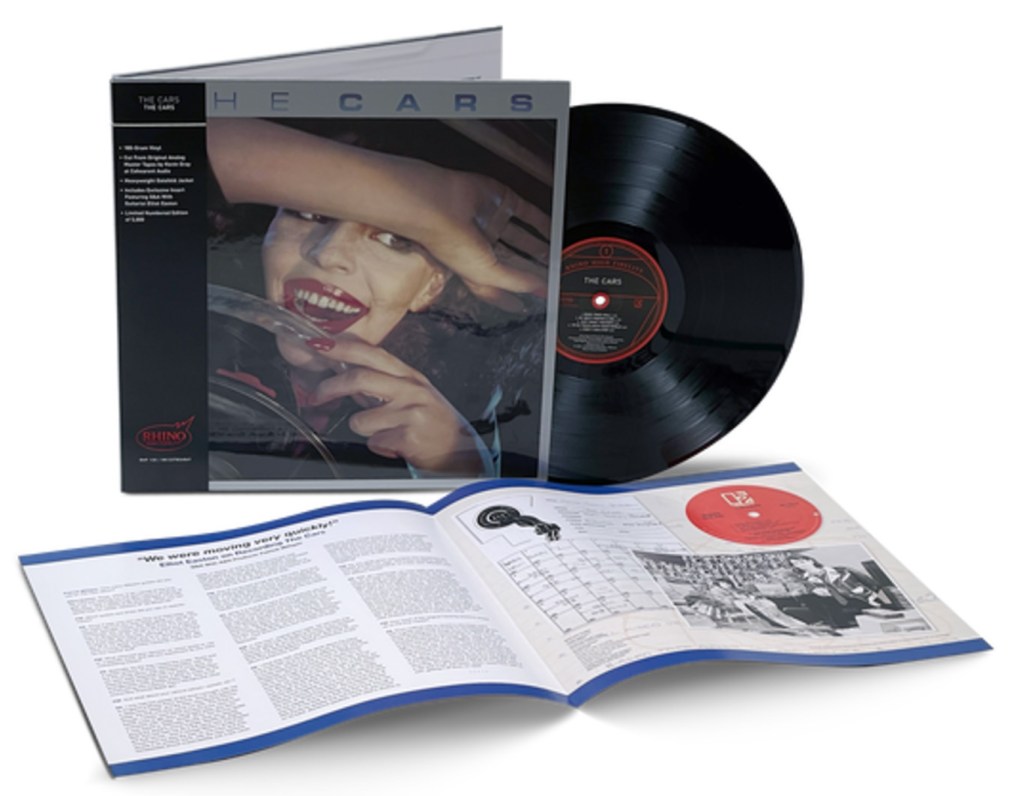
For a deeply meretricious release of recent vintage (OBI strip!, custom booklet!, premium heavy vinyl!, fold-open cover!), see The Cars on Rhino. The only thing left out of the package was a good sounding LP.


Further Reading

(more…)

Led Zeppelin / II – Jimmy Page Remasters a Classic, Updated

More of the Music of Led Zeppelin

A customer who bought one of our Hot Stampers was sent the Page remaster, free of charge of course. He wrote us a nice letter about what a thrill it was to hear such an amazing record — the original, not the reissue — and we made the following comment to him about the shootout he said he was going to do.

Bill,

Pay special attention in your shootout to The Lemon Song. I am going to discuss some things I learned about it recently. See how all your versions do on the song and what you think each version is doing right and wrong.

Enjoy and have fun.

Click here to read the whole story from January, 2023

Every Day Is Record Store Day at The Electric Recording Company

Our Review of The Electric Recording Company’s Release of Forever Changes

Recently we took the Electric Recording Company to task for their botched mastering of Love’s Forever Changes.

At ERC they like to point out they are doing things differently, and boy are they ever. They do not remaster the tapes, they simply transfer the tapes onto disc without any interference from equalizers, compressors and the like.

Naturally, they seem less willing to discuss the sludge-like sound their vintage tube cutting amplifiers bring to every tape that’s forced to go through them before it gets to the cutting stylus. I hope to discuss this issue in more depth down the road.

What Is It, Exactly

For now, let’s try to get to the heart of what this pressing is.

This is not an audiophile record, properly understood.

No member of the audiophile community, those lovers of sound you’ve heard so much about, could possibly put up with a record that sounds as bad as this one does.

Having played two of their releases and knowing how all of them are made, I would be surprised if any of this company’s records are any better than awful.

No, this is plain and simply a collectible.

It exists because it could be made as a very limited edition at a profit.

It exists because it could be made with exceptionally high quality packaging.

The vinyl inside the fancy packaging is only there to make sure that all the elements of a collectible release are accounted for.

All the value is tied up in the collector appeal of the release, none in the vinyl, because the vinyl is junk.

(more…)

A Simple Listening Test Makes It Easy to Judge Pressings of Scheherazade

Hot Stamper Orchestral Pressings Available Now

The Classic reissue of LSC 2446, as well as the Analogue Productions version from 2013 (the original 33 is the only one I have played, mastered by Ryan Smith at Sterling), are, for many reasons, both disasters, but they do have one specific failing that we had no trouble recognizing.

We feel both pressings are worth further discussion and analysis because they both provide an easy test that can show you, dear reader, how wrong they are in one easily identifiable respect.

When reading the commentary below, keep in mind that what is bad about the Classic Records reissue from 1995 is precisely what is bad about the Analogue Productions remaster put out many years later.

As I noted for some of the Classic Heifetz titles a while back, for all I know the CDs for his Living Stereo recordings may have better sound. That’s probably the first place to go, considering Classic’s rather poor track record regarding the remastering of his music.

Case in point: The Living Stereo CDs I own (both the CD and the SACD) of Scheherazade are dramatically better than the awful Classic Records pressing of it.

Audiophiles who don’t notice what is wrong with the Classic pressing need to get hold of a nice RCA White Dog pressing to see just how poorly the Classic stacks up. (They could even find one that’s not so nice and listen through the surface noise. The difference would still be obvious.)


UPDATE 2025

It has been many years since a White Dog pressing won a shootout. In our last listing for a Hot Stamper White Dog pressing in 2024, we noted:

Now that we know which stampers have the potential to win our shootouts, the right Shaded Dog originals have lately been coming out on top, although the White Dog pressings can still sound quite good, just not as good.

No White Dog earned a higher grade than 2+, and none of the three WD pressings we had on hand earned 2+ on both sides.

Our notes for the various sides of the WD pressings read: “a bit brash, sometimes squawky, dry and bright,” and the like.

Those of you looking for the best sound should stick to the Shaded Dog label originals. They are rich and lush in a way that the WD reissues in our experience never are. I used to swear by the WD reissues, but I see now how wrong I was. My judgments were colored by a darker, less revealing stereo than the one we use now, and that makes all the difference in the world.

(more…)

Tone Poets and One-Legged Tarzans

Basic Audio Advice — These Are the Fundamentals of Good Sound

A fundamental tenet of conservatism is that we must accommodate ourselves to the world that exists, not the world we might want to pretend exists, or the world we would like to exist.

The laws of physics are laws — not theories, not recommendations — and they operate independently of how convenient we may find them.

It follows from this — if you will allow me to make the case — that not everybody with a stereo can play Rudy Van Gelder’s recordings properly, and some people cannot play Tarzan at all. (More on that below.)

There is a fellow, rl1856, who made some comments on Robert Brook’s blog, addressing the Tone Poets pressings of RVG’s recordings vis-a-vis vintage pressings that RVG mastered. (Emphasis added.)

rl1856 writes:

An original RVG 1st or 2nd pressing has a visceral, “edge of the seat” feeling that is missing in the TP [Tone Poets] and BN [Blue Note] Classic reissues. The RVG has a tighter stereo spread, and is voiced so that the listener feels they are very close to the musicians. The TP and Classic remasters have a more distant perspective. The soundstage is wider, but the added apparent distance between musician and listener significantly reduces the impact of the music. OTOH, the reissues have greater extension at frequency extremes, and reproduce more micro detail than original pressings. We know that RVG used a surprising amount of EQ when mastering his LPs back in the day. So we need to ask ourselves, what do we want ? A better version of what we are familiar with, including EQ compromises, or a more accurate representation of what was actually captured on the master tape in RVG’s studio ? The answers may be mutually exclusive.

My system: Linn LP12 ITTOK LVII, SoundSmith Denon 103D, Audio Research SP10MKIII, Luxman MA 88 monoblocks, or Triode TRV 845PSE, or Mac 240, KEF LS50. Resolving enough to easily hear differences in LP quality.

When an audiophile reveals that his equipment is simply not capable of reproducing the sound of live music, I think that we can safely ignore whatever opinions he may have offered about the sound of the records he is discussing.

It’s obvious that the records were played with unacceptably low fidelity, which means he has all the credibility of a blind man judging paintings.

If this person wants to make the case that he is in fact able to reproduce music with acceptable fidelity, we would need to know more about his system and room in order to take his claim more seriously.

(more…)

Do Original Pressings Sound Better?

Robert Brook has a blog which he calls

A GUIDE FOR THE DEDICATED ANALOG AUDIOPHILE

Below is a link to the commentary he’s written about his experience as a guest on The Audiophile Roundtable.

(He’s the fellow in the lower right corner.)

Do ORIGINAL Pressings Sound BETTER?

All?

Wouldn’t it be better to pose the question as “Do any audiophile represses sound better?”

But better than what? That’s the $64,000 question. No one seemed interested in answering that one. Or even noticing that it needed answering.

A fellow in the comments section asked:

Here’s a question to Robert, because he said he didn’t like the sound of the Tone Poets he heard… compared to what?

I don’t remember what Robert said but here’s my answer:

Compared to the hundreds of great sounding jazz records you’ve played! Compared to Way Out West if we have to pick one.

(more…)

John writes: “The only problem I have with my evaluations is that I never heard his records.”

More Commentaries Prompted by Forums, Videos and Comments Sections

Please check out the interview Wired conducted with me a few years back.

If you have some time on your hands, maybe too much time on your hands, go to the comments section and read the 300 plus postings that can be found there, the writers of which seem to be offended by the very idea of Hot Stampers.

They also decry the obvious shortcomings of analog vinyl itself, as well as the ridiculously expensive equipment some “credulous, misguided audiophiles,” their terms, use to play vinyl records, as if you didn’t know already!

Here is one that I found to be especially interesting, from a psychological perspective if not from an audio one. (Emphases added.)

Bad, mismatched system setup. Customer base probably has the same. Also evaluation process is questionable. Uses a mediocre solid state amp and looks for “tubey magic” because of some misplaced concept of “accuracy” as I discussed before. [Man, this guy has got our number all right, ouch!]

Yes, there is a lot of bad stuff out there, and it does give the stereo industry as a whole a bad name. I have heard some pretty crappy, expensive setups in my day.

I was listening to Phoebe Snow’s “Second Childhood” on my best system last night. Boy, I love my new turntable!

The only problem I have with my evaluations is that I never heard his records. My comments are probably correct, but it would be interesting to audition a few of his “golden” albums just to confirm he hasn’t really found anything. The reason I am confident that he probably does not have anything is because virtually every repressing I’ve heard is better than the original. Claiming otherwise hurts his credibility.

John

There is one sentence in the paragraphs above that should raise a giant red flag and help you to appreciate how reliable John’s analysis of our stereo and methods might turn out to be. If you didn’t catch it the first time through, give it another shot. Okay, here goes:

The reason I am confident that he probably does not have anything is because virtually every repressing I’ve heard is better than the original.

That’s so strange! Virtually every repressing I’ve heard is worse than the original.

What gives?

If I may paraphrase our writer: the reason I am confident that he probably does not know anything about records or audio is that he thinks repressings are always better than vintage pressings.

We’ve critically auditioned tens of thousands of records, including many hundreds of repressings, admittedly on our “bad, mismatched system setup,” and I guess we must have gotten it all wrong over the 38 39 years we’ve been in the audiophile record business. The shame of it all!

Obviously, John knows he does not need to try one of our Hot Stampers. You can see him talking himself into the wisdom of doing nothing with every paragraph he writes.

It’s easy for him to be right by simply pretending to know something he cannot possibly know.

(Knowledge that is not backed up by empirical findings [1] comes in for a lot of criticism here at Better Records, and for good reason. Guessing, speculating and assuming are poor approaches to separating good pressings from bad ones.)

And if he did ever order one, and had at least a halfway decent stereo to play it on, it would turn his world upside down so fast it would make his head spin, and the possibility of that happening would be very, very upsetting. It makes no sense for John to risk such an outcome.

Even if our records were as cheap as the ones he is buying, even the superior sound would not justify the psychological damage that would result. He would basically have to start his collection over again, as this customer did.  A few hundred others just like him have done the same, and they’re the ones that will be keeping us in business for years to come. To paraphrase another famous saying, “They’ve heard the future, and it works!”

Better for John to follow the path he is on. It’s working for him. Why would he want to rock his own boat?

(more…)

Witches’ Brew on Classic Records and How Crazy Wrong We Were, Part Two

Hot Stamper Living Stereo Classical and Orchestral Titles Available Now

As I noted in Part One of this commentary, I promised to find my old blurb for the Classic pressing of Witches’ Brew from the catalog I sent out for years in the mid-’90s.

Well, I found it.

The excerpt from the earlier commentary seen below gets to the heart of the problem with my (embarrassing) review.

“With an old school audio system you will continue to be fooled by bad records, just as I and all my audio buds were fooled thirty and forty years ago. Audio has improved immensely in that time. If you’re still playing Heavy Vinyl and Audiophile pressings, there’s a world of sound you’re missing. We would love to help you find it.”

Ouch.

I apparently had one of those systems in the ’90s, because my system sure wasn’t doing a very good job of showing me how awful the Classic pressing of Witches’ Brew was.

Also, my guess that the Classic pressing was 10db more dynamic is risible. That number was clearly plucked out of thin air by someone who didn’t know what he was talking about (10db is a lot).

I will take some solace from my comment that  “90% of the magic of the original is here,” which means that even in 1994 I could hear that Bernie’s cutting system had problems reproducing the Tubey Magical Living Stereo sound that was all the rage at the time, mostly owing to Harry Pearson’s listing so many RCAs on his Super Disc List.

And, although we still like Gibson’s reading of the work, these days our favorite performance of Danse Macabre is this one on EMI, one we only discovered about five years ago. It’s one advantage to being in the record business. You get to play lots and lots of records, and playing large numbers of records is practically the only way to find the ones that are even better than the ones you know.

(more…)