Rock and Pop LPs to Improve Your Playback

The Glorious Big Speaker Sound of Wind of Change

Hot Stamper Pressings of the Music of Peter Frampton Available Now

A while back we discussed the kind of sound that Glyn Johns managed to get for the likes of Humble Pie and The Who:

But oh what a glorious sound it is when it’s working. There’s not a trace of anything phony up top, down low or anywhere in-between. This means it has a quality sorely at odds with the vast majority of audiophile pressings, new and old, as well as practically anything recorded in the last twenty years, and it is simply this: The louder you play it, the better it sounds.

Chris Kimsey knew how to get the Big Rock Sound onto tape about as well as anybody who ever lived. His work on this album set me on a path I would would follow for the next fifty years.

Wind of Change is the very definition of a big speaker record, one that requires the highest-resolution, lowest-distortion components to bring out its best qualities. If you have a system like that, you should find much to like here.

I bought my first copy in 1972 while still in high school and it quickly became one of my favorite records.

All these years later it still is.

(more…)

On Dog and Butterfly, Listen for the Fat Snare on Straight On

Hot Stamper Pressings of the Music of Heart Available Now

Take five copies of the album, clean them well and then cue up Straight On. 

Now listen for how fat and solid the snare sounds. 

At least three will have a snare that doesn’t have the heft of the real thing. At most one will show you what it should really sound like.

Of course the copy with the right snare sound may have other problems, most assuredly does have other problems, which is why you need about ten to fifteen copies to really do a proper shootout.

Side Two

The vocals were breathy and clear on this side two, and the overall sound was punchy and energetic. The main areas we took points off for were a lack of warmth and a bit of smear on the acoustic guitars. Most copies have trouble getting all the transient information to resolve properly. The acoustic guitars are the place where this is most easily heard.

Side one earned the full Three Pluses for sound, with some of the breathiest background vocals we heard on any copy. That is a key sign of transparency — the background vocals are clear and breathy behind the lead singers. Most of the time they will be audible but the texture of the voices will be compromised.

(more…)

Room Treatments Bring Out The Big Speaker Whomp Factor

Hot Stamper Pressings of the Music of Sergio Mendes Available Now

UPDATE 2025

The first Sergio Mendes and Brasil ’66 album is one of those records that helped us dramatically improve the quality of our playback.


Only the best copies are sufficiently transparent to grant the listener the privilege of hearing all the elements laid out clearly, each occupying a real three-dimensional space within the soundfield. 

With recent changes to some of our room treatments, we now have even more transparency in the mids and highs, while improving the whomp factor (the formula goes like this: deep bass + mid bass + speed + dynamics + energy = whomp) at the listening position.

There’s always tons of bass being produced when you have three 12′ woofers firing away, but getting the bass out of the corners and into the center of the room is one of the toughest tricks in audio.

For a while we were quite enamored with some later pressings of this album — they were cut super clean, with extended highs and amazing transparency, with virtually none of the congestion in the loud parts you hear on practically every copy.

But that clarity comes at a price, and it’s a steep one. The best early pressings have whomp down below only hinted at by the “cleaner” reissues. It’s the same way super transparent half-speeds fool most audiophiles. For some reason audiophiles rarely seem to notice the lack of weight and solidity down below that they’ve sacrificed for this improved clarity. (Probably because it’s the rare audiophile speaker that can really move enough air to produce the whomp we are talking about here.)

But hey, look who’s talking! I was fooled too. You have to get huge amounts of garbage out of your system (and your room) before the trade-offs become obvious.

When you find that special early pressing, one with all the magic in the midrange and top without any loss of power down below, then my friend you have one of those “I Can’t Believe It’s A Record” records. We call them Hot Stampers here at Better Records, and they’re guaranteed to blow your mind. (more…)

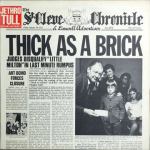
Thick as a Brick Is a Top Test Disc for System Accuracy

Hot Stamper Pressings of the Music of Jethro Tull Available Now

From 2009 to 2010 this was our single go-to record for testing and tweaking our system.

Although we now use an amazing copy of Bob and Ray (the big band version of The Song of the Volga Boatmen located therein has to be one of the toughest tests we know of), we could easily go back to using TAAB.

Artificiality is the single greatest problem that every serious audiophile must guard against with every change and tweak to his stereo. cleaning system, room, electricity and everything else.

Since TAAB is absolutely ruthless at exposing the slightest hint of artificiality in the sound of the system, it is clearly one of the best recordings one can use to test and tune with. Here are just some of the reasons this was one of our favorite test records back in the day:

Dynamics

The better copies are shockingly dynamic. At about the three minute mark the band joins in the fun and really starts rocking. Set your volume for as loud as your system can play that section. The rest of the music, including the very quietest parts, will then play correctly for all of side one. For side two the same volume setting should be fine.

Bass

The recording can have exceptionally solid, deep punchy bass (just check out Barrie “Barriemore” Barlow’s drumming, especially his kick and floor toms. The guy is on fire).

Midrange

The midrange is usually transparent and the top end sweet and extended on the better pressings.

Tubey Magic

The recording was made in 1972, so there’s still plenty of Tubey Magic to be heard on the acoustic guitars and flutes.

(more…)

Virtuoso Guitar Is Potentially an Awesome Direct to Disc Record

Hot Stamper Pressings of Direct-to-Disc Recordings Available Now

This recording has very little processing or EQ boost, and the studio is somewhat dead sounding (all too common in the late-70s). That combination can mean only one thing: If you don’t play this record loud, it will not sound right. 

The famous Sheffield S9 is exactly the same way. It sounds dead and dull until you turn it up good and loud. When you do, lookout — it really comes alive. The best pressings can sound shockingly like live music, something one just does not hear all that often, even when one plays records all day long as we do.

The snare drum on this copy represents one of the most realistic and dynamic sounding snares I have ever heard. Talk about jumping out of the speakers! If you have plenty of large, fast, powerful dynamic drivers like we do, you are in for a real treat. Track one, side one — lookout!

Our Shootout Winner from Years Ago

As usual, the shootout allowed us to hear what was lacking on side two.

Side One

A+++ As Good As It Gets sound from top to bottom. No copy was as transparent, lively or high-rez. No copy actually did ANYTHING better, which is unusual. The distortion level is close to zero on this one. The louder you play it the better it sounds.

Side Two

With a grade of A Double Plus this copy was close to the best, falling a bit short in the area of upper midrange presence and top end. Still, there’s lots of space, the cello sounds full and rich, as does the guitar, and none of the plucked instruments suffer from smear at all.

A great side, just a bit dark compared to the very best.

(more…)

One of The Most Tubey Magical Rock Recordings of All Time

Hot Stamper Pressings of Psychedelic Rock Recordings Available Now

This is some of the best High-Production-Value rock music of the 70s. The amount of effort that went into the recording of this album is comparable to that expended by the engineers and producers of bands like Supertramp, Yes, Jethro Tull, Ambrosia, Pink Floyd and too many others to list.

It seems that no effort or cost was spared in making the home listening experience as compelling as the recording technology of the day permitted. (Of course, as it turns out, recording technology only got worse as the decade wore on, and during the 80s the sound of most recordings went off the proverbial cliff.)

Big Production British Rock just doesn’t get much better than A Space in Time.

Just listen to the guitar solo on Let The Sky Fall. It comes complete with layer upon layer of guitars, acoustic and electric, with some backwards guitar thrown in for good measure. And that’s just the guitar parts. This kind of dense aural soundscape, presented with so many carefully placed elements from side to side and front to back, makes repeated listenings especially rewarding.

No matter how many times you play the album, you are likely to hear (and hopefully appreciate) something new in the mix. I’ve been playing ASIT for forty fifty years (bought my copy when I was still in high school) and I heard lots of things this time around I never knew were there. This is why we keep improving our systems, right? There is never going to be a time when these nearly forty more than fifty year old recordings have nothing new to offer.

Their Only Essential Album

By the way, this was the first Ten Years After record I bought, and I liked it so much I went out and bought many of their other albums, only to find that none of those albums are anything like this one. None of them sound particularly good; none of them are particularly well produced; and, worst of all, most of the music is fairly forgettable British Blues Rock.

(more…)

The Strings on Elton John’s Second Album Are a Tough Test

Hot Stamper Pressings of the Music of Elton John Available Now

What’s especially remarkable about Elton’s second album is the quality of Paul Buckmaster‘s string arrangements. I don’t know of another pop record that uses strings better or has better string tone and texture. Strings are all over this record, not only adding uniquely interesting qualities to the backgrounds of the arrangements but actually taking the foreground on some of the songs, most notably Sixty Years On.

When the strings give in to a lovely Spanish guitar in the left channel (which sounds like a harp!) just before Elton starts singing, the effect is positively glorious. It’s the nexus where amazing Tubey Magical sound meets the best in popular music suffused with brilliant orchestral instrumentation. Who did it better than The Beatles and Elton John? They stand alone.

Correct string tone and texture are key to the best-sounding copies. The arrangements are often subtle, so only the most transparent copies can provide a window into the backgrounds of the songs that reproduce the texture of the strings.

Without extension on the top, the strings can sound shrill and hard, a common problem with many pressings.

Without a good solid bottom end, the rockers (“Take Me to the Pilot”) don’t work either of course, but you can even hear problems in the lower strings when the bass is lightweight.

String tone on a pop record is a tough nut to crack, even more so on a record like this where the strings play such a prominent role. It’s the rare copy that allows you to forget the recording and let you just enjoy the music.

(more…)

The Turn Up Your Volume Test – Blood Sweat and Tears

Hot Stamper Pressings of the Music of Blood, Sweat and Tears Available Now

UPDATE 2025

This commentary was written about twenty years ago, back in the days when I could find clean 360 Label pressings of this album actually sitting in the bins of used record stores. The picture at the bottom says it all — I think we had more than forty copies to work through for our first shootout, pressings of the album that I had been buying (many from Robert Pincus, he was the B,S&T expert back then) since the late-80s. Blood, Sweat and Tears and I go way back.

You may notice that we rarely write about the album these days, and that’s simply because we are not able to find clean, early label pressings to play anymore. (The Red Label pressings can be good but they don’t come close to winning shootouts. Without at least some potential Shootout Winning copies, it makes no sense to do the shootout. The winners are the ones that pay for the losers, naturally, with some profit left over if things go as planned.)

Speaking of which: Our last shootout was quite a few years ago. If we somehow managed to luck into a few copies locally, it’s possible we could do the shootout tomorrow, but buying this title on Discogs and Ebay has been a nightmare, with upwards of 90% of the copies we buy ending up marked return to sender.

The cost in labor (and frustration) we incurred to pursue the album long ago forced us to move on, after plenty of swearing and licking of wounds of course. How is it that record sellers can be so oblivious to the scratches and wear on their consistently noisy vinyl offerings is beyond me.

For those of you who can’t devote the resources to finding a good copy on the Columbia 360 Label, the Gold CD put out long ago by Mobile Fidelity is excellent and well worth whatever you have to pay for it. And I mean that sincerely.


Our Old Commentary

In my opinion this is the BEST SOUNDING rock record ever made. I may be biased because I like the music so much, but played on a Big Speaker System a Hot Stamper pressing is nothing less than ASTOUNDING, the ultimate Demo Disc. It has the power of LIVE MUSIC.

You don’t find that on a record too often, practically never in fact. I put this record at the top of The Best Sounding Rock Records of All Time link (seen on the left) and said it was in a class of its own for good reason — IT IS IN A CLASS OF ITS OWN.

As I’ve noted before, this record is a milestone in the history of popular music. Not only is it The Most Successful Fusion of Rock and Jazz Ever. It’s also One of the Finest Recordings of Popular Music Ever.

The sound is nothing short of amazing. Just the drums alone are enough to win awards: the kick drum has real kick, the snare may actually be the best rock snare ever recorded, the cymbals shimmer like real cymbals; almost everything is right with this record. Especially the music.

Good Demo Disc, Good Test Disc Too

This is the kind of record that doesn’t fall into the good Demo Disc, bad test disc trap. It’s both a good Demo Disc and a good test disc; not too many records can make that claim. (Especially the kinds of records audiophiles tend to like.)

The good copies of this album sound good on almost any system. But the better systems reveal qualities to this recording that you are very unlikely to have ever heard on another record. That’s the Demo side.

On the test side, no matter what level your system is at, any change you make will be instantly obvious on this recording, for good or bad. Nothing can fool it. It’s too tough a test, the toughest I know of bar none. For this record to sound right, truly right, every aspect of its reproduction has to be at the highest level. Any shortcoming will be glaringly obvious. The record may still sound good, but it won’t really sound right. (Knowing what “right” means in this context makes all the difference in the world of course.)

One reason the turn up your volume test is such a great test — the louder the problem, the harder it is to ignore.

(more…)

Listening in Depth to Aja

Hot Stamper Pressings of the Music of Steely Dan Available Now

Generally, what you try to get on side one is a copy with ambience, because most copies are flat, lifeless and dry as a bone.

You want a copy with good punchy bass — many are lean, and the first two tracks simply don’t work at all without good bass. And then you want a copy that has a natural top end, where the cymbals ring sweetly and Wayne Shorter’s saxophone isn’t hard or honky or dull, which it often is on the bad domestic copies.

The truly amazing side twos — and they are pretty darn rare — have an extended top end and breathy vocals on the first track, Peg, a track that is dull on nine out of ten copies. (The ridiculously bright MoFi actually kind of works on Peg because of the fact that the mix is somewhat lacking in top end. This is faint praise though: MoFi managed to fix that problem and ruin practically everything else on the album.)

If you play Peg against the tracks that follow it on side two, most of the time the highs come back. On the best of the best, the highs are there all the way through.

Side One

Black Cow

Fagen’s voice on the first line will always sound grainy – it’s that way on the CD and every LP I have ever played, which means it’s on the tape that way. It will quickly pass, and the rest of the vocals will sound amazing if you have a Hot Stamper Copy.

This song is as BIG and BOLD sounding as any pop song I know. This is Demo Disc material if you have the system to do it justice.

And don’t you just love the way it starts on the upbeat? Now that’s the way to kick off an album!

Aja

Got a big speaker? Lots of power? You will need both to play this song right. Note how the percussion comes through the dense mix, without being abrasive in any way. That’s a sure sign that you have a copy with the transparency and resolution you need to bring out the track’s best qualities. The mix needs that percussion; it’s there for a reason. You, dear audiophile, need an LP that lets that percussion be heard. Many are called; few are chosen.

Deacon Blues

It’s the rare copy that gets the top end for the first two tracks right and still has enough presence and top end for this song, which will tend to sound dull even if the first two tracks don’t. The truly killer pressings get all three tracks to sound amazing, no mean feat.

Side Two

For some reason, side two is almost always cut at a lower level than side one. Pump up the volume a db or two in order to get the full Aja effect for the songs on this side.


UPDATE 2022

The commentary about Peg you see below was written many years ago, and I no longer agree with the claim it makes.

The MoFi is so bad in so many ways that whatever it fixes on the top end, it destroys everywhere else.

It’s one of the greatest audio disasters of the 80s, along with the equally awful Cisco pressing, which qualifies as one of the great audio disasters of the modern Heavy Vinyl era.

(more…)

These Records Helped Us Dramatically Improve Our Playback

Some of the Most Important Albums We Employed to Tune, Tweak and Improve Our Stereo, Room, Table Setup, Electrical Quality and More

The records on this list (limited to rock and pop for the most part but we’re working on adding in the classical and jazz) all have one thing in common: I made practical use of them to improve my equipment, room treatments, table setup, electrical quality and whatever else that I could think of that might result in higher quality playback.

Were it not for my desire — obsession may be the better word, and it’s certainly a better operating principle — to get the wonderful music on these albums to improve with each passing year, Hot Stamper pressings would be at most a niche part of my collection. Worse, and a thought some may find too unpleasant to contemplate, Hot Stampers might have then accounted for only a small part of Better Records’ business.

By the mid-2000s when we started down this road for real, the stereo needed to evolve dramatically. It needed to become much more revealing and truthful than any system I had ever heard if we were going to carry out Hot Stamper shootouts all day.

The best of the best Hot Stamper pressings are often like needles in haystacks. No one in his right mind would go to all that trouble for music that was not emotionally powerful enough to be, for all intents and purposes, practically irresistible.

If you have records you can’t wait to play every time you make a change to your equipment, room, setup, etc., you know what I am talking about.

I favor large scale dynamic speakers because they are the only ones that seem capable of reproducing the demanding recordings you see listed below.

There is no question that the artists that made these albums, in concert with remarkably talented producers and engineers, sweated every detail of these exceptional recordings. For the last five decades I (now we) have been doing all we could to get these wonderful records to sound their best.

We know how good they can sound on systems that have what it takes to play them, because these are the records we used to test, tune and tweak the new studio we built.

The more of that kind of work you do — on your system, room and electricity — the more progress you will make in this hobby. With each improvement, these are the very recordings that will sound bigger and bolder than you ever imagined.

They are the most difficult-to-reproduce albums we know of. Difficult records are the ones that will help you make more real, demonstrable progress in this hobby than any others.

Again and again it was meeting the challenge of reproducing recordings such as these that allowed us to get to the next level, and the next one, and the one after that, and they can do the same for you.

The Top Two

By far the two most helpful records for testing over the last two decades were Tea for the Tillerman (going all the way back to 1984) and Bob and Ray Throw a Stereo Spectacular. We wrote about their uniquely valuable contributions to our audio progress in this commentary.

Led Zeppelin II is probably the main record our current listening panel uses to dial-in the Dynavector 17Dx Karat cartridges we mount three or four times a year so that every record is always  being played with a relatively fresh cartridge. (We are dealers for Dynavector and would love to get you one to try.)

The records below in bold have been especially important for our work. There should be quite a number of commentaries on the blog for each of them.

Also, at the bottom you will notice that more and more jazz and classical records are being added to the list as time permits.

Rock, Pop, etc.

  • 10cc / The Original Soundtrack
  • 10cc / Deceptive Bends
  • 801 / Live
  • Ambrosia / Self-titled
  • America / Self-titled
  • The Beatles / Please Please Me
  • The Beatles / Rubber Soul
  • The Beatles / Revolver
  • The Beatles / Sgt. Pepper’s
  • The Beatles / Magical Mystery Tour
  • The Beatles / Abbey Road

(more…)