fix-me

Letter of the Week – “I was stuck by the difference between what I was “accepting” in my non-hot-stampers and the sonics of a great hot stamper.”

More of the Music of Steve Miller

Reviews and Commentaries of the Music of Steve Miller

One of our good customers had this to say about some Hot Stampers he purchased recently:

Hey Tom,   

As you know, I only play vinyl on my system and have purchased hundreds of hot stampers over the years. I was going though my non-hot-stamper part of my collection and listened for about three days exclusively to non-hot-stampers. I was pleasantly surprised by some and was saying to myself that’s not too bad or that’s okay.

Then, Steve Miller – Brave New World (2.5/3) arrived. As it played, I was stuck by the difference between what I was “accepting” in my non-hot-stampers and the sonics of a great hot stamper. I went back to my non-hot-stampers and ejected 40 albums which are back to CD’s in my car. My non-hot stampers are now less than 10% of the collection.

Life is too short to listen to “acceptable” vinyl. Hot stampers, especially WHS or good vinyl, is why we have spent a lifetime pursuing great audio systems: to sit in our listening rooms and be transported by the emotion of the music.

Thank You
Mike


Mahler / Symphony No. 2 / Walter – Didn’t Make the Grade

More of the Music of Gustav Mahler

This is a Minty looking Columbia 6 Eye stereo LP.

The sound is not very good, however. It just sounds like an old record.

Most of the Columbia orchestral pressings we play seem better suited to the old school audio systems of the 60s and 70s, rather than the modern systems of today.

Some of these records used to sound good on those older systems, and I should know. I had an Old School stereo back in the day and some of the records I used to think sounded good don’t sound so good to me anymore.

For a more complete list of those records, click here.

How Did We Figure All of This Out?

There are more than 2000 Hot Stamper reviews on this blog. Do you know how we learned so much about so many records?

We ran thousands and thousands of record experiments under carefully controlled conditions, and we continue to run scores of them week in and week out to this very day.


We play mediocre-to-bad sounding pressings so that you don’t have to, a public service from your record-loving friends at Better Records.

You can find this one in our Hall of Shame, along with others that — in our opinion — are best avoided by audiophiles looking for hi-fidelity sound. Some of these records may have passable sonics, but we found the music less than compelling.  These are also records you can safely avoid.

We also have an Audiophile Record Hall of Shame for records that were marketed to audiophiles for their putatively superior sound. If you’ve spent much time on this blog, you know that these records are some of the worst sounding pressings we have ever had the misfortune to play.

We routinely put them in our Hot Stamper shootouts, pitted against the vintage pressings that we offer, and are often surprised at just how bad an “audiophile record” can sound and still be considered an “audiophile record.”

Sketches of Spain – Our Mono Shootout Winner from Way Back in 2008

More Vintage Columbia Pressings

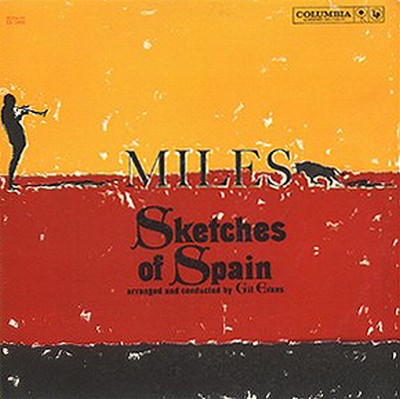
This Mono Six Eye Columbia original pressing is the WINNER and [not-at-all] CURRENT CHAMPION of our Sketches of Spain shootouts. This record always sounded so thin and aggressive, with Miles’ horn always somewhat pinched and sour, but now it sounds wonderful. Who knew this record could sound so good?

Let’s talk about this mono copy. It is clearly more transparent, with less distortion, than any other copy we heard (and this means out of more than twenty!) There may be better sounding pressings out there, but I would be surprised to find one that would be more than a marginal improvement over what I’m hearing on this copy — and that goes for both sides. (more…)

Polar AC – Smeary and Veiled, or Thin and Harsh?

Hot Stamper Pressings of the Music of Freddie Hubbard Available Now

Years ago we described the sound of the album this way:

Most copies fail in one of two ways. Either they’re smeary and veiled, or they’re thin and harsh, but this side has no such problems! There’s plenty of richness and sweetness, but there’s also real bite to the brass. 

Like side one, the balance between transparency and richness is just right here.

We’re big fans of Hubbard’s CTI material around here and this album has a lot of the qualities we love about this stuff. All the usual faces are here — Ron Carter, Billy Cobham, George Benson, Airto — and Rudy Van Gelder does a great job capturing their performances.

We used to criticize RVG pretty harshly, but in recent years we’ve found more and more pressings of his stuff that really work.

We Love CTI

We’ve been really digging this CTI jazz stuff lately. On the better albums such as this one, the players tend to sound carefree and loose — you can tell they are having a heck of a time with the material. Don’t get me wrong — we still love the Blue Note and Contemporary label stuff for our more “serious” jazz needs, but it’s a kick to hear top jazz musicians laying down the grooves and not taking themselves so seriously… especially when it sounds this good!

All Music Guide Bio

One of the great jazz trumpeters of all time, Freddie Hubbard formed his sound out of the Clifford Brown/Lee Morgan tradition, and by the early ’70s was immediately distinctive and the pacesetter in jazz.

Born and raised in Indianapolis, Hubbard played early on with Wes and Monk Montgomery. He moved to New York in 1958, roomed with Eric Dolphy (with whom he recorded in 1960), and was in the groups of Philly Joe Jones (1958-1959), Sonny Rollins, Slide Hampton, and J.J. Johnson, before touring Europe with Quincy Jones (1960-1961). He recorded with John Coltrane, participated in Ornette Coleman’s Free Jazz (1960), was on Oliver Nelson’s classic Blues and the Abstract Truth album (highlighted by “Stolen Moments”), and started recording as a leader for Blue Note that same year.

Hubbard gained fame playing with Art Blakey’s Jazz Messengers (1961-1964) next to Wayne Shorter and Curtis Fuller. He recorded Ascension with Coltrane (1965), Out to Lunch (1964) with Eric Dolphy, and Maiden Voyage with Herbie Hancock, and, after a period with Max Roach (1965-1966), he led his own quintet, which at the time usually featured altoist James Spaulding. A blazing trumpeter with a beautiful tone on flügelhorn, Hubbard fared well in freer settings but was always essentially a hard bop stylist.

In 1970, Freddie Hubbard recorded two of his finest albums (Red Clay and Straight Life) for CTI. The follow-up, First Light (1971), was actually his most popular date, featuring Don Sebesky arrangements. But after the glory of the CTI years (during which producer Creed Taylor did an expert job of balancing the artistic with the accessible), Hubbard made the mistake of signing with Columbia and recording one dud after another; Windjammer (1976) and Splash (a slightly later effort for Fantasy) are low points.

However, in 1977, he toured with Herbie Hancock’s acoustic V.S.O.P. Quintet and, in the 1980s, on recordings for Pablo, Blue Note, and Atlantic, he showed that he could reach his former heights (even if much of the jazz world had given up on him).

Side One

Polar AC 
People Make the World Go Round 
Betcha by Golly, Wow

Side Two

Naturally 
Son of Sky Dive
Sticky Fingers Is a MoFi Disaster to Beat Them All – Now With Video

More of the Music of The Rolling Stones

If you click on the video you can read some of the silly comments people are making about this awful pressing, which happens to be one of the worst sounding versions of Sticky Fingers ever committed to vinyl.

When you stop to consider how awful most pressings are compared to the only version that has ever sounded good to us, the right original domestic LP,  that’s really saying something.

The MoFi pressing of this album is a joke. It’s so compressed, lifeless, and lacking in low end weight and power that it would hardly interfere with even the most polite conversation at a wine tasting. I consider it one of the worst sounding versions ot the album ever made.

Prokofiev / Concerto No. 2 / Frager – A Top Performance

More of the music of Sergei Prokofiev (1891-1953)

This is a very nice looking RCA Living Stereo Shaded Dog LP. Some parts sound better than others but the real reason to buy this record is the performance. Frager is amazing here; he won awards for his performance of this piece in international competitions. The record also features Haydn – Sonata No. 35. The record is a member of HP’s TAS list.  

The Kinks – The Kink Kontroversy

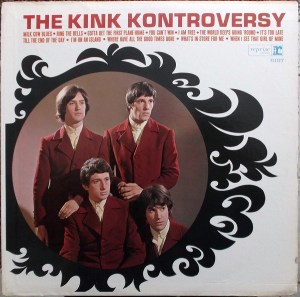
  • Here’s a rare one — a wonderful copy of an early Kinks album, in mono no less, with solid Double Plus (A++) sound or BETTER throughout
  • Both sides here are clean, clear, full-bodied and dynamic with excellent bass and tons of energy 
  • Till the End of the Day was the big hit, and Where Have All the Good Times Gone is also a classic 
  • Allmusic raves, “The Kinks came into their own as album artists — and Ray Davies fully matured as a songwriter — with The Kink Kontroversy…

We discovered the hard way that mono is the only way to go for The Kinks’ third album. The stereo version may in fact be the worst sounding stereo record compared to the mono that we have ever played. (more…)

Letter of the Week – “I played the hell out of my CTA and Chicago 2 back in the day when they came out. Never sounded anything like this.”

More of the Music of Chicago

Reviews and Commentaries for the Music of Chicago

One of our good customers had this to say about some Hot Stampers he purchased recently:

Hey Tom,   

Received my Chicago 2 Hot Stamper last night. Played side 4 A+++ first. Didn’t expect it to sound so amazing. Reminded me of my Miles Davis Kind of Blue where you say zero distortion, zero compression. No shrillness, no muffled vocals, just clear music. All instruments come through with clarity. Relatively quiet too. And this goes for most of the 4 sides of the album.

I played the hell out of my CTA and Chicago 2 back in the day when they came out. Never sounded anything like this. Thanks for a super record.

Steve E. 

Letter of the Week – “The strings on side one are meltingly sweet, especially on You Made Me Love You.”

Hot Stamper Pressings of the Music of Harry Nilsson Available Now

One of our good customers had this to say about some Hot Stampers he purchased recently:

Hey Tom,   

I played the A Little Touch Of Schmilsson White Hot Stamper and loved it. The strings on side one are meltingly sweet, especially on You Made Me Love You. Anytime you get a hot Nilsson stamper please keep me in mind.

All the best,
Phil

Letter of the Week – “I was blown away by the energy captured on this double set…”

One of our good customers had this to say about some Hot Stampers he purchased recently:

Hey Tom, 

Thanks so much for London Calling. Despite having a fair few brilliant records with magic ability to release prodigious amounts of energy (Led Zeppelin, Chicago, BST etc.) I was blown away by the energy captured on this double set and I never thought it would sound soooo good sonically.

I was living in London from 1978 and remember well what a noise this album made. I had it on double cassette and played it constantly, never bought the vinyl at the time but did buy the CD later. I never got the same buzz from the CD and to be honest they didn’t really sound all that good which I put down to the recording. One of my mates at the time was Nick Simonon, the bass player’s younger brother, so I knew they could play really well when they wanted to.

You get to thinking that you’re just getting old and things like London Calling were heard through the heightened emotions of youth and, well, sex and drugs and rock and roll as Mr Dury said. The absolutely brilliant, and I imagine rare, White Hot Stamper has put paid to that, witness a 58 year old singing badly at the top of his lungs as he pogos around the living room! (more…)