Record Mysteries

Perhaps you can explain these record mysteries. We sure can’t.

We Forgot How Mediocre the Originals of A Winter Romance Are

Hot Stamper Pressings of the Music of Dean Martin Available Now

We gave a couple of early pressings another chance and they blew it!

The copies we sell as Hot Stampers are the reissues from the 60s. Here is what we had to say about a copy we posted for sale recently:

With a voice that is relaxed, smooth and warm, Dino is the perfect guy to sing these songs.

The sound of this reissue is far better than any of the originals we played, which mostly weren’t very good. Which just goes to prove (once again) that in the world of vinyl, the idea that the original will have the best sound is a pernicious falsehood.

Rich, sweet, full of ambience, dead on correct tonality, and wonderfully breathy vocals – everything that we listen for in a great record is here.

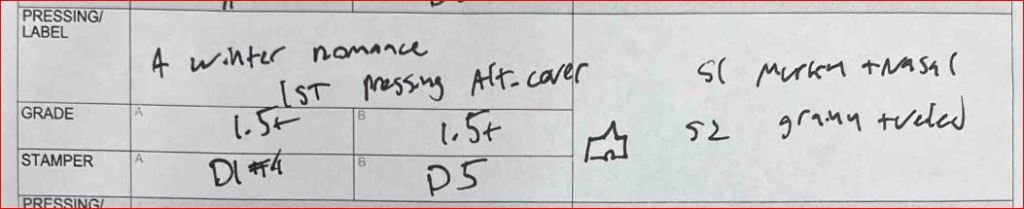
To back that up with actual stamper sheet evidence, here are the grades for the two early pressings we put in our shootout. We’d heard the originals before and never liked them, but sometimes if a particular presssing is cheap and easy to find, we give it another chance.

I think we’re done with the originals now though. They’ve let us down too many times.

Who wants to hear Dean Martin’s gorgeous baritone sounding lean, dry and recessed, or, alternately, murky, nasal, grainy and veiled?

If I didn’t know better I would suspect these originals were modern reissues. This kind of crap sound is all over the Heavy Vinyl records we play, although nobody but us ever seems to notice.

The Point Is

This serves to make a very important point that is near and dear to our hearts:

(more…)

Buy Promos, Don’t Buy Promos — Honestly, Just Make Up Your Mind

Hot Stamper Pressings of Vintage Columbia Albums Available Now

Recently we conducted a shootout for a Columbia recording of jazz fusion music, one that we had auditioned a couple of times before and one for which we knew the music and the general quality of the sound well.

It’s not the record you see pictured. For now we’re keeping the title a mystery, consistent with the idea that we give out lots of bad stampers on this blog, sometimes really bad stampers, but almost never do we give out the good ones.

All the copies we had in our shootout were pressed domestically, and all were mastered by the legendary Robert Ludwig. No Nice Price junk, no imports, none of that crap. We might have made those mistakes in previous shootouts, but having done this shootout a number of times now, we know what works and what doesn’t.

When we do give out the best stampers, as in the case here, we tend to keep the title a mystery. We are not the least bit interested in putting ourselves out of business.

The discussion for today revolves around the idea held by a great many audiophiles that the promo pressings are going to be the best sounding pressings of almost any album they might happen to run across.

And, to be fair, in the case of this mysterious album, they’re potentially right.

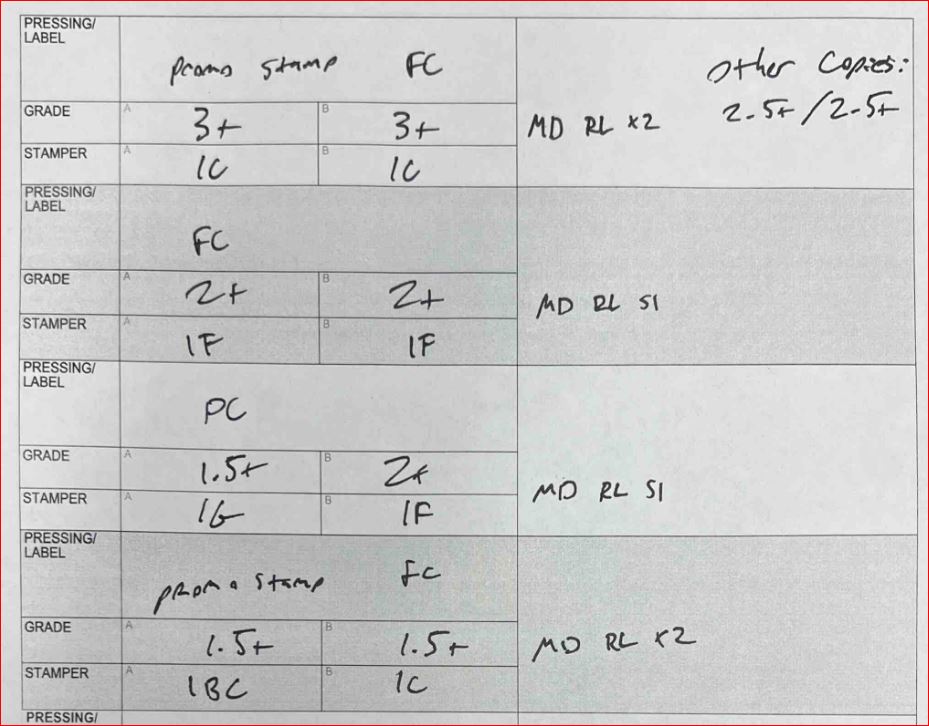
Our best sounding copy was a promo pressing.

What interests me in these findings is that the other promo copy, the one you see at the bottom of the shootout sheet, earned 1.5+ on both sides. It came in last in the shootout, earning good, not great Hot Stamper grades.

If an audiophile collector were to go to Discogs, find the promo pressings, write down their stampers, and then check them against the copies he owned or might want to buy, he could either find himself with a top quality copy, or a far-from-as-good copy, depending on his luck.

Why one set of stampers sounds so much better than another set, or the same or similar set on a different pressing, is a mystery.

Does anyone have a practical way to get around the unfortunate reality that allows one set of stampers to sound great and the same or a similar set of stampers to sound not much better than decent?

Well, we can’t say there is a practical way, but we do know of an impractical one. We’ve been practicing and refining that one for more than twenty years.

(more…)

On this Wonderful Sounding London, Is Ted Burkett’s 2G Stamper the Way to Go?

Hot Stamper Pressings of Recordings by Decca Available Now

Before we go any further, let me say that the record you see pictured is not the record whose shootout and stampers we are about to discuss.

Yes, that’s right, the stamper numbers you see below belong to a different album.

We’ve lately been giving out much more stamper information than we used to, but for now we are keeping this title close to the vest.

What can we learn about the best sounding pressings of this vintage Decca recording, mastered by Mr. E and Mr. G, both outstanding mastering engineers?

It seems that Mr. G cut the better sounding pressing, our shootout winner as a matter of fact, but I can’t say whether the pressing that won was an original, since there were two differently-mastered Blueback pressings in the shootout, and one of them came in tied for last.

It was actually beaten by two copies of the Whiteback reissue. Those seem to be made from the same stampers as the winning pressing, but are those stampers the earliest or did they come later? Who knows?

Mr E. cut a version of the record that was quite a bit less impressive than most of the others, earning grades of 1.5 on side one and 2+ on side two.

Side one was dry and flat, side two rich but hard. We hear a lot of records with these shortcomings. If you play lots of classical music on vintage vinyl, you should be hearing them too.

And Your Point Is?

(more…)

Why Do the Later Stampers of this Shaded Dog Sound So Much Better than the Earlier Ones?

Hot Stamper Pressings of Living Stereo Recordings Available Now

For RCA classical and orchestral recordings, the earliest pressings on the Shaded Dog label, in stereo, tend to be the best sounding, right? 

Maybe. It’s an open question, at least it is for us when we consider how many exceptions to the rule we’ve run into over the 30+ years we’ve been buying and selling them.

If we tallied all the copies we’ve played and created a very large spreadsheet using the data, perhaps we could give you a better answer than “we don’t know,” but we’ve definitely never tallied them up and have no plans to do so. It sounds to me like a lot of work.

However, in our experience, and contrary to the conventional wisdom, sometimes the higher-numbered pressings are better sounding than the lower-numbered pressings. This is true of the stampers for the Shaded Dog pressings below.

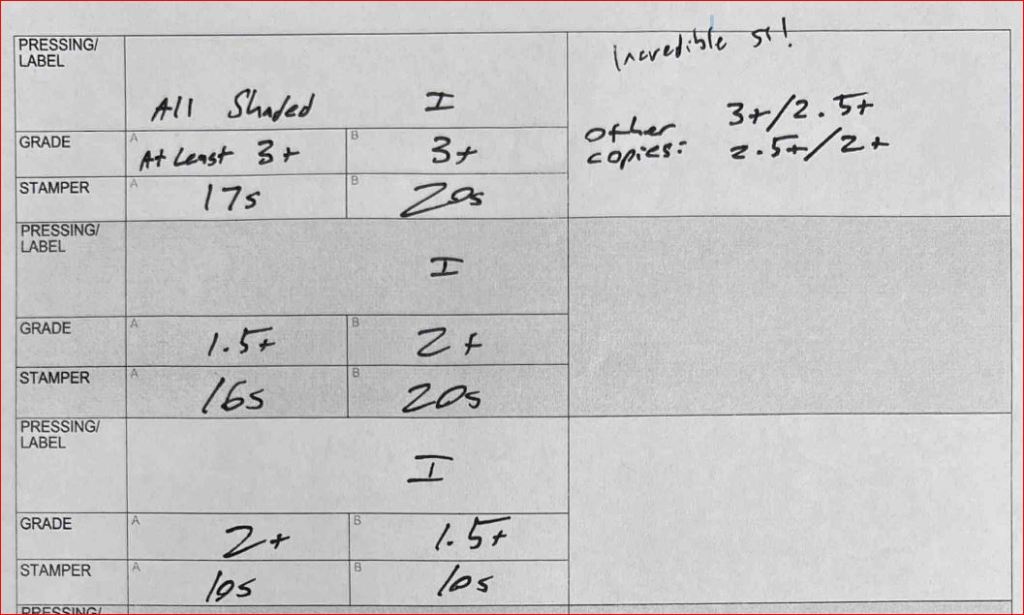
Keep in mind that the stamper numbers you see belong to a different album.

The questions that audiophiles who collect shaded dog pressings should be asking themselves right about now are:

  • Why is 17s/20s consistently better sounding than any copy with any other stampers?
  • Why is the 16s pressing worse sounding than even the worst 17s pressing when they are both Indianapolis pressings only one digit apart?
  • Why does the 20s side two potentially win the shootout with a 3+ grade, but more often only earn a grade of 2.5+ or 2+?
  • And the hardest to stomach of them all are those second-rate 10s stampers. How on earth can they come in last in a shootout against all the copies with higher numbers?

It turns out that the old rule of thumb that the lower-numbered stampers will sound better than the higher-numbered ones is not nearly as reliable as some folks would like it to be.

If it were more reliable, we could all just buy the lowest-numbered stamper copies we could find and know that we had the best available pressing. Then, if we were lucky enough to encounter an even lower-numbered stamper copy, we could buy that one and know that we now had an even better sounding pressing, all without having to play the old “best” one against the new “best” one.

It’s so convenient and logical this way, why would anyone want to bother with a different illogical, inconvenient and obviously counterintuitive method when the other one has so much going for it?

There is only one problem with the idea of collecting the earliest shaded dog pressings in order to secure the best sounding pressings — the fact that the evidence to support such an approach is so spotty. Yes, early stampers win lots of shootouts. No, early stampers do not win all the shootouts, or even a majority of them, judging by a rough calculation using the data from the many hundreds of stamper sheets we’ve created over the years.

Predictions Are Futile

The unfortunate reality we run into is that most of the time we are not able to predict which stampers will win a shootout before we actually sit down to play all our copies.

Although it’s true that there are many pressings in which one set of stampers always wins, the odds are that any particular pressing with those stampers will do well but won’t win, and it sometimes happen that some pressings with those stampers won’t do well at all.

This is why we have to do shootouts, and why you have to do them too, if finding the highest quality pressings is important to you.

Fortunately for readers of this blog, our methods are explained in detail, free of charge.

We’ve also written quite a few commentaries to help audiophiles improve the way they think about records.

I implore everyone who wants to make progress in this hobby to learn from the mistakes we’ve made. There are 146 “we were wrong” listings on the site as of this writing, and we learned something from every damn one of them, painful and costly as those experiences may have been.

(more…)

Out of Two Jazz Samba Originals, Only One Had Even One Good Side

Hot Stamper Pressings of Bossa Nova Albums Available Now

Recently we did a shootout for one of our favorite Bossa Nova albums and had this to say about it:

As you can see from the notes, both sides of our most recent White Hot shootout winning copy were doing everything right.

This is by far the best copy of the album we have ever played — we had no idea a copy could possibly sound this good and be pressed on vinyl this quiet.

Remarkably spacious and three-dimensional, as well as relaxed and full-bodied – this pressing was a big step up over all of the other pressings we played in our recent shootout.

No other copy earned a better grade than 2+ on either side, and some of the originals were godawful (watch for the “wrong” stampers coming to the blog soon).

Here are the wrong stampers we aluded to above, the originals with these markings:

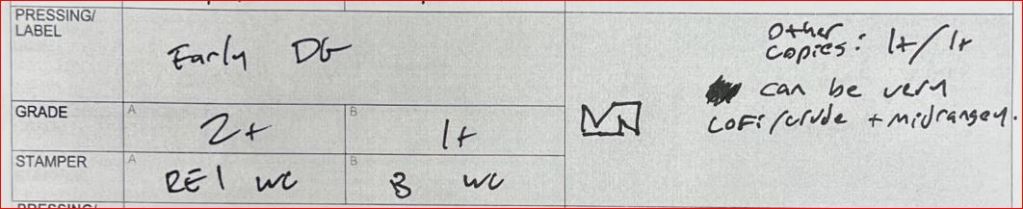
As you can see from the notes, these original stereo pressings can be lo-fidelity, crude and midrangey.

This serves to make a very important point that is near and dear to our hearts:

The idea (and operational premise of most record collectors) that the originals are always better is just a load of bunk.

They might be and then again they might not be. If you want better sounding records, you had better open your mind to the idea that some reissues have the potential to sound better than even the best original pressings.

These, for starters, and there are hundreds more on the blog you can read about here.

(more…)

Out To Lunch on Liberty UA – “The Worst. So Metallic.”

Hot Stamper Pressings of Blue Note Albums Available Now

In our review for the White Hot Stamper shootout winner of Out to Lunch we played in 2023, we wrote:

Out To Lunch is finally back on the site after a four year hiatus, here with INCREDIBLE Shootout Winning Triple Plus (A+++) sound throughout this early pressing.

Dolphy’s debut for Blue Note is an absolute knockout musically, and the quality of the sound on this pressing was everything we could have hoped for.

Both of these sides are amazingly transparent, with stunning immediacy and exceptional clarity – thanks, RVG!

Bobby Hutcherson murders on the vibes on this album – hearing his stellar, groundbreaking work played back on a Top Shelf (3+/3+) copy through a high-end stereo is nothing less than a thrill.

Turn this one up good and loud and revel in the glory that is Out To Lunch, the man’s Masterpiece, and a Must Own jazz album from 1964.

However, if you made the mistake of buying a Black and Blue Liberty UA label pressing, the one that came out in 1970, what you heard bears absolutely no resemblance to the glorious sound we describe above.

Black & light blue label with Blue Note 70’s logo in a square on left, Liberty UA. Inc., Los Angeles, California text on bottom. Runout is etched apart from “VAN GELDER” and “STEREO” that is stamped.

Yes, it may have been mastered by RVG himself, but it sure doesn’t sound much like the better pressings of the album we played in our shootout.

You might think that if Rudy recorded it, he should have known how to master it, so why pay the big bucks for the originals when the man himself was still cutting Blue Note pressings as late as 1970.

Seems like a good rule of thumb to follow, but in this case, it turns out to be a badly mistaken one.

(more…)

I Robot Is a Tough Nut to Crack, Even If You Have Plenty of Early British Pressings to Play

Hot Stamper Pressings of Prog Rock Albums Available Now

Here is how we described a Hot Stamper pressing of I Robot that went up recently, our first in five years:

An early UK pressing (and the first copy to hit the site in years) with seriously good sound throughout.

Many copies tend to be overly smooth, but this one has the kind of clarity that allows the natural textures of the instruments to come through.

Transparency is key to the sound of the better copies, and that is precisely where the dubby domestic pressings fall apart.

Even many of the early British pressings fell short. Good luck finding top quality sound on this one. At the very least you are going to need a big budget — these early UK pressings are not cheap to find in audiophile playing condition.

As you can see, we weren’t kidding about those UK pressings falling short. Here’s two that did, with their stamper numbers posted for all to see.

Side two of the first copy is being held back by sound that is smeary, dry and hard.

Side one of the second copy is murky and hot (bright).

Note that these are early UK stampers, which some in-the-know audiophile collectors will tell you are clearly the best.

(more…)

These Pink Label Pressings Can Sound Good, But Great? Not a Chance

Hot Stamper Pressings of Music on Island Records Available Now

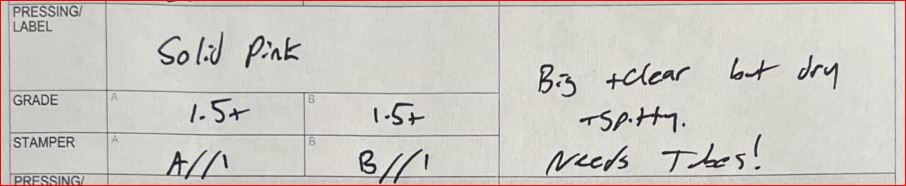
Below you will see the bottom part of the stamper sheet for a shootout we did recently.

Please note that the album you see pictured is not the one we are discussing here.

It very well could have been been a Jethro Tull album, but all we can say for sure is that it was definitely an album on Island, which just happens to be one of our favorite labels, for sound and music.

The earliest pressings for many records on the Island label are not very good. This one — again, not for This Was, for some other record — is not a bad sounding pressing.

With grades of 1.5+ on both sides, it fits comfortably in our section for good, not great sounding LPs — but the right reissues from the 70s are a big step up in class sonically. They’re the ones that win shootouts, not these Pink Label LPs.

It’s big and clear but dry and spitty and badly needs tubes in the cutting chain.

Do the record collectors who prize the Pink Label pressings above all others notice these things?

Do the audiophiles who play them?

Been There, Done That

We’ve run into so many sonically-flawed Pink Label Islands by now that hearing one sound lackluster if not actually awful doesn’t phase us in the least. Some of the other Pink Labels that never win shootouts can be found here.

(more…)

Are All the Original Asylum Pressings of Desperado Demo Discs?

Hot Stamper Pressings of the Music of The Eagles Available Now

No, and this should come as not much of a surprise to anyone that’s bought records from us or spent much time reading this blog.

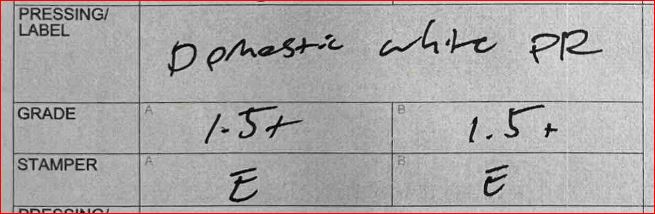
As you can see from the notes below for this particular pressing of Desperado, both sides are passable, earning a minimal Hot Stamper grade of 1.5+.

It’s a decent sounding copy I suppose, but a long, long, long way from the best.

1.5+ is four grades down from the top copy. That’s a steep dropoff as far as we’re concerned. 1.5+ only hints at how good a recording Desperado can be on the best vintage pressings.

To see more records that earned the 1.5+ grade, please click here.

Incidentally, some of them are even on Heavy Vinyl. The better modern pressings have sometimes, if rarely, been known to earn Hot Stamper grades, and one shocked the hell out of us by actually winning a shootout. Wouldn’t you like to know which one!

For those who might be interested, there’s more on our grading scale here.


Desperado Is a True Super Disc 

Of course, the best sound on an Eagles record is found on the first album. For whatever reason, that record was left off the TAS super disc list, even though we feel that both musically and sonically it beats this one by a bit.

On the TAS Super Disc list. Harry Pearson recommends the British SYL pressings for this album. SYL pressings can sound very good; in fact, one of the top copies from a recent (2024) shootout was SYL. A bit of a surprise since our champion for both sides during the previous shootout was domestic.

Does that mean the best domestics will always beat the best SYL pressings? Not at all. Only critical listening can separate the superb pressings from the typical ones. After playing more than a dozen copies of this album this week, we can definitively tell you that there are far more mediocre copies of this record — both domestic and import — than truly exceptional ones. The typical pressing of this album, whether the domestic or SYL, falls far short of belonging on a Super disc list.

There are killer domestic copies and killer SYL imports out there, and the only way to know which ones sound good is to collect ’em, clean ’em, and play ’em.

Remember: TAS list doesn’t guarantee great sound, but Better Records does — if you don’t think a record sounds as good as we’ve stated, we’ll always happily take that record back and refund your money. Good luck getting ol’ Harry to send you a check when the TAS-approved pressings you pick up don’t deliver.

(more…)

What Lessons Can We Take from this Columbia Shootout?

Hot Stamper Pressings of Vintage Columbia Albums Available Now

Recently we conducted a shootout for one of our favorite Columbia recordings, one that we had auditioned many times before and for which we knew the music and the general quality of the sound well.

It’s not the record you see pictured.

For now we’re keeping the title a mystery, consistent with the idea that we give out plenty of stamper information on this blog, including some of the worst ones we’ve had the misfortune to run into, but rarely do we feel the need to give out the really good ones. After decades of doing this kind of work, the time and effort that has gone into finding them is beyond calculation.

When we do give out the best stampers, as is the case here (3BA baby!), we make a point of keeping the title under wraps.

We are not the least bit interested in putting ourselves out of business.

The discussion for today revolves around the idea held by a great many audiophiles that the original White Print 360 label pressings are going to be the best sounding for any title that was made starting with that label in the early-60s.

(The Black Print 360 mono is an example of the mono labels being a bit behind the times as far as I can tell.)

Note that we did not bother to put any of the 70s Red Label Columbia pressings in the shootout. We’ve been down that road with this title before, and we have yet to hear one worth the vinyl wasted on it.

Columbia, like most labels, seems to have made very little effort with the sound quality of their reissues. Perhaps it was the result of all the bad transistor equipment in the studios by the time the 70s rolled around, but that would be speculation on my part, as well as something that would be very hard to find evidence for one way or the other.

We did find one Monk record that sounded better on the Red Label reissue, and readers of this blog should easily be able to find out which one it is by reading our many reviews for Monk’s recorded output.

We have two new lists for those who would like to know which Columbia labels win shootouts — one for 6-Eye winners and one for 360 Label winners.
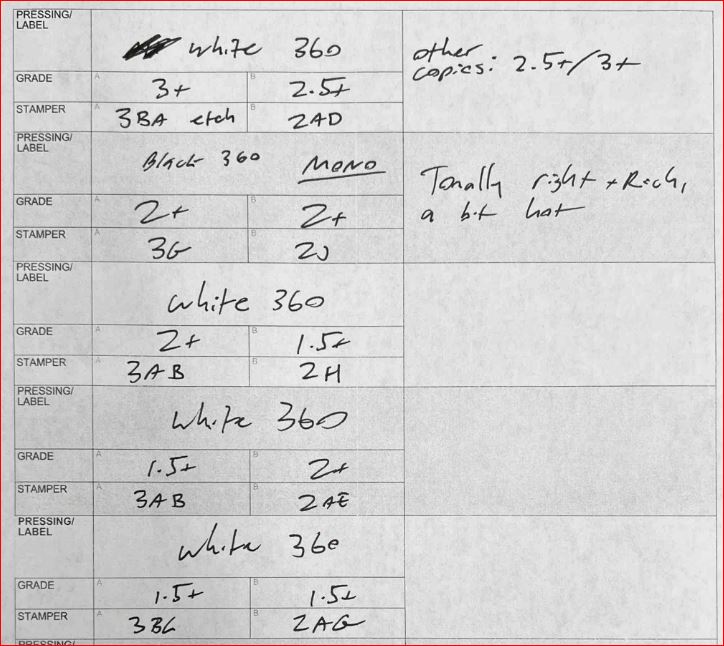
What interests me in these findings is the following:

  • Both of our shootout winning copies had the same stampers. Can that really be a coincidence?
  • The shootout winner for side one is 3BA.
  • Two copies with stampers very similar to that one, 3AB, did noticeably worse, 2+ and 1.5+.
  • And the worst of the White Print 360 Label pressings barely earned a Hot Stamper grade at all.
  • They are on the same original label as the other copies, but for some reason they don’t sound as good. Why is that?

If an audiophile collector were to go to Discogs, find a nice clean copy on the early label and buy it, he might find that he know owns a top quality sounding copy, a pretty good sounding copy, or a not-nearly-as-good sounding copy as he’d hoped for, depending on his luck.

And what would he know about the quality of the recording? About that thing that audiophiles and record collectors seem to reference so often, “the master tape,” as if they have any way of knowing about the sound of a tape they have never come into contact with.

Just Assume

If he had a killer 3BA, wouldn’t he just assume that for some reason the recording must be amazing and consider himself lucky to find such a wonderful record to play.

Why one set of stampers sounds so much better than another set, or the same or a similar set on a different pressing, is a mystery, and it’s one that we confidently predict will never be solved.

Does anyone have a practical way to get around the reality that allows one set of stampers to sound great and the same or a similar set of stampers to sound no better than very good, if that?

Well, we can’t say there is a practical way, but we do know of an impractical one. We’ve been practicing and refining that one for more than twenty years.

We just play lots and lots of copies of the albums to find out how they sound.

(more…)