Passable Sound

Buy Promos, Don’t Buy Promos — Honestly, Just Make Up Your Mind

Hot Stamper Pressings of Vintage Columbia Albums Available Now

Recently we conducted a shootout for a Columbia recording of jazz fusion music, one that we had auditioned a couple of times before and one for which we knew the music and the general quality of the sound well.

It’s not the record you see pictured. For now we’re keeping the title a mystery, consistent with the idea that we give out lots of bad stampers on this blog, sometimes really bad stampers, but almost never do we give out the good ones.

All the copies we had in our shootout were pressed domestically, and all were mastered by the legendary Robert Ludwig. No Nice Price junk, no imports, none of that crap. We might have made those mistakes in previous shootouts, but having done this shootout a number of times now, we know what works and what doesn’t.

When we do give out the best stampers, as in the case here, we tend to keep the title a mystery. We are not the least bit interested in putting ourselves out of business.

The discussion for today revolves around the idea held by a great many audiophiles that the promo pressings are going to be the best sounding pressings of almost any album they might happen to run across.

And, to be fair, in the case of this mysterious album, they’re potentially right.

Our best sounding copy was a promo pressing.
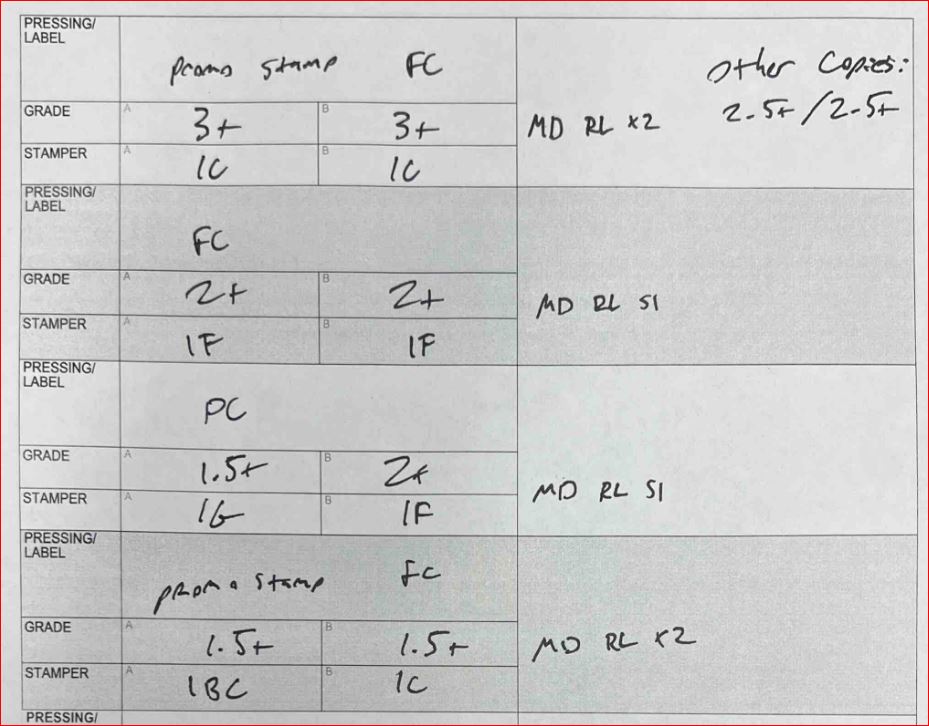
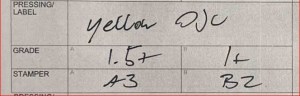
What interests me in these findings is that the other promo copy, the one you see at the bottom of the shootout sheet, earned 1.5+ on both sides. It came in last in the shootout, earning good, not great Hot Stamper grades.

If an audiophile collector were to go to Discogs, find the promo pressings, write down their stampers, and then check them against the copies he owned or might want to buy, he could either find himself with a top quality copy, or a far-from-as-good copy, depending on his luck.

Why one set of stampers sounds so much better than another set, or the same or similar set on a different pressing, is a mystery.

Does anyone have a practical way to get around the unfortunate reality that allows one set of stampers to sound great and the same or a similar set of stampers to sound not much better than decent?

Well, we can’t say there is a practical way, but we do know of an impractical one. We’ve been practicing and refining that one for more than twenty years.

(more…)

The Domestic Stampers of 10cc’s Masterpiece Had Us Fooled for Years

Hot Stamper Pressings of the Music of 10cc Available Now

I haven’t run into many audiophiles who own a copy of The Original Soundtrack, or any other 10cc album for that matter.

It’s the rare person who has the the kind of system that can play a recording with such explosive dynamics.

As I have an uncontrollable habit of saying, this is the kind of record that is guaranteed to bring any audiophile stereo to its knees. 

Since that is the case, and audiophiles who build the kind of big systems in heavily-treated custom rooms to meet the challenge such recordings present are thin on the ground — very thin it seems, as I am the only one I have ever known — it stands to reason that practically no audiophiles have ever experienced the size and power of the recording as it was meant to be heard.

I thought I was doing a very good job reproducing the sound of the album, but recent research has proved that, once again, I was mistaken. Previously I had written:

The recording itself is a tour de force, the main reason I’ve been demonstrating my stereo with it for more than thirty years. The extended suite that opens side one, One Night in Paris, has ambience, three-dimensional sound effects, and incredibly dynamic multi-tracked vocals at the climax that will leave you with your jaw on the floor.

All true. But I had been playing both domestic pressings and British pressings over the course of those thirty years, and I don’t remember clearly preferring one to the other.

With our latest shootout the British pulled away from the pack in a big way, with no British pressing being beaten by any domestic competitor.

The domestic pressings ranged from very good — 2+ on both sides — to passable at best — 1+ on both sides.

I honestly used to think they were close, that they would be hard to tell apart. Those days are gone. We are operating at a whole ‘nother level, and I am glad that we are. We want to give out only the most accurate information and sell only the best sounding records.  What I had thought was true ten years ago turns out to have been off the mark.

When reality turns out to be dramatically different from what you thought it was, and you can prove it — you actually have the physical records to back up your newer, more correct understanding — that’s audio progress.

You might try proving yourself wrong more often.

Most audiophiles I have run into like having their biases confirmed, but look where that has gotten some of them — stuck in a rut. Break out of that way of thinking and you may very well find that you have broken through to another level.

Because if you don’t go out of your way to prove yourself wrong, who will?

(more…)

Out of Two Jazz Samba Originals, Only One Had Even One Good Side

Hot Stamper Pressings of Bossa Nova Albums Available Now

Recently we did a shootout for one of our favorite Bossa Nova albums and had this to say about it:

As you can see from the notes, both sides of our most recent White Hot shootout winning copy were doing everything right.

This is by far the best copy of the album we have ever played — we had no idea a copy could possibly sound this good and be pressed on vinyl this quiet.

Remarkably spacious and three-dimensional, as well as relaxed and full-bodied – this pressing was a big step up over all of the other pressings we played in our recent shootout.

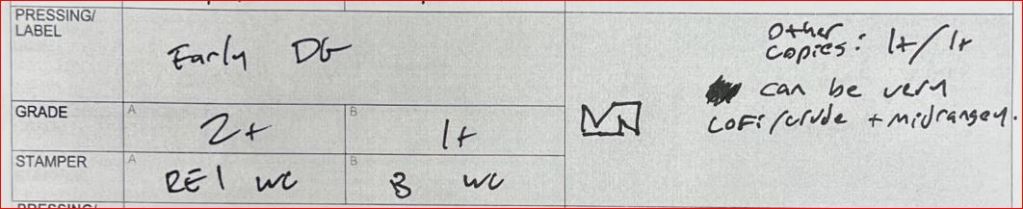
No other copy earned a better grade than 2+ on either side, and some of the originals were godawful (watch for the “wrong” stampers coming to the blog soon).

Here are the wrong stampers we aluded to above, the originals with these markings:

As you can see from the notes, these original stereo pressings can be lo-fidelity, crude and midrangey.

This serves to make a very important point that is near and dear to our hearts:

The idea (and operational premise of most record collectors) that the originals are always better is just a load of bunk.

They might be and then again they might not be. If you want better sounding records, you had better open your mind to the idea that some reissues have the potential to sound better than even the best original pressings.

These, for starters, and there are hundreds more on the blog you can read about here.

(more…)

On Barney Kessel’s Easy Like, Stick With the Earlier Contemporary Pressings

Hot Stamper Pressings of Contemporary Jazz Albums Available Now

The Shootout Winning pressing we played in 2024 was yet another killer Barney Kessel recording from the Golden Age of Tube Recording:

Both sides of this vintage Contemporary pressing were giving us the rich, sweet and tubey MONO sound we were looking for, earning INCREDIBLE Shootout Winning Triple Plus (A+++) grades or close to them

Roy DuNann (at the console on select tracks, with Val Valentin handling engineering duties on the others) always seems to get phenomenally good sound out of the sessions he recorded – amazingly realistic drums in a big room; Tubey Magical guitar tone; deep, note-like string bass, and on and on

For some reason, the guitar sound from this era of All Tube Chain Recording seems to have died out with the times – it can only be found on the best of these vintage pressings, and, as you may imagine, the better the guitar sounds, the more likely it is that the record will win our shootout

If you don’t have an electric guitar jazz record with this kind of off-the-charts Tubey Magical sound, maybe it’s time you got one

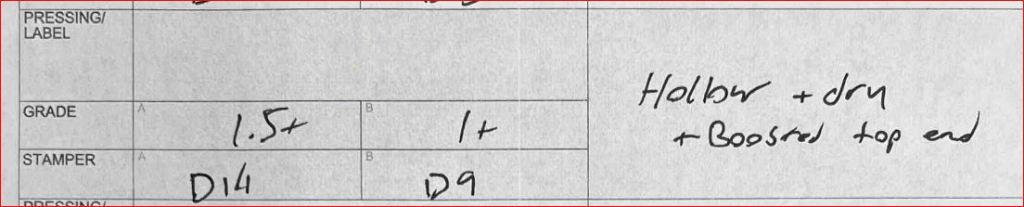
You would never know how good the recording was by playing this D14/D9 pressing on the original label.

The sound was hollow and dry with a boosted top end. The 1+ grade awarded to this side two means it’s simply not that good, early label or no early label.

This Is Why

This is why we do shootouts, and why you must do them too, if owning the highest quality pressings is important to you.

Fortunately for readers of this blog, our methods are explained in detail, free of charge.

We’ve also written quite a few commentaries to help audiophiles improve the way they think about records.

I implore everyone who wants to make progress in this hobby to learn from the mistakes we’ve made. There are 146 “we were wrong” listings on the site as of this writing, and we learned something from every damn one of them.

(more…)

I Robot Is a Tough Nut to Crack, Even If You Have Plenty of Early British Pressings to Play

Hot Stamper Pressings of Prog Rock Albums Available Now

Here is how we described a Hot Stamper pressing of I Robot that went up recently, our first in five years:

An early UK pressing (and the first copy to hit the site in years) with seriously good sound throughout.

Many copies tend to be overly smooth, but this one has the kind of clarity that allows the natural textures of the instruments to come through.

Transparency is key to the sound of the better copies, and that is precisely where the dubby domestic pressings fall apart.

Even many of the early British pressings fell short. Good luck finding top quality sound on this one. At the very least you are going to need a big budget — these early UK pressings are not cheap to find in audiophile playing condition.

As you can see, we weren’t kidding about those UK pressings falling short. Here’s two that did, with their stamper numbers posted for all to see.

Side two of the first copy is being held back by sound that is smeary, dry and hard.

Side one of the second copy is murky and hot (bright).

Note that these are early UK stampers, which some in-the-know audiophile collectors will tell you are clearly the best.

(more…)

Dvorak / Symphony No. 2 – Hard to Recommend on Living Stereo

Hot Stamper Pressings of Living Stereo Titles Available Now
I have never heard a copy of LSC 2489 sound better than decent. We would say the sound quality of this Dvorak title is most likely to be passable at best. True, we haven’t played all that many copies, but the copies we did play were either unimpressive or not good at all.

It certainly is very unlikely to have the wonderful sound of the best Living Stereo pressings that you can find on our site, each of which has been carefully evaluated to the highest standards.

If you can get one for cheap, under five bucks say, go for it. Otherwise we recommend that you pass if what you are looking for is audiophile quality sound.

Perhaps the poor recording quality (I’m guessing; obviously I’ve never heard the master tape) explains the poor sound of the Classic Records remastered version from 1994.

Not that that stopped anybody from buying those awful 180 gram pressings! They may have been mastered by one of the greats, Bernie Grundman, but he was well past his prime when he was working for that awful label, as we explain here.

Have You Noticed?

If you are a fan of Living Stereo pressings, have you noticed that many of them – this one for example – don’t sound good?

If you’re an audiophile with good equipment, you should have. But did you? Or did you buy into the hype surrounding these rare LSC pressings and just ignore the problems with the sound?

I would say RCA’s track record during the 50s and 60s is a pretty good one, offering (potentially) excellent sound for roughly one out of every three titles or so.

But that means that odds are there would be a lot of dogs in their catalog. This is definitely one of them.

(more…)

How Does the Abbey Road Half-Speed of Sticky Fingers Sound?

Hot Stamper Pressings of the Music of The Rolling Stones Available Now

A listing for an early domestic Hot Stamper pressing for Sticky Fingers will typically be introduced this way:

If you have never heard one of our Hot Stamper pressings of the album, you (probably) cannot begin to appreciate just how amazingly well-recorded an album it is.

It is truly a landmark Glyn Johns / Andy Johns / Chris Kimsey recording, as well as our favorite by the Stones, a Top 100 Title (of course) and one that earned 5 stars on Allmusic (ditto).

5 stars: “With its offhand mixture of decadence, roots music, and outright malevolence, Sticky Fingers set the tone for the rest of the decade for the Stones.”

However, we found the new Half-Speed Heavy Vinyl pressing mastered by Miles Showell at Abbey Road to be seriously lacking in “outright malevolence.” It’s so tame that even at high volume it would be unlikely to disturb the most innocuous afternoon tea in the back garden of a country estate.

Brown Sugar is:

  • It’s smaller
  • Not as weighty or lively
  • Tonally pretty close

Sway is:

  • Tonally pretty close
  • Just missing some weight and dynamics

Oh, is that all? Well then, not as bad as it could have been, right?

1.5+, which means it would qualify for our lowest Hot Stamper grade. But no record that does not earn at least that grade on both sides can make it to our site, and when we flipped the album over, side two let us down even more than side one.

Bitch is:

  • A little sandy up top

I Got the Blues is:

  • Missing the dynamics

Grade for side two: 1+. Substandard. Not good enough to sell.

(more…)

The MHS Recording of Chopin’s First Piano Concerto Had the Most Natural Piano of Them All

Hot Stamper Pressings of the Music of Frederic Chopin Available Now

There are some wonderful Musical Heritage Society records sitting in the bins of your local record store or Goodwill, and this one is worth picking up just to hear how well recorded the piano is.

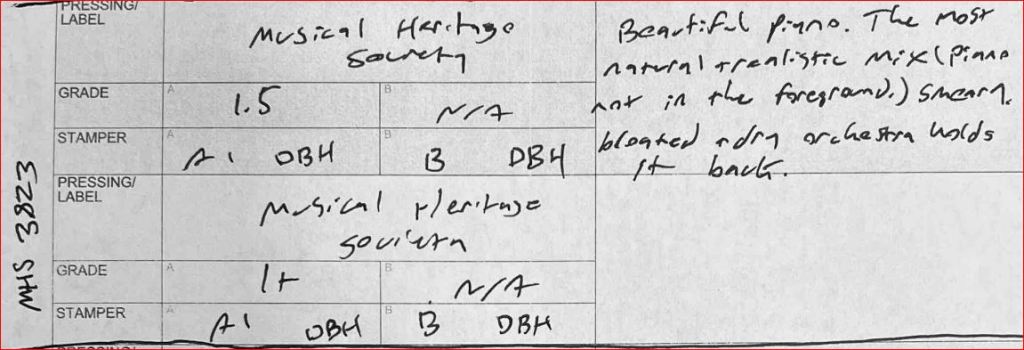
We described it this way:

Beautiful piano. The most natural and realistic mix with the piano not in the foreground.

But there is more to the recording than the sound of the piano.

Smeary, bloated and dry orchestra holds it back.

Well, at least we tried. (Note that side two was deemed not worth grading.)

Our favorite recording for performance and sound is the Living Stereo from 1961, LSC 2575, with Rubinstein at the piano and Skrowaczewski conducting the New Symphony Orchestra of London.

This is what we had to say about the sound of our Shootout Winner:

We love the huge, solid and powerful sound of the piano on this recording. This piano has weight and heft. As a result, it sounds like a real piano.

For some reason, a great many Rubinstein recordings are not capable of reproducing those seemingly all-important qualities in the sound of the piano.

Those are, as I hope everyone understands by now, the ones we don’t sell. If the piano in a piano concerto recording doesn’t sound solid and powerful, what is the point of playing such a record?

Or, to be more accurate, what is the point of an audiophile playing such a record? (Those of you who would like to avoid bad sounding vintage classical and orchestral records have come to the right place. We’ve compiled a very long list of them for precisely that purpose, and we add to it regularly.)

(more…)

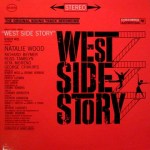
Audiophiles Should Avoid These Stampers on West Side Story

Hot Stamper Pressings of Soundtrack Albums Available Now

None of the 360 Label pressings we played recently were competitive with the Six Eye originals. Some sides earned 2+, but no copy on 360 earned grades of 2+ on both sides.

Stick with the early, stereo pressings in order to have any shot at top quality sound.

As you can see from the notes below for this album, one side was passable, earning our 1.5+ grade. It’s a decent sounding record I suppose, but a long, long, long way from the best.

1.5+ is four grades down from the top copy. That’s a steep dropoff as far as we’re concerned. 1.5+ only hints at how good a recording this can be on the best vintage pressings. To see more records that earned the 1.5+ grade, please click here. For those who might be interested, there’s more on our grading scale here.

Here is what a top quality pressing should sound like:

You’ll find INCREDIBLE Shootout Winning Triple Plus (A+++) grades or close to them on both sides of this original Columbia 6-Eye Stereo pressing.

Spacious, rich and smooth – only vintage analog seems capable of reproducing all three of these qualities without sacrificing resolution, staging, imaging or presence.

Tonality is the hardest thing to get right on this album, and here it is right on the money, because if it were not, it would not have won the shootout.

For those of you who like to do your own shootouts, good luck, you will need a lot of originals to find one that sounds as good as this one does.

5 stars: “The soundtrack of the West Side Story film is deservedly one of the most popular soundtrack recordings of all time, and one of the relatively few to have attained long-term popularity beyond a specialized soundtrack/theatrical musical audience.”

This album is at least five times more common in mono than it is in stereo, and finding enough clean early stereo pressings takes us years nowadays.

(more…)

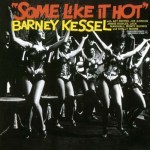
Skip the A3/B2 OJC on Some Like It Hot

Hot Stamper Pressings of the Music of Barney Kessel Available Now

Some Like It Hot badly needed to be made using tubes in the mastering chain, but that didn’t happen.

It’s another case of an OJC with zero Tubey Magic. You might as well be playing the CD. I would bet money it sounds just like this record. Maybe even better.

I suppose if you have a super-tubey phono stage, preamp or amp, you might be able to supply some of the Tubey Magic missing from this pressing, but then all your correctly mastered records wouldn’t sound right, now would they?

We had two copies of the OJC and one of them did better than this one. It earned a Super Hot grade for one side. If you see this OJC pressing in your local record store, avoid these stampers. The sound isn’t awful, but it’s not very good either, especially considering how amazing the tapes must be, based on the sound of our White Hot Stamper shootout winner.

The OJC pressing of this album is much better suited to the old school audio systems of the 60s and 70s than the modern systems of today. These kinds of reissues used to sound good on those older systems, and I should know, I had an old school stereo and some of the records I used to think sounded good back in the day don’t sound too good to me anymore (although this one never did).

The OJC pressings of Some Like It Hot are thinner and brighter than even the worst of the later pressings we’ve auditioned. That is decidedly not our sound. It’s not the sound Roy DuNann was famous for, and we don’t like it either, although we have to admit that we did find the sound of many of these OJC pressings more tolerable — even enjoyable — in the past.

Our old system from the 80s and 90s was tubier, tonally darker and dramatically less revealing, which strongly worked to the advantage of leaner, brighter, less Tubey Magical titles such as this one. Pretty much everybody I knew had a system that suffered from those same afflictions.

Like most audiophiles, I thought my stereo sounded great.

And the reality is that no matter how hard I worked or how much money I spent, I would never have been able to achieve top quality sound for one simple reason: most of the critically important revolutionary advances in audio had not yet come to pass.

It would take many technological improvements and decades of effort until I would have anything like the system I do now.

(more…)