Passable Sound

Skip the Later Labels of this Rodrigo Title on the TAS List

More of the music of Joaquín Rodrigo (1901-1999)

This is a TAS list title that deserves its place on a list of Super Discs, as long as you are talking about one that sounds the way the best copies do.

The best sides are exceptionally transparent and full of energy, with the lush strings of the guitars sounding much more textured and real. The orchestra is rich and sweet, especially for a Mercury, yet the guitars are clear, present and appropriately placed relative to the surrounding ensemble.

But all the later label pressings we’ve bought over the years, mostly because we could afford to buy them, hoping for a miracle, have fallen well short of the mark. The notes below tell the story of their typical and obvious shortcomings.

Side One of the most recent late label pressing we played was crude, smeary and hot (bright).

Side Two was even worse, it was very hot (bright).

If you want to avoid records with these problems, click on any of the links below to see the titles we’ve found over the years with the same issues.

(more…)

You Can Do a Lot Better than this Tchaikovsky 5th

Hot Stamper Classical and Orchestral Pressings Available Now

We played a few copies of the album we had sitting in the backroom and none of them quite worked for us.  The sound was somewhat veiled and dry. (The 1s/1s pressing was the worst of the bunch, by the way.)

A decent record, not much more than that, and not really not worth putting in a shootout with the better pressings of the work we have discovered over the years. The best of the bunch might earn a grade of 1.5+, so why even bother?

Yes, we still have no Hot Stamper pressings of the work to offer, but we know they are coming, someday. Our current favorite is a performance by Mravinsky on DG from 1961.

It’s a “good, not great” vintage classical record, best played on an old school stereo system that can hide its shortcomings.

The much more revealing systems of today, like the one we employed to audition this very copy, simply make it too easy to spot its many faults.

(more…)

Domestic Pressings of Clear Spot? Forget ‘Em!

Hot Stamper Pressings of the Music of Captain Beefheart Available Now

We did this shootout many years ago, so many years ago that I cannot find a record of it.

I remember we thought the German pressings were perhaps a bit boosted on both ends and not as natural sounding as the domestic pressings.

After a multitude of improvements in our cleaning and playback, we would agree with our previous understanding that the German pressings are often wrong, but now we also know how right the right ones can be.

It turns out tha some German pressings are not particularly good, another piece of the puzzle that fell into place during our most recent shootout, as painful as that turned out to be considering the money wasted on them.

Did we have the bad German stamper pressings last time around? Who knows?

The producer, Ted Templeman, (Doobie Brothers, James Taylor) brought his mainstream talents to bear on this music, and when the Captain’s free-form tendencies smashed into Templeman’s conservatism, the result was this musical supernova — out there, but not too far out there.

(Play Trout Mask Replica sometime if you miss that feeling from your old hippie days of being on acid. With that music, drugs are entirely superfluous.)

I don’t know how many audiophiles like Captain Beefheart, probably not too many, but if you’re ever going to try one of his albums, this is the place to start: his masterpiece.

(more…)

Khachaturian Conducts Spartacus – Not As Good As We Thought

Hot Stamper Pressings of Orchestral Spectaculars Available Now

Probably more than ten years ago we had written the following about CS 6322:

The famous TAS list recording. The Decca 180 gram version is very good, but those of you who appreciate the qualities of the original mastering will want to have this one. 

Now jump ahead five years to five years ago. We played three or four copies of the album and none of them really worked for us.

The sound was a bit opaque, a bit dry, and not nearly as tubey as we would have liked. (Many Decca recordings suffer from dry strings, a shortcoming that is apparently rarely noticed by audiophiles and the reviewers who write for them.)

A good record, not a great one, and for that reason really not worth cleaning up and doing a shootout for.  The best copy would not pay for the labor to discover it.

Seems we got this one wrong. Live and learn is our motto, for precisely this reason.

There are quite a number of others that we’ve run into over the years with similar shortcomings. Here they are, broken down by label.

  • London/Decca records with weak sound or performances
  • Mercury records with weak sound or performances
  • RCA records with weak sound or performances

To this day, some of the records on the TAS list seem to me better suited to the old school audio systems of the 60s and 70s than the modern systems of today. These kinds of records used to sound good on those older systems, and I should know, I had an old school stereo and some of the records I used to think sounded good back in the day don’t sound too good to me anymore.

For a more complete list of those records, not just the ones on the TAS List, click here.

The following three things are best kept in mind when a pressing doesn’t sound like we remember it did, or think it should:

(more…)

Avoid M Stampers and Imports If You Want the Best Sound on Tapestry

Hot Stamper Pressings of the Music of Carole King Available Now

The domestic pressings with the stampers shown below, and others similar to them, have not done well in our shootouts for years now. If you own a copy with these stampers, or ones like them, the good news is that we can get you a much better sounding copy of Tapestry than you have ever heard. It won’t be cheap, but we can guarantee that it will be very, very good.

Stamper numbers are not the be-all and end-all in the world of records, a subject we discuss below, but after hearing too many copies with these stampers and decidedly mediocre sound, from now on we are going to focus our attention on the stampers that do well and leave copies with these markings sitting in the bins.

Note that the last listing is for an early UK import. I have no idea how that record got into the shootout. The chances of an import doing well up against Bernie Grundman’s brilliant mastering — from back in the good old days of the 60s, 70s and 80s when he was actually doing brilliant mastering work — is so close to zero it can’t be calculated.

Sometimes we take long shots, hoping to learn something new. In this case, we learned what we already know. Yes, there are still some audiophiles who buy imports of a record like this hoping to find better sound. I can’t imagine what kind of system it would take to hide the bright, dubby sound of the UK pressing we played, but judging from some of the foolishness I read on the Hoffman forum and others of its ilk, I know there must be plenty of them out there.
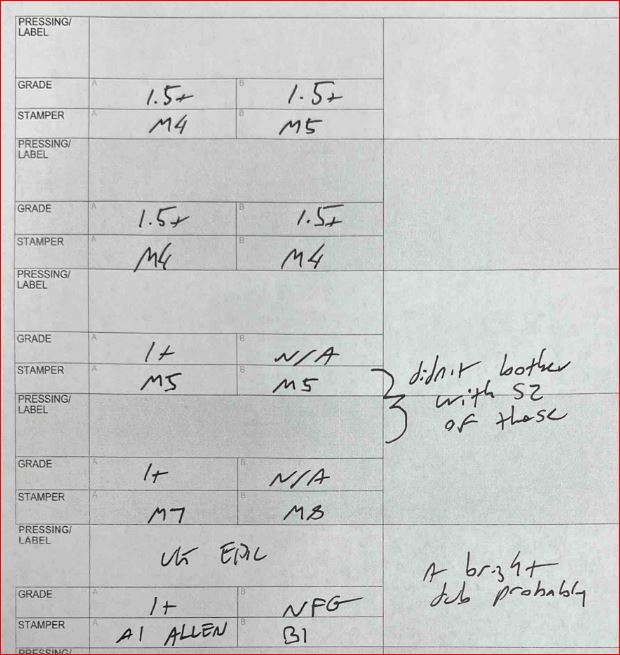
Monarch is responsible for the mediocre-at-best sound of the pressings with the stampers you see above. We tend to like Monarch pressings as a rule, but sometimes they mess up, and they messed up Tapestry compared to others who pressed the record.

We liked all the other copies with other stampers better than than these, which just goes to show you can never know how good it can get until it gets that good. That is what shootouts allow us to do.

Playing close to twenty copies of Tapestry in a shootout allows us to grade Tapestry on a scale, with the M stampers filling out most of the bottom and the other stampers — wouldn’t you like to know which ones! — occupying the middle and the top of the distribution. 

This is what the forum posters fail to understand. They think they have a Hot Stamper when what they actually have (maybe!) is a good sounding record. They don’t know how amazing the record can sound — so much more amazing than the one they own, probably — so they assume they have something good, maybe even the best.

They probably do not, but who really knows? The shootout would supply the data they need to support their conclusions, and since they could not be bothered to conduct one, they have no data to back up their opinions.

The “probably” you see in the above two sentences is there for a good reason. We make a point of being clear about what we can know and we cannot know, and we cannot know what a record sounds like until we play it.

This is obviously true for those of us who try to listen as critically as possible, but we also know that it is just as important to think about records the right way.

(more…)

The Original Mercury Pressings Don’t Sound Good on this Title, But Why?

Hot Stamper Pressings of Mercury Classical Recordings Available Now

For Mercury classical and orchestral recordings, the original FR pressings (when there are such pressings) on the plum label are the way to go, right? 

In some cases, yes. We talk about how much better the FR pressings for The Firebird are compared to the much more common, and still quite good, M2 reissue pressings here.

And the FR pressing of the Rachmaninoff record you see pictured above may indeed have the best sound.
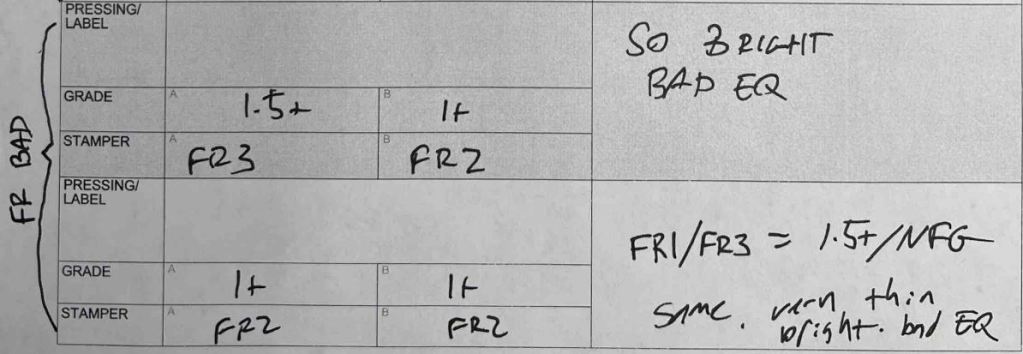

The stamper numbers you see below belong to a different album.

(We’ve lately been giving out much more stamper information than we used to, but for now we are keeping this title closer to the vest.)

Note that we had FR1, FR2 and FR3, all originals, yet none of them could be considered good enough to offer our customers.

It’s just another one of a number of rules of thumb collectors use (“A method or procedure derived entirely from practice or experience, without any basis in scientific knowledge; a roughly practical method.”), one that will sometimes lead you astray if what you are trying to find are not just good sounding pressings of albums, but the best sounding pressings of albums.

Same with reissue versus original. Nice rule of thumb, but it only works, to the extent that it works at all, if you have enough copies of the title to know that you’re not just assuming the original is better. You actually have the data — gathered from the other LPs you have played — to back it up.

Who knew the recording would sound so much better on the right reissue pressings?

(more…)

Getz-Gilberto on Japanese Vinyl

Hot Stamper Pressings of Bossa Nova Albums Available Now

Sonic Grade: C

This is a Minty looking Verve Japanese Import LP.

It’s not competitive with the best domestic pressings, but you could definitely do worse.

Trying to find domestic copies that aren’t trashed is getting harder every day, so if you’re a click and pop counter, this copy may be the ticket.

Stan Getz is a truly great tenor saxophonist, the cool school’s most popular player. This LP is all the evidence you need. Side 1 has those wonderfully relaxed Brazilian tempos and the smooth sax stylings of Stan Getz.

Side two for me is even more magical. Getz fires up and lets loose some of his most emotionally intense playing. These sad, poetic songs are about feeling more than anything else and Getz communicates that so completely you don’t have to speak Portugese to know what Jobim is saying. Call it cool jazz with feeling.

(more…)

For the Mendelssohn and Prokofiev Violin Concertos‎, These Are the Stampers to Avoid

Hot Stamper Pressings Featuring the Violin
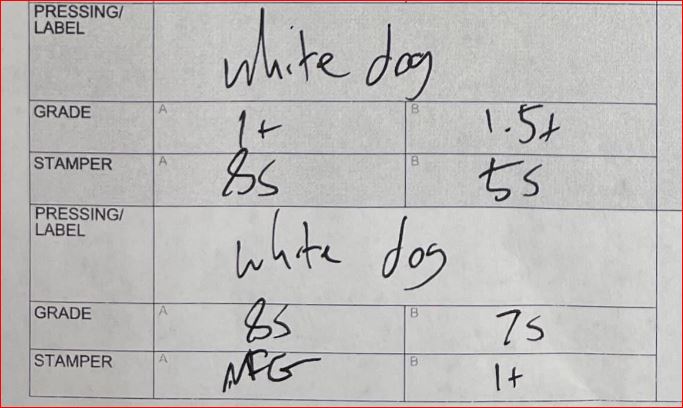
None of the White Dog pressings we played in our most recent shootout were better than mediocre, and the 70s Red Seal pressings were uniformly awful as well.

We had two different side ones with 8s stampers, and two different sides twos with 5s and 7s, respectively. (One of our Shaded Dogs had a 5s side two but it sounded quite a bit better than the White Dog side two with 5s.)

There are quite a number of other records that we’ve run into over the years with obvious shortcomings.

(more…)

Can’t Buy Much of a Thrill – Now with Notes!

Hot Stamper Pressings of the Music of Steely Dan Available Now

At least some of the thrills are here, and for any record on Chad’s label, that is really saying something.

Sonic Grade: B+ to A-

A few comments for the UHQR have been added since this went up on 4-4-23, now that I’ve had a chance to see the notes in full. I’ve noted the additions in brackets and sectioned some off as well.

Word from the listening panel is in, and they say the new Bernie Grundman mastered UHQR is actually not bad! [Not good, but not bad.]

The tonality is much closer to correct than a lot of the Heavy Vinyl LPs we’ve played recently. Oddly enough, instead of the EQ being overly smooth, in the way that appears to be all the rage these days, the tonality instead errs on the side of somewhat thinner and brighter than ideal. (One could also use the term “correct.”)

This should not be especially surprising. Bernie Grundman has been remastering Heavy Vinyl records since the mid-’90s. Overly smooth titles that he cut are hard to find, on the hundreds of titles he did for Classic Records or anywhere else. The more of his recent work I play, the more I have come to see his disastrously dull Giant Steps as an outlier.

The instruments where these tonality issues are most easily recognized are two that we have written a great deal about on this blog: pianos and snare drums.

The snare sound on the Brothers in Arms that Chris Bellman cut at Bernie Grundman Mastering has the same problem as this new Can’t Buy a Thrill. (Review with specifics coming, sorry for the delay, it has only been two years and I’ve been busy with other things.)

The thin sounding piano on the Cisco pressing of Aja is likewise a common shortcoming we notice on many of the modern recuts we play.

With links to 29 titles to test for a correct piano sound, and 13 for the snare test, the critical listener should be able to find some records in his own collection that will shed light on the problems we heard on Chad’s UHQR.

If your system errs on the side of fat and dark, Chad’s repress has what you need to “fix” the sound of the album. Instead of a murky piano, now you have a clear one. Instead of a too-fat snare getting lost in the mix, now you have a clear snare that you can more easily separate out from the other instruments.


Added 4/5

Note that we did not play all four sides. We felt sides one and three were enough to get an idea of how thrilling this pressing was going to be. We don’t get paid to play Heavy Vinyl pressings. We play them to help audiophiles understand their strengths and weaknesses. We hope that some audiophiles will hear what we have described and perhaps consider that there is a better way. That other way can be found in the bins of their local record store or, for those with deeper pockets, on our site. Either way, settling for the kind of sound found on these modern reissues is the one choice no one should be making.

We played the following four songs, and heard the sonic qualities described below:

(more…)

Debussy / La Mer / Haitink

The Music of Claude Debussy Available Now

This is an older review. When we revisited this title recently, we felt it was badly lacking in Tubey Magic, a real deal killer for us here at Better Records.

It’s a decent sounding record, not much more than that, but it does have a top performance. If you see one for cheap in the bins, pick it up and give it a spin.

We prefer Ansermet’s performances for Decca of both La Mer and Prelude to the Afternoon of a Faun.

Our review for the album from years ago can be seen below. As for other records we think we got wrong — we may change our minds again! — you can find more under the heading of Live and Learn.

(more…)