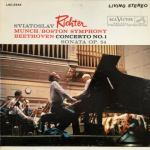
Performers

Bruch / Vieuxtemps – Scottish Fantasy / Concerto No. 5 / Heifetz

More Classical Recordings Featuring the Violin
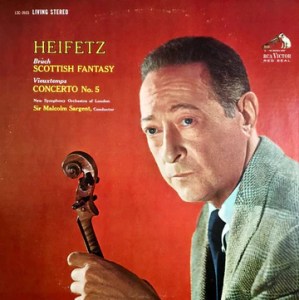
  • Boasting two Shootout Winning Triple Plus (A+++) Living Stereo sides, this early Shaded Dog pressing of these wonderful Romantic works could not be beat
  • The Heifetz Scottish Fantasy on side two is our favorite and contains the best sound we know for the work
  • The orchestral passages are rich and sweet, the violin present, all of its harmonics gloriously intact
  • As usual for a Living Stereo Heifetz violin recording, he is front and center, with every movement of his bow reproduced clearly, without being hyped-up in the least
  • Marks in the vinyl are sometimes the nature of the beast with these early pressings – there simply is no way around them if the superior sound of vintage analog is important to you
  • We will have some Super Hots coming soon for those of you looking for quieter vinyl

If you want to demonstrate the magic of Living Stereo recordings, jump right to the second movement of the Bruch. The sonority of the massed strings is to die for. When Heifetz enters, the immediacy of his violin further adds to the transcendental quality of the experience. Sonically and musically it doesn’t get much better than this, on Living Stereo or anywhere else.

The violin is captured beautifully on side two. More importantly, there is a lovely lyricism in Heifetz’s playing which suits Bruch’s Romantic work perfectly. I know of no better performance.

The Bruch brings to mind some of Tchaikovsky’s works. It’s so sweet and melodic, it completely draws you into its world of sound. This is a work of unsurpassed beauty, music that belongs in any serious classical collection.

The performance of the Vieuxtemps Concerto No. 5 is also wonderful, and the Romantic music is even better than I remember it from our last shootout.
(more…)

Where Cheap Turntables Fall Flat – The Music of Franz Liszt

Hot Stamper Pressings of Classical Music Available Now

Classical music is unquestionably the ultimate test for proper turntable/arm/cartridge setup.

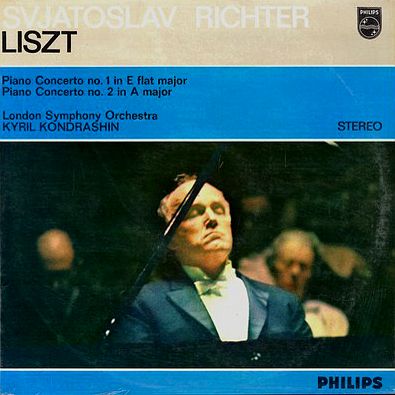
The Liszt Piano Concerto record you see pictured is a superb choice for making small adjustments to your setup in order to improve the playback of these very difficult to reproduce orchestral recordings.

Here are some other reviews and commentaries touching on these areas of turntable setup.

One of the reasons $10,000+ front ends exist is to play large scale, complex, difficult-to-reproduce music such as Liszt’s two piano concertos. You don’t need to spend that kind of money to play this record, but if you choose to, it would surely be the kind of record that could help you recognize the sound quality your tens of thousands of dollars has paid for.

It has been my experience that cheap tables more often than not collapse completely under the weight of a mighty record such as this.

(more…)

In 2005 We Were (Probably) Way Off the Mark for Brahms’ Piano Concerto No. 2

Hot Stamper Pressings of Living Stereo Titles Available Now

UPDATE 2024

This is a very old review. We would no longer agree with the assertion that the White Dog pressings are better sounding than the Shaded Dogs. In our recent shootout, the first one I can remember since 2005 — that was 19 years ago! — the White Dogs did not do nearly as well as the Shaded Dogs we have on hand.


This White Dog pressing is the best sounding copy I’ve ever heard, much better than the earlier pressings. The piano doesn’t break up like it does on those, especially in the second movement.

Finally the piano sounds right – solid and with the correct overtones. It goes without saying that this is an exceptionally good performance as well.

One of the best of the Cliburn recordings which, as you may know, are rarely any good, the worst of them being LSC 2252 and the best of them being, probably, LSC 2507.


This is an Older Classical/Orchestral Review

Most of the older reviews you see are for records that did not go through the shootout process, the revolutionary approach to finding better sounding pressings we started developing in the early 2000s and have since turned into a veritable science.

We found the records you see in these older listings by cleaning and playing a pressing or two of the album, which we then described and priced based on how good the sound and surfaces were. (For out Hot Stamper listings, the Sonic Grades and Vinyl Playgrades are listed separately.)

We were often wrong back in those days, something we have no reason to hide. Audio equipment and record cleaning technologies have come a long way since those darker days, a subject we discuss here.

Currently, 99% (or more!) of the records we sell are cleaned, then auditioned under rigorously controlled conditions, up against a number of other pressings. We award them sonic grades, and then condition check them for surface noise.

As you may imagine, this approach requires a great deal of time, effort and skill, which is why we currently have a highly trained staff of about ten. No individual or business without the aid of such a committed group could possibly dig as deep into the sound of records as we have, and it is unlikely that anyone besides us could ever come along to do the kind of work we do.

(more…)

Tchaikovsky, Rachmaninoff, et al. / Music of Old Russia / Milstein

Hot Stamper Pressings Featuring the Violin

  • Music of Old Russia finally returns to the site on this rare, hard to find original Blue Angel Stereo pressing with two INSANELY GOOD Shootout Winning Triple Plus (A+++) sides
  • To call this title hard to find with the right stampers is quite an understatement — our last shootout for the album took place in 2013 (!)
  • Both of these sides are remarkably transparent, with huge amounts of space around the players, the unmistakable sonic hallmark of the properly mastered, properly pressed vintage analog LP
  • This is one of the better violin showpiece albums we have ever offered on the site

This rare, hard to find original Blue Angel stereo pressing has exquisite sound. As we noted in our listing for Milstein’s Saint-Saens Third, it is the rare Heifetz album on Shaded Dog that can compete with it.

We would rank this Angel recording/pressing with the best of Rabin and Milstein on Capitol, as well as the wonderful Ricci and Campoli discs on London/Decca.

The transparency of both sides lets you “see” the orchestra clearly, without sacrificing richness or weight.

What a record! What a performance from Nathan Milstein.

(more…)

Beethoven and Richter – Our Favorite Performance on Vinyl

More of the Music of Ludwig van Beethoven

  • A stunning copy of this wonderful concerto performance that boasts a Shootout Winning Triple Plus (A+++) side two mated to a solid Double Plus (A++) side one, and reasonably quiet vinyl for a Shaded Dog from 1961
  • This pressing has the real Living Stereo magic in spades, but unlike most of the RCA concerto recordings, Richter, the brilliant soloist featured here, is not overly spotlighted, hence the much more natural “concert hall” sound
  • The piano is part of the orchestra, and properly sized, allowing the contributions of the other musicians to be heard more clearly, laid out as they are so elegantly across a huge and deep Boston Symphony Hall stage

In orchestral music, when it comes to clarity there is nothing close to the sound of the live performance, but some records, this one especially, give you the sense that you are hearing it all. Audio may be an illusion but it can be a very convincing one.

The spaciousness and three-dimensionality of the recording are also exceptional. Through the efforts and skill of the RCA engineers, that striking openness in the recording is somehow combined with an electrifying immediacy in the sound of the piano, no mean feat. One rarely hears both, except of course live (and not always even then).

There may be other performances of merit, but I know of no recording of this music with better sound. If you are demonstrating naturalistic sound, not bombastic Hi-Fi spectacularity, this pressing more than qualifies as a Demo Disc.

(more…)

On This Recording of Concerto No. 1, Transparency and Piano Weight Are Key

More of the Music of Ludwig van Beethoven
Notes from a recent shootout.

This pressing has the real Living Stereo magic in spades, but unlike most of the RCA concerto recordings, Richter, the brilliant soloist featured here, is not overly spotlighted, hence the much more immersive “concert hall” sound.

The piano is part of the orchestra, and properly sized, allowing the contributions of the other musicians in the orchestra to be heard more clearly, laid out as they are elegantly across a huge and deep Boston Symphony Hall stage.

All of which adds up to a top quality piano concerto recording in every way.

When it comes to clarity in orchestral music, there is nothing that comes close to the sound of a live performance.

However, some records, this one especially, give you the sense that you are hearing it all.

Audio may be an illusion but it can be a very convincing one.

The spaciousness and three-dimensionality of the recording are also exceptional. Through the efforts and skill of the RCA engineers, that striking openness in the recording is somehow combined with an electrifying immediacy in the sound of the piano, no mean feat. One rarely hears both, except of course live (and not always even then).

There may be other performances of merit, but I know of no recording of this music with better sound. If you are demonstrating naturalistic sound, not bombastic Hi-Fi spectacularity, this pressing more than qualifies as a DEMO DISC.

What to Listen For

What typically separates the killer copies from the merely good ones are qualities that we often look for in the records we play: transparency. Transparency allows you to hear into the recording, reproducing the ambience and subtle musical cues and details that high-resolution analog is known for.

(Note that most Heavy Vinyl pressings being produced these days seem to be seriously Transparency Challenged. Lots of important musical information — the kind we hear on even second-rate standard-weight pressings — is simply not to be found.)

Solid weighty sound for a piano concerto recording is critically important as well. The piano has to be big, powerful, and solid, as massive as a boulder, just the way it can be in the concert hall. In this respect it helps to have Sviatoslav Richter pounding away on the instrument of course.

Side One

Amazing – big and rich without a touch of smear on the strings or the percussive piano. The piano is right sized and that is unusual indeed in our experience.

Dynamic as all get out, with lively horns and a piano that is clear and present. Tonally correct, in a big hall, the sound is Hard To Fault.

The piano is so clear, yet the orchestra is as rich and smooth as one could possibly ask for. No smear, no congestion, no bandwidth limitations – this is the sound of the master tape. No modern reissue — digital or analog — will ever be able to reproduce more than a fraction of the sound found on this pressing.

Side Two

Big, lively and less congested that most of the copies we played. Side one had no smear, this side has a touch, but the sound is wonderful nevertheless.

Listen to the woodwinds on this side; they are glorious. You will have a hard time finding better sound for that section of the orchestra on other recordings.

Beethoven’s Violin Concerto – Classic Records Reviewed

Hot Stamper Pressings Featuring the Violin
An Audiophile Hall of Shame pressing and another Classic Records Classical LP we found seriously lacking in some of the most important qualities we listen for on the classical and orchestral recordings we audition.

The Classic pressing of this album does not present the listener with the sound of a real, wood instrument, bowed by horsehair, in a physical space.

It is an airless fraud, a cheap fake reproduction that’s incapable of fooling anyone currently in possession of two good ears, a properly set up hi-fi system and a decent collection of Golden Age violin concerto recordings.

The fact that a great many writers identifying themselves as audiophiles embraced Classic’s mediocre-at-best reissues tells me that they were lacking some or all of the above.

Notes from a Recent Hot Stamper Pressing (more…)

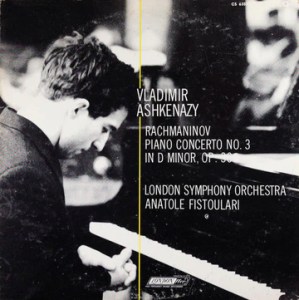
Rachmaninoff – Piano Concerto No. 3 / Ashkenazy / Fistoulari (London)

More of the Music of Sergei Rachmaninoff

  • A vintage London Stereo pressing of Rachmaninoff’s Piano Concerto No. 3 boasting excellent Double Plus (A++) sound from first note to last
  • Spacious, rich and smooth – only vintage analog seems capable of reproducing all three of these qualities without sacrificing resolution, staging, imaging or presence
  • Looking to demonstrate just how good 1963 Tubey Analog sound can be? This outstanding copy may be just the record for you
  • If you love this well-known piano concerto as much as we do, this is surely a classic from 1963 that belongs in your collection.
  • To read the 60-odd reviews and commentaries we’ve written for piano concertos, please click here

This Decca-engineered recording from the Walthamstow Assembly Hall is rich and natural, with lovely transparency and virtually no smear to the strings, horns or piano.

What an amazing recording. What an amazing piece of music.

The sound is explosively dynamic and on this copy it was positively jumping out of the speakers. In addition, the brass and strings are full-bodied, with practically no stridency, an unusual feat the Decca engineers seem to have accomplished.

Big, rich sound can sometimes present problems for piano recordings. You want to hear the percussive qualities of the instrument, but few copies pull off that trick without sounding thin. This one showed us a piano that was both clear and full-bodied.

With huge amounts of hall space, weight and energy, this is Demo Disc quality sound by any standard. Once the needle has dropped you will quickly forget about the sound (and all the money you paid to get it!) and simply find yourself in the presence of some of the greatest musicians of their generation, captured on one the greatest analog recordings of the day.

The right UK Decca pressings, Boxed and Unboxed, can also have excellent sound.

(more…)

For the Mendelssohn and Prokofiev Violin Concertos‎, These Are the Stampers to Avoid

Hot Stamper Pressings Featuring the Violin

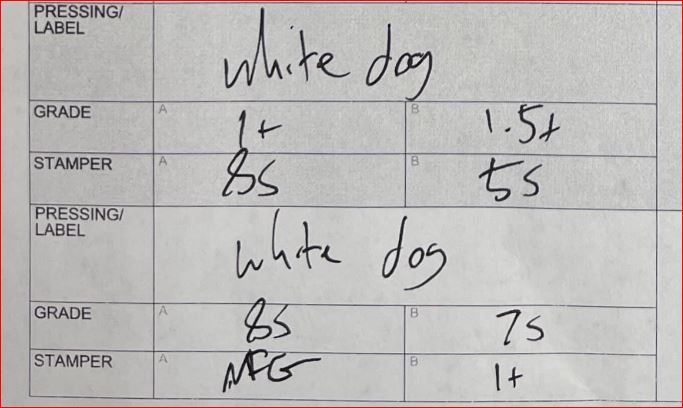
None of the White Dog pressings we played in our most recent shootout were better than mediocre, and the 70s Red Seal pressings were uniformly awful as well.

We had two different side ones with 8s stampers, and two different sides twos with 5s and 7s, respectively. (One of our Shaded Dogs had a 5s side two but it sounded quite a bit better than the White Dog side two with 5s.)

There are quite a number of other records that we’ve run into over the years with obvious shortcomings.

(more…)

Rachmaninoff / De Falla – Rhapsody On A Theme Of Paganini / Nights In The Gardens Of Spain

More of the Music of Sergei Rachmaninoff

  • The rich, textured sheen of the strings the RCA engineers achieved in the ’50s and ’60s is a joy to hear throughout these pieces
  • This is something the Heavy Vinyl crowd will never experience, because that sound just does not exist on modern remastered records the way it does on these vintage pressings
  • Tonally correct from top to bottom and as transparent as practically any vintage recording you may have heard, the combination of clarity and Tubey Magic here will be hard to beat
  • To see more of the best orchestral recordings with top quality sound we’ve done shootouts for, click here
  • If you’re a fan of Rachmaninoff and/or Rubinstein, we think this Living Stereo from 1960 belongs in your collection.

This superb Living Stereo recording checks off a number of boxes for us here at Better Records.

Until we heard the right later pressings, we had always been disappointed with this TAS List recording, wondering what all the fuss was about. The original Shaded Dog pressings we had played left a lot to be desired. Like many of the old records we audition, it was somewhat crude and congested, and badly lacked both highs and lows, our definition of boxy sound.

Well, now we know. The early Shaded Dog pressings have consistently worse sound than the reissues we are offering here.

We never offered the record as a Hot Stamper pressing because we didn’t think the sound of the originals was all that impressive, TAS List or no TAS List.

Mystery solved, and truly Hot Stampers have now been made available to the discriminating audiophile.

Harry’s list, as was so often the case, did not provide the information needed to find the pressing that captured all the qualities of the recording the way this one does.

Did Harry have a good later pressing? Did he have an original and simply liked it more than we did? We’ll never know.

(more…)