Focus-Jazz

These are just a sampling of the jazz albums we think we know well.

Passion Flower Is Better Music with Better Sound than For Duke

Hot Stamper Pressings of Pablo Recordings Available Now

This is one of the all time great Pablo sleepers.

Why is no one else writing about records like these? The music is wonderful and the sound is top drawer on the best copies. If you’ve tried and failed with other Pablo Zoot Sims records, fear not: this title is one of the best we have ever played, musically and sonically.

The ensemble is huge, probably at least a dozen pieces at any given time, and all that energy is captured on the best copies with tremendous engineering skill. The lively arrangements are by none other than Benny Carter, a man who knows his jazz. His career started in the ’20s(!) and lasted into this century if you can believe it. I consider myself fortunate to have seen him play locally when he was more than 90 years old. He stlll had it, kind of.

What to Listen For

Clarity and transients.

Thickness and fatness were common problems with Passion Flower — many copies were overly rich and somewhat opaque. It’s not necessarily a bad sound, but it becomes more and more irritating as you find yourself struggling to hear into the musical space of the studio. Smear is a problem too; many copies were lacking the transient information of the best.

In a nutshell, our Hot Stamper pressings are the most transparent copies that are tonally correct, with the least amount of smear.

Better Sound than a Direct Disc?

Musically Passion Flower is everything that For Duke isn’t, and although it may not be a Direct to Disc recording, it sure sounds better to these ears than that pricey TAS List Super Disc. The insufferably dead room For Duke was recorded in has forever ruined the album for me. I can’t stand that sound (which helps explain our aversion to Heavy Vinyl around these parts — the sound of the new remasters is consistently lacking in space, ambience and three-dimensionality).

(more…)

What We Listen For – Timbre, Richness, Tubey Magic and Freedom from Artificiality

Hot Stamper Pressings of the Music of Barney Kessel Available Now

Man, when you play a Hot Stamper copy of an amazing recording such as this, the timbre of the instruments is so spot-on it makes all the hard work and money you’ve put into your stereo more than pay off. To paraphrase The Hollies, you get paid back with interest.

If you hear anything funny in the mids and highs of this record, don’t blame the record. This is the kind of record that shows up audiophile BS equipment for what it is: Audiophile BS. If you are checking for richness, Tubey Magic and freedom from artificiality, I can’t think of a better test disc. It has loads of the first two and none of the last.

A Great Test Disc

We highly recommend you make every effort to find yourself a copy of this album and use it to test your own equipment. The right pressing can be both a great Demo Disc and a great Test Disc.

Two of the best sounding jazz guitar records in the history of the world were made by Barney Kessel for Contemporary: this one, and Music To Listen To Barney Kessel By. I used to have them both in my personal collection.


UPDATE 2015

This was written many years ago when I actually had a personal collection. With 40,000 records in stock I don’t need a collection of my own anymore. Any record I might want to play is in stock, waiting to be shot out.

UPDATE 2025

I’ve retired to Georgia. All the records are back in California where we are working diligently at finding them good homes.


Such a wonderful idea for an album. The melodies from Bizet’s Carmen are unforgettable and perfect fodder for jazz improvisation. Don’t think that this is just guitar and rhythm. This is a full band with lots of horns, clarinets of all kinds, bassoons, oboes, flutes, piano, vibes — the variety of sounds to be found on this album is practically unlimited.

And with Roy DuNann’s engineering, you will never hear richer, fuller sound with more accurate timbres for all the instruments mentioned above. The guy was a genius. His recordings define High Fidelity for me. I know of none better.

The Sound We Love

For those of you who appreciate the sound that Roy DuNann (and Howard Holzer on other sessions) were able to achieve in the 50s and 60s at Contemporary Records, this LP is a Must Own (unless you already have it, which is doubtful considering how hard it is to find a copy in clean condition). Their stuff just doesn’t get any better than this. Tubey magic, richness, sweetness, dead-on timbres from top to bottom — this is a textbook example of Contemporary sound at its best.

From an audiophile point of view, how can you beat a Roy DuNann recording of so many instruments? It’s audiophile heaven. The sound is gorgeous, all tube, live-to-two-track direct from the Contemporary studio.

Warning: Stereo Editorial Follows

The same is true for audio equipment, as I’m sure you’ve experienced first-hand. Some stereos can just bore you to tears with their dead-as-a-doornail sound and freedom from dynamic contrasts. Other stereos are overly-detailed and fatiguing; they wear out their welcome with their hyped-up extremes.

As Goldilocks will gladly tell you, some stereos are just right; they have the uncanny ability to get out of the way of the music. Some equipment doesn’t call attention to itself, and that tends to be the kind of equipment we prefer around here at Better Records.

After thirty five years in this hobby [now closer to fifty], I’ve had my share of both. 90+ per cent of the stuff I hear around town makes me appreciate what I have at home. I’m sure you feel the same way.

Instruments Used on This Album

Guitar
Flute
Alto Flute
Oboe
Clarinet
Trombone
Saxophones
Bassoon
Bass Clarinet
Piano
Bass
Drums


Further Reading

Kind of Blue – An Album We Are Clearly Obsessed With

Hot Stamper Pressings of Miles’s Albums Available Now

Kind of Blue is an album we admit to being obsessed with — just look at the number of commentaries we’ve written about it.

Some highlights include:

Kind of Blue checks at least seven of our most important boxes here at Better Records.

  1. It’s a core jazz title, one that belongs in any serious audiophile’s record collection
  2. It’s a jazz masterpiece
  3. It’s a personal favorite
  4. It was recorded by one of the greats, Fred Plaut
  5. It was produced by another one of the greats, Teo Macero
  6. It was recorded at Columbia’s famed 30th street studio
  7. And some of the greatest jazz artists of their day played on it:

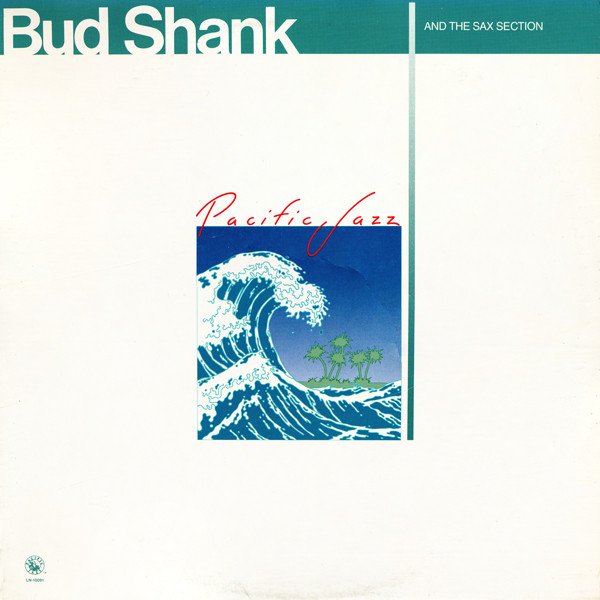
We Used to Sell the Dubby Reissues of Bud Shank And the Sax Section, Ouch

More of the Music of Bud Shank

I used to sell reissues of this record back in the day some twenty odd years ago. While they aren’t terrible — lackluster is a more apt description — we can clearly hear now that they are made from second generation tapes.

The stage is recessed and collapsed, and the sound never gets big enough nor lively enough to free itself from the speakers. (This happens to be our all-too-common experience with many of the Heavy Vinyl pressings we audition and consequently write mean things about. Can you blame us? We loathe that sound.)

It’s yet another example of a record we was wrong about. Live and Learn, right?

I would not buy any Pacific Records pressing with this style reissue cover. We’ve never heard one sound better than mediocre on our current system.


This record sounds best this way:

(more…)

Eric Dolphy – Rarely have I heard a string bass sound better than it does here.

More of the Music of Eric Dolphy

Do the originals sound as good as these ’70s pressings?

Not a clue. Never ran into a clean one in my life.

Rarely have I heard a string bass sound better than it does here. The flute is equally gorgeous. Amazing that they could record a live jazz concert this well in 1961.

Although this is only our second Hot Stamper listing for the album, I’ve known about Dolphy’s legendary Copenhagen Concert for close to thirty years. When an audiophile hears a bass clarinet reproduced the way it is on this record he is very unlikely to forget it.

With the hundred-plus changes to the system and room I’ve made over that span of time the reproduction of the bass clarinet has only gotten more real.

It’s proof positive that everything in audio can get dramatically better with constant effort and attention to every aspect of sound. From the room to the electricity to the right cleaning techniques, everything can come together to make that instrument sound like it is in the room with you, a room that sounds like you imagine a jazz club might sound in 1961.

What a thrill. It’s what we audiophiles live for. It’s what keeps us going in this hobby.

If you know people who used to be into audio and aren’t anymore it’s because they just never got to the point where they were doing it right.

To Swing Or Not To Swing in 1955 with Barney Kessel

xxxMore Jazz Recordings Featuring the Guitar

If you’re a fan of Jazz Guitar, this 5 Star All Tube MONO Recording from 1955 belongs in your collection.

Definitely one of the best early Contemporary LPs we’ve ever played – this is why audiophiles love mono.

Man, this music is a blast when it sounds this good. I don’t think there’s a whole lot you could do to make this music sound any better. It’s one of the best early mono Contemporary LPs I’ve ever played. It’s so Tubey Magical. Kessel’s guitar sound is out of this world.

The music here matches the sound for excellence. The whole band just swings. There’s a real old rag-timey feel to the songs.

Look at this list of all-star players: Harry Edison, Jimmy Rowles, Red Mitchell and Shelly Manne — this is some serious jazz talent.

(more…)

Why Can’t Anybody Remaster As Well As Dave Ellsworth Nowadays??

More of the Music of Marty Paich

More Jazz Recordings of Interest

If you large group swinging West Coast Jazz is your thing – think Art Pepper Plus Eleven – you will really get a kick out of this one.

Albert Marx was the producer of the original sessions back in 1957. Fast-forward to the ’80s and Marx is now the owner of his very own jazz label, Discovery Records. Who would know the sound of the original tapes better than he? Working with Dave Ellsworth at KM, Marx has here produced one of the best jazz reissues we’ve heard in years.

We finally got hold of an original, and sure enough, it had some of the qualities we might have guessed it would have.

It was big and rich, as expected, but it was also crude and gritty, like a lot of old jazz and pop vocal records from the ’50s are.

The reissue not only got rid of those problems, but because it was cut properly on much better mastering equipment, it was also more open and resolving of studio space and detail.

If you want to know what a properly remastered record sounds like, this pressing will show you. It should also make clear that the second-rate pressings being made today are a disgrace, pure and simple, a drum we have been beating on for at least the last fifteen years.

If only these modern engineers could put together the quality mastering chain that Albert Marx had available, as well as Dave Ellsworth and his team, not to mention the knowledge of how to use it, and the critical listening skills required to get it right and to recognize when it was right.

Practically all of the qualities missing from modern records are found right here on this budget Discovery pressing. If more reissues sounded like this, we seriously might have to rethink our business model.

But modern reissues don’t sound like this. They practically never do. Which makes the service we offer more necessary than ever.

And if you can’t afford our records, we tell you how to find your own Hot Stampers.

(more…)

How Do You Like Your Sky Dive – Blurry, Thick, Veiled, Dull or Slow?

Hot Stamper Pressings of the Music of Freddie Hubbard Available Now

That’s too often the sound we hear on the Heavy Vinyl records being pressed these days. From time to time we get hold of some to audition just to see what they’ve done with (to?) the titles we know well.

We sure don’t have any intention of selling them. That would violate our principles. And the very name of our operation: Better Records. It’s rare for anything pressed on Heavy Vinyl to qualify as a Better Record, which is why so many of them can be found in our Heavy Vinyl disasters section.

Not sure why so few reviewers and audiophiles notice these rather obvious shortcomings, but we sure do, and we don’t like it when records sound that way.

But that sound can be found on plenty of vintage pressings too. We should know, we’ve played them by the tens of thousands!

Smear is by far the most common problem with the copies we played. When the transient bite of the trumpet is correctly reproduced, maintaining its full-bodied tone and harmonic structures, you know you have a very special copy of Sky Dive (or First Light or Red Clay, etc., etc.).

When the sound is blurry, thick, veiled, dull or slow, you have what might be considered something more like the average copy.

Rudy gets one hell of a lively trumpet sound in this period of his career. If you have a good pressing of one of his early ’70s jazz recordings the sound can be positively EXPLOSIVE, with what feels like all the size and power of live music.

If you don’t have a hot copy of Red Clay, get one. It’s some of the best funky jazz ever recorded. No collection should be without it.

I Once Fell Into a Common Audiophile Trap – Legrand Jazz Helped Me Find My Way Out

More Vintage Hot Stamper Pressings on Columbia Available Now

This 2005 commentary discusses how easy it is to be fooled by tweaks that seem to offer more transparency and detail at the expense of weight and heft. Detail is everything to some audiophiles, but detail can be a trap that’s easy to fall into if we do not guard against it.

The brass on this wonderful Six Eye Mono pressing of the album set me straight. [Since that time I have not been able to find mono pressings that sounded as good as I remember this one sounding. That sh*t happens.]

I was playing this record today (5/24/05) after having made some changes in my stereo over the weekend, and I noticed some things didn’t sound quite right. Knowing that this is an exceptionally good sounding record, albeit a very challenging one, I started playing around with the stereo, trying to recapture the sound as I remembered it from the last copy that had come in a few months back.

As I tweaked and untweaked the system around this record, I could hear immediately what was better and what was worse, what was more musical and what was more Hi-Fi. The track I was playing was Night In Tunisia, which has practically every brass instrument known to man, in every combination one can imagine.

Since this is a Mono pressing, I didn’t have to worry about issues like soundstaging, which can be misleading, or perhaps distracting is a better way to describe the problem.

I was concerned with tonality and the overall presentation of the various elements in the recording.

To make a long story short, I ended up undoing all the things that I had done to the system over the weekend! In other words, what improvements I thought I had made turned out not to be improvements at all. And this is the album that showed me the error of my ways.

Brass instruments are some of the most difficult to reproduce, especially brass choirs.

(more…)

Listening for Tubey Magic, Track by Track on Straight from the Heart

More of the Music of John Klemmer

Presenting another entry in our extensive Listening in Depth series with advice on what to listen for as you critically evaluate your copy of Straight from the Heart. Here are more albums currently on our site with similar Track by Track breakdowns.

The best copies give you dynamics and immediacy like you have rarely heard outside of the live event.

Hell, this record IS live; it’s live in the studio. It’s a direct to disc recording, what else could it be?

There is simply nothing getting in the way of the music. If you have the system for it, you can recreate the live sound of this session in a way that few other recordings allow you to do.

This copy had one quality not heard on most of the others: Tubey Magic. The sound is rich and full-bodied, practically free of grit and grain – this is the kind of sound one hears occasionally on the best tube equipment and practically nowhere else. Of course this is an all-transistor affair, but tubey sound is what ended up on the record, so go figure.

Many copies were slightly lean, making the sax a bit aggressive in places. The killer copies fill out the horn sound, giving it the needed weight and body that the real instrument would have, without adding a euphonically artificial richness that the real instrument wouldn’t.

(more…)