Month: July 2025

The Wall Sounds Terrible on these “Audiophile” Rip-offs

Hot Stamper Pressings of the Music of Pink Floyd Available Now

This Japanese import is one of the dullest, muddiest, worst sounding copies of The Wall we have ever played. It is clearly made from a second generation tape (or worse!).

Is it the worst version of the album ever made? Hard to imagine it would have much competition.

And somehow this pressing, or one very much like it, ended up as on the TAS Super Disc List. I would hope that the copy Harry played sounded a whole lot better than this one.

The version on the TAS Super Disc list is EMI 4814, which I believe is the British original. Conventional wisdom? Is The Absolute Sound capable of any other?
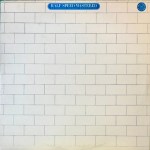
And the CBS Half-Speed is every bit the mudfest that the Half-Speed is.

How is it that the worst sounding pressings are so often marketed to audiophiles as superior to their mass-produced counterparts? In our experience, more often than not they are just plain awful, inferior in every way but one: surface quality.

And the knock on these CBS Half-Speeds is that they are made from the same vinyl CBS used to press all their other records.

I remember buying them back in the late-70s at Tower Records. They were only $12.99 when Mobile Fidelity pressings were $17.99, garnering a premium price because they were pressed in Japan. Fool that I was, I bought plenty of both, not to mention those made by Nautilus, Direct Disk Labs and plenty of others too painful to think about.

Dear audiophiles, stop collecting crappy audiophile pressings with quiet vinyl and just switch to CD already. You’ll be getting better sound and saving yourself a lot of money to boot. You simply cannot defend analog with this kind of junk.
(more…)

Rimsky-Korsakov / Scheherazade (Early Reissue)

More of the Music of Rimsky-Korsakov

rimskscheh_6212_1610_1389793105

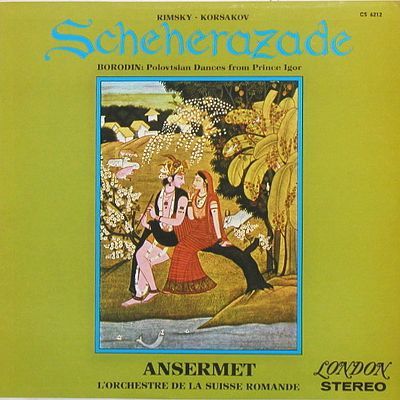
  • Very good sound throughout this vintage London pressing of Ansermet and the Suisse Romande’s superb performance of this dazzlingly symphonic suite, with both sides earning Hot Stamper grades
  • It’s richer, fuller and with more presence than the average copy, and that’s especially true for whatever godawful Heavy Vinyl pressing is currently being foisted on an unsuspecting record buying public
  • This is true of even our lowest-priced, lowest-graded copies – they are guaranteed to sound much better than any pressing you can find on the market today, as well as any pressing you may already own
  • This copy is in fact one of those lowest graded copies – as you can see from the shootout notes below, it’s a bit small and veiled, and maybe dry in places
  • Even with these common shortcomings, we doubt there is any modern pressing that can touch it, and even the best vintage pressings of other recordings of the work will more than likely come up short when played head to head with this very LP
  • We’ve come up with a simple listening test to help our audiophile brethren judge pressings of Scheherazade, especially those woeful iterations of the music on Heavy Vinyl. We hope you will find time to avail yourself of the lessons we’ve learned

We did a monster shootout for this music in 2014, one we had been planning for more than two years. On hand were quite a few copies of the Reiner on RCA; the Ansermet on London (CS 6212, his second stereo recording, from 1961, not the earlier and noticeably poorer sounding recording from in 1959); the Ormandy on Columbia, and a few others we felt had potential.

The only recordings that held up all the way through — the fourth movement being THE Ball Breaker of all time, for both the engineers and musicians — were those by Reiner and Ansermet. This was disappointing considering how much time and money we spent finding, cleaning and playing those ten or so other pressings.

Here it is many years later and we’re capitalizing on what we learned from the first big go around, which is simply this: the Ansermet recording on Decca/London can not only hold its own with the Reiner on RCA, but beat it in virtually every area. The presentation and the sound itself are both more relaxed and natural, even when compared to the best RCA pressings.

The emotional content of the first three movements (all of side one) under Ansermet’s direction are clearly superior. The roller-coaster excitement Reiner and the CSO bring to the fourth movement cannot be faulted, or equaled. In every other way, Ansermet’s performance is the one for me. We did a monster shootout for this music in 2014, one we had been planning for more than two years. On hand were quite a few copies of the Reiner on RCA; the Ansermet on London (CS 6212, his second stereo recording, from 1961, not the earlier and noticeably poorer sounding recording from in 1959); the Ormandy on Columbia, and a few others we felt had potential. (more…)

Graceland, Where Clarity Is King

Hot Stamper Pressings of the Music of Paul Simon Available Now

We regularly do shootouts for Graceland. Having played so many copies over the years we’re become quite familiar with the range of sound on the album, what constitutes good, better and best, and we understand precisely what qualities the premier copy must have in order to win one of our shootouts. 

Above all the thing Graceland has going for it sonically is CLARITY. It has many other good qualities as well: It can be open and spacious, tonally correct, with punchy, tight bass and present, breathy vocals.

The better copies have all these qualities to some degree, but the one thing a good copy must have is clarity, because that’s what’s especially good about the sound of Graceland. (more…)

Classic Records – More of the Same Old Same Old

Hot Stamper Pressings of Vintage Columbia Albums Available Now

Weaver of Dreams is yet another Classic Records LP that’s hard to get excited about.

The notes I found attached to a copy in the backroom and played should be all you need to know to avoid the Classic pressing.

Shifted up (tonally) and hard.

Who wants a classic Columbia that sounds like that, especially one that was recorded in Columbia’s legendary Columbia 30th street studio recordings.

Years ago we wrote that Bernie Grundman’s work for Classic Records could be summed up in these four wordsIt seems that this Burrell record has some of those rather obvious shortcomings.

There are certainly some incredible sounding pressings of this album out there, but who has the resources it would take to find them?

Most of the early stereo 6-Eye pressings we come across these days turn out to have constant surface noise. Many have severely damaged inner grooves. Even the mintiest looking copies often turn out to be too noisy for most audiophiles.

This is of course why the hacks at Classic Records did so well for themselves — until they went under — hawking remastered versions of classic albums pressed on new, quieter vinyl.

The problem is that most of their stuff just doesn’t sound all that good, this album included. We’ve played it; it’s decent, but any Hot Stamper will show you just how much music you are missing.
If you want to hear this album with amazing fidelity but don’t want to spend the time, money and energy collecting, cleaning, and playing mostly mediocre copies until you luck into a good one, a Hot Stamper pressing is the only way to go.

That is, if you can find one on our site. We rarely have any stock of this album, for the reasons listed above.

We do have other Kenny Burrell albums, but even the records he made in the 70s are getting hard to find these days.

And if you are going to try to dig up your own top quality pressings, advanced record cleaning technologies are a must. Records pressed in the 60s are always in need of serious scrubbing, using the right fluids on the right machinery. Without the help of both of those, you have very little chance of success.

(more…)

Shelly Manne & His Men – At The Black Hawk, Vol. 4

More of the Music of Shelly Manne

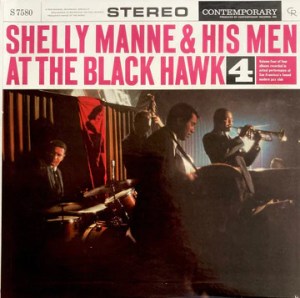
  • Here is an early Contemporary stereo pressing with solid Double Plus (A++) sound on both sides
  • This is West Coast Jazz at its best, and if anyone can capture the realism of a live jazz club, it’s the engineers and producers at Contemporary
  • For our shootout, we chose to play Volumes 2, 3 and 4 on the same day, which taught us something we might not have known otherwise — Volume 4 tends to have the best sound of those three albums
  • If you want to hear a healthy dose of the Tubey Magic, size and energy of this wonderful live session recorded at the Black Hawk in September 1959, this copy will let you do that
  • 4 stars: “Shelly Manne’s 1959 quintet (with trumpeter Joe Gordon, tenor saxophonist Richie Kamuca, pianist Victor Feldman, bassist Monty Budwig, and the drummer/leader) was … a hard-swinging unit well versed in bebop. The lengthy solos are consistently excellent, making this entire series recommended to straight-ahead jazz fans.

(more…)

Letter of the Week – “I still find the WHS to Hoffman 45 comparison a particularly insightful one.”

Hot Stamper Pressings of the Music of Fleetwood Mac Available Now

Our good customer Aaron is somewhat obsessed with the White Hot Stamper Rumours he bought from us a while back. He finds testing it against the Hoffman 45 RPM version of the album his audiophile friends own instructive, about their systems, what they listen for, and lots more.

I’ve added some comments which I hope are helpful as well. We’ll let him take it from here.

Dear Tom,

I still find the WHS to Hoffman 45 comparison a particularly insightful one. I remember the bass being bloated and wonky on the Hoffman, and tight and impactful on the WHS on my system. I found it that way on [my friend’s] system too, but sometimes live rock music has unpleasant, over-emphasized bass. The kids like it that way I guess.

Aaron,

The proper comparison is not live rock music because a studio album is not really trying to recreate the sound of the band in concert.

On the best pressings the sound should be tonally balanced and correct, with no faults of any kind to draw your attention.

A Super Hot could sound that way. The White Hot would be 25% bigger and clearer and more punchy and resolving while still being balanced and tonally neutral.

Having auditioned and tested them by the hundreds, it has been our experience that Heavy Vinyl records never come to life the way the best vintage pressings do.

You need the right system to hear the difference, and the more right the system, the more you will hear how big the difference is.

I didn’t make any particular note of the position of the vocals, but one thing [my friend’s] system does really well is imaging, so I’m inclined to trust his impression from where he was sitting. It might be that what he was experiencing as accurate, breathtaking sound was described as “forward.” Seems like a reasonable term for that experience.

That could be a bad wire, bad electricity, glare from hi-fi-ish electronics, bad room treatments or no room treatments at all, bad speaker positioning — lots of things make vocals more forward in either a good way or a bad way. This story might be helpful in understanding some aspects of midrange presentation we wrestled with when setting up our new studio.

From where I sat, I could agree with [my friend] that the Hoffman put the snare more forward than the WHS does, but whether you like that or find it a distraction is a matter of taste.

Which is why this is not a good test record.

Where is the snare supposed to be? Who can say?

Good test records are the ones where the sound is clearly more wrong or more right as something in the playback changes, whether it’s a new piece of equipment, a tweak, or a different pressing of the same music.

If the snare is forward on a system, you play an orchestral record and point to the fact that the violins are hard and the brass is honky, or the piano sounds clanky or vague, and then you know you need to fix something because none of those instruments are supposed to sound that way.

But a snare on a rock record?

You didn’t mix the album. You don’t know! Worse, you can’t know.

(more…)

Cheap Trick – At Budokan

More of the Music of Cheap Trick

  • Very good sound on this true classic from Cheap Trick, with both sides earning Hot Stamper grades – fairly quiet vinyl too
  • We guarantee there is more space, richness, presence, and performance energy on this copy than others you’ve heard or you get your money back – it’s as simple as that
  • One of only two Cheap Trick albums that cuts it for us sonically and musically (the other being Dream Police)
  • 5 stars: “With their ear-shatteringly loud guitars and sweet melodies, Cheap Trick unwittingly paved the way for much of the hard rock of the next decade, as well as a surprising amount of alternative rock of the 1990s, and it was At Budokan that captured the band in all of its power.”

The first pressings of this record come with an OBI strip and a Japanese style lyric and photo booklet, giving the impression that this is a Japanese pressing. But it’s clearly domestic, so kudos have to go to Epic Records for doing a wonderful imitation that would practically fool any record collector.

Most of the copies we have to offer will come with the booklet, while the OBI strips are long gone.

This is probably the only Cheap Trick record most casual fans will ever need. The live versions of ‘Ain’t That A Shame’ and ‘I Want You To Want Me’ are AS GOOD AS IT GETS. Where would Classic Rock Radio be without catchy pop like this? Nowhere man!

A Rock Masterpiece

We consider this Chip Trick album their Masterpiece. Others that belong in that category can be found here.

(more…)

Finding the Demo Disc in Your Collection: A New Champion is Crowned!

Robert Brook runs a blog called The Broken Record, with a subtitle explaining that the aim of his blog is to serve as:

A GUIDE FOR THE DEDICATED ANALOG AUDIOPHILE

Finding the DEMO DISC in Your Collection: A New Champion is CROWNED!

We Love the Record Too

Here is how we described a recent shootout winning copy:

The mastering EQ is close to perfection, with correct tonality from top to bottom. It’s surprisingly rich and smooth. Transparency and top-end extension were excellent as well. The timpani has the weight and whomp of the real thing, and they’re way at the back where they should be.

This is a superb Demonstration disc, but it is also an excellent Test disc. The sound of the best copies is rich, full-bodied, incredibly spacious, and exceptionally extended up top. There is a prodigious amount of musical information spread across the soundstage, much of it difficult to reproduce.

Musicians are banging on so many different percussive devices (often at the far back of the stage, or, even better, far back and left or right) that getting each one’s sonic character to clearly come through is a challenge — and when you’ve met it, a thrill. If you’ve done your homework, this is the kind of record that can show you what you’ve accomplished.

On the best copies the strings have wonderful texture and sheen. If your system isn’t up to it (or you have a copy with a problem in this area), the strings might sound a little shrill and possibly grainy as well, but I’m here to tell you that the sound on the best copies is just fine with respect to string tone and timbre. You will need to look elsewhere for the problem.

Tops for Table Tweaking

The recording has tremendous transients and dynamics as well; be prepared to have trouble tracking it. In that respect it’s a prime candidate for table, cartridge and system tweaking. (I once adjusted my anti-skate while playing this very album, at the time dialing it in to a “T”.

(more…)

Tchaikovsky’s None-Too-Impressive 6th Symphony on Classic Records

Hot Stamper Pressings of the Music of Tchaikovsky Available Now

It’s been quite a while since I played the Classic pressing, twenty years or more, but I remember it as none-too-impressive, playing into my natural prejudice against the earliest Living Stereo recordings and Classic Records themselves.


UPDATE 2025

Having heard some amazingly good sounding ones since this review was written many years ago, we are no longer prejudiced against the “earliest Living Stereo releases.” Many of them have superb sound.


The original is not good either in our experience. The only version of this wonderful performance from 1955, the best we know of, is this very late reissue that we discovered more than twenty years ago, a sleeper of a record if ever there was one.

When you hear how good it sounds, you may have a hard time believing that it’s a budget reissue from 1976, but that’s precisely what it is.

Even more extraordinary, the right copies are the ones that win shootouts.

(more…)

Listening in Depth to The Royal Scam

Hot Stamper Pressings of the Music of Steely Dan Available Now

We really went overboard with the track commentary for this one many years ago. This should make it easy for you to compare what we say about the sound of these songs with what they sound like to you on your system, using the copy you own or, better yet, one of our Hot Stampers. 

If you end up with one of our pressings, listen carefully for the effects we describe below. This is a very tough record to reproduce — everything has to be working in tip-top form to even begin to get this complicated music sounding the way it should — but if you’ve done your homework and gotten your system really cooking, you are in for the time of your Steely Dan life.

Side One

Kid Charlemagne

By far the most sonically aggressive track on this album, Kid Charlemagne is a quick indicator of what you can expect from the rest of the side. The typical copy is an overly-compressed sonic assault on the ears. The glaring upper midrange and tizzy grit that passes for highs will have you jumping out of your easy chair to turn down the volume. Even my younger employees who grew up playing in loud punky rock bands were cringing at the sound.

However, the good copies take this aggressive energy and turn it into pure excitement. The boys are ready to rock, and they’ve got the pulsing bass, hammering drums, and screaming guitars to do it.

Without the grit and tizz and radio EQ — which could have been added during mastering or caused by the sound of some bad ABC vinyl, who can say which — the sound is actually quite good on the best copies.

It’s one of the toughest tests for side one. Sad to say, most copies earn a failing grade right out of the gate.

The Caves of Altamira

This is the best test for side one.

There are sweet cymbals at the beginning, and Fagen’s double tracked voice should be silky and smooth, but on the really hot copies it’s also big and alive.

When I was first doing these shootouts, I noted that the hi-hat is front and center in the mix of this song, and when that hi-hat sounds grainy or aggressive, it’s positively unlistenable.

That hi-hat needs to sound silky and sweet or this song is going to give you a headache, at least at the volume I play it at: GOOD and LOUD.

(more…)