Month: June 2024

Burt Bacharach – Casino Royale

More Soundtrack Recordings of Interest

  • Casino Royale finally returns to the site after a two and a half year hiatus, here with solid Double Plus (A++) sound throughout this original Stereo Colgems pressing
  • A record that has its share of problems, but if you’ve got the system for it (huge, heavily tweaked, fast, undistorted, highly resolving and free from obvious colorations), this pressing is guaranteed to handily beat anything else you’ve heard
  • TAS list favorite – “The Look of Love” with warmth, richness and immediacy? Here is the sound you never thought you’d hear
  • 4 1/2 stars: “The more recognizable and certainly more straightforward side of Bacharach is here, too, on the Dusty Springfield smash ‘The Look of Love.’ This is one of Bacharach’s best soundtracks…”

(more…)

A Pink Label Island LP Left Us with Egg on Our Face

Hot Stamper Pressings of the Music of Traffic Available Now

We used to think that The Best of Traffic had better sound than the early pressings of Mr. Fantasy, but in a head to head comparison with a killer copy we played not long ago, we were proved wrong, or, perhaps more accurately, we proved ourselves wrong, something we pride ourselves in being able to do by carrying out regular shootouts for records we’ve been listening to for more than twenty years.

Oddly enough, in our shootouts we often learn new things about records we thought we knew well.

Here is what we had to say about one of the tracks on Mr. Fantasy that we thought sounded dramatically better on The Best of Traffic back around 2005:

Best evidence: Heaven Is In Your Mind, the second track on side one. It is amazing sounding here and such a disappointment on every Pink Label Island original we’ve played.

Once you know how good that song can sound — by playing a Hot Stamper copy of Best of Traffic like this one — going back to the original version of the song found on the album is not just a letdown, it’s positively painful. Where’s the analog magic? The weight to the piano? The startling clarity and super-spaciousness of the soundfield? The life and energy of the performance?

They’re gone, brother. Not entirely gone, mind you, more a shadow of what they should be, but once you’ve heard the real thing it’s not a lot of fun listening to a shadow.

You can be sure that we did not know what we were talking about when we wrote all that.

What we had done is assumed that all the pink label pressings of Mr. Fantasy sounded like the one we played, something we’ve been telling audiophiles for twenty years not to do, because collecting records by label is a fool’s game.

In this case, clearly we are the fools.

It probably — probably, since all the evidence points in the same direction — had the stampers you see below, apparently known as an Orlake Pressing, something I knew nothing about until reading about it on Discogs just now.

  • Matrix / Runout (Side A, stamped): ILPS+9061+A
  • Matrix / Runout (Side B, stamped): ILPS+9061+B

These same stampers would be used to press the Pink Rim Label copy you see below. We put it into a recent shootout and described it as having “hollow, dubby” sound.

Yes, we heard the very same “dubby” sound on a copy we played about twenty years ago, and thought all the early pressings on Island, pink and pink rim alike, had these same mastering shortcomings.

Back then we didn’t know what we know now, which is that the right UK pressings on Island of Mr. Fantasy are dramatically better sounding.

(more…)

David Bowie / Aladdin Sane

More David Bowie

More Records with Exceptionally Tubey Magical Sound


  • Excellent sound throughout this vintage UK pressing of Bowie’s 1973 post-Ziggy classic, with solid Double Plus (A++) grades or BETTER from top to bottom – exceptionally quiet vinyl too
  • Both of these sides are remarkably rich, smooth and warm, something that all the best Ken Scott tube recordings are renowned for
  • Plenty of Bowie Classics: “Watch That Man,” “Aladdin Sane,” “Panic in Detroit,” “Cracked Actor,” “The Jean Genie,” “Lady Grinning Soul,” and more
  • Bowie encyclopedist Nicholas Pegg describes it as “one of the most urgent, compelling and essential” of his releases
  • Fun fact: Bowie “ruled the (British) album chart, accumulating an unprecedented 182 weeks on the list in 1973 with six different titles.”
  • Here are more of our favorite Hot Stamper pressings of recordings with exceptionally Tubey Magical sound
  • And some reviews and commentaries for the most Tubey Magical recordings we have ever played
  • If you’re a fan of Bowie, or Glam in general, this title is clearly a Must Own from 1973

The big Bowie sound for this wonderful follow-up to Ziggy Stardust! We just finished shooting out a number of import pressings of the album, and this was one of the best copies we heard. It’s got the kind of Tubey Magical richness that takes these glam rockers to a whole new level.

(more…)

Listening in Depth to the White Album

Hot Stamper Pressings of The White Album Available Now

It’s exceedingly difficult to find audiophile quality sound on The White Album. The Beatles were breaking apart, often recording independently of each other, with their own favorite engineers as enablers, and George Martin nowhere to be found most of the time. They were also experimenting more and more with sound itself, which resulted in wonderful songs and interesting effects. However, these new approaches and added complexity often result in a loss of sonic “purity.”

Let’s face it, most audiophiles like simplicity: A female vocal, a solo guitar — these things are easy to reproduce and often result in pleasing sound, the kind of sound that doesn’t take a lot of expensive equipment or much effort to reproduce.

Dense mixes with wacky EQ are hard to reproduce (our famous difficulty of reproduction scale comes into play here), and the White Album is full of that sound, taking a break for songs like Blackbird and Julia.

Some of the Tubey Magic that you hear on Pepper is gone for good. (Play With a Little Help from My Friends on a seriously good Hot Stamper pressing to see what has been lost forever. Lovely Rita would probably work just as well, too.)

Side One

Looks at the lineup for side one. Is there a rock album on the planet with a better batch of songs?

Having done shootouts for the White Album by the score, we can also say with some certainty that side one is the most difficult side to find White Hot stamper sound for. It’s somewhat rare to find a side one that earns our top Triple Plus (A+++) sonic grade, even when all the other sides do. (Actually what happens more often than not is that we take the best second discs and mate them with the best first discs to make the grades consistent for the whole album. But don’t tell anybody.) (more…)

The Three / Self-Titled (45 RPM)

More Jazz Recordings Featuring the Piano

  • Amazing sound throughout this Japanese import pressing, with both sides earning KILLER Shootout Winning Triple Plus (A+++) grades or close to them
  • The transients are uncannily lifelike – listen for the powerful kinetic energy produced when Shelly whacks the hell out of his cymbals
  • My favorite piano trio jazz album of all time — every one of the tracks is brilliantly arranged and performed
  • 4 stars: “One of Joe Sample’s finest sessions as a leader” – with Shelly Manne and Ray Brown, we would say it’s clearly his finest session, as a leader or simply as the piano player in a killer trio
  • Some of the other records we’ve discovered with top jazz piano sound can be found here
  • More amazing sounding piano recordings, of every kind of music, can be found here

If you want to hear the full six tunes recorded by The Three at that famous Hollywood session (which ran all day and long into the night, 4 AM to be exact), our 33 RPM pressings are your best bet.

If you want absolutely amazing, mind-blowing, you-are-there sound, a Hot Stamper 45 is the only way to go.

The music is so good that I personally would not want to live without the complete album. The Three is, in fact, my favorite piano trio jazz album of all time. Very one of those six tracks is brilliantly arranged and performed (if you have the right takes of course; more about that later).

This album checks off a number of important boxes for us here at Better Records:

(more…)

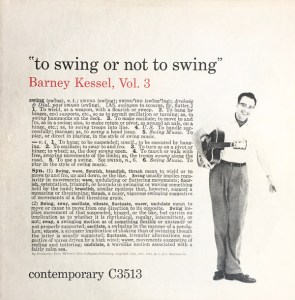
Barney Kessel – Vol. 3: To Swing Or Not To Swing

More Barney Kessel

More Contemporary Label Jazz Recordings

  • Boasting seriously good Double Plus (A++) grades from start to finish, this early Contemporary MONO pressing is guaranteed to blow the doors off any other Vol. 3, To Swing Or Not To Swing you’ve heard – reasonably quiet vinyl too
  • Tubey Magic, richness, sweetness, dead-on timbres from top to bottom – this is a textbook example of Contemporary sound at its best
  • For some reason, the guitar sound from this era of all tube chain recording seems to have died out with the times – it can only be found on the best of these vintage pressings
  • 5 stars: “The unusual repertoire on this set … would by itself make this bop/cool set noteworthy. Add to that a very interesting lineup of players (trumpeter Harry “Sweets” Edison, Georgie Auld or Bill Perkins on tenor, pianist Jimmy Rowles, the rhythm guitar of Al Hendrickson, bassist Red Mitchell, and Shelly Manne or Irv Cottler on drums) … and the overall result is a recording highly recommended to fans of straight-ahead jazz.”
  • If you’re a fan of jazz guitar, this all tube MONO recording from 1955 surely belongs in your collection

Man, this music is a blast when it sounds this good. I don’t think there’s a whole lot you could do to make this music sound any better! It’s one of the best early mono Contemporary LPs we’ve ever played. It’s so Tubey Magical. Kessel’s guitar sound is out of this world.

The music here matches the sound for excellence. The whole band just swings. There’s a real old rag-timey feel to the songs. Look at this list of all-star players: Harry Edison, Jimmy Rowles, Red Mitchell and Shelly Manne — this is some serious jazz talent.

(more…)

Also Sprach Zarathustra by Way of Zubin Mehta – No Great Shakes

More of the music of Richard Strauss

A very good performance, with passable sonics.

But passable sonics are not going to cut it at the prices we charge.

Unlike many audiophiles and the reviewers who write for them, we have never been taken with most of the recordings of Zubin Mehta and the LA Philharmonic.

They almost always suffer from exactly the same problems that we heard on this album. We had about five copies on hand in preparation for a shootout, some of which I had noted seemed to sound fine, but once we listened more critically we started to hear the problems that eventually caused us to abandon the shootout. We ended up giving away the stock to our good customers for free.

Here is what my notes say:

By the way, if you do have some of these and want to play them, the 4G side two was the best we played, much better than any 6G side two.

This link will take you to our current favorite recording of the work.

Opacity Vs. Transparency

Note that we have been especially anti-heavy vinyl in our recent commentaries for their consistently opaque character, the opposite of what is necessary in order to hear into the music, deep into the soundstage, to see and hear ALL the instruments, even the ones at the back.

Try that with any Classic Record or Speakers Corner pressing. Our Hot Stamper pressings can show you precisely what you have been missing all these years if you have been collecting and playing releases from those labels and others like them.

(more…)

Letter of the Week – “After playing a few very smooth and quiet bands I put on my excellent vintage copy of Aja that proceeded to destroy the Cisco.”

More of the Music of Steely Dan

One of our good customers had this to say about some Hot Stampers he purchased recently (bolding added):

Hey Tom,   

It’s amusing that even Golden Ears who have the attention of large readerships can miss and misunderstand so much. You don’t have to understand the technical why of the variability of LPs to appreciate just how profound the audible differences can be from stamper to stamper. Even in acknowledging that differences are present, they do not seem to appreciate the extreme degree of the variation in sound among LPs from different stampers.

As so many of us have learned from you, a “hot stamper” LP is simply in a whole different league in sound quality. A good sound system is necessary to realize just how big that difference is and the more optimized that system is the better.

Beyond the audible reality and the technical issues, it is the subject of value that is not understood or appreciated. The ability to simply find a nice playable copy of a vintage LP is a major task. So many LPs have suffered the gouging of what must have been a rusty nail used as a stylus as well as all the other sins that can be wreaked on the plastic disc. Then the incredible task of assembling enough different copies to be able to do the “shoot-out” would seem impossible.

I have, as many now may have tried, done a simple “shoot-out” of a few copies of a favorite LP. Among those I have always found the “better” of the bunch. Now and then and just by luck (since the statistics of not having enough samples was not working in my favor) I have found what must indeed be a “hot stamper). And WOW …..what a difference!

The number of times this has occurred fits on less than one hand yet when you hear an LP that has been mixed and mastered really well and then “transferred” with care and quality via an excellent stamper, there is an epiphany. Suddenly you hear what you often refer to as “master tape” sound. As I have said before, this is really a sad statement about the quality and consistency of record production throughout its history.

The “Audiophile” Half-Speed thing only piles it on top of this with the way mastering at half speed seems to extract the dynamic life and frequency response from an album in contrast to a standard copy.

The logical intention that mastering at half speed would allow the cutting lathe tool to have “more time” to lay down more of the music signal just never really worked.

You would think the “Golden Ears” that developed this idea would have compared the result with real-time cutting speed (not brain surgery). I never wanted all this to be the way it is and didn’t even know it until I stumbled upon Better Records one day. But it is the way it is!

(more…)

Paul McCartney & Wings – Wings Over America

More Paul McCartney

More of The Beatles

  • With excellent sound on all six sides, these vintage Capitol pressings will be very hard to beat
  • SIX sides of live Wings music, phew! As I’m sure you can imagine, this shootout was quite the undertaking
  • This copy was just BIGGER and RICHER than most others we played – it’s clean, clear and full-bodied with a solid bottom end, tons of energy and lots of space around all of the musicians
  • “… the Beatles mystique was still very much attached to record and artist alike… and it seemed like McCartney represented the part of the group’s legacy that came closest to living up to fans’ expectations. Thus the album ended up selling in numbers, rivaling the likes of Frampton Comes Alive and other mega-hits of the period, and rode the charts for months.”
  • If you’re a McCartney fan, this title from 1976 is surely of interest, assuming you already have the first album, Unplugged and Band on the Run, and maybe Ram – all Must Own Titles or something close to them

(more…)

Should We Follow George Martin’s Expert Advice?

Hot Stamper Pressings of the Music of The Beatles Available Now

Scroll down to the bottom and click on the lighter text for “2 Comments” to read someone’s defense of the mono mixes, followed by our reply.


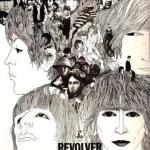
One of our good customers had this to say about the new Revolver pressing and The Beatles in mono:

Hey Tom,

I think the Revolver new thing doesn’t sound terrible. It’s just what you’re comparing it with. Most people are going off original pressings maybe and the acclaimed mono and stereo box stuff that came out in the last 10 years. IF you don’t try one of those Harry Moss records or a 1970s pressing, you probably think the new Revolver is fine or even good. That’s my theory. Who knows.

And as far as mono vs. stereo… you know the answer to this but I’m not sure. Were those earliest records meant to be mono or recorded as if they would be put out as mono and later records – maybe Rubber Soul on – meant to be stereo? I don’t know the answer to that. But maybe that’s why people are so loyal to mono. They feel like “this is how it was meant to be heard by the artist.”

George Martin was very clear about that, the first two albums for sure and really, the first four are, for him, better heard in mono than stereo.

Dear Sir,

I disagree. I think George heard the playback on studio monitors stuck on a wall five feet from his head.

Who cares what that sounds like?

Nobody who isn’t mixing a record would ever listen to music that way, certainly not in this day and age.

More importantly, who are you going to believe, your lying ears or George Martin?

This is fundamental to understanding everything to do with audio and records.

Richard Feynman summed it up beautifully:

Science is the belief in the ignorance of experts.

Watch the Let It Be documentary produced by Peter Jackson, especially the last part where they play the album back for everyone who was involved in the making of it.

With four crappy monitor speakers lined up left to right and shoved up against a wall.

This is how they listened to the album in order to approve Glyn Johns’ mix and the takes he chose to use?

(more…)