Classic Records – Classical

Classic Records Got One Thing Right on SR-90006

Hot Stamper Pressings of Orchestral Spectaculars Available Now

The Classic pressing of this famous recording has dreadful sound. Their entire Mercury series was nothing but a disaster. Wilma Cozart was right to give up after the first six titles were completed and then wash her hands of the whole mess.

No audiophile with good equipment and two working ears should have been fooled by the hype swirling around Classic’s Heavy Vinyl pressings, although it seems that plenty of audiophiles were, and, once so fooled, the natural thing to do is for them to double down on their foolishness.

Confirmation bias kicks right in and from then on they will only hear what they allow themselves to hear, even though their head is aching and their ears are close to bleeding. Hurry up and turn down the volume. We’re getting more of the real master tape sound than we can take! Somebody fix what Cozart and Fine screwed up all those years ago!

Can anyone actually have played this pressing more than a handful of times? The originals we buy are often worn out. Is that even possible with a Classic Records pressing? Has it ever happened? Color me skeptical.

Classic Records is right about the performance, however. See for yourself:

Whether you prefer the fabulous bass dynamics and savage paganism of the Scythian Suite, the colorful and captivating sound-portrait of the fairy tale Love for Three Oranges Suite, Dorati’s super-charged readings of these scores are unsurpassed. Acclaimed by critics and audiophiles alike as among the very best of the best Mercury’s, this dramatic and riveting combination of Prokofiev, Dorati and Mercury Living Presence is a sure winner. 

What they are not telling you is that their mastering of the album was dreadful.

If you know the sound of Mercury’s records well, you know that the last thing you would want is a pressing of SR 90006 that could be described by any of the following five words:

(more…)

Allow Us to Make the Case that Even CDs Have Better Sound than Classic’s Vinyl

brahmvioli_1903_debunk

Hot Stamper Classical and Orchestral Pressings Available Now

The Classic reissue of LSC 1903 is a disaster: shrill, smeary and profoundly unmusical.

In these four words we can describe the sound of the average Classic Records Living Stereo pressing.

The best Heifetz records on Classic were, if memory serves, LSC 2734 (Glazunov), LSC 2603 (Bruch) and LSC 2769 (Rozsa).

They aren’t nearly as offensive as the others, and one is actually quite good. If you can pick one up for ten or twenty bucks, you might get your money’s worth depending, I suppose, on how critically you listen to your classical records.

The CDs are better for all I know. That’s probably the first place to go, considering Classic’s generally poor track record.

(more…)

Another Fine Entry for Our Heavy Vinyl Hall of Shame

Hot Stamper Pressings of Orchestral Spectaculars Available Now

UPDATE 2026

It just so happens that I had the time to listen to this work from start to finish twice just last night, 2/11/2026. Saw it performed live just a few months back at Atlanta Symphony Hall.

This wonderful work never gets old.  Next time we do a shootout for the performance we like with Muti on EMI I hope you will see your way to picking up a copy. You won’t regret it.


The Classic Records repressings of Pictures at an Exhibition — whether at 33, 45, or any other speed, on one disc or four –are all godawful sounding.

(Yes, we have auditioned both versions, for as long as we could stand them, which wasn’t long as the sound was painfully bad. The details can be found below.)

Everything that was bad about the worst original Shaded Dog pressings not only hasn’t been fixed, it’s been made even worse!

Yes, we admit to having played a good pressing of LSC 2201 in 2024, but there are just too many bad pressings of the album to bother doing a shootout for it. It’s hard to justify the cost when so few have the sound we are looking for.

The shrillness, the hardness, the sourness, the loss of texture to the strings, the phony boosted deep bass — this is the kind of sound that makes my head hurt and my skin crawl. After a minute or two of listening to sound this bad I’ve had it.

And can you believe that HP put this miserable remastered pressing on his TAS Super Disc List? Sad but true.

(more…)

Gaite Parisienne Is Just More Smeary Dreck from Classic Records

More of the Music of Jacques Offenbach

Sonic Grade: F

The last time I played the Classic I thought it was nothing but a smeary mess, as awful as their awful Scheherazade. If I were to play it today, I’m guessing it would join the other Classic Records entries in our audiophile hall of shame.

Here are some other records we played and found had smeary strings. Orchestral recordings with smeary strings do not last long on our turntable.

I love Arthur Fiedler‘s performance with the Boston Pops and the 1954 two track RCA Living Stereo sound, but finding an original Shaded Dog pressing in clean condition under $500 with the right stampers is all but impossible nowadays.

If you want to go that way, more power to you. 

This 1954 2-track recording is RCA’s first stereo recording of the work. 1954. Can you believe it? A few mics and two channels and it blows away most of the classical recordings ever done! Some old record collectors and tube lovers say classical recording quality ain’t what it used to be. This record proves it.

Here are some other records that are good for testing string tone and texture.

How Good Is the Sibelius Violin Concerto on Classic Records?

Hot Stamper Pressings Featuring the Violin

Classic remastered this title in the 90s — of course they did, it’s clearly one of the better Heifetz recordings.

As expected, Classic’s remastered pressing of the Sibelius Violin Concerto (LSC 2435) was awful, as bad as LSC 1903, 1992, 2129 and others too numerous to list. 

(There is one Classic violin concerto record that is actually better than every RCA Living Stereo we have ever played — which amounts to scores of them since we have done shootouts for them all — and one of these days you will be able to read about it right here on this very blog!)

The Classic is both aggressive and lacking in texture at the same time, the worst of both worlds.

Bernie’s cutting system is what I would call Low Resolution — the harmonics and subtleties you would expect to hear are simply not there. He brightens the tonal balance, causing screechy strings whenever they get loud.

The world is full of these kinds of third-rate records. They make up the bulk record collectors’ collections as well as the ones audiophiles have sitting on their shelves.

(more…)

The Violin is a Wonderful Instrument for Tweaking and Tuning

Hot Stamper Pressings Featuring the Violin Available Now
Our review for LSC 2314, with both the Mendelssohn and Prokofiev Violin Concertos, described the wonderful sound we heard on some of the better copies as follows:

As usual for a Living Stereo Heifetz violin concerto recording, he is front and center, with his fingering and every movement of his bow clearly audible, without being hyped-up in the least. (Well, maybe just a bit.)

No violin concerto recording can be considered to have proper Living Stereo sound if the violin isn’t right, and fortunately we found the violin on this copy to be very, very right, with the kind of rosiny texture and immediacy that brings the music to life right in your very own listening room.

Audiophiles who cannot hear what is wrong with the Classic Records repressings of Heifetz’s RCA recordings by the greatest composers who ever lived, including:

may want to seek out a nice — maybe even one that’s not so nice — vintage RCA Shaded Dog of any of his albums, if only to see just how poorly the Classics stack up (with the exception of the LSC 2734, which we have to say, against all odds, is very good).

(more…)

Skip the Classic Records Pressing of Ballet Music From The Opera

Hot Stamper Living Stereo Orchestral Titles Available Now

Classic Records ruined this album, as anyone who has played some of their classical reissues would have expected.

Their version is dramatically more aggressive, shrill and harsh than the Shaded Dogs we’ve played, with almost none of the sweetness, richness and ambience that the best RCA pressings have in such abundance.

In fact their pressing is just plain awful, like most of the classical recordings they remastered, and should be avoided at any price. 

Apparently, most audiophiles (including audiophile record reviewers) have never heard a top quality classical recording. If they had, Classic Records would have gone out of business immediately after producing their first three Living Stereo titles, all of which were dreadful and labeled as such by us way back in 1994. I’m not sure why the rest of the audiophile community was so easily fooled, but I can say that we weren’t, at least when it came to their classical releases. 

We admit to having made plenty of mistaken judgments about their jazz and rock, and we have the we was wrong entries to prove it.

The last review we wrote for the remastered Scheherazade, which fittingly ended up in our Hall of Shame, with an equally fitting sonic grade of F.

TAS Super Disc list to this day? Of course it is!

With every improvement we’ve made to our system over the years, their records have managed to sound progressively worse. (This is pretty much true for all Heavy Vinyl pressings, another good reason for our decision to stop buying them in 2007.) That ought to tell you something.

Better audio stops hiding and starts revealing the shortcomings of bad records.

(more…)

Venice on Classic Records

Hot Stamper Pressings of Classical and Orchestral Music

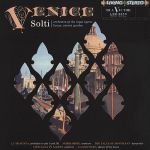
Classic Records remastered the tapes for LSC 2313 and even the people who like the sound of Classic’s Heavy Vinyl pressings used to complain about it, so you can imagine what we think of it.

What a piece of garbage. With smeary, shrill, screechy strings, it gives no indication of the beauty that is on the tape. 

The Victrola reissue, VICS 1119, is dramatically better sounding than any other reissue of the album we have played, including of course the Classic, and may even be better sounding that the Shaded Dog original itself.


This Heavy Vinyl reissue is noticeably lacking in a number of areas that are important to the proper presentation of orchestral music. If you own a copy of this title, listen for the qualities we identified above in the sound that came up short.

Below you will find links to other records that have the same shortcomings we heard when playing the Classic Records pressing of LSC 2313.

(more…)

Capriccio Italien on Classic Records and How Badly I Missed the Boat

More of the Music of Peter Ilyich Tchaikovsky

More of the Music of Nikolai Rimsky-Korsakov

Years ago, around 2005 if memory serves, I played a copy of the Classic Records pressing of LSC 2323 and thought it was pretty good.

I thought it was better than the Shaded Dog copies I had compared it to, which, based on hundreds of other Classic Records titles I had auditioned, was unexpected to say the least.

Little did I know that the Shaded Dog pressings on this title are not remotely competitive with the early reissues.

The best of the Shaded Dog pressings we could find, which just happened to have a 1s side one, came in tied for last with the one 70s Red Seal pressing we thought sounded good enough to make the shootout.

(Some inside baseball: most of the Shaded Dogs and Red Seals were needle-dropped, and all but two were eliminated before the shootout. It takes time and wastes money to clean and play pressings that sound hopeless, so a quick elimination round often precedes the cleaning process.)

Back then it was tough to wrap my head around the idea that a Classic Record classical title could actually be better sounding than a Shaded Dog — it had never happened, so I knew there had to be more to the story.

Finding the time to do the serious investigation of LSC 2323 that would be necessary to get to the bottom of it was not in the cards, so I shelved the project for close to the next twenty years.

The title would have to wait until 2025 to go through a proper shooout, and when it did, naturally the Classic was part of the mix, which is the way we do things here at Better Records. Every record gets the chance to show us what it can do, to be evaluated fairly without the listener having any way to know which pressing is playing.

It turns out that side one of the Classic was passable, but side two — the side I had probably never played — was every bit as bad as most of their other classical offerings.

Side One, Second Movement (Tchaikovsky)

  • Big, but bright and compressed
  • Gets loud but opaque and hot
  • Good weight

Side One, First Movement

  • Bright and blurry bells
  • Sort of tubey but a mess
  • Grade: 1+ (passable, but no Hot Stamper)

Side Two (Rimsky-Korsakov)

  • Big but boomy and smeary
  • Brass is edgy and opaque
  • No top end or space
  • Peaks are hot and congested
  • Grade: NFG

To recap: In 2005 I was impressed with Classic’s pressing of LSC 2323. That was only twenty years ago, yet I could not have been more wrong. I thought my stereo was great — I’d owned top quality equipment since 1975 by then — thirty sodding years — so my audiophile credentials would surely dwarf those of the vast majority of forum posters who write about audiophile pressings today. How reliable should we expect their reviews to be?

(more…)

Tchaikovsky’s None-Too-Impressive 6th Symphony on Classic Records

Hot Stamper Pressings of the Music of Tchaikovsky Available Now

It’s been quite a while since I played the Classic pressing, twenty years or more, but I remember it as none-too-impressive, playing into my natural prejudice against the earliest Living Stereo recordings and Classic Records themselves.


UPDATE 2025

Having heard some amazingly good sounding ones since this review was written many years ago, we are no longer prejudiced against the “earliest Living Stereo releases.” Many of them have superb sound.


The original is not good either in our experience. The only version of this wonderful performance from 1955, the best we know of, is this very late reissue that we discovered more than twenty years ago, a sleeper of a record if ever there was one.

When you hear how good it sounds, you may have a hard time believing that it’s a budget reissue from 1976, but that’s precisely what it is.

Even more extraordinary, the right copies are the ones that win shootouts.

(more…)