one-track

Here is a group of titles that have one or two tracks of special interest to audiophiles, mostly as test tracks but sometimes simply because they can sound out of this world on the right pressing.

The Turn Up Your Volume Test – Almost Cut My Hair

Hot Stamper Pressings of the Music of Crosby, Stills, Nash and (Sometimes) Young

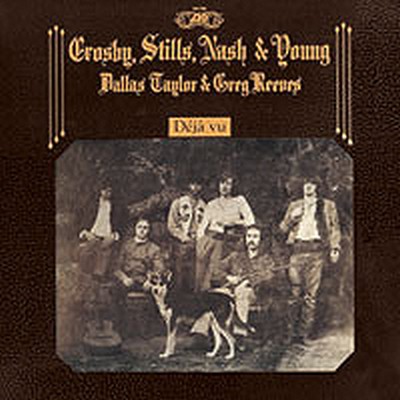
The only time Crosby, Stills, Nash & Young actually sound like a real rock and roll band is on the track Almost Cut My Hair.

According to Stephen Barncard, one of the engineers on Deja Vu, the track was actually recorded live in the studio.

Boy, it sure sounds like it. The amount of energy the band generates on this one song threatens to exceed the energy of the entire first album put together. (Not really. The energy on 49 Bye-Byes, the last track on side two and my favorite on the album is off the charts and shows just how powerful there brand of Hippie Folk Rock could be given the right material. I defy anyone to name two albums from the period released back to back that are better. They have their equals, don’t get me wrong, but the idea of there being a pair of “betters” is a hard one to entertain once the pot smoke clears.)

The reason this song presents such a tough test is that it has to be mastered properly in order to make you want to turn it up, not just louder, but as loud as your stereo will play.

This song is not to be used as background music whilst sipping wine and smoking cigars.

It positively cries out to be played at serious volume levels on monstrously large speakers. Nothing else will do justice to the power of the band’s one and only live performance captured on the album.

Listen to Neil in the left channel wailing away like a man possessed. Imagine what his grunged-out guitar would sound like blasting out of a stack of Marshall amps the size of a house.

(more…)

Listening in Depth to Rubber Soul

Hot Stamper Pressings of the Music of The Beatles Available Now

After playing so many copies of this record over the last few years, all of us here at Better Records have come to appreciate just how wonderful an album Rubber Soul really is. It has 14 compact, well-structured, well-arranged pop songs, each of which is a gem in its own right.

It reminds me a bit of the second album (With The Beatles) in that respect — short and to the point, get in and get out. (Having listened to With the Beatles regularly for more than twenty years, I find it to be the weakest of all the studio albums. Unlike most Beatles albums, it would not be coming to my desert island.)

But the second album does not feature acoustic guitars the way Rubber Soul does. From an audiophile point of view, the strumming of those amazingly Tubey Magical acoustic guitars is in large part what makes Rubber Soul such a special recording. (For more records that are good for testing how much Tubey Magic their acoustic guitars have, click here.)

But what we’ve noticed only recently [recently as in about 15 years ago] is how much the tambourine is used. It’s all over this album, and the good news is that most of the time it sounds great. There are other high frequency percussion instruments — shakers and the like — and between the tambourine and all the rest there’s just a lot of percussive energy on most of the songs that really carries them along.

As far as I am concerned, this could be called The Tambourine Album. No other Beatles album features that instrument so boldly in the mix and builds so many songs around it.

Side One

Drive My Car

Mobile Fidelity made a mess of this song on their Half-Speed Mastered release. They took out far too much upper midrange and top end.

What drives the energy of the song are the cow bell, the drums and other percussion. Instead of a scalpel Mobile Fidelity took a hatchet to this slightly bright track, leaving a dull, lifeless, boring mess. Some Parlophone copies may be a little bright and lack bass, but they still manage to convey the energy of the song. The purple label Capitols can also be quite good. A bit harsher and spittier, yes, but in spite of these shortcomings they communicates the music.

As much as I might like some of the MoFi Beatle records, and even what MoFi did with some of the other tracks on Rubber Soul, they sure sucked the life out of Drive My Car. We all remember how much fun that song was when it would come on the radio. Playing it on a very high quality stereo should make it more fun, not less. If you’ve got a Rubber Soul with a Drive My Car that’s no fun, it’s time to get another one.

(more…)

On Waka/Jawaka Transparency Is Key

Hot Stamper Pressings of the Music of Frank Zappa Available Now

Not long ago we discovered the secret to separating the men from the boys on side one: transparency.

On the lively, punchy, dynamic copies — which are of course the best ones — you can follow the drumming at the beginning of Big Swifty note for note: every beat, every kick of the kick drum, every fill, every roll.

It’s all there to be heard and appreciated. If that track on this copy doesn’t make you a huge fan of Aynsley Dunbar, I can’t imagine what would. The guy had a real gift.

Big Swifty!

The 17-plus-minute-long Big Swifty is a suite in which each section slowly, almost imperceptibly blends into the next, so that you find yourself in a completely new and different section without knowing how you got there — that is, until you go back and play the album and listen for just those transistions, which is what makes it worth playing hundreds and hundreds and hundreds of times.

Big Swifty is a jazz suite with amazingly innovative work by Sal Marquez on trumpet. He single-handedly turns this music into a work of brilliance. I can’t imagine a more talented player.

Zappa on guitar is excellent as well. Aynsley Dunbar plays his ass off, only falling short when it comes time to do his drum solo on Waka/Jawaka.

The interplay of each of these rock musicians is in the tradition of the greatest jazz artists stretching all the way back to the 50s.

And since the drumming throughout this record is so crucial to the music itself, a copy that really gets that right is one that probably gets everything right.

(more…)

Detail on Crosby, Stills and Nash – Holy Grail or Audio Trap?

Hot Stamper Pressings of the Music of Crosby, Stills, Nash and (Sometimes) Young

Detail may be the Holy Grail to some audiophiles, but listening for the details in a recording can be a trap we too easily fall into unless we are on our guard.

Tonal balance is the key.

Without correct tonal balance, no judgments about the details of the recording have any real value. 

A case in point: As good as the Classic Heavy Vinyl pressing is, the guitar at the opening of Helplessly Hoping tells you everything you need to know about what’s missing. The guitar on the better Hot Stamper domestic copies has a transparency and harmonic integrity that cannot be found on Classic’s version.

The Classic Records pressing gets the tonal balance right, but their guitar lacks the subtlety and harmonic resolution of the real thing.

I’m laboring here to avoid the word “detail,” since many audiophiles like bright, phony sounding records because of all their wonderful detail. Patricia Barber’s albums come to mind, along with scores of audiophile pressings. 

The MoFi guys and the CD guys are constantly falling into the trap of being impressed by the phony detail in some recordings.

The solution is to get the sound tonally balanced first, then see how much detail you have left.

Detail is not the end-all and be-all of audio. Those who think it is have systems that are sure to fall apart at louder levels. If the sound of your system on your best pressings doesn’t get better as it gets louder, you are failing one of the most important tests in all of audio, the turn up your volume test.

(more…)

Midrange Suckout? I Have a Theory

These Titles Are Good for Testing Presence in the Midrange

Many audiophile records suffer from a bad case of midrange suckout.

Vocals and other instruments seem to be so far back in the soundfield that they might as well be coming from another room.

Yet somehow there are still audiophiles who defend the records put out by the ridiculous label that single-handedly created and produced that sound. What is wrong with these people?

(On a side note, yes, I was one of the audiophiles who fell for their phony EQ trickery in the 70s and 80s. In my defense, that was a long time ago.)

I Have a Theory

Actually, I have a good idea why so many so-called audiophile records have a sucked-out midrange.

A midrange suckout creates depth in a system that has difficulty reproducing it.

Imagine that instead of having your speakers pulled well out from the back wall the way you should, you instead have your speakers shoved flat up against that wall.

This arrangement has the effect of seriously limiting your speakers’ ability to reproduce the three-dimensional space of the recordings you play.

Kind of Blue on MoFi

I hinted back in 2022 I was going to discuss their pressing down the road, and like most things that I was supposed to write about down the road, we’re still waiting to see it.

The short version of that future commentary will note that the drums in the right channel of All Blues are about five feet further back in the soundfield than they are on our reference too-noisy-to-sell Six-Eye pressing, or any other pressing of the album we’ve played for that matter.

At the time I could not wrap my head around how Mobile Fidelity could have gotten hold of the multi-tracks in order to remix the album and place the drums further back in the mix.

(more…)

Driving My Car into a Ditch

Hot Stamper Pressings of the Music of The Beatles Available Now

Mobile Fidelity made a mess of Drive My Car on their Half-Speed mastered release of Rubber Soul in 1982.

Perhaps it’s more accurate to say Stan Ricker, MoFi’s go-to mastering engineer, did.

He equalized out far too much upper midrange and top end.

What fuels the energy of the track are the cow bell, the drums and other percussion. Instead of a scalpel, Mobile Fidelity took a hatchet to this slightly bright track, leaving a dull, lifeless, boring mess.

Some Parlophone copies may be a little bright and lack bass, but at least they manage to convey the musical momentum of the song.

Even the purple label Capitol reissues can be quite good. A bit harsher and spittier, yes, but in spite of these shortcomings they communicate the music, which ought to count for something.

As much as I might like some of the MoFi Beatles records [not so much anymore], and even what MoFi did with some of the other tracks on Rubber Soul, they sure sucked the life out of Drive My Car.

We all remember how much fun that song was to hear when it would come on the radio. Playing it on a very high quality stereo should make it more fun, not less.

If you’ve got a Rubber Soul with a Drive My Car that’s no fun, it’s time to get another one.

By The Way

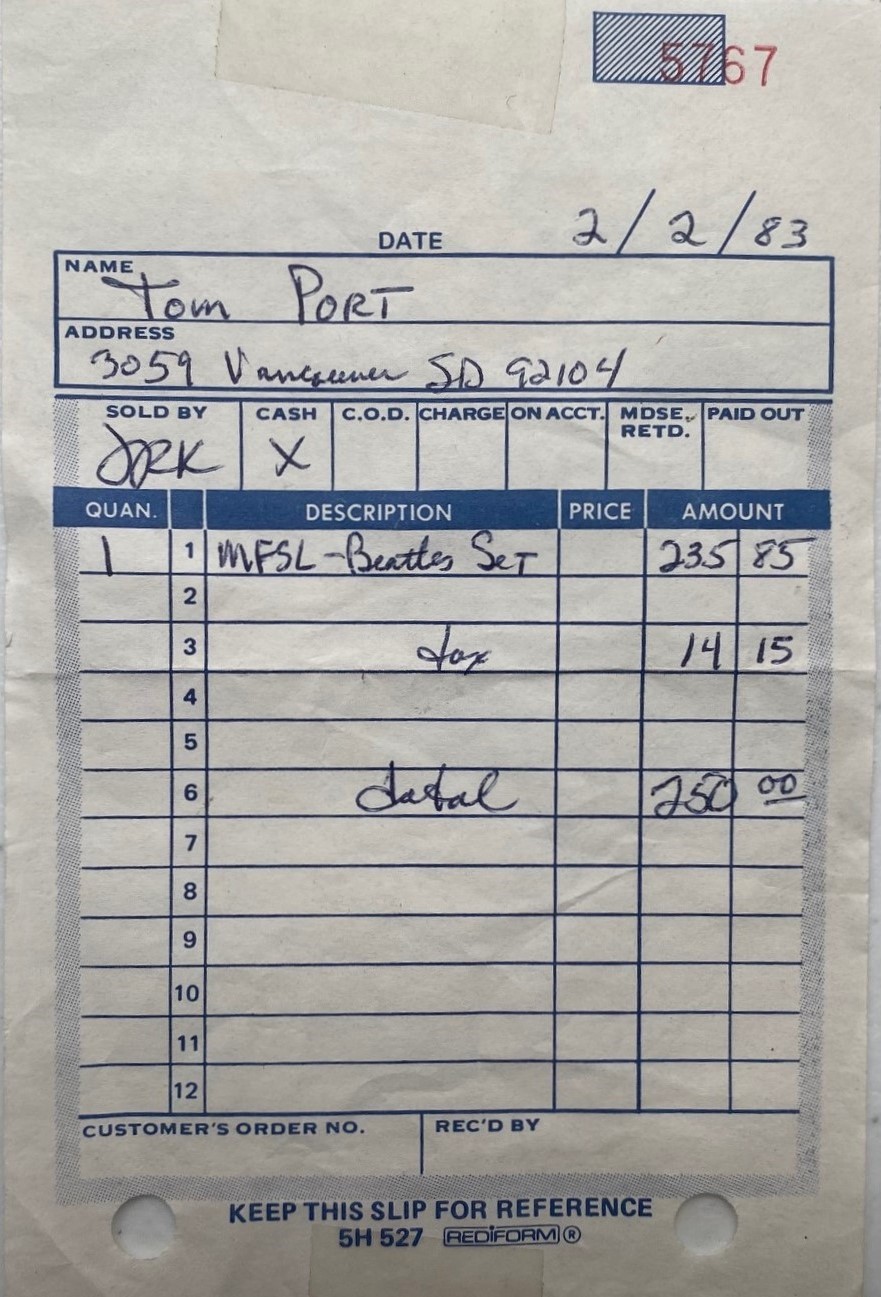
The best $250 — to the penny! — I ever spent on records is the price I paid for my brand new, still-in-the-shipping-carton MoFi Beatles Box. I ordered it in 1982 when I first learned of it, and it finally came the next year. I already owned all The Beatles albums MoFi had done by that point, including the UHQR of Sgt. Peppers, which, like a fool, I got rid of once the set came out.

(more…)

Listening In Depth to Gaucho, The Band’s Last Good Album

Hot Stamper Pressings of the Music of Steely Dan Available Now

Presenting another entry in our extensive listening in depth series with advice on what to listen for as you critically evaluate your copy of Gaucho.

Here are some albums currently on our site with similar track by track breakdowns.

Of all the great albums Steely Dan made, and that means their seven original albums and nothing that came after, there are only three in our opinion that actually support their reputation as studio wizards and recording geniuses.

Chronologically they are Pretzel Logic, Aja, and Gaucho. Every sound captured on these albums is so carefully crafted and considered that it practically brings one to tears to contemplate what the defective DBX noise reduction system did to the work of genius that is Katy Lied, their best album and the worst sounding. (Those cymbal crashes can really mess with your mind if you let them. To get a better picture of the DBX sound, just bang two trash can lids together as close to your head as possible.)

The first two albums can sound very good, as can Royal Scam, but none of those can compete with The Big Three mentioned above for sonics. A Hot Stamper copy of any of them would be a seriously good sounding record indeed.

Side One

Babylon Sisters

From the time the background singers come in with “Babylon sisters” until they reach the final “shake it!” there should be a shocking crescendo of volume and intensity. If you are testing a system using a Hot Stamper pressing of this record and you are not overwhelmed by how loud those ladies sing, that system is failing in the most fundamental way. This track should be thrilling on a good system. If it’s not, it is simply not doing the job it is supposed to do, which is to reproduce with fidelity the energy of those singers.

The tom intro is a great test for transparency. On most copies those opening drums are flat and lackluster. When it’s done right, you can hear the room around the drums, and that’s a mighty fine sounding room!

Also, pay attention to the bell in the left channel at the beginning of the song – if it’s sharp and doesn’t really sustain, you’re probably dealing with the typical extension-challenged copy. If it’s shimmery with a natural sounding decay you may very well be in store for some great sound.

On most copies the saxophone that intermittently pokes its head out will get smoothed over, losing its bite and getting lost in the mix. Much the same can be said for the background singers — they can easily sound veiled and get lost in the mix.

(more…)

Two Key Tracks for Testing Rubber Soul

Hot Stamper Pressings of Rubber Soul Available Now

Rubber Soul is one of the most difficult Beatles records to get to sound right. The individual tracks seem to vary drastically in terms of their tonality. Some (What Goes On) sound sweet, rich and near perfect. Others (You Won’t See Me) can be thin and midrangy. What’s a mother to do?

I think what we’re dealing with here are completely different approaches to the final mix. The Beatles were experimenting with different kinds of sounds, and their experiments produced very different results from track to track on this album more than practically any other I can think of besides The White Album (which was recorded in multiple studios by multiple producers and engineers).

Is Your Rig Up To It?

One final note: this is the kind of record that really rewards a good cartridge/ arm/ table combination. You do not want to play this record with a lean or bright sounding cartridge, or a front end that does not track sibilances well. (I could name some equipment that I would not want to play this record on, but rather than insult the owners of such equipment, let’s just say they will have a tough time with this record.)

The Toughest Test on Side One

“Nowhere Man.” Unless you have an especially good copy this song will sound VERY compressed, much too thick and congealed to be as enjoyable as we know it can be. The best copies manage to find the richness in the sound as well as the breathiness in the vocals that others barely hint at.

Play this track on whatever copies you own (more than one I hope) and see if it doesn’t sound as compressed, thick and congested as we describe.

The Toughest Test on Side Two

(more…)

Way Back in 2007 We Discovered the Hottest Meddle Stampers of Them All

Hot Stamper Pressings of the Music of Pink Floyd Available Now

UPDATE 2020

This review from 2007 describes our experience of having stumbled upon the right stampers for Meddle. To this day, only these stampers and no others have won the many shootouts we’ve done for the album in the ensuing years, perhaps as many as a dozen shootouts or more.

These stampers are also very hard to find, which is why you may not have seen a copy of Meddle hit the site in a while. If we could find them, believe me, we would have them up all the time, as this is one amazing sounding album.

Want to find your own shootout winner?

Scroll to the bottom to see our advice on doing just that.


This Harvest Green Label British Import pressing has a side one that goes FAR beyond anything we’ve ever heard for this album. We had no choice but to award this side one the very rare A with FOUR pluses. We’ve never given any side of any other Pink Floyd record such a high grade, so you can be sure that you’ve never heard them sound this amazing.

  • Our lengthy commentary entitled outliers and out-of-this-world sound talks about how rare these kinds of pressings are and how to go about finding them.
  • We no longer give Four Pluses out as a matter of policy, but that doesn’t mean we don’t come across records that deserve them from time to time.
  • Nowadays we often place them under the general heading of breakthrough pressings. These are records that, out of the blue, reveal to us sound that fundamentally changes what we thought we knew about these often familiar recordings.
  • When this pressing (or pressings) landed on our turntable, we found ourselves asking “Who knew?“
  • Perhaps an even better question would have been “how high is up?”

(more…)

Listening for Harmonically Correct Acoustic Guitars

Hot Stamper Pressings of the Music of America Available Now

The guitars on America’s self-titled debut are a true test of hi-fidelity. As it says below, most of the pressings of this record do not get the guitars to sound right. They often sound veiled and dull, and on a copy with a bit too much top end, they will have an unnatural hi-fi-ish sparkle.

This kind of sparkle can be heard on many records Mobile Fidelity made in the 70s and 80s. Tea for the Tillerman, Sundown, Year of the Cat, Finger Paintings, Byrd at the Gate, Quarter Moon in a 10 Cent Town — the list of MoFis with sparkling acoustic guitars would be very long indeed, and these are just the records with prominent acoustic guitars.

Three Roses and Rainy Day

The key song on side one that we use to test is Three Roses. There are three sonically-separated individuals each playing six string acoustic guitars, and when this side is cut right the guitars sound just gorgeous: sweet, with all their harmonic structures intact. (It’s also my favorite song on side one.)

The real test on side two is the song Rainy Day. Lots of guitars, and when the close-miked descending guitar figure comes in after the first few couplets, if it’s too bright, you’re going to know it. This song is the hardest one to cut and almost never sounds right. Some copies are cut JUST RIGHT. The vocals are breathy, the guitars are full-bodied, and the overall sound is airy, open, and spacious.

(more…)