1.5+

The Heavy Vinyl as well as the vintage pressings linked here earned a sonic grade of 1.5+ on at least one side. To put that in perspective, our minimum grade for an entry level Hot Stamper pressing on the site is 1.5+ on both sides.

Rachmaninoff – Symphonic Dances / Johanos

Hot Stamper Pressings of Rachmaninoff’s Music 

  • With solid Double Plus (A++) sound or close to it on both TAS-approved sides, this original Turquoise label pressing of this orchestral spectacular is doing just about everything right
  • Fairly quiet for a Vox pressing too – noisy vinyl is the rule and not the exception
  • It’s an extraordinary recording, and so wonderful on this pressing that after playing it, you may agree with us that few other classical Demo Discs are in its league (particularly on side two)
  • The bottom end on side two of this record is powerful and solid, and side one is not far behind in both those areas – this is the way to record tympani!
  • The sound is dynamic, lively and big – jumping out of the speakers and bringing the power and the vibrant colors of the symphony right into your listening room (also particularly on side two)
  • True, side one earned a minimal Hot Stamper grade of 1.5+, but we still guarantee that it will beat the pants off any Heavy Vinyl reissue, because every one of those that we played was opaque, muddy and thick enough to have us crying “uncle” after five minutes

(more…)

We Were Way Off the Mark with this Rodrigo Recording in 2010

More of the music of Joaquín Rodrigo (1901-1999)

In 2010 we did a shootout for this title and thought we had found a good one. We wrote:

A good side one backed with a lovely side two! We shot out a stack of these recently and side two of this copy was one of the few sides that really impressed us. The sound is transparent and full of energy. Side one is pretty good but a bit crude in the louder passages.

This is a wonderful record. The performance here by the first family of guitar is legendary. More importantly, the music is delightful and belongs in any serious classical collection.

RFR-1 stampers. What the best originals like this one give you is immediacy. The attack of the guitar is more real.

Comparing this with the Golden Import shows you that some of the transients are smoothed over on that pressing.

If you’ve got the front end that can deal with the Mercury upper midrange and transient attack, the strings will sound textured and clear, not harsh or shrill. (A badly mastered version of this record would make your ears bleed.)

More importantly, this copy captures the sounds of the guitars perfectly. I doubt if anybody could do it as well as Mercury.

Recently we did the shootout again and came up with very different findings:

Now those same stampers are tubey and weighty, but the strings are too hot (bright and shrill) and flat (lacking richness).

We can sum up the sound of these stampers — on a different copy of course, something to keep in mind — in one word:

Ouch.

Please allow us to help you avoid making the same mistakes we did:

  • More records with bright sound can be found here
  • More records with flat sound can be found here

What’s So Golden About These Imports Anyway?

And by the way, we would never even bother to reserve the studio time to play a Golden Import pressing these days. I can count on one hand the titles that actually sound good to me and it’s just not worth the labor to find the one out of fifty that has hi-fidelity sound as we currently define it.

This commentary gets at our disappointed feelings about the label.

(more…)

Audiophiles Should Stick with Stereo on Looking Ahead!

Hot Stamper Pressings of Contemporary Jazz Albums Available Now

As a general rule, audiophiles should stick to stereo pressings of stereo recordings.

Case in point: The early stereo pressing of the album you see pictured to the left is an amazing Demo Disc quality jazz record.

Here is how we described a killer copy we found recently:

We play a lot of vintage Contemporary recordings, but this one surprised us right from the first track with sound that stands out — this on a label that produced many of our favorite standout recordings.

Both of these sides are clean, clear, and transparent, with an abundance of energy and wonderful clarity in the mids and highs.

This is not an easy record to come by, as evident by how long it took us to get our most recent shootout going, and they usually don’t sound anywhere near this good when you’re lucky enough to be able to track one down.

Mono Mistakes

However, do not make the mistake of thinking that any of these wonderful comments apply to the two mono pressings we played.

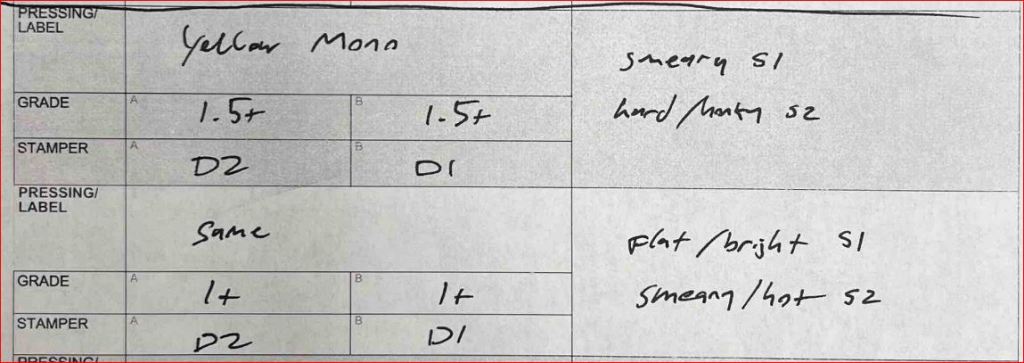
One was passable, earning our 1.5+ grade. It’s a nice enough sounding record I suppose. Smeary, hard and honky.

Of all the Heavy Vinyl pressings we’ve played over the years, only a handfull of the best of them would earn that grade or better. They would suffer from a different suite of problems, but they would be problems nonetheless. Some of our reviews for them can be found here.

1.5+ is four grades down from the top copy. That is a steep dropoff as far as we are concerned. 1.5+ only hints at how good a recording Looking Ahead! can be on the best vintage pressings. (The OJC we played earned the same grade.)

(more…)

Led Zeppelin / II – A New Player Joins the Fun

Hot Stamper Pressings of the Music of Led Zeppelin Available Now

Aaron writes to us often about records. Here is his latest offering. (I’ve made some comments of my own. They are the ones that are not italicized.)

Hi Tom,

Today I did something I’ve wanted to do for years – I played The Two Game.

The Two Game is based on The Blue Game, the one we created for Joni’s Blue Album way back in 2007. That game was apparently harder to play than we thought since nobody seemed to want to play it.

The Rhino pressing’s shortcomings were clear to us at the time, all the way back in 2007, and we noted that it was even superior to the best Bernie Grundman-mastered vintage pressings in one respect. But it seems that no one besides us could figure out what was going on with the sound of the record, even after we gave our customers a free copy so they could play it at home head to head against our Hot Stamper pressing.

With my stereo finally dialed-in and my family all out of the house, I dived in to the Page remaster of Zep 2, side by side with my White Hot Stamper. To help the comparison, I backdropped it with a bunch of other copies I’ve accumulated over the years.

Tom, I figure I’ll need several tries to get to the bottom of this, but it’s going to be an awesome ear-training experience for me, and if I have to listen to any record on repeat, this is a good one. So let me share my thoughts from this first comparison, and maybe you can point out some directions to go in next time I’m up for trying it again.

I chose The Lemon Song, because it is awesome, and because I view it as one of the tracks that’s most balanced overall, with all the instruments contributing about equally, and relatively devoid of studio tricks. Like a kid left to eat all he wants of his favorite candy, I had to eventually stop just from fatigue and satiation.

I recommended The Lemon Song to a customer who wanted to play the game, writing:

Pay special attention in your shootout to The Lemon Song. I am going to discuss some things I learned about it recently. See how all your versions do on the song and what you think each version is doing right and wrong. Enjoy and have fun.

I think the Page remaster actually corrects a problem with this track that exists on all the original versions of the album mastered by Robert Ludwig. For anyone else who wants to play the game, please consider this a clue.

Another piece of advice would be that The Lemon Song is not a good track for overall testing.

There are much better tracks for that purpose, tracks that will make it much easier to recognize what is so fundamentally different about the two pressings.

(more…)

Ravel / Daphnis et Chloé – Good, Not Great on Decca Jubilee

Hot Stamper Pressings on Decca and London Available now

The Decca budget reissue you see to the left had passable sonics. It would probably be competitive with the top five percent ot Heavy Vinyl pressings that we’ve played over the last 30 years. Some of those would earn grades of 1.5+, which turned out to be the case here.

We play every pressing we can get our hands on because you never know just how good one of these budget reissues can sound until you clean it up and give it a spin.

Most don’t pan out — maybe one out of five is any good — but that’s just the nature of the best when it comes to collecting top quality records.

Most OJC pressings of jazz albums aren’t very good, but the best ones clearly are because they win our blinded shootouts.

If you want the best sound, you had better have your mind open to the idea that the originals are not the only ones that were mastered correctly. There are currently 175 records we’ve identified as sounding better on a reissue pressing, and that number probably represents less than half of the ones we’ve encountered over the many years we’ve actively been doing shootouts.

The commentary for the amazing sounding Decca originals below describes just how wonderful they are, worlds better than anything you can find on Heavy Vinyl.

(more…)

These Stampers Consistently Come in Last in Our Shootouts

Hot Stamper Pressings of the Music of The Eagles Available Now

All the original domestic pressings are cut by Ted Jensen at Sterling as far as we know.

You can find TJ and STERLING on every last one of them (with the notable exception of the SRC pressings, best avoided). What you can’t find is good sound on every last one of them.

The most common stampers can be found from pressing plants using the following label designations: MON, PRC, PRCW, AR and SP.

In our experience, two of the five labels listed above have the potential to win shootouts. Two of the others tend to end up somewhere in the middle of the grading curve. One consistently ends up at the bottom.

It’s important to keep in mind that in our shootouts, the person hearing the copy being played, the one who is carefully noting its strengths and weaknesses, has no idea what pressing plant actually produced the record, or what its specific stampers numbers might be.

That kind of  information is compiled after the grading has been done. That’s when these patterns emerge.

The domestic pressings with the stampers shown above have not done well in our shootouts for years now. If you own a copy with these stampers, or ones like them, the good news is that we can get you a much better sounding copy of The Long Run than you have ever heard. It won’t be cheap, but we guarantee that it will be very, very good.

Stamper numbers are not the be-all and end-all in the world of records, but after hearing too many copies with these stampers and less than stellar sound, from now on we are going to focus our attention on the stampers that do well and leave copies with these markings sitting in the bins.

Stampers

That the stampers are entirely responsible for the quality of any given record’s sound is a mistaken idea, and a rather convenient one when you stop to think about it. Audiophiles, like most everybody else on this planet, want answers, the simpler the better. Easier to memorize that way.

(more…)

How Can the Best Stampers Also Be the Worst Stampers?

Hot Stamper Pressings of Contemporary Jazz Available Now

Recently we conducted a shootout for a superb Contemporary recording, one that we had auditioned a couple of times before and one which we felt we knew the music and the quality of the sound well.

It’s not the record you see pictured. For now we’re keeping the title a mystery, consistent with the idea that we give out lots of bad stampers on this blog, but almost never do we give out the good ones.

Why, you ask?

The cost of discovering the right stampers is usually high, can take decades, and is fundamentally at the heart of how we make our money: by finding amazing sounding pressings with stampers we know to be good, cleaning them up, playing them, and offering those that, for whatever mysterious reasons that no one has figured out, including us, tend to have the best sounding grooves.

This time around we kept track of the stamper numbers for all the pressings we played, something we are making a habit of doing these days and using to highlight discoveries in the sound of the records we play.

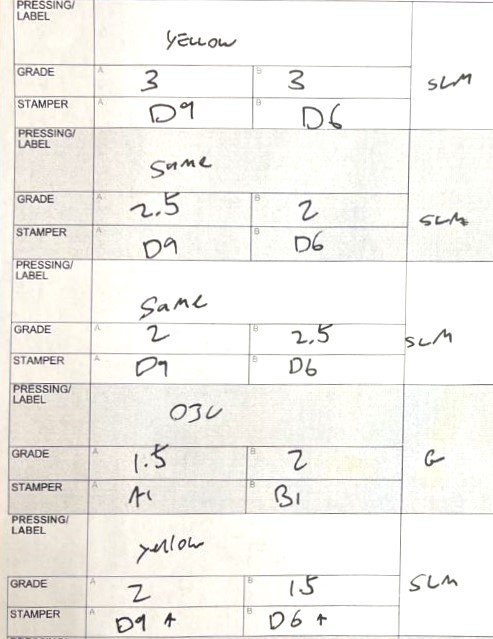
In this case, we discovered an anomaly we thought we would bring to the audiophile world’s attention: the fact that the stampers for the best souding pressing were also the stampers for the worst sounding pressing, because they were the stampers for all the pressings.

One copy earned our White Hot Stamper grade, our highest, for its clearly superior sound, and another one earned our lowest Hot Stamper grade of 1.5+. The rest were quite good, in between those two, which is a very common outcome for most of our shootouts: lots of records in the middle of the distribution, some winners at the top and some losers at the bottom.

Note that the OJC of this title is one we have liked in the past. It didn’t do so well this time around, and that is mostly because we found out about some stampers we like even better. We will probably not being buying the OJC anymore; it’s probably more trouble than it’s worth.

However, the key takeaway from this stamper sheet is the fact that it beat one of the real Contemporary label pressings in the shootout.

So the question an audiophile record collector might ask himself is this one: is the OJC better or worse than the real Contemporary pressing with D9/D6 stampers?

(more…)

Watch Out for 5c on Side One of The White Album

Hot Stamper Pressings of The White Album Available Now

Starting as early as 1984, some pressings of The White Album came with a decidely inferior side one, 5c.

Often it was mated to an equally problematic-sounding side two, -6. Although the -6 stamper can be good, when it has 5c on side one, it’s never as good as it should be.

Even though this copy had less-than-impressive sound on sides three and four — these sides qualify as minimally Hot Stamper pressings — there is nothing inherently wrong with the -2/-3 stamper numbers for those sides.

These later pressings just don’t sound as good as the earlier ones we like.

Not that we like the originals.

The few we’ve played were terrible. They tend to have -1 or -2 stampers for the first two sides, and their mastering tends to add a lot of problems to a recording that already has more than its share.

Want to find your own top quality copy?

Consider taking our moderately helpful advice regarding the pressings that tend to win our shootouts. The White Album sounds its best:

(more…)

Avoid M Stampers and Imports If You Want the Best Sound on Tapestry

More of the Music of Carole King

The domestic pressings with the stampers shown below, and others similar to them, have not done well in our shootouts for years now. If you own a copy with these stampers, or ones like them, the good news is that we can get you a much better sounding copy of Tapestry than you have ever heard. It won’t be cheap, but we can guarantee that it will be very, very good.

Stamper numbers are not the be-all and end-all in the world of records, a subject we discuss below, but after hearing too many copies with these stampers and decidedly mediocre sound, from now on we are going to focus our attention on the stampers that do well and leave copies with these markings sitting in the bins.

Note that the last listing is for an early UK import. I have no idea how that record got into the shootout. The chances of an import doing well up against Bernie Grundman’s brilliant mastering — from back in the good old days of the 60s, 70s and 80s when he was actually doing brilliant mastering work — is so close to zero it can’t be calculated.

Sometimes we take long shots, hoping to learn something new. In this case, we learned what we already know. Yes, there are still some audiophiles who buy imports of a record like this hoping to find better sound. I can’t imagine what kind of system it would take to hide the bright, dubby sound of the UK pressing we played, but judging from some of the foolishness I read on the Hoffman forum and others of its ilk, I know there must be plenty of them out there.
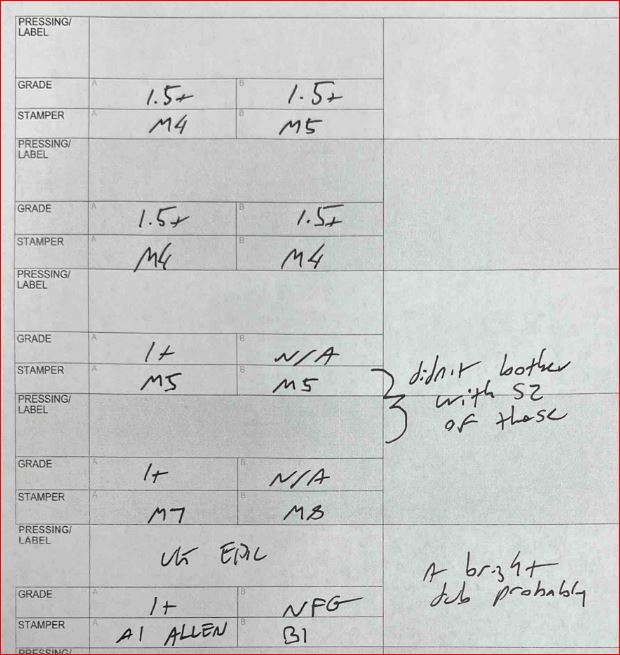
Monarch is responsible for the mediocre-at-best sound of the pressings with the stampers you see above. We tend to like Monarch pressings as a rule, but sometimes they mess up, and they messed up Tapestry compared to others who pressed the record.

We liked all the other copies with other stampers better than than these, which just goes to show you can never know how good it can get until it gets that good. That is what shootouts allow us to do.

Playing close to twenty copies of Tapestry in a shootout allows us to grade Tapestry on a scale, with the M stampers filling out most of the bottom and the other stampers — wouldn’t you like to know which ones! — occupying the middle and the top of the distribution. 

This is what the forum posters fail to understand. They think they have a Hot Stamper when what they actually have (maybe!) is a good sounding record. They don’t know how amazing the record can sound — so much more amazing than the one they own, probably — so they assume they have something good, maybe even the best.

They probably do not, but who really knows? The shootout would supply the data they need to support their conclusions, and since they could not be bothered to conduct one, they have no data to back up their opinions.

The “probably” you see in the above two sentences is there for a good reason. We make a point of being clear about what we can know and we cannot know, and we cannot know what a record sounds like until we play it.

This is obviously true for those of us who try to listen as critically as possible, but we also know that it is just as important to think about records the right way.

(more…)

Our Old Prediction for LSC 2563 Came True

Hot Stamper Pressings that Feature the Violin

Many years ago we wrote:

This is a very old review and it’s doubtful we would not prefer the right Shaded Dog pressing these days.

That turned out to be the case, as we had two late-label 70s Red Seal pressings in the shootout we just did and only one of them was even passable.

A few things about the new pressings and the old commentary caught my eye.

First off, 3s is a fairly low number. The Shaded Dogs that win the shootout must be lower, which means they are either 1s or 2s. Not much to choose from there!

Secondly, the commentary you see below goes into great detail regarding what each piece found on the pressing was doing right and wrong.

It makes us sound like we knew what we were talking about when it came to this specific Red Seal pressing of the album we had played.

I assure you that we did not.

On the web I come across lots of reviews for audiophile pressings in which the writers go on for page after page about how much better the new Heavy Vinyl pressing is compared to the old record the reviewer owns.

This is no longer hard for me to understand. They are simply as lost as I used to be.

(more…)