*What’s the Big Idea?

Thoughts on The Big Picture from someone who has been playing records for almost 60 years. I bought a copy of She Loves You on Swan in 1964 and still own it. In case you were wondering, the disc is cracked but the picture sleeve is still in pretty good shape.

Remembering the Glorious Sound of Tubes

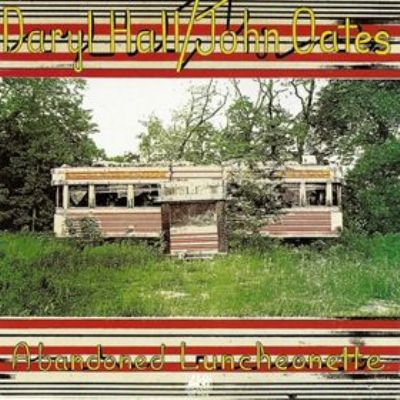
Hot Stamper Pressings of the Music of Hall and Oates Available Now

This record has the sound of TUBES. I’m sure it was recorded with transistors, judging by the fact that it was made after most recording studios had abandoned that “antiquated” technology, but there may be a reason why they were able to achieve such success with the new transistor equipment when, in the decades to come, they would produce nothing but one failure after another.

In other words, I have a theory.

They remember what things sounded like when they had tubes. Modern engineers appear to have forgotten that sound. They seem to have no reference for Tubey Magic. If they use tubes in their mastering chains, they sure don’t sound the way vintage tube-mastered records tend to sound.

Transistor Audio Equipment with Plenty of Tubey Magic

A similar syndrome was then operating with the home audio equipment manufacturers as well. Early transistor gear by the likes of Marantz, McIntosh and Sherwood, just to name three I happen to be familiar with, still retained much of the smooth, rich, natural, sweet, grain-free sound of the better tube equipment of the day.

I once owned a wonderful Sherwood receiver that you would swear had tubes in it. In fact it was simply an unusually well-designed transistor unit. Anyone listening to it would never know that it was solid state. It has none of the “sound” we associate with solid state, thank goodness.

Very low power, 15 watts a channel. No wonder it sounded so good.

Stick with the 4 Digit Originals (SD 7269)

If you’re looking for a big production pop record that jumps out of your speakers, is full of TUBEY MAGIC, and has consistently good music, look no further. Until I picked up one of these nice originals, I had no idea how good this record could sound. For an early ’70s multi-track pop recording, this is about as good as it gets (AGAIG as we like to say). It’s rich, sweet, open, natural, smooth most of the time — in short, it’s got all the stuff we audiophiles LOVE.   

(more…)

Heavy Vinyl – Audiophile Blessing or Curse?

More Letters Comparing Hot Stamper Pressings to their Heavy Vinyl Counterparts

Two editorial points to make up front:

The run-of-the-mill Heavy Vinyl pressing is so lifeless and opaque that we think the run-of-the-mill CD, on average, will sound better.

If you’re an audiophile who is currently collecting and playing Heavy Vinyl pressings, you are making the worst choice possible: second- or third-rate sound quality coupled with the hassle and expense of the modern LP.

In this letter Dan tells us of his disappointment with the new reissues he’s been trying:

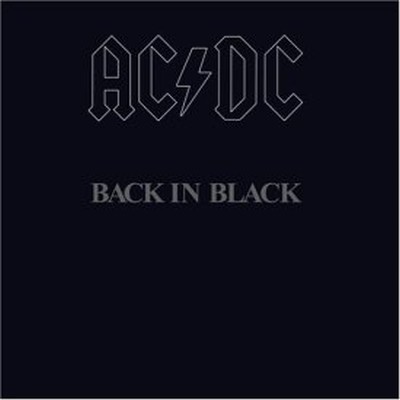
I can’t tell you how many modern reissues I’ve bought over the past couple months that have lost, and lost badly, to just my one single original or early pressing of an album. Reissues by AC/DC, The Who, ZZ Top, The Rolling Stones, and Patti Smith have all failed miserably against my merely average sounding originals.

As a result, I have almost zero interest in buying anything that’s reissued nowadays. But I believe you said in a recent commentary that the less audiophile pressings you have in your collection the better. So I suppose the fact that I’m weeding these out from my collection is good news as far as my ears and stereo are concerned. But it’s still a sad state for the audio industry as a whole. It’s too bad we can’t tell a different story. I don’t know what in the mastering/pressing process needs to be different, but something does.

(more…)

Half-Speed Mastering – A Technological Fix for a Non-Existent Problem

Hot Stamper Pressings of the Music of Joe Jackson Available Now

UPDATE

This commentary was written many years ago. We had a Hot Stamper Section back then, because we were selling lots of other kinds of records including direct-to-disc recordings, Heavy Vinyl, Half-Speeds, OJC‘s and various other pressings which we thought would appeal to those in search of higher quality sound.

In 2011, we officially stopped selling anything other than records we had cleaned, evaluated, and found to have superior sound.


We do a lot of MoFi bashing here at Better Records, and for good reason: most of their pressings are just plain awful. We are shocked and frankly dismayed to find that the modern day audiophile still flocks to this label with the expectation of a higher quality LP, seemingly unaware that although the vinyl may be quiet, the mastering — the sound of the music as opposed to the sound of the record’s surfaces — typically leaves much to be desired. 

Hence the commentary below, prompted by a letter from our good friend Roger, who owned the MoFi Night and Day and who had also purchased a Hot Stamper from us, which we are happy to say he found much more to his liking.

In my response, after a bit of piling on for the MoFi, I then turned my attention to three Nautilus records which I had previously held in high regard, but now find deserving of a critical beatdown. (We actually have a section for bad sounding records I once liked. Live and learn, right?) This one is entitled:

(more…)

Some of the Albums We Sell (For Big Bucks!) Are Poorly Recorded – Who Knew?

More on the Pitfalls of Conventional Thinking

It’s amazing how many records that used to sound bad — or least problematic — now sound pretty darn good. 

Every one of them is proof that judgments about the sound quality of recordings are of limited value.

The recordings don’t change. Our ability — and yours — to find, clean and play the pressings made from them does, and that’s what Hot Stampers are all about.

You have a choice. You can choose to take the standard audiophile approach, which is to buy the record that is supposed to be the best pressing, check off the box for that title, file it alphabetically on the shelf where it goes and sleep soundly knowing that all is now right with the world, or at least that title.

You did the right thing, you bought the pressing you were told to buy, the one you read the reviews about, the one on the list, the one they said was made from the real analog tape, mastered by one of the greats, the one pressed on the best vinyl, in a limited run, and on and on down the list.

When — sometimes if but usually when — the sound of the record doesn’t live up to the hype surrounding it, you merely accept the fact that the recording itself must be at fault.

We did it too, more times than I care to admit.

Instead of heading toward that dead end, perhaps you should consider adopting our approach, an approach that allows you to hear those very same albums sound dramatically better than you ever thought possible. In fact, many of our customers have written to tell us what a revelation our Hot Stamper pressings of albums they were familiar with turned out to be.

(more…)

Hot Stampers Simply Do Not Exist for Some Audiophiles

Please Consider Taking Some of Our Hard-Earned Audio Advice

It is an unfortunate fact that, at least for some audiophiles, Hot Stampers simply do not exist.

They may be lovers of sound, the dictionary definition of an audiophile, but their systems are not revealing and accurate enough to allow them to hear how good a properly-mastered, properly-pressed, properly-cleaned vintage (or maybe not so vintage) pressing can sound relative to whatever other version of the music they may have — Heavy Vinyl, cassette, CD, etc.

They simply do not possess a system (power, equipment, room, tweaks) of the quality required to play them at their best. 

Others won’t have developed the rudimentary listening skills needed to recognize the superior sound of a Hot Stamper pressing when it’s playing on their turntable.

Speculation? Opinion? Not really. Not when the evidence is this overwhelming. Let’s look at some of the facts.

A great many analog-oriented audiophiles are quite happy with the sound of Heavy Vinyl LPs, the kind that we regularly trash around here.

Those pressings set a decidedly low standard for sound quality, to our ears anyway, so if the typical audiophile is happy with them, what does that tell you about the quality of his audio chain and the nature of his critical listening skills?

(more…)

The Thrill of Discovering Great Recordings

Hot Stamper Pressings of Percussion Recordings Available Now

Robert Fine was one of the greatest audio engineers who ever lived. He is the man responsible for recording this audiophile gem for Command, as well as much of the Mercury catalog.

Unfortunately, we rarely have any Command records in stock, but we do make an effort to have a good selection of the most amazing sounding Mercury titles available in the form of Hot Stamper pressings.

If you have the system for it, it’s very possible you have never heard most of these instruments sound this real on any other recording. It’s as if you were standing right in the studio with them. Yes, it’s that crazy good.

Let Me Ask You This

Here’s a question no one seems to be asking:

Who is finding incredible Demo Discs like this Command from 1961 nowadays?

(more…)

Warning: Hot Stampers May Cause Cognitive Dissonance

Thinking Critically About Records Is Key to Understanding Them

Check out the article that Wired wrote about Better Records and our pursuit of Hot Stampers.

If you have time, go to the comments section and read any of the 300 or more postings claiming that the very idea of Hot Stampers is absurd, not to mention the atavistic, borderline fetishistic attachment to vinyl that these self-described “lovers of sound” engage in, and don’t forget how ridiculously expensive the equipment many of them own must be, making a real trifecta of audiophile inanity.

As if you didn’t know already!

But all of this is true only under one condition:

That you have never played one of our Hot Stamper pressings on top quality equipment.

Once you have played one, even the most skeptical audiophile often finds himself becoming as fetishistic about the pursuit of old records as we are (and have been for fifty years).

We sure get a lot of letters from folks who seem to like our records. Can there really be that much Kool-Aid to go around? is it possible for one sip to change your life?

Good News

There is a way to find out.

If you live in America and you try one of our Hot Stamper pressings and you decide you don’t like it, we will cover the shipping cost both ways and refund 100% of the money you paid.

With a guarantee like that, wouldn’t it be more absurd to conclude, as so many have done, that what we say about records cannot possibly be true? All without even a hint of empirical evidence to support the idea?

The Real Risk

Of course, the real risk in taking a chance on a Hot Stamper is not financial, since we are covering all the costs.

The real risk is that you might end up proving to yourself that some of the things you have been told about records are mistaken.

Carefully cleaned and evaluated vintage pressings can indeed sound dramatically better than the ones they are making these days. We can actually prove it. You just need to let us send you the proof.

Now wait just a gosh darn minute, Mister Hot Stampers, I hear you saying to yourself.

I own so many of these new records! I’m a smart guy. I’m no dummy. How could I have been so easily taken in? Why did I believe them when they told me these new records were the best? You know, the labels that make them and the reviewers who review them and the forum posters who rave about them. Everybody. I thought we all agreed about this!

It’s not right that your Hot Stamper pressings turn all of what I thought I knew to be true on its head. Yes, your records are clearly better, but now I feel I was duped when I bought all these other pressings. I feel like a fool and I don’t like that feeling.

You can see how easy it would be for this turn of events to result in some serious cognitive dissonance, the kind that everyone — even me — will do everything in their power to avoid. (Most of it is subconscious and automatic anyway, so you don’t really have to do anything, truth be told.)

The Right Choice Is Clear

Therefore the easiest choice, the smartest choice, the choice practically every audiophile makes (never mind the general public, they couldn’t care less), is to come up with some reasons why our records cannot possibly be as good sounding as we say.

That’s the ticket. This whole Hot Stamper thing makes no sense. It’s not possible. Your customers are wrong. They are deluding themselves. You guys are the ones who are suffering from cognitive bias, not me. You hear what you want to hear on these old records and you ignore what’s good about the new ones.

I’m pretty sure that must be what’s going on. How can everybody else be wrong and somehow you get to be right? That’s really absurd. You should be ashamed of yourself for ripping off gullible audiophiles who are too stupid to realize that what you are selling is the worst kind of snake oil. Either that or false hope. You’re cynically preying on those who have more money than sense and laughing all the way to the bank. That’s on you. There’s a sucker born every minute, and that’s why you will never run out of customers. Hah!

Fair enough. Well said. You figured out this whole thing must be a scam. Awesome. Good job.

As a bonus, you’ve just saved yourself a huge amount of work and avoided a lot of mental anguish. You proved yourself right without lifting a finger. (Well, you did some typing, so I guess that counts as lifting a finger. But it sure was easier than playing a record and critically listening to it. That stuff is hard.)


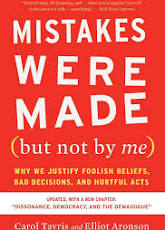
Now that all that Hot Stamper stuff is out of the way, please allow me to point you toward the one book that explains all the bad thinking we humans constantly engage in, this one.

In my experience, no other book explains more about audio and the audiophiles who pursue it, myself included. I guarantee that if you read this book you will never be the same. It is that eye-opening.

Kind of like playing your first Hot Stamper. Nothing is ever the same again. Even if it is a scam.

(more…)

The Scientific Method in a Nutshell, Courtesy of Richard Feynman

An Experimental Approach to Finding Better Records Is the Only One that Works

Experimenting with records is the best way to learn about them. Hot Stamper shootouts are simply the name we* gave to the rigorous blinded experiments we do in order to find the best sounding pressings of the albums we play.

If you haven’t run an actual experiment under controlled conditions, you may have an opinion about the sound of a given record, you may even have experts who agree with you about that record, but what you don’t have is evidence to back up anything you or anybody else says.

It’s possible that when carrying out your experiments you may have allowed yourself to be fooled, or maybe you failed in some other way to run a proper shootout,

The audio world is drowning in pretentious knowledge, the kind that has no experimental evidence to support it.

We here at Better Records do things differently. We run experiments that tell us not which pressings should sound the best, but which ones do sound the best.

Our experimental results regularly disagree with whatever it is that the conventional wisdom of the audiophile community might have predicted.

As Richard Feynman points out below, that makes us right and them wrong, at least provisionally.

(more…)

“Why would you want to go into a room and just play a record by yourself?”

In Geoff Edgers’ Washington Post article about audiophiles, somebody asks “why would you want to go into a room and just play a record by yourself?”

I would answer the question with a question of my own:

Why would you go to a museum and just look at a painting by yourself?

You don’t need anybody around you to help you understand a painting. You just look at the painting and you experience looking at a painting.

When I listen to a record, I want the experience of listening to the record. I don’t need anybody else around. I don’t need anybody talking to me. I want it to take me from the beginning to the end. And at the end I should feel like I still want more.

For me, that’s what a good record and a good stereo is all about. That’s the reason some of us describe ourselves as audiophiles.

The shortest definition of an audiophile is a “lover of sound.” I love good sound and I’ve spent more than forty years building a stereo system that has what I think is very good sound. (What others think of it has never been of much concern, and I don’t know why it would be.)

It’s in a darkened room with no windows [1] because music sounds better in a darkened room with no windows and the door closed. (In our old studio, the stereo sounded better with the door at the end of the hallway open. This one sounds better with the door behind the left speaker closed. There is no rule to follow here. Whatever sounds the best, sounds the best.)

There is one chair and it is located in the only sweet spot in the room. (Yes, there can only be one sweet spot.)

I go in there to put myself in the living presence of the musicians who performed on whatever record I choose to play.

Music is loud and so I play the stereo at levels as close to those of live music as I can manage.

The system creates a soundfield that stretches from wall to wall and floor to ceiling. With the speakers pulled so far out into the room, they have often been known to disappear, leaving only three-dimensional imaging of great depth and precision (especially in the case of orchestral music).

By listening this way, I am able to completely immerse myself in the music I play, with no distractions of any kind.

This way of listening is more intense and powerful and transportive than any other I have known (outside of the live event of course).

That’s what I am trying to achieve with my system and the best records I can find to play on it: an experience that is so intense and powerful that I find myself completely transported out of the real world I exist in, and into the imaginary world created by the producers, engineers and musicians responsible for making the record.

If you want this kind of experience, you need more than good music. You need a good recording of that music, and, if you’re an analog sort of person with high standards, you need an exceptionally good pressing of that recording.

At the highest levels of sound quality, for us audiophiles it can’t just be about the music. You really do need all three: good music, well recorded, then mastered, pressed and cleaned properly.

Depending on your tastes and standards, good music can easily be found most everywhere. Good music with good sound, at least on vinyl, is much more rare, and good sounding music reproduced well is, in my experience, very rare indeed.

Some people are upset and put off by what they consider to be our “extreme” approach to records and audio. It bothers them that we constantly say that doing records and audio is harder than it looks. To them it seems so easy.

Naturally, we believe there is ample evidence to support our views on the subject. I refer those who disagree with us to the many hundreds of commentaries on this blog.

And, if I may paraphrase Jesus, upset folks will always be with us.


[1] In the picture below you can see how bright the back of the soundroom is. Until I watched the video again recently, I had completely forgotten that we had installed a solatube skylight in the ceiling at the far end of the room.

Why did we do that? Because there is no electricity being used in this room that is not going to the stereo. There is a light by the turntable that runs off batteries. When we tried plugging that light into the electrical circuits, even the ones separated from the ones the system uses, the sound became degraded — flatter, harsher, less transparent, less open, etc.

We needed more light in the room to do our work, so we put a solatube well behind the listener, which allowed us to leave the area around the speakers mostly dark. This worked like a charm.

We spents months testing the electricity going to everything in the space we rent, including the testing of the isolation transformers we use (about six as I recall) for our computers and record cleaning machines.

All of the experiments we carried out were done without the listener knowing what had been changed. Notes were taken and combinations of changed evaluated.

I did this kind of thing over the course of years in the house I owned in Thousand Oaks, where we had the studio set up in the master bedroom, so I knew exactly how to go about it. If you ever manage to do this kind of work for your own stereo — assuming you take it to the level we took it to — the one thing you are guaranteed to take away from the experience is how shocking the before and after difference can be.

We don’t talk about it much because it’s just too complicated and so few audiophiles will choose to make use of our experience. I doubt if even one out of a hundred of our customers would. Robert Brook and a handful of others at most would be my guess.

But good electricity is key to good sound, and, if I may be so bold, it’s the most obvious source of problems in home audio systems.


Further Reading
We Don’t Know — And We’ve Learned Over the Years Not to Pretend To

More on the Subject of Pretentious Knowledge

In our twenty-year-old review for the Speakers Corner pressing of the Tsar Saltan we made the following claim, a claim which we obviously had no evidence to back up.

But… when I hear this kind of sound only one word comes to mind, a terrible word, a word that makes us recoil in shock and horror. That word is DUB. This reissue is made from copy tapes, not masters.

It was foolish of us to declare any such thing, especially with such certainty. How on earth could we possibly know what tapes were used to master the record, in Germany of all places? The very idea is absurd. We call people out for saying things they have no evidence to support all the time. Running into this review today, I have to call myself out for such nonsense. What I should have said was the following:

This reissue sounds to us as though it has been made from copy tapes.

Just to be clear, I think I am perfectly justified in saying that it sounds like a copy tape was used to master the record, but I am not at all justified in saying that a copy tape was actually used to master the record.

Nor do I have any business talking about about the sound of a master tape I’ve never heard.

I can certainly talk about the sound of the best London pressings. Those I have played. I’ve listened to batches of them over the course of many years. They may be expensve but they are not hard to find. We’ve sold dozens of them as Hot Stamper pressings and played plenty of others with sound not good enough or surfaces not quiet enough to offer to our customers.

Whatever approach Decca may have used in the mastering, with whatever tape they may have used to make the records that we’ve auditioned, is information that would be nice to have. But it’s really none of my business, since it doesn’t alter the sound of the pressings we auditioned.

More importantly, it’s none of Better Records’ business.

(more…)