Albums with Lower Sound Quality

This Tony Hawkins-Mastered Pressing Sure Was a Letdown

Hot Stamper Pressings of Orchestral Spectaculars Available Now

This London original pressing with 1K/1K stampers (the work of Tony Hawkins) was so bright, dry, and shrill I could hardly stand it for more than the minute it took me to realize it was not going to get any better. The sound is bad enough to send it right into our hall of shame.

There are a number of other Deccas and Londons that we’ve played over the years that were disappointing, and they can be found here.

The copy we had back in 2010 was a very good sounding record, or so we thought.

Maybe we were wrong! It’s not as though we don’t admit to the possibility. You can read all about it below.

(more…)

Gunfighter Ballads & Trail Songs – Tubey Magical on the Red Label?

Hot Stamper Pressings of Tubey Magical Rock Records in Stock Now 

UPDATE 2023

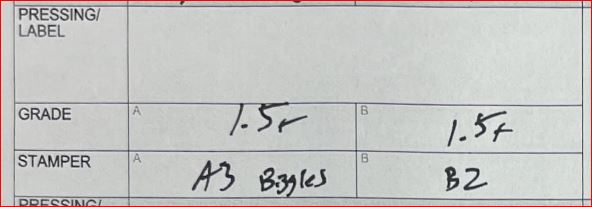
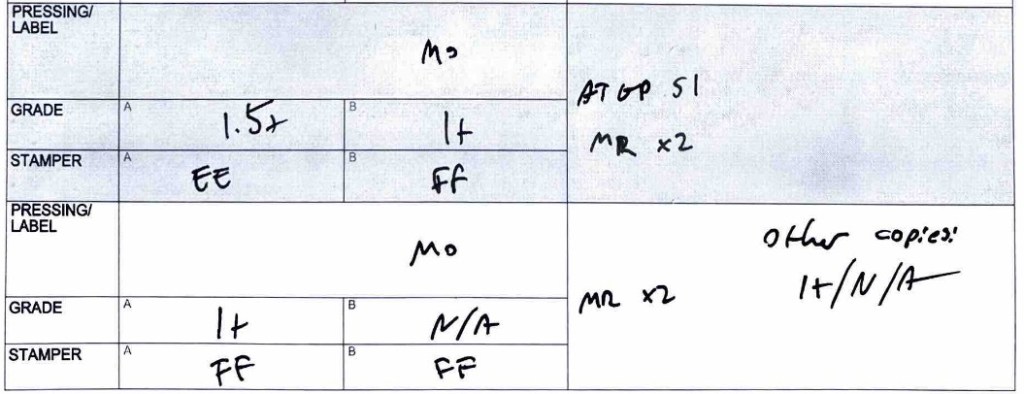
In 2023 we did another shootout for this devilishly difficult-to-find album, and none of the Red Label pressings we played scored better than 1.5+ on any side. Many of them were hopeless thin and dry.

We would not recommend Gunfighter Ballads and Trail Songs at anything but a nominal price.


Our older commentary follows.

Years ago we noted that the red label Columbia reissues of most of their catalog leave much to be desired. Here is an excerpt from a listing for The Byrds’ Greatest Hits.

One might assume that the later label copies would be the ones that would most likely have been cut with lower distortion equipment, the way the later Kind of Blues are cut so much cleaner than the earlier ones.

On The Byrds’ albums this is almost never the right approach. The Tubey Magic of the earlier pressings is absolutely crucial to the sound of these albums. It is the sine qua non of Classic 60’s Rock sound. Without it you might as well be playing a CD.

It turns out that some copies of Gunfighter Ballads and Trail Songs on the later red label can actually sound amazingly Tubey Magical, especially on side two. In fact we heard a red label side two that was even more rich than the best 360s.

Since the person listening to the record has no idea what the actual label is of the record being evaluated — which is about as close an approximation of the Scientific Method as we can manage around here — it was very surprising to hear such glorious Tubey Magical Richness and Sweetness come from such an unexpected source.

A good reason not to avoid later pressings and reissues absent any evidence of their inferiority.

And a good reason to judge your records by playing them whenever possible. (more…)

The 2002 OJC Pressings Can Be Very Good but They Don’t Win Shootouts

Hot Stamper Pressings of the Music of Bill Evans Available Now

For a Hot Stamper pressing we put up recently, we noted:

Moon Beams is one of the best sounding Bill Evans records we’ve ever played. You can see why we chose it to be the first OJC Hot Stamper of his work to hit the site back in 2015. Play “It Might As Well Be Spring” for the kind of sublime musical experience you only find on 20th century analog recordings.

All of that is true for the best of the 20th century pressings we played. (Which, by the way, does not include any originals as those are consistently inferior to the later pressings we’ve auditioned.)

As for the 21st century, the sound of the best 2002 pressings on OJC are somewhat opaque and dry compared to the best that came before. This is something we rarely point out in the listings we have on sale on the site. You generally have to come to the blog to get a fuller picture of the specific shortcomings we might have of some of our Hot Stamper pressings.

We know both dry sound and opaque sound well, having played hundreds of pressings that suffer from such conditions.

The sound may be decent on most of these 2002 pressings, and fairly good on the best of them, but that’s not really what we were hoping to find. We spent a lot of money and we spent a lot of time, to quote a famous line by a famous rock band, but the six 2002 pressings we cleaned and played nevertheless came up a bit short. That’s just how it goes sometimes. (And sometimes it goes completely off the tracks.)

The way we approach a shootout such as this typically involves playing a copy or two some pressing, the 2002 OJC in this case, and hearing sound good enough to make us think it might have the potential for greatness. As you can see by the marks we gave out, the average copy earned a grade of 1.5+, which is a good, not great Hot Stamper grade.  Greatness was just not in the cards.

An Amazing Recording Held Back by Truly Awful Mercury Mastering

Hot Stamper Mercury Pressings Available Now

This Mercury 35mm recording was released through Philips after they’d bought the Mercury label back in the 60s.

Philips would go on to release the mostly dreadful Golden Import pressings that were made from all the most famous Mercury recordings, but of course they sounded a great deal more like Philips recordings than Mercury recordings once they had been remastered.

Some things never change. Do you like the sound Steve Hoffman brought to the DCC vinyl releases? You can be sure you will get plenty of that sound and very little of any other. We call that My-Fi. Once we learned to recognize it, something we admit took us longer than it should have, we became ardently opposed to it.

If you think that the right way to remaster records is to make them sound more like you want them to sound and less like the scores of vintage pressings sounded before, you and I are clearly in different camps. (One listen to a Hot Stamper pressing may be all that it takes to get you to switch camps.)

This album was recorded by Robert Fine and Wilma Cozart, then mastered by George Piros, all members of the legendary Mercury team, revered by the audiophile cognoscentias as true giants , and with good reason. We count ourselves among Mercury’s biggest fans.

It is instructive to note that the Philips mastering in this case is dramatically superior to the mediocre Mercury mastering by Robert Fine, which may strike you as counterintuitive, but is nonetheless a fact that cannot be denied once you have played a sufficient number of copies of each version, as we have.

(more…)

Ravel / Concerto in G – Munch

Hot Stamper Pressings of the Music of Ravel Available Now

UPDATE 2025

We just played a clean, early Shaded Dog pressing of LSC 2271, featuring Ravel’s Concerto in G.

Although it is a good sounding record, we do not believe it is very likely to be a great one.

If you own the record, play it and see if it still holds up. Our latest purchase didn’t.

There may be great sounding pressings of it, but at the price clean copies command these days, $100 and up, we have decided that pursuing this title is no longer in anyone’s interest.

Live and learn is our motto, and progress in audio is a feature, not a bug, of record collecting at the most advanced levels.

(more…)

The Byrds in Mono – How Do The Original Pressings Sound?

Hot Stamper Pressings of Folk Rock Albums Available Now

Congested and compressed, with no real top, who in his right mind could put up with that kind of sound on a modern audiophile system?

Can the apologists for mono really be taking this ridiculously crappy sound seriously?

I hope not, but I suspect that is exactly what they are doing. The question is: why?

They seem to like the congested, distorted, top-end-lacking Beatles records in mono, so why not The Byrds?

To these ears, the monos for both bands have a lot in common.

And what they have in common is sound we want nothing to do with.

Now, to be fair, we’ve stopped buying these monos, so there may actually be a good copy or two out there in the used record bins that does have good sound.

In our defense, who really has the time to play records with so little potential for good sound?

What about the Sundazed mono pressings?

The best Columbia stereo copies on the original label are rich, sweet and Tubey Magical — three areas in which the Sundazed reissues are seriously lacking.

Does anyone still care? We simply cannot be bothered with these bad Heavy Vinyl pressings. If you’re looking for mediocre sound just play the CD. I’m sure it’s every bit as bad.

(more…)

Do Pressings Remastered at 45 RPM Have Better Sound?

More Reviews and Commentaries for 45 RPM Pressings

No doubt some do, but based on our admittedly limited experience, we rather doubt any of the titles shown here, or from this series, are likely to be very good sounding.

I was going to write about the awful Holst The Planets with Previn from this series that I had played a few years back, but never got around to it.

Lots of punchy, powerful and deep bass — yes, 45 RPM mastering is known for that — but the dry, overly clean, clear, modern sound and the screechy strings made me take it off the turntable halfway through the first side. (We write more about EMI and Angel pressings here.)

If you want a good sounding pressing of The Planets, our favorite by far is Previn’s reading on EMI from 1974.

As usual, our advice is to accept no substitutes. There are a lot of bad sounding, poorly performed Planets out there.


(more…)

Don’t Waste Your Money on this Prokofiev Symphony No. 5

Hot Stamper Pressings of Living Stereo Recordings Available Now

UPDATE 2026

The copies we recently auditioned of LSC 2272 were crude and congested in the loudest passages. Cleaning did not seem to help. There may be better sounding copies of the album out there in record land but we are not going to spend any more time looking for them, especially considering the prices Living Stereo pressings now command on the used record market.

Please consider taking our advice and giving this one a miss.

There are quite a number of other vintage classical releases that we’ve run into over the years with shortcomings such as these.

For fans of vintage Living Stereo pressings, here are some to avoid.

Some audiophiles may be impressed by the average Shaded Dog pressing, but I can assure you that we here at Better Records are decidedly not of that persuasion.

Something in the range of five to ten per cent of the major label Golden Age recordings we play will eventually make it to the site. The vast majority just don’t sound all that good to us. (Many have second- and third-rate performances and those get tossed without ever making it to a shootout.)

(more…)

Verdi, et al. / Ballet Music From The Opera

Hot Stamper Pressings of Living Stereo Recordings Available Now

UPDATE 2026

This review was written many, many years ago, so many years ago that I don’t think I knew that the Victrola reissue had consistently better sound than any Shaded Dog we had ever played.

But one thing I did know was that the sound had obvious and rather serious shortcomings, shortcomings that the fans of vintage vinyl never seemed to notice. The conventional wisdom according to which so many record collectors and record reviewers operate, including the vast majority of those who identify as audiophiles, may have blinded them to the reality of its defects.

It’s also rare and sells on the collector market for a lot of money. Those facts often blind record lovers too.

Someone with the original in his collection might pull it off the shelf where it has been sitting for years and show such a rare and valuable and therefore impressive record to you. I suspect that such a collector would be much less likely to play it for you.

Having to sit down and actually play the records we sell means that biases and prejudices of these kinds can have no effect on our judgments. The records get played against other pressings and we simply call them as we hear them.

Contrary to the conventional wisdom, the original is not that good of a record.

And the best news is that the reissue is a true Demo Disc of the highest order.


Our Old Review

This copy of LSC 2400 has vintage RCA Golden Age sound, for better and for worse. Even though the album was recorded by Decca, it’s got a healthy dose of Living Stereo Tubey Magic.

There will never be a reissue of this record that even remotely captures the richness of the sound found here.  

And the hall is HUGE — so spacious and three-dimensional it’s almost shocking, especially if you’ve been playing the kind of dry, multi-miked modern recordings that the 70s ushered in for London and RCA.

(more…)

Famous Overtures… Beethoven on London Didn’t Make the Grade

Hot Stamper Classical and Orchestral Imports on Decca & London

Our notes make mention of the fact that none of the copies of CS 6053 — Famous Overtures… Beethoven — that we had on hand in preparation for our now-abandoned shootout sounded good enough to make cleaning and playing them worthwhile.

The sound had plenty of Golden Age Tubey Magic — it’s rare that an early London pressing from 1959 doesn’t — but the strings were pinched in the louder parts of the music.

It sounded to us like an old record.

It has the kind of sound that makes it much more likely to be found sitting on a shelf and not a platter. Seriously, why would you bother?

The world is full of records that don’t sound especially good. As a matter of fact they make up the bulk of the world’s record collections. The average record is, by definition, mediocre, so it stands to reason that all those rooms full of shelves of vinyl you see on the internet are packed with mediocre sounding records.

(more…)