
Hot Stamper Pressings of the Music of Rimsky-Korsakov Available Now
Wikipedia has a nice entry for some of Rimsky-Korsakov’s ideas behind the final movement of the piece:
These [later] works resemble brightly colored mosaics, striking in their own right and often scored with a juxtaposition of pure orchestral groups. The final tutti of Scheherazade is a prime example of this scoring. The theme is assigned to trombones playing in unison, and is accompanied by a combination of string patterns. Meanwhile, another pattern alternates with chromatic scales in the woodwinds and a third pattern of rhythms is played by percussion.
Wikipedia
Could not have said it better myself!
We’ve written at length about the thrills to be had when playing the last movement of Scheherazade — not brilliantly, to be sure, as the writer for Wikipedia has done, but serviceably I hope. Unfortunately, not every pressing of Reiner’s performance is able to communicate the musical values of the work the way the best pressings can.
As you can see from our notes for the this Heavy Vinyl Analogue Productions pressing, the thrill was barely there on the first side, and by the second side it was completely gone.
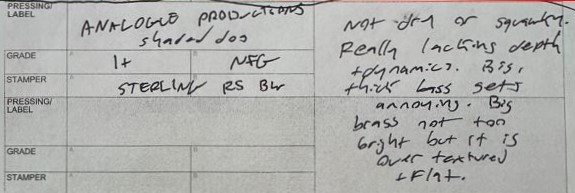
The notes from our 2024 shootout read:
- Not dry or squawky
- Really lacking depth and dynamics.
- Big, thick bass gets annoying.
- Big brass not too bright but it is over-textured and flat.
Plenty of modern records suffer from these as well as lots of other shortcomings. For some reason, the writers for The Absolute Sound who put this crappy LP on their Super Disc list didn’t seem bothered by them the way we were.
If you own this pressing, here are the kinds of things you might want to listen for in order to recognize its many, and quite serious, failings.
When played head to head against any properly-mastered vintage vinyl LP, this pressing will fall short in a number of important areas. Linked below are titles we’ve found to be good for testing these same qualities in a recording.

 Sundazed’s reissue gives the original a run for the money and remains true to the original, though it suffers in the bass, which while deep and reasonably well defined, is not as tightly drawn or focused. The upper mids on the original also bloom in a way that the reissue’s don’t, giving the reissue a slightly darker, recessed sound, but there’s still sufficient energy up there since Dylan’s close-miked vocals pack an upper midrange punch. If the vocals or harmonica sound spitty and unpleasantly harsh, it’s your system, not the record [!] – though there’s plenty of grit up there. On the plus side, the overall clarity and transparency of the reissue beats the original. [!] A really fine remastering job.


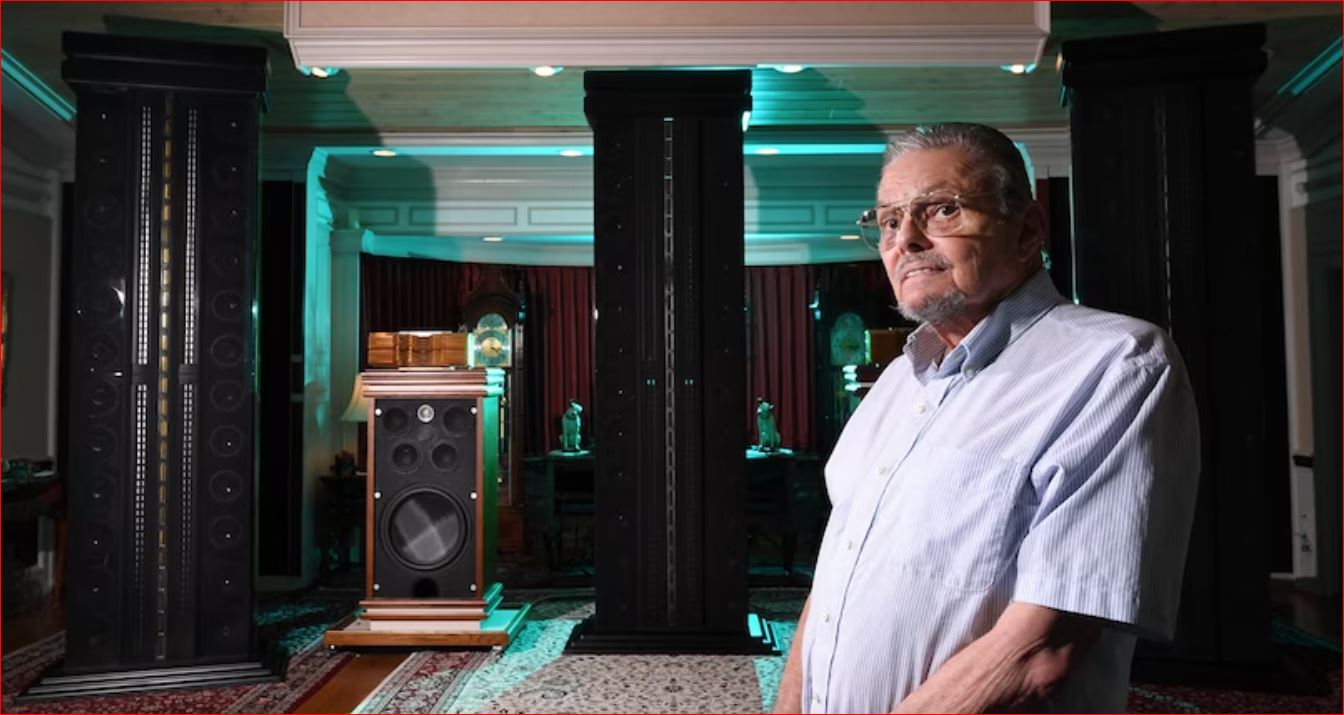
 He built a million dollar stereo to play records like these?

 Hot Stamper Pressings of the Music of Michael Jackson Available Now

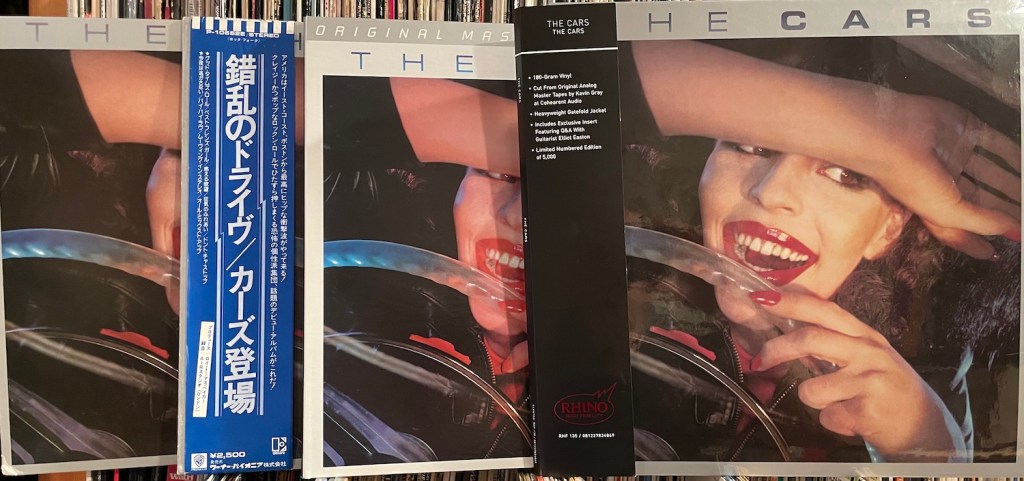
 Hot Stamper Pressings of the Music of The Cars Available Now

 At the time, I don’t think he understood how that could even be possible. He’d visited Bernie Grundman and read all the rave reviews for his work in the audiophile press. What do you mean his record sounds like a CD? Who the hell do you think you are anyway?

In that post, I took a certain person (rl1856) to task for making judgments about pressings using speakers that are not capable of doing the job he wants them to do, which is to make it possible for him to “easily hear differences in LP quality.”
An original RVG 1st or 2nd pressing has a visceral, “edge of the seat” feeling that is missing in the TP [Tone Poets] and BN [Blue Note] Classic reissues. The RVG has a tighter stereo spread, and is voiced so that the listener feels they are very close to the musicians. The TP and Classic remasters have a more distant perspective. The soundstage is wider, but the added apparent distance between musician and listener significantly reduces the impact of the music. OTOH, the reissues have greater extension at frequency extremes, and reproduce more micro detail than original pressings. We know that RVG used a surprising amount of EQ when mastering his LPs back in the day. So we need to ask ourselves, what do we want ? A better version of what we are familiar with, including EQ compromises, or a more accurate representation of what was actually captured on the master tape in RVG’s studio ? The answers may be mutually exclusive.
My system: Linn LP12 ITTOK LVII, SoundSmith Denon 103D, Audio Research SP10MKIII, Luxman MA 88 monoblocks, or Triode TRV 845PSE, or Mac 240, KEF LS50. Resolving enough to easily hear differences in LP quality.